Juttmunda

vip
Age 0.6 Year
Peak Tier 0
No content yet
#rsETHAttackUpdate :
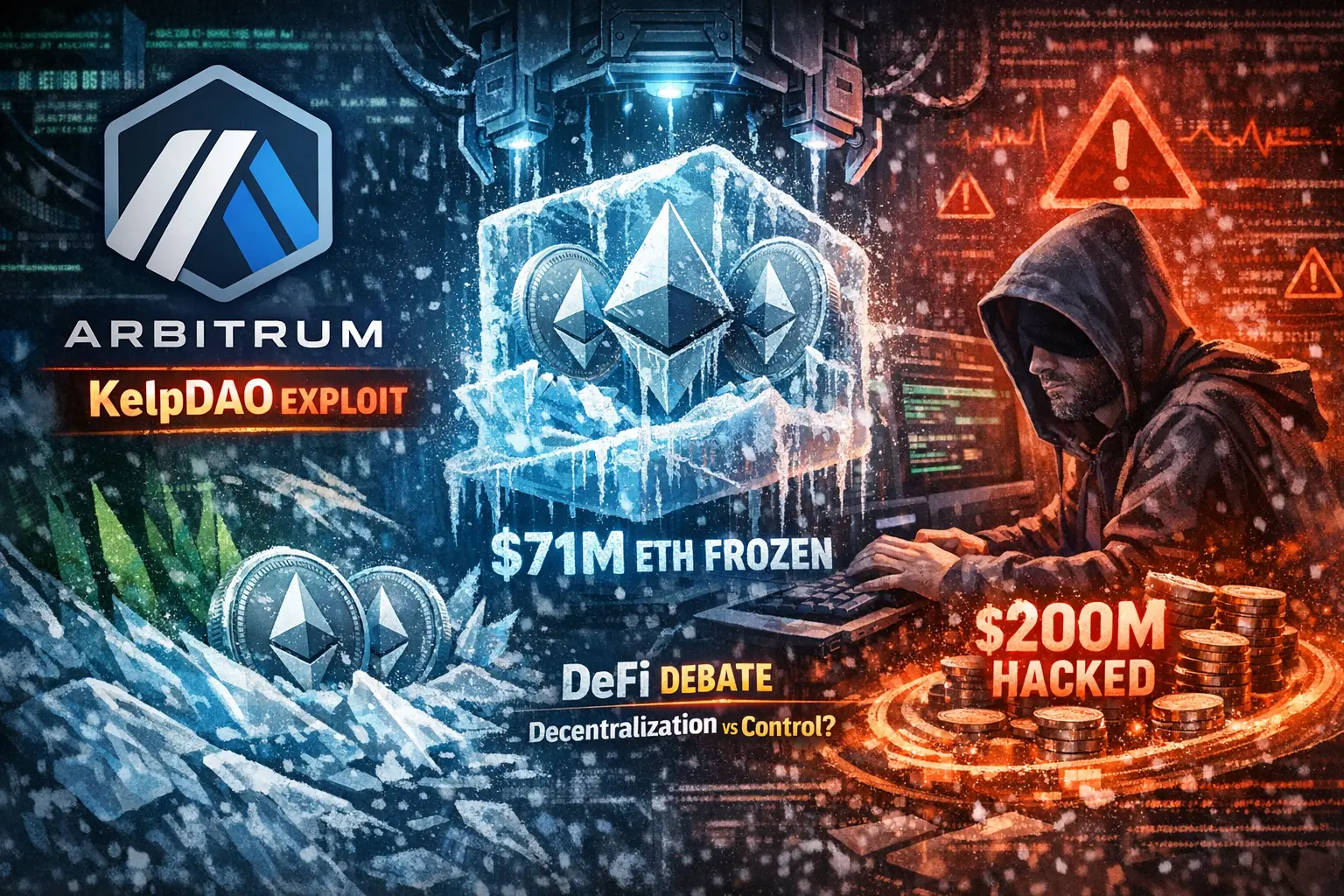
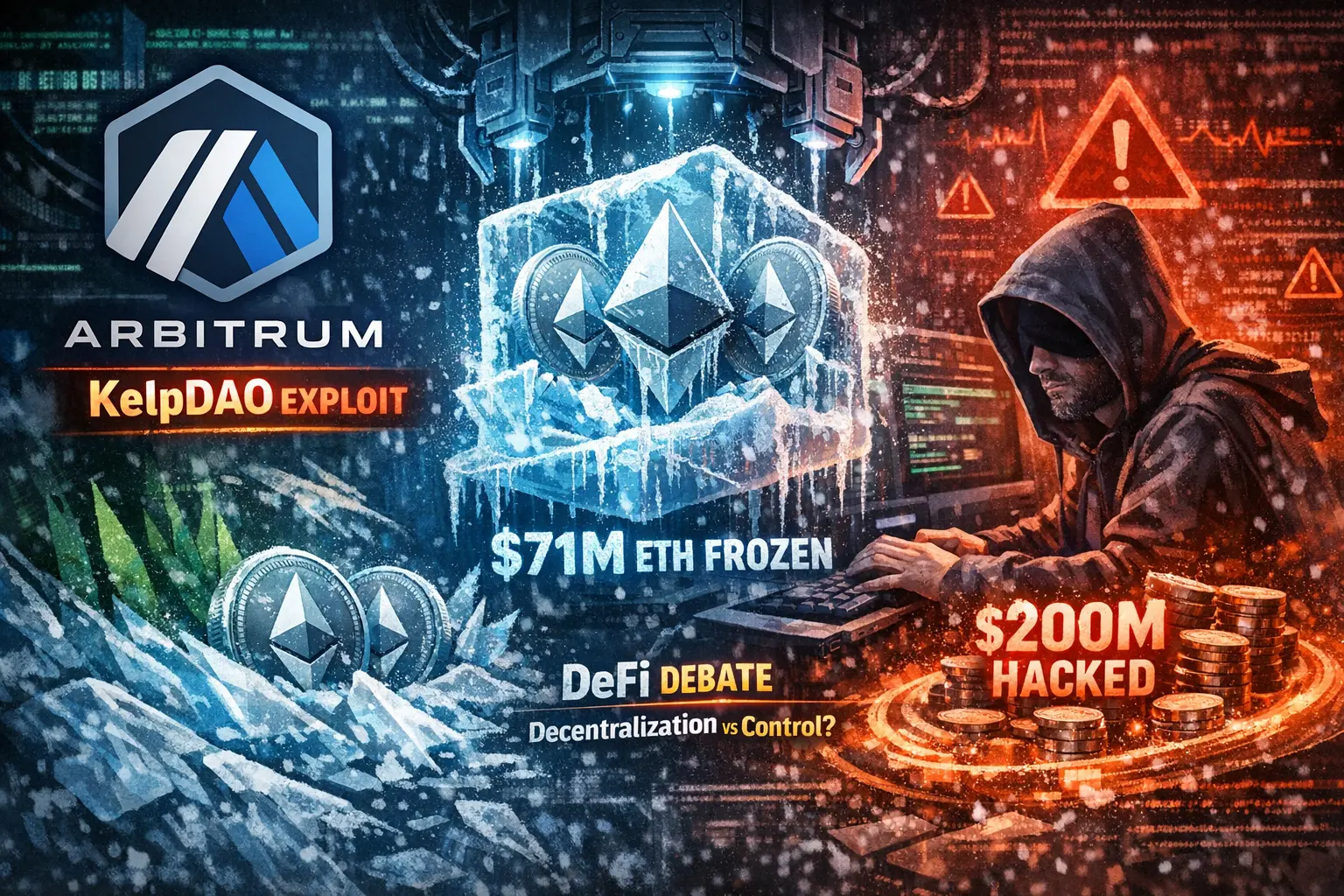
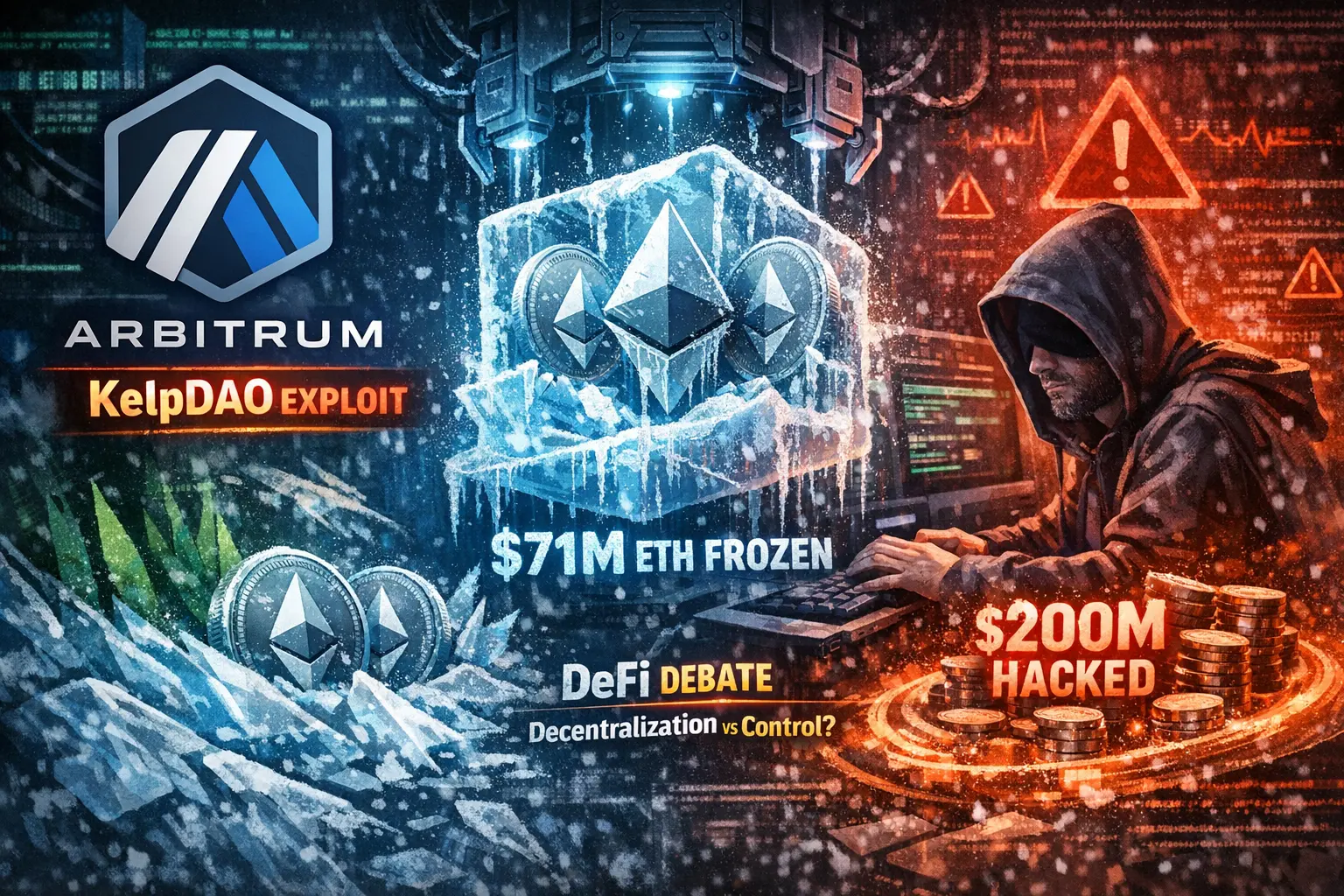
The rsETH Attack: A $292M DeFi Shock That Redefined Crypto Security in 2026
The crypto market was violently shaken on April 18, 2026, when KelpDAO’s rsETH ecosystem suffered a devastating exploit worth approximately $292 million. This was not just another DeFi hack—it became a systemic stress test for the entire decentralized finance ecosystem, exposing structural weaknesses in cross-chain infrastructure, collateral design, and protocol interdependence.
What followed was not only a token collapse—but a liquidity shock, confidence crisis, and a forced global reassessment o
ETH0.05%
AAVE2.76%
ARB3.84%
HighAmbition
#rsETHAttackUpdate :
The rsETH Attack: A $292M DeFi Shock That Redefined Crypto Security in 2026
The crypto market was violently shaken on April 18, 2026, when KelpDAO’s rsETH ecosystem suffered a devastating exploit worth approximately $292 million. This was not just another DeFi hack—it became a systemic stress test for the entire decentralized finance ecosystem, exposing structural weaknesses in cross-chain infrastructure, collateral design, and protocol interdependence.
What followed was not only a token collapse—but a liquidity shock, confidence crisis, and a forced global reassessment of DeFi risk models.
🧠 Understanding rsETH and Its Role in DeFi
rsETH is a liquid restaking token issued by KelpDAO, allowing users to stake Ethereum while keeping liquidity active across DeFi platforms.
In simple terms:
Users stake ETH → receive rsETH
rsETH is used in lending, borrowing, and yield strategies
It acts as collateral across multiple DeFi ecosystems
This makes rsETH a systemically important asset in DeFi, meaning any instability affects not just one protocol—but many interconnected markets.
⚠️ How the $292M Exploit Happened
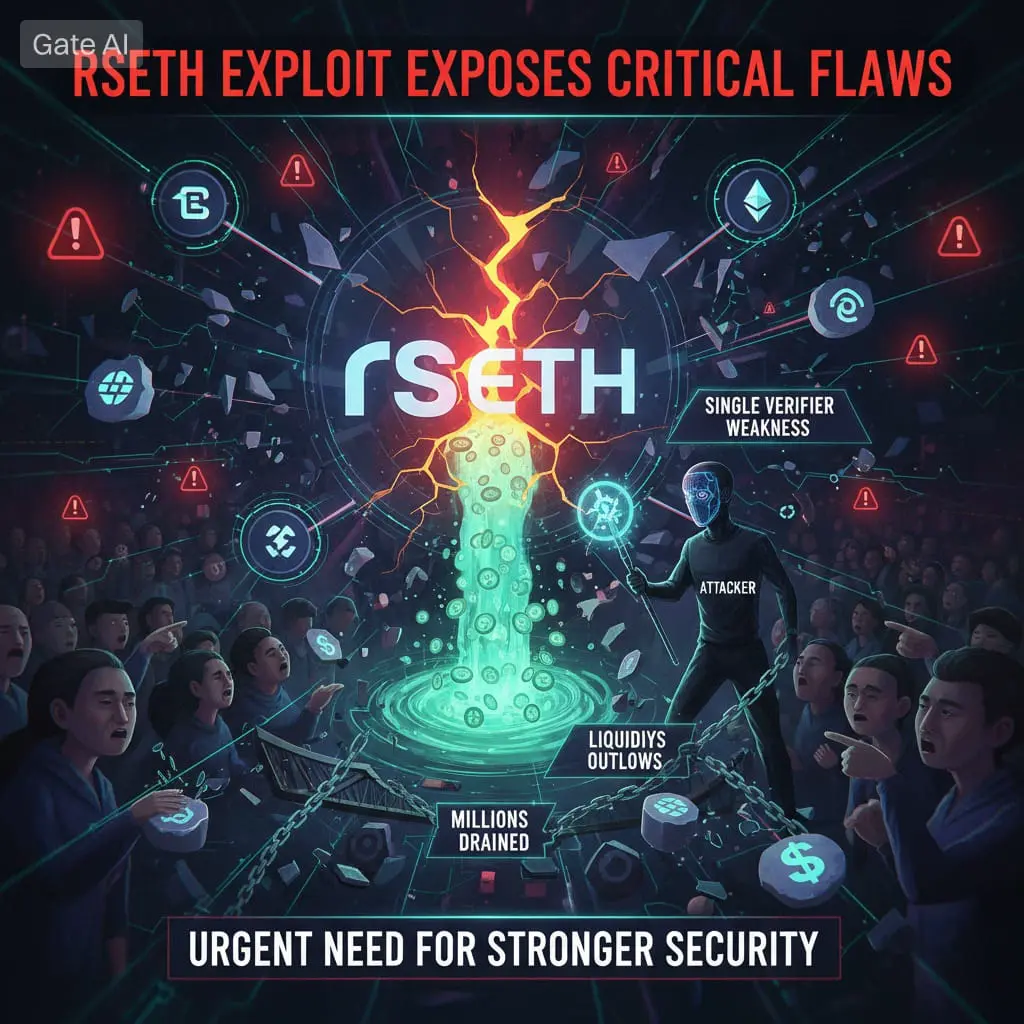
The attack exploited a critical flaw in KelpDAO’s cross-chain verification system, specifically within a LayerZero bridge adapter.
🔴 Core vulnerability:
KelpDAO used a single-verifier DVN (Decentralized Verifier Network) configuration.
Instead of requiring multiple independent confirmations, only one verifier approval was needed to validate cross-chain messages.
That single point of trust became the entry point for attackers.
🧨 Attack Execution Flow
The exploit unfolded in a highly structured sequence:
1. Fake Cross-Chain Messages
Attackers injected forged messages into the system, pretending legitimate deposits occurred across chains.
2. Minting Unbacked rsETH
The system incorrectly minted:
~116,500 rsETH tokens
Worth approximately $292 million
With no real ETH backing
3. DeFi Collateral Abuse
The attackers used rsETH as collateral on major lending protocols (including Aave) and borrowed real assets:
~52,834 WETH (Ethereum mainnet)
~29,782 WETH + 821 wstETH (Arbitrum)
4. Extraction of Real Liquidity
This created a massive imbalance between synthetic collateral and real assets, leading to systemic exposure.
📉 Immediate Market Reaction
The impact was instant:
rsETH sharply depegged from ETH
Ethereum experienced short-term pressure
DeFi tokens (especially lending protocols) dropped significantly
Trading volumes surged due to panic repositioning
Ethereum Price Context (Current Market)
At the time of market stabilization:
ETH Price: ~$2,320–$2,380 range
Market remained in a consolidation phase between $2,100–$2,400 zones
Despite the exploit, ETH remained structurally stable because the issue was not Ethereum itself—but a layered DeFi dependency failure.
💣 Systemic Impact: The DeFi Liquidity Shock
The most dangerous outcome was not the hack itself—but the liquidity chain reaction.
Key consequences:
Massive withdrawals from DeFi lending protocols
Sudden liquidity contraction across multiple chains
Collateral reassessment across lending platforms
Risk repricing across all synthetic assets
This resembled a “digital bank-run effect”, where fear spreads faster than technical fixes.
Aave and other lending platforms faced:
Rising bad debt exposure
Emergency asset freezes
Collateral re-evaluation processes
🛡️ Emergency Protocol Responses
🔹 KelpDAO Actions:
Paused rsETH minting and transfers
Suspended cross-chain operations
Began full reserve reconciliation
🔹 Aave Actions:
Froze rsETH collateral markets
Removed borrowing power from rsETH
Initiated risk containment procedures
🔹 Ecosystem Response:
Major DeFi players created emergency liquidity support pools to stabilize rsETH backing and reduce systemic damage.
📊 Ethereum Trading Strategy (Post-Exploit Market Structure)
Despite the chaos, ETH continues to trade within a structured macro range.
🟢 Current ETH Market Zone:
Range: $2,200 – $2,450
Bias: Neutral to slightly bearish consolidation
Volatility: Moderate, event-driven spikes
📈 ETH Trading Strategy (Simplified Institutional Approach)
1. Accumulation Zone Strategy
Range: $2,100 – $2,250
Considered long-term value accumulation zone
Suitable for gradual spot entry
Ideal for DCA (Dollar Cost Averaging)
2. Breakout Strategy
Trigger: Above $2,450
Confirms bullish expansion phase
Targets: $2,600 → $2,800
Momentum continuation likely if volume supports
3. Risk/Downside Strategy
If breakdown below $2,100:
Market enters deeper correction phase
Next support: $1,950–$2,000
Defensive positioning recommended
⚖️ Market Sentiment Shift After rsETH Attack
The event has permanently shifted market psychology:
Before:
High trust in cross-chain composability
Aggressive leverage usage
Strong confidence in synthetic collateral systems
After:
Increased skepticism toward bridged assets
Lower leverage appetite
Strong preference for native collateral (ETH, BTC)
Higher demand for protocol insurance models
🔍 Key Lessons for Crypto Investors
1. Composability is powerful—but fragile
One weak link can destabilize entire systems.
2. Cross-chain bridges remain high-risk infrastructure
Even advanced protocols can fail if verification is centralized.
3. Collateral ≠ safety
Synthetic assets require deeper risk analysis than native assets.
4. DeFi is now entering “risk maturity phase”
Security will matter more than speed or innovation.
📌 Final Outlook
The rsETH exploit is more than a hack—it is a defining moment for DeFi evolution.
While the immediate damage was severe, the long-term outcome may actually strengthen the ecosystem through:
Better bridge security standards
Improved collateral frameworks
Stronger risk management systems
More realistic leverage controls
Ethereum and DeFi markets have survived this shock—but the rules of the game are changing.
🚀 Closing Insight
In crypto, innovation always moves faster than regulation or security. The rsETH incident is a reminder that:
The future of DeFi will not be defined by how fast it grows—but by how well it survives its own complexity.
repost-content-media
  • Reward
  • Comment
  • Repost
  • Share
#CryptoMarketSeesVolatility
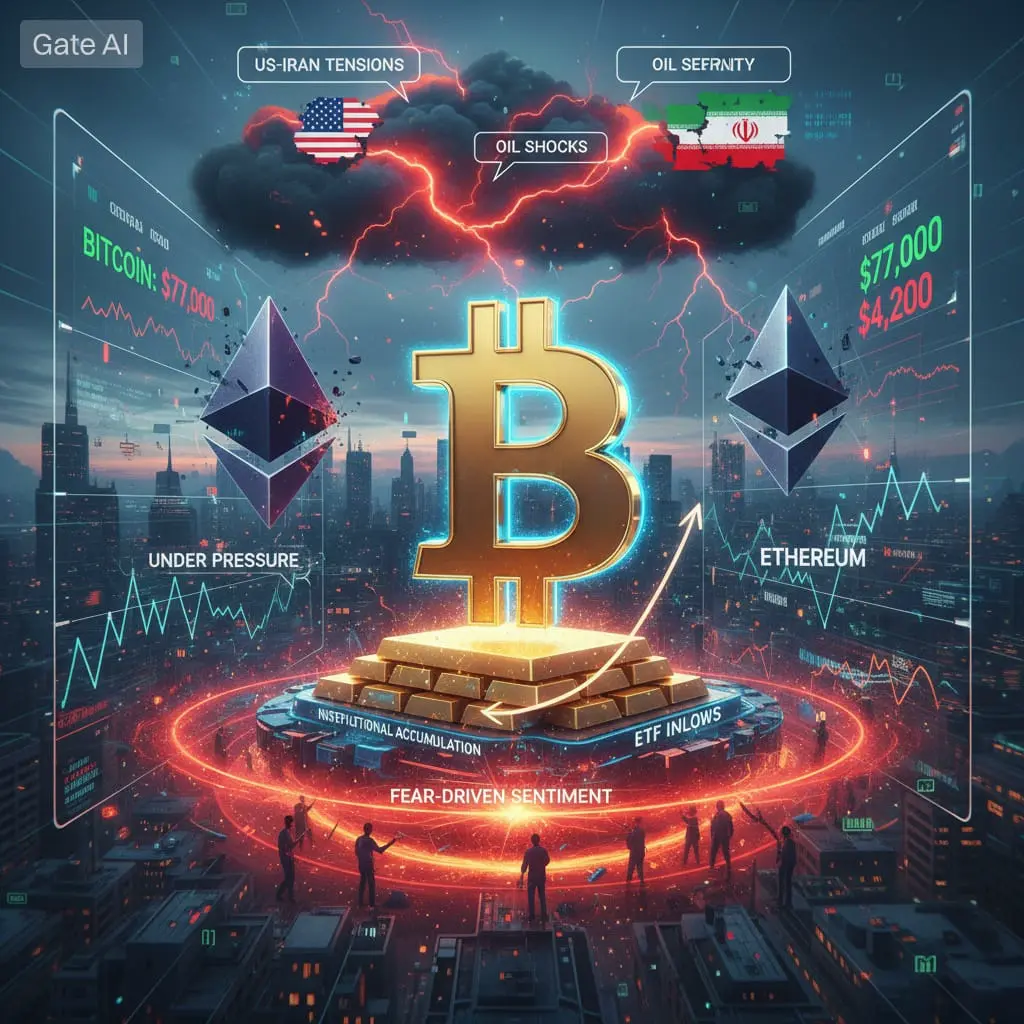
🚨 Crypto Market Enters High Volatility Phase Amid Iran Geopolitical Crisis, Institutional Liquidity Flow, and Structural Market Compression
The global cryptocurrency market is currently experiencing a sustained high-volatility environment, where price action is being influenced by a combination of geopolitical instability, macroeconomic risk repricing, derivatives positioning, and institutional accumulation patterns, creating a complex market structure in which short-term movements appear highly reactive while the underlying long-term trend remains dependent on li
HighAmbition
#CryptoMarketSeesVolatility
🚨 Crypto Market Enters High Volatility Phase Amid Iran Geopolitical Crisis, Institutional Liquidity Flow, and Structural Market Compression
The global cryptocurrency market is currently experiencing a sustained high-volatility environment, where price action is being influenced by a combination of geopolitical instability, macroeconomic risk repricing, derivatives positioning, and institutional accumulation patterns, creating a complex market structure in which short-term movements appear highly reactive while the underlying long-term trend remains dependent on liquidity absorption and macro resolution.
At present, Bitcoin is trading around $77,700, while Ethereum is trading near $2,300–$2,320, and both assets are showing completely different short-term behavior patterns despite sharing the same macro environment, which clearly indicates that market dynamics are being driven more by asset-specific liquidity conditions and positioning structures rather than uniform directional sentiment across the entire crypto sector.
📊 Current Market Structure and Price Behavior Analysis
Bitcoin continues to trade in a relatively tight but volatile range between $76,900 and $78,600, where price repeatedly tests both support and resistance levels without establishing a sustained breakout direction, suggesting that the market is currently in a liquidity compression phase, where both buyers and sellers are actively defending key levels while larger institutional participants gradually absorb supply in the background.
Ethereum, on the other hand, is showing slightly weaker short-term momentum as it fluctuates within the range of $2,285 to $2,358, reflecting mild downside pressure of approximately -1% in the last 24 hours, however this movement does not represent structural breakdown but rather short-term repositioning within a broader accumulation structure where staking activity and long-term holding behavior continue to provide underlying price stability.
The overall market condition can therefore be described as sideways consolidation with high intraday volatility spikes, where price remains range-bound but reacts sharply to external macro triggers, which is a typical characteristic of markets transitioning between uncertainty-driven contraction and liquidity-driven expansion phases.
🌍 Geopolitical Shock: Iran–US Tension as Primary Macro Catalyst
The dominant driver behind current market volatility remains the escalating geopolitical tension between the United States and Iran, particularly following the breakdown of nuclear negotiations and increasing instability in the Strait of Hormuz, which plays a critical role in global oil transportation and energy supply chains, and any disruption in this region has historically resulted in immediate risk repricing across global financial markets including equities, commodities, and digital assets.
This situation has created a global risk-off sentiment environment, where capital temporarily shifts away from high-volatility assets such as cryptocurrencies and moves toward safer instruments, while at the same time increasing volatility due to rapid repositioning of leveraged positions, derivatives exposure adjustments, and liquidity redistribution across exchanges.
As a result, crypto markets are not reacting in isolation but are instead behaving as part of a broader macro liquidity system where geopolitical uncertainty directly influences risk appetite and capital allocation behavior.
🧠 Market Sentiment: Fear Zone but Early Accumulation Behavior Emerging
The Fear and Greed Index currently sitting at 39 (Fear Zone) indicates that market sentiment is cautious and uncertain, however historically such levels have often coincided with early accumulation phases rather than deep capitulation events, especially when supported by strong institutional inflows and declining exchange reserves.
This creates a critical divergence between retail sentiment and institutional behavior, where retail participants are primarily reacting to uncertainty by reducing exposure, while institutional investors are gradually increasing exposure during volatility, thereby creating a silent transfer of assets from weaker hands to stronger hands.
🏦 Institutional Activity: Silent but Strong Accumulation Trend
Despite short-term price fluctuations, institutional accumulation continues to remain one of the strongest underlying forces in the current market structure, as large Bitcoin wallets have accumulated approximately 270,000 BTC over the past 30 days, while exchange reserves continue to decline to multi-year lows, indicating that available liquid supply is steadily decreasing.
Additionally, spot Bitcoin ETFs have maintained consistent inflows, reflecting sustained institutional interest, and suggesting that large capital allocators are treating current volatility as an accumulation opportunity rather than a distribution phase.
This behavior strongly indicates that while price remains range-bound, structural demand is quietly increasing beneath the surface, which is a historically significant precursor to long-term bullish expansion phases.
🔵 Ethereum Market Dynamics: Mixed Short-Term Pressure but Strong Structural Foundation
Ethereum is currently displaying a mixed market structure where short-term price weakness coexists with strong underlying fundamental strength, as evidenced by increasing staking participation levels reaching approximately 32% of total supply, continued growth in network activity exceeding 200 million transactions in Q1 2026, and sustained institutional accumulation trends that suggest long-term confidence in Ethereum’s ecosystem remains intact.
However, in the short term, Ethereum is facing resistance in the $2,350–$2,400 range, while maintaining key support around $2,200–$2,250, which creates a defined trading structure where price is likely to remain range-bound until a broader macro or liquidity-driven catalyst triggers a breakout in either direction.
⚡ Why Volatility Remains Elevated Across Crypto Markets
The current high-volatility environment is not the result of a single factor but rather a combination of multiple overlapping structural forces, including geopolitical uncertainty increasing global risk premiums, derivatives market imbalances creating leveraged position unwinding, funding rate fluctuations indicating mixed long and short positioning, and technical compression across Bitcoin and Ethereum that builds energy for eventual breakout movements.
Additionally, the presence of both negative and neutral funding rates suggests that short positioning remains structurally active, which increases the probability of short squeeze scenarios if upward momentum begins to build unexpectedly, thereby amplifying volatility in both directions.
📉 Market Psychology: A Silent Battle Between Fear and Accumulation
The current market psychology reflects a clear divergence between retail and institutional behavior, where retail traders remain cautious due to geopolitical uncertainty and short-term price instability, while institutional participants continue to accumulate strategically during volatility phases, creating a silent but powerful redistribution cycle within the market structure.
This environment is typically characterized by low conviction breakouts, frequent fake moves, and sharp liquidity-driven reversals, all of which serve to eliminate weak leveraged positions before a more sustainable trend direction emerges.
📊 Trading Structure and Liquidity-Based Market View
From a structural perspective, the market can currently be divided into three phases: the first phase being fear-driven volatility expansion where uncertainty dominates price action, the second phase being the current accumulation zone where price remains range-bound while liquidity is absorbed, and the third phase being the eventual expansion phase where breakout momentum develops once liquidity imbalance reaches a critical threshold.
Bitcoin’s current trading behavior between $76,900 and $78,600, combined with Ethereum’s range between $2,285 and $2,358, strongly supports the interpretation that the market is in a controlled compression phase rather than a directional breakdown or full bullish breakout phase.
🔮 Forward-Looking Market Outlook
Looking ahead, the direction of the cryptocurrency market will remain heavily dependent on geopolitical developments related to Iran–US negotiations, global energy stability, and broader macroeconomic liquidity conditions, while simultaneously being supported by structural tailwinds such as continued Bitcoin ETF inflows, declining exchange reserves, and post-halving supply dynamics that historically contribute to long-term bullish cycles.
If geopolitical tensions begin to stabilize, the market is likely to transition into a strong liquidity-driven expansion phase where Bitcoin could break above $80,000, Ethereum could move toward $2,600+, and altcoins could follow with delayed but amplified momentum, whereas continued escalation may result in prolonged sideways volatility with periodic downside liquidity tests before structural recovery resumes.
🚀 Final Conclusion
The current cryptocurrency market should not be interpreted as a simple bullish or bearish environment, but rather as a liquidity-driven equilibrium phase under macro uncertainty, where price is temporarily compressed while institutional capital continues to accumulate beneath the surface, and where volatility is not a sign of weakness but rather a reflection of active capital redistribution within a structurally evolving financial system.
Ultimately, the key takeaway is that in crypto markets, fear does not destroy value but instead redistributes it, and the current phase represents a critical accumulation window where smart capital positions itself before the next major directional expansion begins.
💡 Key Insight
In modern crypto markets, price is only the visible layer, while liquidity flow, institutional positioning, and macro uncertainty determine the real direction, and the current environment clearly shows that while volatility is high, structural accumulation is even stronger beneath the surface.
repost-content-media
  • Reward
  • Comment
  • Repost
  • Share
#US-IranTalksStall
The recent breakdown in negotiations between the United States and Iran represents one of the most significant geopolitical developments affecting global markets in 2026. The talks, which were held in Islamabad, Pakistan, collapsed after marathon 21-hour negotiations failed to produce a truce deal, with both sides trading accusations and escalating tensions.
Reasons Behind the Talks Stall
The primary sticking points that led to the collapse of negotiations are multifaceted. First and foremost, Iran's refusal to commit to abandoning its nuclear ambitions remains the central
BTC0.43%
HighAmbition
#US-IranTalksStall
The recent breakdown in negotiations between the United States and Iran represents one of the most significant geopolitical developments affecting global markets in 2026. The talks, which were held in Islamabad, Pakistan, collapsed after marathon 21-hour negotiations failed to produce a truce deal, with both sides trading accusations and escalating tensions.
Reasons Behind the Talks Stall
The primary sticking points that led to the collapse of negotiations are multifaceted. First and foremost, Iran's refusal to commit to abandoning its nuclear ambitions remains the central obstacle. US Vice President JD Vance explicitly stated that Tehran would not accept Washington's terms regarding nuclear weapons development. The US demands an affirmative commitment that Iran will not seek nuclear weapons or the tools to quickly achieve them.
The Strait of Hormuz has emerged as another critical flashpoint. Iran continues to essentially control this vital waterway through which approximately 20 percent of global oil shipments pass. President Trump announced that the US would impose a naval blockade on Iranian ports in response to Iran's closure of the strait since the beginning of hostilities on February 28, 2026. This blockade has sent oil prices spiraling worldwide and created significant economic pressure on Iran.
Iran has expressed frustration over Trump's decision to maintain the naval blockade even after Tehran announced it would reopen the strait following a 10-day ceasefire between Israel and Lebanon. Iranian officials have threatened to forgo negotiations entirely after the US military seized an Iranian-flagged vessel attempting to defy the blockade over the weekend.
The scope of Iran's nuclear enrichment program has also been contentious. The proposed enrichment program was based on what analysts describe as an overly ambitious 10-year reactor plan, including enriching uranium up to 20 percent with advanced centrifuges. The International Atomic Energy Agency has tracked Iran's nuclear fuel and documented that Iran had 45.5 kilograms of uranium enriched to 20 percent, representing roughly a seven-to-eight-year supply for the reactor.
Why Iran is Stalling the Talks
Iran's negotiating position appears driven by several factors. The regime is seeking to maintain leverage by controlling the Strait of Hormuz, which gives them significant geopolitical power. Additionally, Iran views the US blockade as a violation of the ceasefire agreement, creating a Catch-22 situation where neither side is willing to make the first concession.
The Iranian leadership, under Supreme Leader Mojtaba Khamenei, faces domestic pressure to appear strong against American demands. The country's economy has been devastated by sanctions, and any deal that appears to capitulate to US demands could undermine the regime's legitimacy. Furthermore, Iran's strategic alliances with regional actors and its position within the Axis of Resistance create additional constraints on its negotiating flexibility.
Impact on Crypto Markets
The breakdown in US-Iran talks has created significant ripples throughout cryptocurrency markets. Bitcoin, which had touched the 79,000 USDT level, has retreated to approximately 77,700 USDT, reflecting the risk-off sentiment that typically accompanies geopolitical uncertainty.
The correlation between geopolitical tensions and crypto market volatility has become increasingly pronounced. When traditional safe-haven assets like gold and the US dollar strengthen during times of crisis, cryptocurrencies often experience sell pressure as investors seek liquidity and stability. The current situation is no exception, with Bitcoin struggling to maintain momentum above key resistance levels.
The Strait of Hormuz crisis has particular implications for crypto markets because it affects global energy prices. Higher oil prices typically lead to inflationary pressures, which can influence Federal Reserve policy decisions. Any indication that the Fed might maintain higher interest rates for longer due to inflation concerns tends to weigh on risk assets, including cryptocurrencies.
BTC Current Price Analysis and Forecast
Bitcoin is currently trading around 77,700 USDT, having retreated from the 79,000 USDT resistance level. Technical analysis reveals a mixed picture. On the 4-hour timeframe, moving averages show a bullish alignment with MA7 above MA30 above MA120, indicating an overall upward trend. However, there are concerning signals as well.
The 4-hour chart displays a MACD top divergence pattern, where price made a new high while the MACD histogram decreased, suggesting potential pullback risk. Daily indicators show overbought conditions with CCI at 114.97 and WR at negative 19.51, indicating the market may be due for a correction.
Short-term indicators on the 15-minute timeframe show oversold conditions with CCI at negative 153.55 and WR at negative 87.26, suggesting potential for a bounce. However, the price has fallen below the 20-period moving average, indicating short-term weakness.
Volume analysis shows significant participation with 24-hour trading volume exceeding 522 million USDT, suggesting strong market interest at current levels. The fear and greed index sits at 39, indicating a neutral to slightly fearful sentiment among market participants.
Trading Strategy and Price Targets
Given the current geopolitical uncertainty and technical setup, a cautious approach is warranted. The immediate support level to watch is around 76,900 USDT, which represents the recent low. If this level holds, Bitcoin could attempt another push toward the 79,000 USDT resistance.
However, if the US-Iran situation deteriorates further and oil prices spike, Bitcoin could face additional downside pressure. In a risk-off scenario, support levels at 75,000 USDT and 72,000 USDT come into play. The 200-day moving average around 73,000 USDT represents a critical long-term support zone.
For upside targets, a break above 79,000 USDT could open the door to 82,000 USDT and potentially 85,000 USDT. However, given the overbought daily conditions and geopolitical risks, the probability of immediate new highs appears limited.
Strategic Recommendations
Traders should consider reducing position sizes during periods of heightened geopolitical uncertainty. Setting stop-losses below the 76,000 USDT level would help protect against a deeper correction. For those looking to accumulate, dollar-cost averaging on dips toward the 75,000-76,000 USDT zone may be prudent.
The correlation between traditional markets and crypto has been increasing, so monitoring developments in oil prices, the US dollar index, and equity markets will provide valuable context for crypto trading decisions. Any resolution to the US-Iran tensions could spark a relief rally, while escalation could trigger a broader risk-off move affecting all asset classes.
In conclusion, the US-Iran talks stall represents a significant geopolitical risk factor for crypto markets in the near term. While Bitcoin's long-term fundamentals remain intact, short-term volatility is likely to persist until there is clarity on the diplomatic front. Traders should remain vigilant, manage risk appropriately, and be prepared for rapid shifts in market sentiment as the situation evolves.
repost-content-media
  • Reward
  • Comment
  • Repost
  • Share
#EthereumMemeSeasonReturns
Ethereum Meme Season Returns: A Comprehensive Analysis of the Current Market Cycle
The cryptocurrency landscape is witnessing a significant shift as the Ethereum meme coin season makes a powerful comeback in April 2026. After a period of dominance by Solana-based meme coins and the pump.fun meta, capital is rotating back to Ethereum's ecosystem, driven by renewed interest in established communities, deeper lore, and the promise of more sustainable growth patterns. This article provides a detailed examination of the current state, price forecasts, trading strategies,
HighAmbition
#EthereumMemeSeasonReturns
Ethereum Meme Season Returns: A Comprehensive Analysis of the Current Market Cycle
The cryptocurrency landscape is witnessing a significant shift as the Ethereum meme coin season makes a powerful comeback in April 2026. After a period of dominance by Solana-based meme coins and the pump.fun meta, capital is rotating back to Ethereum's ecosystem, driven by renewed interest in established communities, deeper lore, and the promise of more sustainable growth patterns. This article provides a detailed examination of the current state, price forecasts, trading strategies, and future outlook for Ethereum and its meme coin ecosystem.
Understanding the Ethereum Meme Season Phenomenon
The Ethereum meme season represents a cyclical pattern where investor attention and capital flow toward meme-based cryptocurrencies built on the Ethereum blockchain. Unlike the fast-flip culture that characterized recent Solana meme coin cycles, the current Ethereum resurgence emphasizes projects with established communities, longer histories, and stronger holder conviction. Social media sentiment analysis reveals overwhelmingly positive discussions around Ethereum meme coins, with traders highlighting the shift from speculative quick trades to more strategic, community-driven investments.
The breakout star of this season is ASTEROID, which has pumped over ten times overnight to reach a market capitalization between 135 million and 200 million dollars, with weekly volume exceeding 250 million dollars. This token, tied to SpaceX and Elon Musk narratives, is being positioned as Ethereum's first major runner of 2026. Alongside ASTEROID, classic Ethereum meme coins are experiencing a revival, including PEPE, SHIB, FLORK, and WOJAK, each showing remarkable performance metrics that suggest a broader trend rather than isolated incidents.
Current Market Status and Price Analysis
Ethereum itself is trading at approximately 2,319 USDT, experiencing a slight decline of 1.38 percent over the past twenty-four hours. Despite this short-term pullback, Ethereum has demonstrated resilience with a thirty-day gain of 12.57 percent. The cryptocurrency maintains its position as the second-largest digital asset by market capitalization, valued at approximately 281 billion dollars.
Technical analysis reveals mixed signals for Ethereum. On the fifteen-minute timeframe, moving averages show a bearish alignment, while the Commodity Channel Index and Williams Percent Range indicate oversold conditions, suggesting potential short-term bounce opportunities. The four-hour timeframe presents a more concerning picture with a recent moving average crossover to the downside, though the daily chart continues to show underlying strength. Trading volume has been elevated, with approximately 292 million USDT in twenty-four-hour volume, indicating active market participation.
PEPE, one of the leading Ethereum meme coins, trades at 0.000003836 USDT with a twenty-four-hour gain of 1.85 percent. The token has formed a double bottom pattern on recent charts, suggesting potential upward momentum. Technical indicators show bullish alignment across multiple timeframes, with the token outperforming Bitcoin over recent periods. Social sentiment remains extremely positive, with one hundred percent of analyzed social media content expressing bullish sentiment toward PEPE.
SHIB maintains its position as a top-tier meme coin, trading at 0.000006148 USDT with modest twenty-four-hour gains of 1.2 percent. The token shows similar technical patterns to PEPE, with double bottom formations and positive moving average alignments on shorter timeframes. Market capitalization stands at approximately 3.6 billion dollars, ranking thirty-third among all cryptocurrencies.
FLOKI has emerged as a standout performer, trading at 0.00003368 USDT with impressive twenty-four-hour gains of 4.43 percent and seven-day appreciation of 9.71 percent. Technical indicators show strong bullish momentum across all timeframes, with the token significantly outperforming Bitcoin. The thirty-day gain of 16.38 percent demonstrates sustained interest from market participants.
WOJAK represents the most explosive mover in the Ethereum meme ecosystem, trading at 0.00000010434 USDT with staggering twenty-four-hour gains of 11.1 percent. The token has appreciated 342 percent over the past seven days and 482 percent over thirty days, driven by significant whale accumulation and new exchange listings including perpetual futures on Aster with up to three times leverage.
Price Forecasts and Future Projections
Institutional analysts have provided bullish forecasts for Ethereum's price trajectory. Standard Chartered has projected Ethereum reaching 7,500 USDT in 2026, representing more than triple its current valuation. This prediction is based on increasing institutional adoption, the growth of decentralized finance applications, and Ethereum's position as the leading smart contract platform. More aggressive forecasts suggest Ethereum could potentially reach five figures, driven by whale accumulation patterns that mirror previous bull market cycles.
For meme coins specifically, analysts point to historical precedents where established Ethereum meme coins delivered returns of fifty to one hundred times during peak market conditions. The current cycle shows similarities to early 2021 and 2024 patterns, where PEPE and other meme coins experienced exponential growth. Social media discussions suggest expectations for multiple meme coins to reach market capitalizations between 500 million and one billion dollars if catalysts materialize.
The correlation between Ethereum's price performance and its meme coin ecosystem remains strong. As Ethereum appreciates, it creates a rising tide effect that lifts all projects built on its blockchain. This relationship suggests that Ethereum price targets of 7,500 USDT or higher would provide substantial tailwinds for meme coin valuations across the ecosystem.
Trading Strategies for the Current Cycle
Successful navigation of the Ethereum meme season requires a multi-faceted approach combining technical analysis, risk management, and market sentiment monitoring. For conservative investors, accumulating positions in established meme coins like PEPE and SHIB during market dips has historically provided favorable risk-adjusted returns. These tokens offer deeper liquidity and more established communities, reducing the risk of complete capital loss.
For more aggressive traders, identifying emerging meme coins with strong narratives and early community formation presents opportunities for outsized returns. The ASTEROID phenomenon demonstrates how quickly new entrants can capture market attention when aligned with trending narratives. However, this approach requires diligent research and acceptance of higher volatility and potential downside risk.
Risk management remains paramount in meme coin trading. Position sizing should reflect the speculative nature of these assets, with most traders recommending allocations of no more than five to ten percent of total portfolio value to meme coin positions. Stop-loss orders and profit-taking strategies should be predetermined to remove emotional decision-making during volatile price movements.
Technical analysis tools provide valuable entry and exit signals. Current market conditions show multiple meme coins forming bullish chart patterns, including double bottoms and moving average crossovers. Monitoring volume patterns helps identify genuine breakouts versus false signals, with sustained above-average volume typically confirming trend strength.
Market Sentiment and Community Dynamics
Social sentiment analysis reveals extremely positive sentiment across Ethereum meme coins, with PEPE, SHIB, and FLOKI all showing one hundred percent positive social media sentiment. This level of consensus, while bullish, also warrants caution as extreme sentiment often precedes short-term corrections.
Community engagement metrics indicate strong holder conviction, with many long-term holders from previous cycles re-entering positions. The return of whale wallets accumulating significant positions in tokens like WOJAK suggests sophisticated investors are positioning for continued upside. Exchange listings, including perpetual futures and new trading pairs, provide additional validation of market interest.
The narrative shift from Solana back to Ethereum reflects growing appreciation for Ethereum's deeper liquidity, more established infrastructure, and stronger regulatory clarity. While Solana meme coins offered faster transaction speeds and lower costs during the pump.fun era, Ethereum's ecosystem provides greater stability and institutional acceptance.
Future Outlook and Strategic Planning
The Ethereum meme season appears to be in its early to middle stages, with significant room for expansion based on historical cycle comparisons. If Ethereum achieves institutional price targets of 7,500 USDT or higher, the meme coin ecosystem could experience proportional or greater gains as retail interest returns to the cryptocurrency markets.
Key catalysts to monitor include continued institutional adoption of Ethereum, regulatory developments affecting the broader cryptocurrency market, and the emergence of new narrative drivers that could propel specific meme coins to new heights. The integration of artificial intelligence narratives, as seen with tokens like FARTCOIN, represents a potential avenue for continued innovation within the meme coin space.
Investors should maintain flexibility in their strategies, ready to adjust positions as market conditions evolve. The volatile nature of meme coins requires constant vigilance, with successful participants typically maintaining active monitoring of social sentiment, technical indicators, and macroeconomic factors affecting the broader cryptocurrency market.
Conclusion
The Ethereum meme season return represents a significant opportunity for informed investors willing to navigate the inherent risks of this asset class. Current market conditions, combined with bullish institutional forecasts for Ethereum itself, create a favorable environment for meme coin appreciation. Established tokens like PEPE, SHIB, and FLOKI offer relatively lower-risk exposure to the trend, while emerging tokens like ASTEROID and WOJAK present higher-risk, higher-reward opportunities.
Success in this market requires disciplined risk management, thorough research, and the ability to act decisively when opportunities arise. As the cycle progresses, maintaining awareness of shifting sentiment and technical signals will be crucial for maximizing returns while protecting capital. The convergence of institutional interest in Ethereum and retail enthusiasm for meme coins suggests this season may have significant room to run, potentially delivering returns that justify the risks for appropriately positioned investors.
repost-content-media
  • Reward
  • Comment
  • Repost
  • Share
#SpaceXBids$60BforCursor
SpaceX's Bold $60 Billion Bet on Cursor: A Game-Changing Move in the AI Arms Race and Its Ripple Effects on the Cryptocurrency Market
The technology world witnessed a seismic announcement on April 21, 2026, when SpaceX revealed it had secured an option to acquire Cursor, the red-hot AI coding startup, for a staggering $60 billion. This deal represents one of the most significant moves in the artificial intelligence sector and carries profound implications not just for the tech industry, but potentially for the broader financial markets including cryptocurrency.
Unders
HighAmbition
#SpaceXBids$60BforCursor
SpaceX's Bold $60 Billion Bet on Cursor: A Game-Changing Move in the AI Arms Race and Its Ripple Effects on the Cryptocurrency Market
The technology world witnessed a seismic announcement on April 21, 2026, when SpaceX revealed it had secured an option to acquire Cursor, the red-hot AI coding startup, for a staggering $60 billion. This deal represents one of the most significant moves in the artificial intelligence sector and carries profound implications not just for the tech industry, but potentially for the broader financial markets including cryptocurrency.
Understanding the Deal Structure
The agreement between SpaceX and Cursor is not a straightforward acquisition, but rather a strategic partnership with a powerful call option attached. Under the terms announced by SpaceX on its X platform, the two companies will collaborate closely to develop what they describe as the world's best coding and knowledge work AI. SpaceX has been granted the right to either acquire Cursor outright for $60 billion later this year, or alternatively pay $10 billion for the joint work if they choose not to proceed with the full acquisition.
This structure is particularly interesting because it gives SpaceX tremendous flexibility while providing Cursor with a substantial floor valuation. The $10 billion payment option essentially guarantees Cursor a massive payday even if the acquisition does not materialize, while the $60 billion acquisition price represents a significant premium over Cursor's most recent reported valuation.
The Meteoric Rise of Cursor
To understand why SpaceX would consider paying $60 billion for Cursor, one must appreciate the startup's extraordinary trajectory. Cursor, founded by Anysphere, has experienced one of the most rapid value appreciations in startup history. The company was valued at just $2.5 billion in January 2025, climbed to $9 billion by May 2025, and reached a $29.3 billion post-money valuation following a $2.3 billion Series D funding round in November 2025.
Most recently, Cursor was reportedly in talks to raise an additional $2 billion at a $50 billion valuation before the SpaceX deal was announced. The company has grown from zero to $2 billion in annualized recurring revenue within just three years, making it the fastest-scaling B2B software company on record. With over one million paying customers and penetration into 70 percent of the Fortune 1000 companies, Cursor has established itself as a dominant force in AI-assisted coding.
The Strategic Rationale
SpaceX's interest in Cursor aligns perfectly with Elon Musk's broader vision of building an integrated AI powerhouse. In February 2026, SpaceX acquired xAI, Musk's artificial intelligence startup, in an all-stock transaction that valued the combined entity at $1.25 trillion. The Cursor deal represents the next phase of this AI consolidation strategy.
The collaboration centers on combining Cursor's advanced coding interface with SpaceX's massive Colossus supercomputer, which reportedly leverages over one million Nvidia H100 GPU equivalents. This computational firepower will enable the development of next-generation AI models specifically optimized for coding and knowledge work tasks.
For SpaceX, which is preparing for what could be the largest initial public offering in history with a targeted valuation of $1.75 to $2 trillion, owning a dominant AI coding platform provides multiple strategic advantages. It secures access to cutting-edge AI technology, creates potential synergies with its existing operations, and positions the company at the forefront of the AI revolution that is transforming virtually every industry.
Impact on the Cryptocurrency Market
The SpaceX-Cursor deal carries several important implications for the cryptocurrency market, though the effects may be indirect and unfold over time.
Increased Institutional Interest in Tech-Related Assets
The sheer scale of this deal, coming on the heels of SpaceX's massive IPO preparations, signals continued institutional appetite for high-growth technology assets. This environment typically creates positive sentiment around digital assets and blockchain technology, as investors seek exposure to the next wave of technological innovation. The deal reinforces the narrative that we are in a period of transformative technological change, which often correlates with increased interest in cryptocurrencies as alternative investment vehicles.
AI Token Momentum
Cryptocurrency projects focused on artificial intelligence and decentralized computing infrastructure stand to benefit from the heightened attention on AI capabilities. Tokens associated with decentralized compute networks like Render and Akash, which provide distributed GPU power for AI training and inference, could see increased interest as the market recognizes the massive computational requirements of advanced AI systems.
The SpaceX-Cursor partnership specifically highlights the critical importance of compute infrastructure in the AI race. As companies like SpaceX build massive centralized supercomputers, there is a countervailing narrative around decentralized alternatives that could resonate with the crypto community. Projects enabling distributed AI training, decentralized machine learning marketplaces, and blockchain-based AI services may attract renewed investor attention.
Regulatory Scrutiny and Market Structure
The deal has already attracted attention from regulators, with reports suggesting both the Federal Trade Commission and the Securities and Exchange Commission are examining aspects of the transaction. This regulatory scrutiny of major AI consolidation deals could have spillover effects on how cryptocurrency markets are regulated, particularly as the lines between traditional technology and decentralized systems continue to blur.
If regulators take a more aggressive stance on AI industry consolidation, it could potentially accelerate interest in decentralized alternatives that operate outside traditional corporate structures. Cryptocurrency and blockchain technology represent precisely such alternatives, offering permissionless innovation and distributed governance models.
Venture Capital Rotation
The massive returns that Cursor's early investors, including Andreessen Horowitz and Thrive Capital, stand to realize from this deal could influence venture capital allocation patterns. Successful exits of this magnitude often lead to increased capital availability for emerging technology sectors, including blockchain and cryptocurrency startups. As venture firms distribute returns to their limited partners, some of this capital may find its way back into the crypto ecosystem through new investments.
Market Sentiment and Risk Appetite
Large technology deals often serve as barometers for broader market sentiment. The willingness of SpaceX to commit up to $60 billion for an AI coding platform suggests strong confidence in the future of artificial intelligence and technology-enabled productivity gains. In environments where investors are optimistic about technological disruption and willing to deploy capital aggressively, risk assets including cryptocurrencies typically perform well.
However, there is also a potential counter-narrative. If the deal is perceived as evidence of a technology bubble, with valuations reaching unsustainable levels, it could contribute to risk-off sentiment that negatively impacts cryptocurrency prices. The market's interpretation of this deal will depend largely on whether investors view it as rational strategic positioning or excessive speculation.
Long-Term Structural Implications
Looking beyond immediate price movements, the SpaceX-Cursor deal may accelerate several trends relevant to the cryptocurrency ecosystem. The integration of AI capabilities into major technology platforms could drive demand for blockchain-based identity systems, decentralized data marketplaces, and cryptocurrency payment rails that enable seamless value transfer in AI-enabled economies.
Furthermore, as AI systems become more sophisticated, the need for verifiable computing, proof of authenticity, and decentralized verification mechanisms may increase. Blockchain technology offers solutions to these challenges, potentially creating new use cases at the intersection of AI and cryptocurrency.
Conclusion
SpaceX's $60 billion option to acquire Cursor represents a watershed moment in the artificial intelligence industry, highlighting both the extraordinary value creation potential of AI-native companies and the strategic importance of controlling critical AI infrastructure. For the cryptocurrency market, the deal creates a complex mix of opportunities and considerations.
While the immediate impact on cryptocurrency prices may be limited, the longer-term implications are significant. The deal reinforces the importance of computational infrastructure in the emerging AI economy, validates the massive valuations being assigned to AI-focused companies, and may accelerate regulatory and market developments that affect the broader technology landscape.
Investors in cryptocurrency should monitor how this deal influences capital flows, regulatory approaches, and technological development in the AI sector. The convergence of artificial intelligence and blockchain technology represents one of the most promising frontiers for innovation, and major transactions like the SpaceX-Cursor deal provide important signals about how this convergence may unfold.
As SpaceX prepares for its historic IPO and continues building its AI capabilities through partnerships and acquisitions, the cryptocurrency market will likely remain sensitive to developments in this space. The ultimate impact will depend on how successfully crypto projects can position themselves as complementary or alternative infrastructure to the centralized AI systems being built by giants like SpaceX.
repost-content-media
  • Reward
  • Comment
  • Repost
  • Share
#FirstTradeOfTheWeek
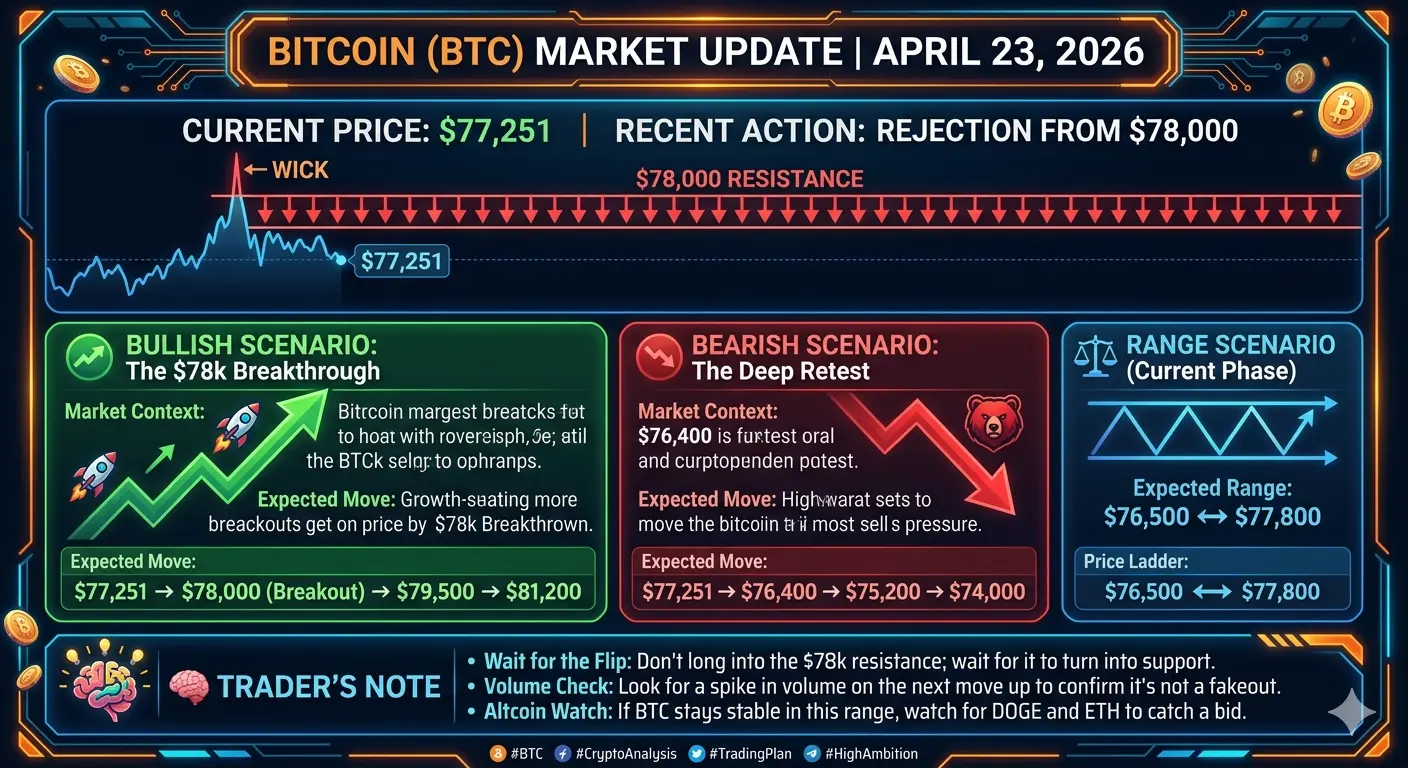
Bitcoin (BTC) Market Update | April 23, 2026

The market is showing some heavy resistance at the psychological $78,000 mark. After yesterday's touch and rejection, BTC is currently cooling off around $77,251.
This "wick" above $78k suggests that while the bulls have the strength to push high, sell pressure at that level is significant.

We are seeing a classic consolidation phase. As long as BTC holds above the $76,500 support, the structure remains bullish for another attempt at $78k.
However, if we lose $76k, we might see a deeper retest of the $74,500 zone before a
BTC0.43%
DOGE2.04%
ETH0.05%
HighAmbition
#FirstTradeOfTheWeek
Bitcoin (BTC) Market Update | April 23, 2026

The market is showing some heavy resistance at the psychological $78,000 mark. After yesterday's touch and rejection, BTC is currently cooling off around $77,251.
This "wick" above $78k suggests that while the bulls have the strength to push high, sell pressure at that level is significant.

We are seeing a classic consolidation phase. As long as BTC holds above the $76,500 support, the structure remains bullish for another attempt at $78k.
However, if we lose $76k, we might see a deeper retest of the $74,500 zone before any further upside.

🚀 BTC Technical Briefing | April 2026
​💰 Current Price: $77,251
📉 Recent Action: Rejection from $78,000

🟢 BULLISH SCENARIO: The $78k Breakthrough
​Market Context: * High volume consolidation below resistance.
​Positive funding rates and spot buying interest.
Expected Move:
​$77,251 → $78,000 (Breakout) → $79,500 → $81,200
Key Support: $76,500
Trigger: 4H Candle close above $78,200.

🔴 BEARISH SCENARIO: The Deep Retest
​Market Context:
​Exhaustion at the local top.
​BTC Dominance slipping as liquidity moves to Alts.
Expected Move:
​$77,251 → $76,400 → $75,200 → $74,000
Key Resistance: $78,000
Trigger: Breakdown below $76,000.

⚖️ RANGE SCENARIO (Current Phase)
​Expected Range: $76,500 ↔ $77,800
Behavior: * Side-ways movement to reset indicators (RSI/MACD).
​"Stop-hunting" both long and short positions.
​Best for scalping the extremes.

🧠 TRADER’S NOTE
​Wait for the Flip: Don't long into the $78k resistance; wait for it to turn into support.
​Volume Check: Look for a spike in volume on the next move up to confirm it's not a fakeout.
​Altcoin Watch: If BTC stays stable in this range, watch for DOGE and ETH to catch a bid.
repost-content-media
  • Reward
  • Comment
  • Repost
  • Share
#BTCMarketAnalysis
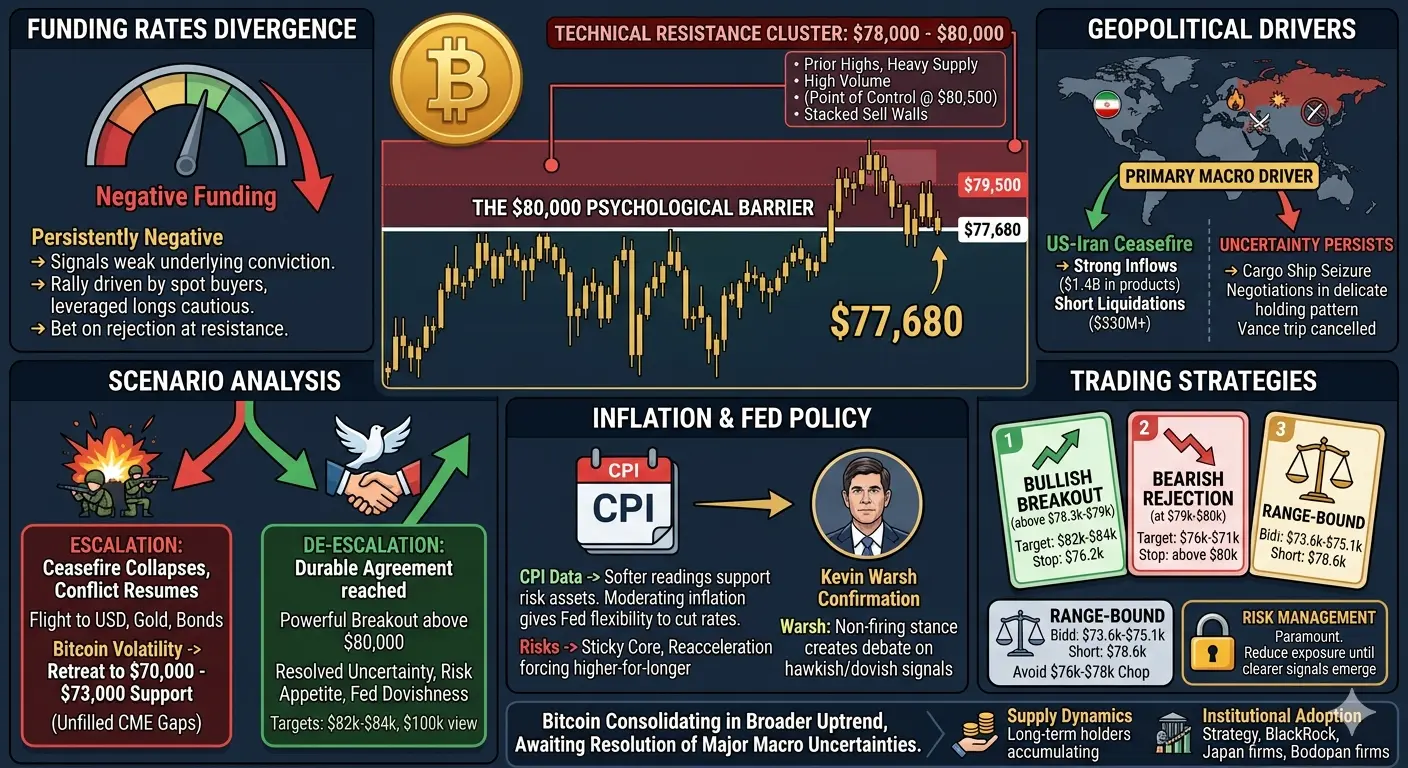
Bitcoin is currently trading around $77,680, after recently touching highs near $79,500 and failing to break the major $80,000 psychological resistance. This rejection is not just a simple pullback; it reflects a combination of technical pressure, liquidity barriers, and cautious market sentiment that is shaping the current market structure.
The $78,000 to $80,000 zone has become one of the most important resistance areas in the market right now. This region aligns with previous highs formed in late January and early February, which means a large number of traders previousl
BTC0.43%
HighAmbition
#BTCMarketAnalysis
Bitcoin is currently trading around $77,680, after recently touching highs near $79,500 and failing to break the major $80,000 psychological resistance. This rejection is not just a simple pullback; it reflects a combination of technical pressure, liquidity barriers, and cautious market sentiment that is shaping the current market structure.
The $78,000 to $80,000 zone has become one of the most important resistance areas in the market right now. This region aligns with previous highs formed in late January and early February, which means a large number of traders previously entered positions here. As price revisits this zone, many of those participants are exiting their positions at breakeven or small profit, creating strong selling pressure. At the same time, volume profile analysis shows the Point of Control (POC) near $80,500, meaning this is where the highest trading activity occurred historically. Such levels often act as magnets for price but also require strong momentum to break through.
Liquidity data further strengthens this bearish pressure in the short term. There are heavy sell walls stacked between $80,000 and $84,000, indicating that even if Bitcoin manages to break $80K, it will not be an easy continuation. Without sustained institutional inflows and strong spot demand, any breakout attempt may face quick rejection.
Another critical signal comes from the derivatives market. Funding rates remain negative despite price moving upward toward $79K. This is an unusual divergence because, in strong bullish trends, funding typically turns positive. The current situation suggests that spot buyers are pushing the price up, while leveraged traders are either cautious or actively shorting the market. This creates a fragile rally structure where upward movement lacks strong conviction and can reverse quickly if buying pressure slows down.
At the macro level, geopolitical developments have become the dominant driver of Bitcoin’s recent price action. The temporary ceasefire between the United States and Iran triggered a strong risk-on move, pushing Bitcoin from the low $70,000 range to nearly $79,000 within a short time. This move was supported by approximately $1.4 billion in institutional inflows, highlighting how quickly sentiment can shift when global tensions ease. Additionally, the rally caused over $330 million in short liquidations, creating a chain reaction of forced buying that accelerated the upward move.
However, the situation remains unstable. Reports of renewed tensions, including the seizure of an Iranian cargo vessel, caused Bitcoin to briefly fall below $74,000, showing how sensitive the market currently is to geopolitical headlines. While temporary stability has returned, the lack of a permanent resolution keeps uncertainty high.
🔍 Scenario Breakdown:
🔴 Bearish Scenario (Geopolitical Escalation):
If tensions rise again or the ceasefire collapses, markets may shift into risk-off mode. In this case, Bitcoin could drop toward $73,000 – $70,000, especially as CME gaps remain open in that range. Initially, BTC may move in correlation with equities to the downside before stabilizing.
🟢 Bullish Scenario (De-escalation & Stability):
If peace talks progress and uncertainty fades, Bitcoin could break above $80,000 with strong momentum. This could open the path toward $82,000 – $84,000, and in an extended rally, the $90,000 – $100,000 range could come into focus as institutional demand strengthens.
📊 Inflation & Federal Reserve Influence:
Recent CPI data has shown signs of easing inflation, which supports risk assets like Bitcoin. Lower inflation increases the likelihood of future interest rate cuts, which improves liquidity conditions and supports bullish momentum.
However, risks still remain. Core inflation is still relatively sticky, and any unexpected increase could push the Federal Reserve to maintain higher interest rates for longer. This would reduce liquidity and potentially slow down Bitcoin’s upward movement.
In addition, discussions around potential Federal Reserve leadership changes and policy direction are adding another layer of uncertainty that traders must monitor closely.
📈 Trading Strategies:
Bullish Breakout Strategy:
Wait for a confirmed breakout above $78,300 – $79,000 with strong volume and rising open interest.
Targets: $80K → $82K → $84K
Stop Loss: Below $76,200 or $75,500
Confirmation: Funding turning positive + strong spot demand
Bearish Rejection Strategy:
Look for rejection signals near $79K – $80K (e.g., long wicks, bearish divergence).
Targets: $76K → $73.5K → $71K
Stop Loss: Above $80K
Range Trading Strategy:
Market is currently range-bound, so traders can:
Buy near $75,100 – $73,600
Sell near $78,600+
Avoid $76K – $78K zone due to choppy movement
📦 On-Chain & Market Structure:
On-chain data continues to show strong long-term confidence:
+303,000 BTC accumulated by long-term holders
-290,000 BTC reduced by short-term holders
This indicates a shift from weak hands to strong hands, which is typically a bullish sign for the long-term trend.
Institutional participation is also increasing, with major players and corporations continuing to accumulate Bitcoin, reinforcing the broader bullish structure.
⚠️ Risk Management:
The current market environment is highly sensitive and driven by external factors. Traders should:
Use proper position sizing
Avoid over-leveraging
Wait for confirmation before entering trades
Stay updated on geopolitical and macro developments
🔮 Final Outlook:
Bitcoin remains in a larger uptrend, but is currently facing a strong resistance barrier. The $80,000 level is the key trigger point for the next major move.
A strong breakout above this level could lead to rapid upside expansion, while repeated rejection may push price back toward the $70,000 support region.
In this phase, patience and discipline are more important than aggressive trading. The market is offering opportunities, but only to those who can manage risk and adapt quickly to changing conditions.
repost-content-media
  • Reward
  • Comment
  • Repost
  • Share
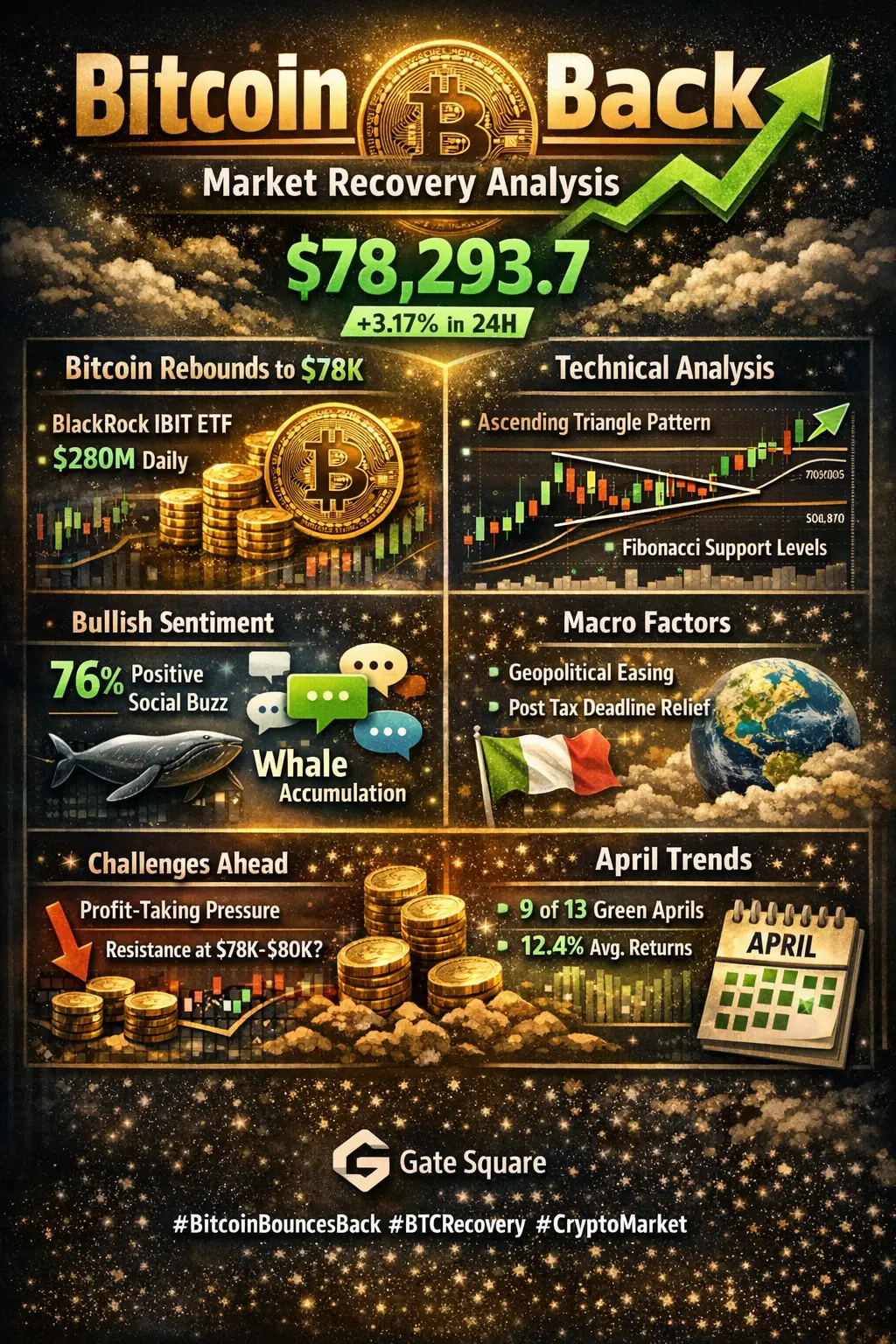
#BitcoinBouncesBack
Bitcoin has staged an impressive recovery in recent days, rebounding from the mid-$70,000 range to consolidate around $78,390. This price action reflects a classic risk-asset repricing pattern driven by a complex interplay of geopolitical developments, institutional flows, and macroeconomic signals.
The Price Journey: From $79K to $76K and Back to $78K
Bitcoin's recent volatility highlights shifting market sentiment. The cryptocurrency initially surged toward $79,000, fueled by optimism surrounding the Iran-Israel ceasefire and the reopening of the Strait of Hormuz. Howeve
BTC0.43%
HighAmbition
#BitcoinBouncesBack
Bitcoin has staged an impressive recovery in recent days, rebounding from the mid-$70,000 range to consolidate around $78,390. This price action reflects a classic risk-asset repricing pattern driven by a complex interplay of geopolitical developments, institutional flows, and macroeconomic signals.
The Price Journey: From $79K to $76K and Back to $78K
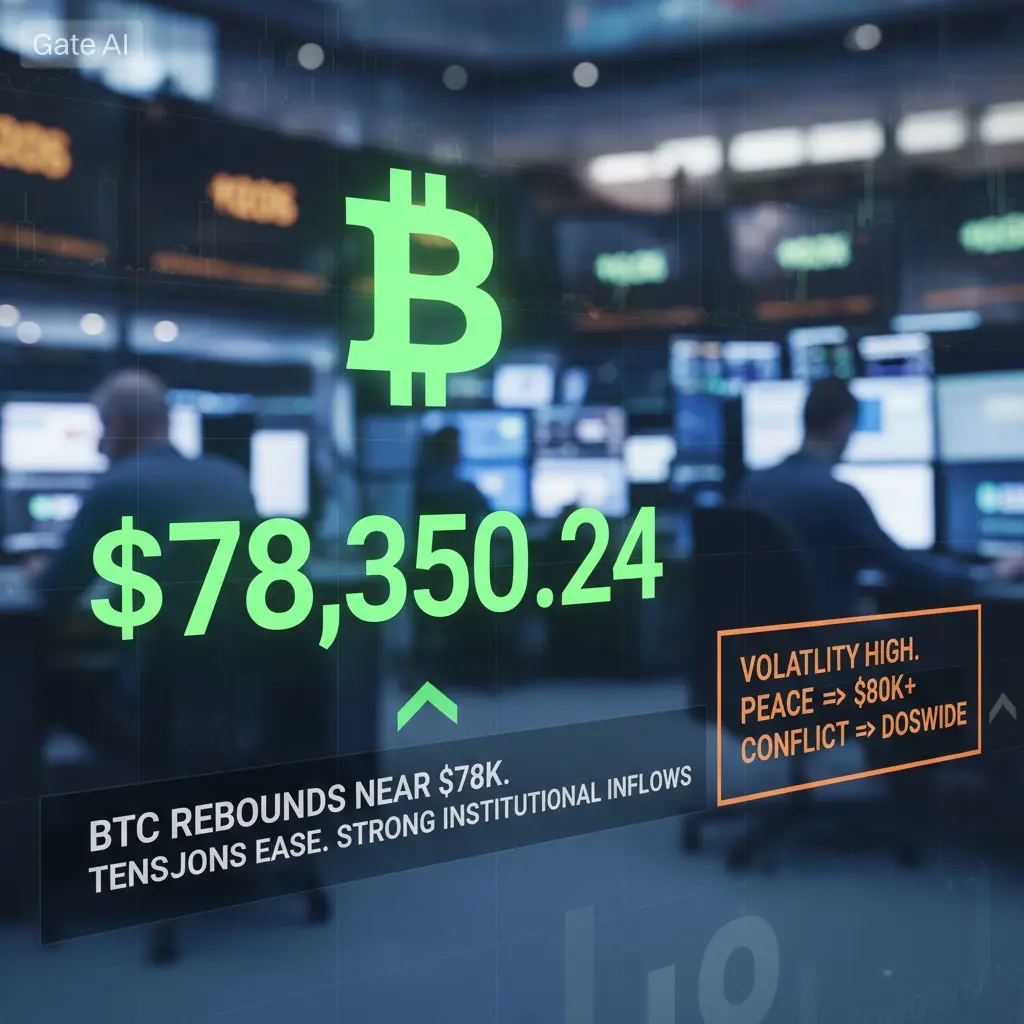
Bitcoin's recent volatility highlights shifting market sentiment. The cryptocurrency initially surged toward $79,000, fueled by optimism surrounding the Iran-Israel ceasefire and the reopening of the Strait of Hormuz. However, the rally proved short-lived as prices retreated to approximately $76,000, reflecting skepticism about the durability of the peace agreement. The subsequent stabilization around $78,390 suggests cautious optimism among traders.
This price pattern reveals key dynamics. The spike to $79,000 represented a relief rally as investors priced in reduced geopolitical risk. The pullback to $76,000 showed unwillingness to chase higher prices without confirmation of sustained de-escalation. The current consolidation reflects a balance between buyers and sellers.
The Strait of Hormuz Crisis: Iran's Calculated Moves
The situation in the Strait of Hormuz has been the primary driver of Bitcoin's volatility. This narrow waterway handles a significant portion of global oil shipments, making it a critical chokepoint. When Iran effectively restricted the strait following military tensions, oil prices surged sharply, triggering risk-off sentiment across markets.
Recent developments have been instructive. On April 17, Iran announced that the strait was "open" to commercial shipping, causing oil prices to drop and Bitcoin to move above $77,000. However, this proved temporary, as reports soon emerged of tanker incidents and renewed threats.
The current situation remains tense. Iran has shown a pattern of announcing openings followed by aggressive actions, creating volatility. Oil prices have reacted accordingly, rebounding after initial drops. This suggests the strait is being used as leverage in negotiations, adding uncertainty for markets.
Ceasefire Prospects: Two Scenarios for Bitcoin
Markets are currently pricing two key scenarios:
1. Ceasefire Success
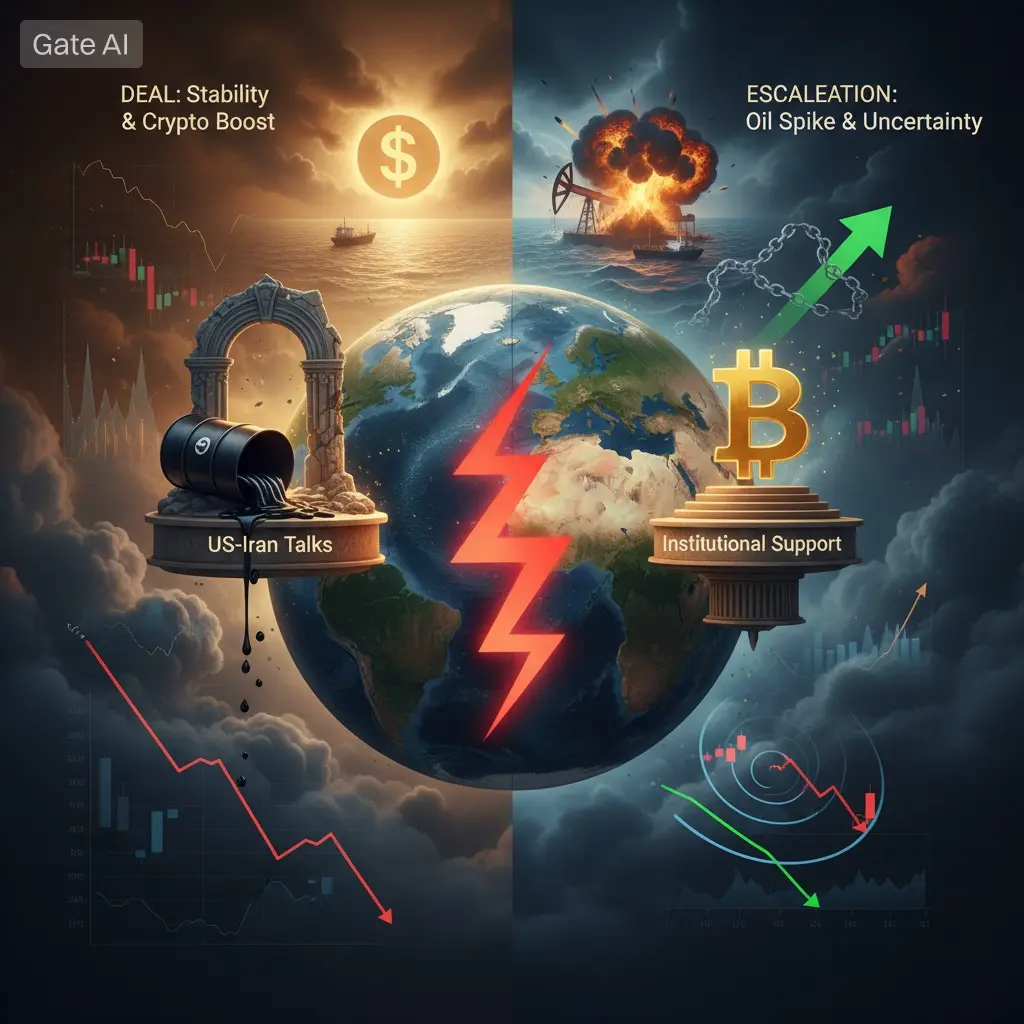
If tensions ease and the strait remains open, Bitcoin could gain momentum and test the $80,000 level. Reduced geopolitical risk would support a risk-on environment. However, a “sell-the-news” reaction could limit upside after initial gains.
2. Continued Conflict
If tensions escalate, oil prices may remain elevated, fueling inflation concerns and limiting monetary easing. In this case, Bitcoin could retest the $72,000–$74,000 support zone.
Currently, the market appears to be pricing a middle ground, explaining consolidation near $78,000.
CPI Data and Macro Implications
Inflation remains a key factor, with CPI around 3.3% year-over-year. Elevated energy costs linked to geopolitical tensions continue to influence inflation trends.
Higher inflation → lower chances of rate cuts → pressure on BTC
Lower inflation → increased easing expectations → support for BTC
If oil prices stabilize, it could create a favorable macro environment. However, persistent core inflation remains a constraint.
Institutional Flows and On-Chain Dynamics
Institutional activity continues to support Bitcoin:
Strong ETF inflows
Declining exchange reserves
Increased whale accumulation
This reflects a tightening supply environment, supporting long-term bullish structure.
On-chain signals are also constructive:
BTC holding above key realized levels
Positive institutional demand indicators
Stable derivatives positioning
However, rising profit-taking near resistance suggests caution in the short term.
Market Sentiment
Market sentiment remains cautiously bullish.
Traders are focused on key levels:
Above $80K → potential breakout
Below $78K → risk of pullback
This reflects a market waiting for confirmation before taking strong directional positions.
Conclusion: Navigating Uncertainty
Bitcoin’s recovery to $78,390 highlights resilience amid global uncertainty. Institutional support and improving structure provide a strong foundation, but short-term direction remains tied to geopolitical developments and inflation trends.
If tensions ease, Bitcoin could challenge the $80,000 level. If risks increase, a retest of lower support remains possible. In either case, volatility is likely to persist, making risk management essential.
repost-content-media
  • Reward
  • Comment
  • Repost
  • Share
#USIranTalksProgress .
US-Iran Talks Progress: Current Situation and Market Impact Analysis
The negotiations between the United States and Iran have entered a critical phase in April 2026, with both sides sending mixed signals about the prospects for a lasting peace agreement. The talks, which began in April 2025 under the mediation of Oman and later moved to venues including Rome, Geneva, and most recently Islamabad, Pakistan, have faced numerous setbacks despite intermittent progress.
Current Status of Negotiations
The fourth round of negotiations in 2026 concluded on April 7, 2026, with bot
HighAmbition
#USIranTalksProgress .
US-Iran Talks Progress: Current Situation and Market Impact Analysis
The negotiations between the United States and Iran have entered a critical phase in April 2026, with both sides sending mixed signals about the prospects for a lasting peace agreement. The talks, which began in April 2025 under the mediation of Oman and later moved to venues including Rome, Geneva, and most recently Islamabad, Pakistan, have faced numerous setbacks despite intermittent progress.
Current Status of Negotiations
The fourth round of negotiations in 2026 concluded on April 7, 2026, with both sides agreeing to a two-week ceasefire. However, the situation remains volatile. President Trump has expressed confidence that a deal is close, stating that the US would acquire Iran's enriched uranium and that no money would exchange hands. Meanwhile, Iran's top negotiator Mohammad Bagher Ghalibaf has indicated progress in talks, though Iranian officials continue to criticize what they perceive as US violations of the ceasefire terms.
The core sticking points remain Iran's nuclear program and the US demand for comprehensive inspections. Iran has offered to build additional nuclear reactors as part of a broader agreement, but concerns persist about Tehran's commitment to transparency. The US naval blockade of Iranian ports continues despite Iran's announcement that the Strait of Hormuz is open for commercial shipping, creating confusion about the actual status of maritime traffic through this critical waterway.
Strait of Hormuz: The Geopolitical Flashpoint
The Strait of Hormuz remains the central flashpoint in this conflict. This narrow waterway handles approximately one-fifth of global crude oil shipments, making it one of the most strategically important maritime passages in the world. Iran has repeatedly opened and closed the strait in response to developments in negotiations, creating significant uncertainty for global energy markets.
The US has maintained a naval presence in the region, with reports indicating that American forces have turned back over 30 vessels attempting to violate the blockade. President Trump ordered the Navy to shoot and kill Iranian boats laying mines in the strait, raising tensions further. Iran has responded by seizing cargo ships and threatening retaliation against what it calls US armed piracy.
Iran's Strategic Calculations
Iran faces a complex strategic dilemma. On one hand, the country seeks relief from crippling economic sanctions and the US naval blockade that has severely impacted its oil exports. The war has pushed over 30 million Iranians back into poverty according to UN estimates, creating immense domestic pressure for a resolution. On the other hand, Iranian leadership remains deeply suspicious of US intentions, viewing the negotiations as potentially leading to a surrender rather than a genuine peace agreement.
The Iranian parliamentary speaker has criticized Trump for imposing what he calls a siege while claiming to seek peace, suggesting that Tehran views the US approach as contradictory. Iran's supreme leader has warned against enemy media operations, indicating concerns about internal stability during this sensitive period.
Bitcoin Market Analysis: Current Status
Bitcoin has demonstrated remarkable resilience amid the geopolitical turbulence, though it has experienced significant volatility. The cryptocurrency reached a monthly high of approximately $78,922 following the announcement of the ceasefire extension, representing a rally of about 10.4% in 24 hours. However, the price has since pulled back to around $74,000-$76,000 range as tensions flared again.
The current Bitcoin price stands at approximately $78,408, with modest 24-hour gains of 0.09%. The cryptocurrency has shown a 7-day increase of about 3.6% and a 30-day surge of nearly 14%, indicating underlying strength despite geopolitical headwinds. The Fear and Greed Index has reached 63, suggesting growing optimism among market participants.
Institutional adoption continues to provide support for Bitcoin prices. Spot Bitcoin ETFs have logged six consecutive days of inflows, with BlackRock's IBIT ETF leading with substantial daily purchases. MicroStrategy acquired 34,164 BTC on April 20, 2026, demonstrating continued corporate confidence in the asset. Total crypto market capitalization has risen above $2.7 trillion, reflecting broad-based strength across digital assets.
Oil Market Dynamics: XTI and Brent Prices
The oil market has experienced extreme volatility due to the Strait of Hormuz disruptions. Brent crude oil prices have surged above $95 per barrel, with some analysts predicting prices could reach $130 per barrel if disruptions continue through June 2026. West Texas Intermediate (WTI) crude is trading around $93-$96 per barrel, representing a significant premium over pre-conflict levels.
Citi analysts have outlined three scenarios for oil prices based on Strait of Hormuz developments. In the best-case scenario where ceasefire extension is signed and flows gradually resume, prices could stabilize around current levels. The worst-case scenario involves prolonged disruption lasting eight to nine weeks, which would push crude inventories to record lows and maintain prices around $130 per barrel until the third quarter.
The US Energy Information Administration has raised its 2026 oil price forecast significantly due to the supply disruptions. Major oil companies including Chevron and Shell have warned about the physical manifestations of the strait closure working their way through global supply chains. The impact extends beyond crude oil to affect fertilizer costs, transportation, and virtually every production chain worldwide.
Interconnected Market Dynamics
The relationship between geopolitical developments, oil prices, and cryptocurrency markets has become increasingly complex. Bitcoin has shown a decoupling from traditional risk assets, with smaller sell-offs during each Iran-related shock suggesting that crypto may have largely priced in geopolitical tail risk. This resilience contrasts with the more pronounced reactions in equity markets and oil prices.
Arthur Hayes and other prominent crypto analysts have suggested that the Federal Reserve may eventually need to print money to fund the Iran war, which could drive Bitcoin higher as a hedge against monetary expansion. Institutional investors appear to be actively using Bitcoin as protection against the contagion effects of the geopolitical crisis, with BlackRock and MicroStrategy engaged in what some observers describe as an arms race for remaining Bitcoin supply.
Potential Market Scenarios
If the ceasefire proves successful and a comprehensive agreement is reached, several market outcomes appear likely. Bitcoin could experience a significant rally as geopolitical risk premium dissipates, potentially testing the $80,000 level and beyond. The cryptocurrency has shown resilience during previous de-escalations, and a lasting peace agreement could trigger renewed institutional interest.
Oil prices would likely decline substantially from current elevated levels, potentially returning to the $70-$80 per barrel range if Strait of Hormuz traffic normalizes. This would provide relief to global inflation pressures and support equity markets. Traditional safe-haven assets like gold and the US dollar might face headwinds as risk appetite returns.
Conversely, if negotiations fail and military escalation resumes, Bitcoin could face renewed selling pressure despite its recent resilience. Oil prices would likely spike above $100 per barrel and potentially reach the $130 level predicted by Citi analysts. Global equity markets would face significant headwinds, and recession probabilities would increase substantially.
Conclusion
The US-Iran negotiations represent a critical juncture for global markets. While both sides have expressed optimism about reaching an agreement, substantial obstacles remain. The Strait of Hormuz continues to serve as both a bargaining chip and a potential trigger for wider conflict. Bitcoin has demonstrated unexpected resilience amid the turmoil, though its ability to maintain current levels depends heavily on the negotiation outcome. Oil markets remain extremely sensitive to developments, with prices reflecting significant risk premium that could unwind quickly if peace is achieved or intensify further if conflict escalates. Investors across all asset classes are watching these negotiations with intense interest, understanding that the outcome will have profound implications for global economic stability in the months ahead.
repost-content-media
  • Reward
  • Comment
  • Repost
  • Share
#WarshHearingSparksDebate
Warsh Hearing Sparks Debate: Crypto's Moment at the Fed
The Senate confirmation hearing for Kevin Warsh as Federal Reserve Chair has ignited intense debate across financial markets and the cryptocurrency ecosystem. This three-hour session before the Senate Banking Committee represents a watershed moment where digital assets took center stage in America's monetary policy discourse.
Crypto Takes the Spotlight
Warsh delivered a landmark statement that resonated throughout the hearing: "Digital assets are already part of the fabric of our financial services industry in t
BLAST0.81%
BTC0.43%
BlackRiderCryptoLord
#WarshHearingSparksDebate
Warsh Hearing Sparks Debate: Crypto's Moment at the Fed
The Senate confirmation hearing for Kevin Warsh as Federal Reserve Chair has ignited intense debate across financial markets and the cryptocurrency ecosystem. This three-hour session before the Senate Banking Committee represents a watershed moment where digital assets took center stage in America's monetary policy discourse.
Crypto Takes the Spotlight
Warsh delivered a landmark statement that resonated throughout the hearing: "Digital assets are already part of the fabric of our financial services industry in the United States." This declaration signals a fundamental shift from previous Fed leadership that largely viewed crypto with skepticism or indifference. His acknowledgment that blockchain technology has woven itself into the nation's financial infrastructure marks the most explicit Fed Chair nominee endorsement of crypto's legitimacy to date.
The nominee's personal portfolio adds compelling context to this stance. Financial disclosures reveal holdings across more than 30 crypto assets spanning DeFi protocols, Layer 1 networks, and scaling solutions including Blast. While Warsh has committed to divesting these positions upon confirmation, the breadth of his investments demonstrates sophisticated understanding of the ecosystem rather than casual speculation.
The CBDC Opposition
Warsh's unequivocal rejection of a Federal Reserve Central Bank Digital Currency stands as his most consequential policy position. He asserted the Fed lacks legal authority to issue a CBDC and characterized such a move as "bad policy choice." This stance aligns with Republican concerns about government surveillance and financial privacy while potentially clearing the path for private stablecoins and decentralized alternatives to flourish without federal competition.
Partisan Divide on Display
Senator Elizabeth Warren emerged as the hearing's most vocal critic, raising alarms about Warsh's independence from the Trump administration. Her "sock puppet" characterization underscored Democratic fears that the nominee might compromise Fed autonomy to advance political agendas. Warren also scrutinized his pre-2008 crisis advocacy for derivatives and questioned potential conflicts arising from his crypto portfolio.
Warsh firmly rejected these characterizations, emphasizing his commitment to Fed independence and denying any external pressure on monetary policy decisions. Senator John Kennedy countered Warren's criticism by highlighting perceived hypocrisy regarding bank bailout positions, illustrating the hearing's sharp partisan undertones.
Market Implications
Bitcoin maintained stability around $75,000 during and following the hearing, with market participants interpreting Warsh's testimony as net-positive for risk assets. His characterization of Bitcoin as a "policy cop" that helps inform policymakers when they are doing things right or wrong suggests a framework where crypto serves as a real-time indicator of monetary policy effectiveness.
The hearing's broader significance extends beyond immediate price action. Warsh's potential confirmation would make him the first Fed Chair with direct venture capital exposure to cryptocurrency projects. His stated fluency in stablecoins, tokenized real-world assets, and AI-driven blockchain applications positions him to shape regulatory frameworks that could determine how traditional finance integrates with decentralized systems.
Confirmation Challenges Remain
Despite emerging with his policy framework intact, Warsh faces procedural obstacles. Senator Thom Tillis has indicated willingness to block the nomination pending resolution of investigations into current Fed Chair Jerome Powell. Ethics concerns surrounding his financial disclosures and the timeline for divestiture may also complicate confirmation prospects.
The hearing represents more than a personnel decision—it encapsulates the ongoing struggle to define cryptocurrency's role within the world's most influential central bank. Whether Warsh secures confirmation or not, his testimony has permanently elevated crypto from fringe technology to legitimate subject of monetary policy debate.
For traders and investors, the hearing reinforces a narrative shift where digital assets are increasingly viewed as established financial instruments rather than speculative experiments. The path forward likely involves continued regulatory clarity, potential integration of blockchain technology into Fed operations, and an acknowledgment that the future of money may look fundamentally different from its past.
repost-content-media
  • Reward
  • Comment
  • Repost
  • Share
#Gate13thAnniversaryLive
Gate 13th Anniversary Live: A Month-Long Celebration of Innovation and Community
Gate.io marks its 13th anniversary with an unprecedented global celebration running through April and May 2026, cementing its position as one of the longest-standing cryptocurrency exchanges in the industry. Founded in 2013 by Dr. Han Lin, Gate has grown from a niche trading platform to serving over 50 million users worldwide, and this milestone event reflects both its heritage and forward-looking vision.
The Live Carnival Experience
At the heart of the anniversary is the Gate 13th Annive
BlackRiderCryptoLord
#Gate13thAnniversaryLive
Gate 13th Anniversary Live: A Month-Long Celebration of Innovation and Community
Gate.io marks its 13th anniversary with an unprecedented global celebration running through April and May 2026, cementing its position as one of the longest-standing cryptocurrency exchanges in the industry. Founded in 2013 by Dr. Han Lin, Gate has grown from a niche trading platform to serving over 50 million users worldwide, and this milestone event reflects both its heritage and forward-looking vision.
The Live Carnival Experience
At the heart of the anniversary is the Gate 13th Anniversary Live Carnival, launched on April 20 and continuing until May 20 UTC. This immersive streaming event transforms passive viewing into active earning, offering participants multiple reward streams. Streamers and viewers alike can earn up to $100 in bonuses, receive limited-edition anniversary gift boxes, and benefit from homepage exposure and traffic boosts for content creators. Daily red packet drops and check-in bonuses ensure consistent engagement throughout the month-long celebration.
The Live Banquet Event on April 20 brought together industry leaders at Rosewood Hong Kong for a gala discussion on market trends, streamed live at 20:00 UTC+8. This exclusive gathering featured insights from key figures in the blockchain space, with replays available for those who missed the live broadcast.
WCTC Season 8: The Trading Competition Returns
The World Crypto Trading Competition Season 8 forms a cornerstone of the anniversary celebration, featuring a prize pool of up to 8 million USDT. This year's tournament introduces multi-dimensional upgrades to its format, incorporating team battles alongside individual rankings to enhance user engagement. The competition reflects Gate's commitment to fostering trading excellence while rewarding community participation through richer interactive mechanisms.
Global Offline Events
Beyond digital experiences, Gate has orchestrated significant offline activations. The 13th Anniversary Blue Carpet Ceremony at K11 MUSEA in Hong Kong featured the unveiling of an F1 Red Bull team display car, symbolizing Gate's partnership with high-performance racing. The Racing the Future outdoor exhibition runs from April 18-24 at the K11 MUSEA waterfront promenade, offering visitors an immersive brand experience. Additional global events are planned throughout the anniversary period.
Activity Hub and Engagement Rewards
The dedicated Activity Hub serves as the central coordination point for anniversary participation, hosting daily quizzes, time capsule features, and task-based rewards. Users can access this through the platform's activities portal, with continuous updates ensuring fresh engagement opportunities throughout the celebration period.
ETF Special Event
Running until May 27, the ETF Special Event offers up to 13x reward boosts with a prize pool of 80,000 USDT. This initiative highlights Gate's expanding product ecosystem beyond spot trading, catering to users seeking leveraged exposure to cryptocurrency markets through regulated exchange-traded products.
CEO's Anniversary Reflection
Dr. Han Lin's anniversary letter to the community reflects on Gate's journey from a small startup to a global platform serving millions. The message emphasizes the company's commitment to security, innovation, and user-centric development as core values that have sustained the platform through multiple market cycles over thirteen years.
How to Participate
Users can engage with the anniversary celebration through multiple channels: the Gate Live platform for streaming rewards, the WCTC S8 trading competition for active traders, the Activity Hub for daily tasks and quizzes, and official Gate social channels for real-time updates. The Live Carnival signup is accessible through official Gate communication channels.
This 13th anniversary represents more than a corporate milestone; it demonstrates Gate's sustained relevance in an industry characterized by rapid evolution and intense competition. As April marks Gate Anniversary Month, the platform continues to roll out new initiatives, making this an opportune time for both existing users and newcomers to explore the ecosystem's offerings.
repost-content-media
  • Reward
  • Comment
  • Repost
  • Share
#SpaceXBids$60BforCursor
SpaceX Secures $60B Acquisition Option for Cursor AI: A Strategic Power Play in the Developer Tools Market
SpaceX has officially announced a landmark partnership with Cursor AI, the AI-powered code editor that has become the fastest-growing SaaS startup in history, including an exclusive option to acquire the company for $60 billion later this year. This deal represents one of the most significant strategic moves in the AI development tools space and signals SpaceX's aggressive expansion beyond aerospace into artificial intelligence infrastructure.
The Deal Structure
XAI2.34%
BlackRiderCryptoLord
#SpaceXBids$60BforCursor
SpaceX Secures $60B Acquisition Option for Cursor AI: A Strategic Power Play in the Developer Tools Market
SpaceX has officially announced a landmark partnership with Cursor AI, the AI-powered code editor that has become the fastest-growing SaaS startup in history, including an exclusive option to acquire the company for $60 billion later this year. This deal represents one of the most significant strategic moves in the AI development tools space and signals SpaceX's aggressive expansion beyond aerospace into artificial intelligence infrastructure.
The Deal Structure
The agreement, announced on April 21, 2026, grants SpaceX the right to acquire Cursor for $60 billion or alternatively pay $10 billion for their collaborative work together. This is not a traditional acquisition bid but rather a strategic option that gives SpaceX flexibility while securing Cursor's cutting-edge technology and elite developer user base. The $60 billion valuation represents a 20% premium over Cursor's anticipated $50 billion valuation in an upcoming private fundraising round.
Why This Matters: The Strategic Rationale
SpaceX gains access to Cursor's rapidly growing platform, which has achieved unprecedented growth from $1 million ARR in December 2023 to $2 billion ARR by February 2026, with projections reaching $6 billion by year-end. Cursor has become the preferred AI coding assistant for expert software engineers, creating a powerful distribution channel for AI models.
In return, Cursor receives access to SpaceX's Colossus supercomputer, featuring approximately one million H100 GPU equivalents, enabling the training of world-class coding AI models. This computational advantage addresses a critical gap, as neither Cursor nor xAI currently possesses proprietary models matching those from Anthropic and OpenAI.
The Bigger Picture: SpaceX's AI Ambitions
This deal aligns perfectly with Elon Musk's broader AI strategy. In February 2026, SpaceX acquired xAI in a transaction valuing the combined entity at $1.25 trillion. The Cursor partnership completes the vertical integration: compute infrastructure (Colossus) through models (Grok/xAI) to developer tools (Cursor). This positions SpaceX/xAI to challenge OpenAI, Anthropic, and Google in the AI coding assistant market.
Market Implications
The timing is strategic as SpaceX prepares for its anticipated IPO, potentially one of the largest in history. The Cursor option adds significant value to SpaceX's technology portfolio and demonstrates its evolution into a diversified technology conglomerate. For the AI industry, this signals intensifying competition for developer mindshare and the increasing importance of owning the integrated development environment (IDE) layer.
Critical Considerations
While the $60 billion valuation has drawn skepticism from some analysts who consider it steep, others argue the strategic value of owning the IDE moat justifies the premium. The deal's success depends on execution: integrating Cursor's product with SpaceX's computational resources while maintaining the startup's rapid innovation pace.
What to Watch
Market participants should monitor whether SpaceX exercises the acquisition option before or after its IPO, how quickly the combined entity can launch competitive AI coding models, and whether this triggers consolidation responses from competitors like Microsoft (GitHub Copilot) and Anthropic.
This partnership exemplifies the AI industry's maturation, where compute power, distribution, and model capabilities must converge for market leadership. SpaceX is positioning itself at the intersection of all three.
repost-content-media
  • Reward
  • Comment
  • Repost
  • Share
#WCTCTradingChallengeShare8MUSDT
The World Crypto Trading Championship has officially launched with an unprecedented8 million USDT prize pool, marking one of the most significant trading competitions in the cryptocurrency space this quarter. This briefing provides essential intelligence for participants seeking competitive advantage.
Market Context and Strategic Environment
Bitcoin is currently trading at $78,205, posting a solid24-hour gain of2.19%, with intraday highs reaching $78,432. Ethereum demonstrates even stronger momentum at $2,391, up2.94% with peaks at $2,412. The Fear and Greed I
BTC0.43%
ETH0.05%
ARB3.84%
BlackRiderCryptoLord
#WCTCTradingChallengeShare8MUSDT
The World Crypto Trading Championship has officially launched with an unprecedented8 million USDT prize pool, marking one of the most significant trading competitions in the cryptocurrency space this quarter. This briefing provides essential intelligence for participants seeking competitive advantage.
Market Context and Strategic Environment
Bitcoin is currently trading at $78,205, posting a solid24-hour gain of2.19%, with intraday highs reaching $78,432. Ethereum demonstrates even stronger momentum at $2,391, up2.94% with peaks at $2,412. The Fear and Greed Index sits at32, indicating cautious market sentiment that typically precedes significant volatility windows ideal for active trading strategies.
Institutional accumulation continues as a dominant narrative. Strategy, led by Michael Saylor, executed its third-largest Bitcoin purchase on record last week, acquiring34,164 BTC worth $2.54 billion, bringing total holdings above800,000 BTC. This institutional confidence provides underlying support for BTC price action throughout the competition period. Morgan Stanley, Coinbase, and BlackRock maintain aggressive accumulation postures, positioning Bitcoin as a geopolitical hedge and inflation protection instrument.
Exchange reserves have declined for seven consecutive weeks to2.681 million BTC, signaling systematic long-term holder accumulation. The Coinbase premium index has remained positive for twelve straight days, confirming renewed American market buying pressure. These supply dynamics create favorable conditions for upward price movements during high-volume trading events like the championship.
Critical Risk Factors and Volatility Catalysts
The Kelp DAO exploit represents the most significant security event of the past week, with $292 million stolen from the cross-chain bridge protocol. The attacker has already laundered approximately $80 million through THORChain and other privacy protocols. Arbitrum Security Council successfully froze $71 million in stolen ETH, demonstrating improved emergency response capabilities across Layer2 ecosystems.
This incident has triggered broader DeFi contagion concerns. Aave's total value locked dropped by $8 billion following the exploit, with sector-wide DeFi losses exceeding $600 million in recent weeks. Total value locked across decentralized finance has fallen to $82.4 billion, its lowest level in twelve months and a25% decline from January2026 levels.
Privacy protocol Umbra has voluntarily shut its front-end interface to impede further laundering, while LayerZero attributes the exploit to inadequate decentralized verifier network configuration, with preliminary indicators pointing to North Korean threat actor involvement. These security developments will likely influence market volatility and trader psychology throughout the competition.
Technical Developments and Infrastructure Updates
Bitcoin Core v31.0 introduces mempool optimization and enhanced privacy broadcasting capabilities, improving network efficiency. BOB Gateway advances native Bitcoin cross-chain trading infrastructure, while Bitcoin Vault now supports non-anchored BTC lending, expanding DeFi utility without custodial risk.
Ethereum's Q1 on-chain transaction volume exceeded200 million, establishing new records. Vitalik Buterin's five-year roadmap emphasizes quantum-resistant security and zero-knowledge verification upgrades. The Hong Kong ETH Hub inauguration signals accelerated Asia-Pacific developer ecosystem development. Staking participation has reached32% of total supply, an all-time high demonstrating network security and holder commitment.
Coinbase is advancing crypto-collateralized lending products, Tether continues USDT issuance expansion, and OCBC Bank has launched tokenized gold funds deployed on Ethereum, accelerating traditional finance and Web3 convergence.
Trading Strategy Considerations
The current market structure presents several tactical opportunities for championship participants. Reduced exchange reserves combined with institutional accumulation creates supply-constrained conditions favorable for breakout momentum plays. However, the elevated security risk environment demands rigorous position sizing and stop-loss discipline.
The Fear and Greed Index at32 suggests markets are not overheated, leaving room for sentiment-driven rallies. Historical patterns indicate that championship competitions often generate self-reinforcing volume spikes as participants execute aggressive strategies, potentially amplifying normal price movements.
Cross-chain bridge vulnerabilities have resurfaced as a primary risk vector. Traders should monitor protocol security announcements and be prepared for rapid position adjustments if additional exploits materialize. The THORChain laundering activity indicates sophisticated threat actors remain active, creating potential for further market disruption.
Competition Mechanics and Optimization
The8 million USDT prize pool rewards both absolute returns and risk-adjusted performance. Participants should balance aggressive position-taking with capital preservation, as drawdowns can eliminate contention for top-tier prizes. Volume-based scoring components incentivize consistent trading activity rather than single large bets.
Risk management becomes paramount given current market conditions. The combination of institutional accumulation trends and security event volatility creates a two-sided market where disciplined traders can capture significant alpha while protecting downside exposure.
Conclusion
The WCTC Trading Challenge arrives during a structurally constructive period for cryptocurrency markets, supported by institutional adoption, supply constraints, and technological advancement. However, the elevated security risk environment and DeFi contagion effects demand enhanced vigilance and adaptive risk management. Successful participants will combine aggressive tactical execution with rigorous defensive protocols, capitalizing on volatility while maintaining capital preservation discipline.
The championship format rewards sustained performance over pure speculation, making this environment particularly suitable for traders who can navigate the intersection of institutional momentum and security-driven market dislocations.
#WCTC #TradingChallenge #CryptoTrading
repost-content-media
  • Reward
  • Comment
  • Repost
  • Share
#MAGAHits$20MMarketCap
MAGA Hits $20M Market Cap - Briefing
The MAGA token has officially breached the $20 million market capitalization milestone, marking a significant achievement for this Solana-based meme coin. Originally launched as a "Make Aliens Great Again" narrative play, the project has evolved into one of the most discussed tokens in the current market cycle.
Price Action & Performance
MAGA has demonstrated remarkable resilience over the past 72 hours. The token briefly touched $30 million in market cap before experiencing a healthy pullback that was immediately absorbed by the mar
SOL0.19%
BlackRiderCryptoLord
#MAGAHits$20MMarketCap
MAGA Hits $20M Market Cap - Briefing
The MAGA token has officially breached the $20 million market capitalization milestone, marking a significant achievement for this Solana-based meme coin. Originally launched as a "Make Aliens Great Again" narrative play, the project has evolved into one of the most discussed tokens in the current market cycle.
Price Action & Performance
MAGA has demonstrated remarkable resilience over the past 72 hours. The token briefly touched $30 million in market cap before experiencing a healthy pullback that was immediately absorbed by the market. This price action indicates genuine buying interest rather than artificial pump-and-dump mechanics. Early entrants who positioned below $1 million market cap have seen returns exceeding 100x, yet the token continues to attract new capital inflows.
The 24-hour trading volume has remained elevated, suggesting sustained liquidity and active market participation. Community sentiment metrics show approximately 70% bullish bias among active participants, with influential traders calling for continued upside toward the $0.05 price target.
Narrative Catalyst
The recent surge correlates with renewed interest in extraterrestrial disclosure narratives. Following public statements regarding potential government transparency on UFO-related documentation, the "alien" meme sector has experienced a broad repricing. MAGA has emerged as the primary beneficiary of this thematic rotation, distinguishing itself from competitors through consistent community engagement and viral marketing campaigns.
Technical Analysis
Current price structure suggests consolidation in the $18-20 million range before the next leg higher. Support levels have held firm during minor corrections, with each dip attracting aggressive accumulation. The token exhibits characteristics of a maturing meme asset - reduced volatility relative to its earlier trading history while maintaining sufficient momentum for continued appreciation.
Risk Assessment
As with all meme coin investments, MAGA carries substantial volatility risk. The project lacks fundamental utility beyond its community-driven narrative. Liquidity conditions, while improved, remain thinner than established cryptocurrencies. Potential investors should allocate capital proportionally to their risk tolerance and implement appropriate position sizing strategies.
Market Outlook
The path to $100 million market cap represents a realistic near-term objective based on current momentum and community engagement metrics. However, meme coin cycles are notoriously unpredictable, and profit-taking at regular intervals remains prudent portfolio management.
#MAGA #MemeCoin #Solana #CryptoBriefing
repost-content-media
  • Reward
  • Comment
  • Repost
  • Share
#BitcoinBouncesBack
Bitcoin Bounces Back: Market Recovery Analysis
Bitcoin has staged an impressive recovery, reclaiming the $78,000 level with a solid 3.17% gain in the last 24 hours. The world's leading cryptocurrency is currently trading at $78,293.7, demonstrating resilience after a challenging Q1 2026 that saw a 23% decline.
Key Recovery Drivers
Institutional demand continues to fuel this bounce. BlackRock's IBIT ETF has been a major catalyst, with the asset manager reportedly accumulating approximately $280 million in Bitcoin daily during peak flow periods. U.S. spot Bitcoin ETFs record
BTC0.43%
BlackRiderCryptoLord
#BitcoinBouncesBack
Bitcoin Bounces Back: Market Recovery Analysis
Bitcoin has staged an impressive recovery, reclaiming the $78,000 level with a solid 3.17% gain in the last 24 hours. The world's leading cryptocurrency is currently trading at $78,293.7, demonstrating resilience after a challenging Q1 2026 that saw a 23% decline.
Key Recovery Drivers
Institutional demand continues to fuel this bounce. BlackRock's IBIT ETF has been a major catalyst, with the asset manager reportedly accumulating approximately $280 million in Bitcoin daily during peak flow periods. U.S. spot Bitcoin ETFs recorded approximately $1.9 billion in net inflows last week, marking the strongest five-day stretch since early February. Year-to-date 2026 inflows now approach $2.3 billion, fundamentally altering Bitcoin's supply dynamics.
Technical Analysis
The recovery shows strong technical foundations. Bitcoin has established support above $74,818 and is testing resistance near $78,489. The 15-minute timeframe reveals a bullish ascending triangle pattern with higher lows forming consistently. Volume has expanded significantly during upward moves, confirming genuine buying interest rather than speculative pumps.
The 4-hour chart displays a golden pocket retracement bounce, with price respecting key Fibonacci levels. Short-term moving averages have crossed above longer-term ones, signaling momentum shift. However, indicators like CCI and WR suggest the asset is approaching overbought territory on daily timeframes, warranting caution for fresh longs.
Market Sentiment
Social sentiment has flipped decisively bullish, with 76% of social media discussions reflecting positive outlook versus 12% negative. Discussion volume has increased 35% compared to the previous three-day period, indicating renewed retail interest. Whale accumulation remains at decade highs, providing underlying support even as short-term holders take profits.
Macro Context
Geopolitical developments have played a role in Bitcoin's recovery narrative. Easing tensions in certain global conflict zones have reduced risk-off sentiment, while ongoing U.S.-Iran discussions have positioned Bitcoin as a hedge against traditional market contagion effects. The April 15 U.S. tax deadline, historically associated with negative 30-day returns, has passed without major sell pressure.
Historical Perspective
April has traditionally been one of Bitcoin's strongest months, with 9 out of 13 Aprils since 2013 closing green and averaging 12.4% returns. While 2026 entered April following its worst Q1 since 2018, this historical pattern suggests the recovery may have room to extend.
Challenges Ahead
Despite the bounce, obstacles remain. Short-term holder exchange inflows reached 65,000 BTC within 24 hours as prices hit $75,000, indicating profit-taking pressure. Large deposits surged from below 10% to significantly higher levels, suggesting some holders are using the recovery to exit positions. The market must absorb this supply to sustain higher prices.
Outlook
The path forward depends on several factors: continued institutional inflow sustainability, macroeconomic conditions, and Bitcoin's ability to consolidate above $78,000. A decisive break above $80,000 could open the door to retest all-time highs, while failure to hold current support may see a retest of $72,000-$74,000 range.
For traders, this recovery presents both opportunity and risk. The trend has shifted bullish in the short term, but overbought conditions suggest patience for better entry points may be prudent. Risk management remains essential as volatility persists.
#BitcoinBouncesBack #BTCRecovery
repost-content-media
  • Reward
  • Comment
  • Repost
  • Share
#USIranTalksProgress
US-Iran Nuclear Talks Progress: A Geopolitical Chess Game
The latest round of negotiations between the United States and Iran marks a critical juncture in Middle Eastern diplomacy, with both sides reporting constructive dialogue while fundamental disagreements persist over the future of Tehran's nuclear program and regional security arrangements.
Current Negotiation Status
The third round of high-level talks concluded on April 26, 2025, in Muscat, Oman, following two previous rounds in Oman (April 12) and Rome (April 19). Iranian Foreign Minister Abbas Araghchi described
BlackRiderCryptoLord
#USIranTalksProgress
US-Iran Nuclear Talks Progress: A Geopolitical Chess Game
The latest round of negotiations between the United States and Iran marks a critical juncture in Middle Eastern diplomacy, with both sides reporting constructive dialogue while fundamental disagreements persist over the future of Tehran's nuclear program and regional security arrangements.
Current Negotiation Status
The third round of high-level talks concluded on April 26, 2025, in Muscat, Oman, following two previous rounds in Oman (April 12) and Rome (April 19). Iranian Foreign Minister Abbas Araghchi described the discussions as "constructive," noting that technical experts participated for the first time, which he deemed "very useful." Omani Foreign Minister Badr Albusaidi announced that a fourth round is scheduled for May 3, indicating continued diplomatic momentum despite underlying tensions.
The talks are mediated by Oman, with delegations led by White House envoy Steve Witkoff and Iranian Foreign Minister Araghchi. The format remains indirect, with Omani diplomats shuttling messages between separate rooms—a diplomatic arrangement that has allowed both sides to maintain face while engaging in substantive dialogue.
Core Disputes and Sticking Points
The fundamental divide centers on Iran's nuclear enrichment activities. Secretary of State Marco Rubio stated that Washington is open to Iran maintaining a civilian nuclear program, but only if Tehran abandons domestic uranium enrichment entirely. "There's a pathway to a civil, peaceful nuclear program if they want one," Rubio emphasized, "but if they insist on enriching, then they will be the only country in the world that doesn't have a weapons program but is 'enriching'—that's problematic."
Iran maintains its position that any agreement must include the removal of "unjust sanctions" and insists on its right to peaceful nuclear activities. The Iranian Foreign Ministry reaffirmed readiness to build confidence about the peaceful nature of its program while remaining steadfast on ending economic restrictions.
The Strait of Hormuz Factor
Complicating negotiations is the standoff over the Strait of Hormuz, through which approximately one-fifth of global oil shipments pass. Iran has exerted increased control over the strategic waterway, prompting warnings from President Trump against using it as leverage. The situation has created uncertainty in energy markets, with oil prices reacting to developments in the talks.
International Atomic Energy Agency Assessment
IAEA Director General Rafael Grossi stated that Iran is "not far" from possessing nuclear weapons capability, adding urgency to the negotiations. The nuclear watchdog would likely play a central verification role should an agreement be reached, similar to its function under the 2015 Joint Comprehensive Plan of Action (JCPOA).
Historical Context and Trump's Approach
These talks represent the first high-level US-Iran engagement since Trump unilaterally withdrew from the JCPOA in 2018. After returning to office in January 2025, Trump revived his "maximum pressure" sanctions campaign but simultaneously dispatched a letter to Supreme Leader Ali Khamenei calling for renewed negotiations while warning of military consequences if diplomacy fails.
Trump has expressed cautious optimism, stating Iran appears more willing to negotiate than before and proposing joint plans for uranium removal. However, he has also warned against Iranian "blackmail" regarding the Strait of Hormuz, maintaining that military options remain available if talks collapse.
Market Implications and Regional Dynamics
The negotiations occur against a backdrop of heightened regional tensions. Energy markets remain sensitive to developments, with oil prices fluctuating based on perceived progress or setbacks. The outcome could significantly impact global energy security, sanctions enforcement, and regional power dynamics.
Analysts note that Washington's relative silence compared to Tehran's diplomatic messaging has allowed Iran to frame continued talks as a political victory, when in fact the mere fact of negotiations represents a strategic win for the Trump administration after years of diplomatic freeze.
What to Watch Next
The fourth round on May 3 will be crucial in determining whether technical discussions can translate into a framework agreement. Key indicators include whether the US maintains its demand for complete dismantlement of Iran's enrichment capabilities or accepts a compromise allowing limited civilian nuclear activities under strict verification.
The success of these talks carries implications beyond the nuclear file, potentially reshaping US-Iran relations, regional security architecture, and the broader Middle East geopolitical landscape for years to comes
repost-content-media
  • Reward
  • Comment
  • Repost
  • Share
#ArbitrumFreezesKelpDAOHackerETH
Arbitrum Security Council Freezes $71M in ETH Linked to Kelp DAO Exploit
Arbitrum's Security Council executed an emergency freeze of 30,766 ETH worth approximately $71 million on April 20, 2026, moving funds linked to the Kelp DAO exploit into an intermediary wallet that can only be accessed through further Arbitrum governance action. The council acted on law enforcement's input regarding the exploiter's identity and executed the freeze within approximately 20 minutes via a system-level ArbOS transaction executed by nine of the 12 council members.
The Kelp DAO
ETH0.05%
AAVE2.76%
ZRO3.3%
BTC0.43%
BlackRiderCryptoLord
#ArbitrumFreezesKelpDAOHackerETH
Arbitrum Security Council Freezes $71M in ETH Linked to Kelp DAO Exploit
Arbitrum's Security Council executed an emergency freeze of 30,766 ETH worth approximately $71 million on April 20, 2026, moving funds linked to the Kelp DAO exploit into an intermediary wallet that can only be accessed through further Arbitrum governance action. The council acted on law enforcement's input regarding the exploiter's identity and executed the freeze within approximately 20 minutes via a system-level ArbOS transaction executed by nine of the 12 council members.
The Kelp DAO Exploit Context
The original exploit struck Kelp DAO's LayerZero-powered bridge on April 18, where attackers minted approximately $292 million worth of unbacked rsETH and drained over $200 million in real WETH from Aave before markets could freeze, leaving the lending protocol with hundreds of millions in bad debt. The freeze recovered roughly a quarter of the stolen funds before they could be fully bridged to Ethereum mainnet. However, the exploiter quickly moved the remaining approximately $175 million (75,701 ETH) in three transactions to fresh wallets on mainnet, with signs of laundering through THORChain and Umbra toward BTC.
Attribution and Investigation
Preliminary indicators point to North Korean hackers as the culprit, specifically the TraderTraitor hacking group known for targeting crypto assets. North Korean hackers working for Kim Jong Un's regime have become highly successful at stealing crypto, with over $2 billion stolen in 2025 alone and approximately $6 billion total since 2017.
Kelp DAO's Response
Kelp DAO acted quickly by pausing contracts and blacklisting wallets tied to the attacker, preventing an additional 40,000 rsETH worth about $95 million from being drained. LayerZero criticized Kelp DAO's use of a 1-of-1 decentralized verified network configuration, arguing that it created a single point of failure without independent verification. Kelp DAO, however, pointed out that the single-DVN setup is the configuration documented by LayerZero.
Aave's Position
The rsETH markets on Aave V3 and V4 have been frozen, with the asset stripped of borrowing power as a measure following the exploit. Aave is now dealing with $124M to $230M in bad debt from the incident. The Aave community is expected to discuss whether rsETH should be permanently delisted from all Aave markets once the situation stabilizes.
Decentralization vs Security Debate
The incident has sparked debates on decentralization versus security in Layer 2 networks. Arbitrum is a permissionless layer-2 network settled on Ethereum, and the Security Council's ability to freeze funds controlled by an outside address raises questions about how far emergency powers should extend, even when applied to state-sponsored thieves. The frozen funds can only be released through an Arbitrum governance vote, such as if the owner proves innocence, and the action had no impact on other users or applications on the network.
#Arbitrum #KelpDAO #DeFiSecurity
repost-content-media
  • Reward
  • Comment
  • Repost
  • Share
#ArbitrumFreezesKelpDAOHackerETH
Arbitrum Security Council Freezes $71M in ETH Linked to Kelp DAO Exploit
Arbitrum's Security Council executed an emergency freeze of 30,766 ETH worth approximately $71 million on April 20, 2026, moving funds linked to the Kelp DAO exploit into an intermediary wallet that can only be accessed through further Arbitrum governance action. The council acted on law enforcement's input regarding the exploiter's identity and executed the freeze within approximately 20 minutes via a system-level ArbOS transaction executed by nine of the 12 council members.
The Kelp DAO
ETH0.05%
AAVE2.76%
BTC0.43%
ZRO3.3%
BlackRiderCryptoLord
#ArbitrumFreezesKelpDAOHackerETH
Arbitrum Security Council Freezes $71M in ETH Linked to Kelp DAO Exploit
Arbitrum's Security Council executed an emergency freeze of 30,766 ETH worth approximately $71 million on April 20, 2026, moving funds linked to the Kelp DAO exploit into an intermediary wallet that can only be accessed through further Arbitrum governance action. The council acted on law enforcement's input regarding the exploiter's identity and executed the freeze within approximately 20 minutes via a system-level ArbOS transaction executed by nine of the 12 council members.
The Kelp DAO Exploit Context
The original exploit struck Kelp DAO's LayerZero-powered bridge on April 18, where attackers minted approximately $292 million worth of unbacked rsETH and drained over $200 million in real WETH from Aave before markets could freeze, leaving the lending protocol with hundreds of millions in bad debt. The freeze recovered roughly a quarter of the stolen funds before they could be fully bridged to Ethereum mainnet. However, the exploiter quickly moved the remaining approximately $175 million (75,701 ETH) in three transactions to fresh wallets on mainnet, with signs of laundering through THORChain and Umbra toward BTC.
Attribution and Investigation
Preliminary indicators point to North Korean hackers as the culprit, specifically the TraderTraitor hacking group known for targeting crypto assets. North Korean hackers working for Kim Jong Un's regime have become highly successful at stealing crypto, with over $2 billion stolen in 2025 alone and approximately $6 billion total since 2017.
Kelp DAO's Response
Kelp DAO acted quickly by pausing contracts and blacklisting wallets tied to the attacker, preventing an additional 40,000 rsETH worth about $95 million from being drained. LayerZero criticized Kelp DAO's use of a 1-of-1 decentralized verified network configuration, arguing that it created a single point of failure without independent verification. Kelp DAO, however, pointed out that the single-DVN setup is the configuration documented by LayerZero.
Aave's Position
The rsETH markets on Aave V3 and V4 have been frozen, with the asset stripped of borrowing power as a measure following the exploit. Aave is now dealing with $124M to $230M in bad debt from the incident. The Aave community is expected to discuss whether rsETH should be permanently delisted from all Aave markets once the situation stabilizes.
Decentralization vs Security Debate
The incident has sparked debates on decentralization versus security in Layer 2 networks. Arbitrum is a permissionless layer-2 network settled on Ethereum, and the Security Council's ability to freeze funds controlled by an outside address raises questions about how far emergency powers should extend, even when applied to state-sponsored thieves. The frozen funds can only be released through an Arbitrum governance vote, such as if the owner proves innocence, and the action had no impact on other users or applications on the network.
#Arbitrum #KelpDAO #DeFiSecurity
repost-content-media
  • Reward
  • Comment
  • Repost
  • Share
#ArbitrumFreezesKelpDAOHackerETH
Arbitrum Security Council Freezes $71M in ETH Linked to Kelp DAO Exploit
Arbitrum's Security Council executed an emergency freeze of 30,766 ETH worth approximately $71 million on April 20, 2026, moving funds linked to the Kelp DAO exploit into an intermediary wallet that can only be accessed through further Arbitrum governance action. The council acted on law enforcement's input regarding the exploiter's identity and executed the freeze within approximately 20 minutes via a system-level ArbOS transaction executed by nine of the 12 council members.
The Kelp DAO
ARB3.84%
ETH0.05%
AAVE2.76%
ZRO3.3%
BlackRiderCryptoLord
#ArbitrumFreezesKelpDAOHackerETH
Arbitrum Security Council Freezes $71M in ETH Linked to Kelp DAO Exploit
Arbitrum's Security Council executed an emergency freeze of 30,766 ETH worth approximately $71 million on April 20, 2026, moving funds linked to the Kelp DAO exploit into an intermediary wallet that can only be accessed through further Arbitrum governance action. The council acted on law enforcement's input regarding the exploiter's identity and executed the freeze within approximately 20 minutes via a system-level ArbOS transaction executed by nine of the 12 council members.
The Kelp DAO Exploit Context
The original exploit struck Kelp DAO's LayerZero-powered bridge on April 18, where attackers minted approximately $292 million worth of unbacked rsETH and drained over $200 million in real WETH from Aave before markets could freeze, leaving the lending protocol with hundreds of millions in bad debt. The freeze recovered roughly a quarter of the stolen funds before they could be fully bridged to Ethereum mainnet. However, the exploiter quickly moved the remaining approximately $175 million (75,701 ETH) in three transactions to fresh wallets on mainnet, with signs of laundering through THORChain and Umbra toward BTC.
Attribution and Investigation
Preliminary indicators point to North Korean hackers as the culprit, specifically the TraderTraitor hacking group known for targeting crypto assets. North Korean hackers working for Kim Jong Un's regime have become highly successful at stealing crypto, with over $2 billion stolen in 2025 alone and approximately $6 billion total since 2017.
Kelp DAO's Response
Kelp DAO acted quickly by pausing contracts and blacklisting wallets tied to the attacker, preventing an additional 40,000 rsETH worth about $95 million from being drained. LayerZero criticized Kelp DAO's use of a 1-of-1 decentralized verified network configuration, arguing that it created a single point of failure without independent verification. Kelp DAO, however, pointed out that the single-DVN setup is the configuration documented by LayerZero.
Aave's Position
The rsETH markets on Aave V3 and V4 have been frozen, with the asset stripped of borrowing power as a measure following the exploit. Aave is now dealing with $124M to $230M in bad debt from the incident. The Aave community is expected to discuss whether rsETH should be permanently delisted from all Aave markets once the situation stabilizes.
Decentralization vs Security Debate
The incident has sparked debates on decentralization versus security in Layer 2 networks. Arbitrum is a permissionless layer-2 network settled on Ethereum, and the Security Council's ability to freeze funds controlled by an outside address raises questions about how far emergency powers should extend, even when applied to state-sponsored thieves. The frozen funds can only be released through an Arbitrum governance vote, such as if the owner proves innocence, and the action had no impact on other users or applications on the network.
#Arbitrum #KelpDAO #DeFiSecurity
repost-content-media
  • Reward
  • Comment
  • Repost
  • Share
#ArbitrumFreezesKelpDAOHackerETH
Arbitrum Security Council Freezes $71M in ETH Linked to Kelp DAO Exploit
Arbitrum's Security Council executed an emergency freeze of 30,766 ETH worth approximately $71 million on April 20, 2026, moving funds linked to the Kelp DAO exploit into an intermediary wallet that can only be accessed through further Arbitrum governance action. The council acted on law enforcement's input regarding the exploiter's identity and executed the freeze within approximately 20 minutes via a system-level ArbOS transaction executed by nine of the 12 council members.
The Kelp DAO
ETH0.05%
AAVE2.76%
BTC0.43%
ZRO3.3%
BlackRiderCryptoLord
#ArbitrumFreezesKelpDAOHackerETH
Arbitrum Security Council Freezes $71M in ETH Linked to Kelp DAO Exploit
Arbitrum's Security Council executed an emergency freeze of 30,766 ETH worth approximately $71 million on April 20, 2026, moving funds linked to the Kelp DAO exploit into an intermediary wallet that can only be accessed through further Arbitrum governance action. The council acted on law enforcement's input regarding the exploiter's identity and executed the freeze within approximately 20 minutes via a system-level ArbOS transaction executed by nine of the 12 council members.
The Kelp DAO Exploit Context
The original exploit struck Kelp DAO's LayerZero-powered bridge on April 18, where attackers minted approximately $292 million worth of unbacked rsETH and drained over $200 million in real WETH from Aave before markets could freeze, leaving the lending protocol with hundreds of millions in bad debt. The freeze recovered roughly a quarter of the stolen funds before they could be fully bridged to Ethereum mainnet. However, the exploiter quickly moved the remaining approximately $175 million (75,701 ETH) in three transactions to fresh wallets on mainnet, with signs of laundering through THORChain and Umbra toward BTC.
Attribution and Investigation
Preliminary indicators point to North Korean hackers as the culprit, specifically the TraderTraitor hacking group known for targeting crypto assets. North Korean hackers working for Kim Jong Un's regime have become highly successful at stealing crypto, with over $2 billion stolen in 2025 alone and approximately $6 billion total since 2017.
Kelp DAO's Response
Kelp DAO acted quickly by pausing contracts and blacklisting wallets tied to the attacker, preventing an additional 40,000 rsETH worth about $95 million from being drained. LayerZero criticized Kelp DAO's use of a 1-of-1 decentralized verified network configuration, arguing that it created a single point of failure without independent verification. Kelp DAO, however, pointed out that the single-DVN setup is the configuration documented by LayerZero.
Aave's Position
The rsETH markets on Aave V3 and V4 have been frozen, with the asset stripped of borrowing power as a measure following the exploit. Aave is now dealing with $124M to $230M in bad debt from the incident. The Aave community is expected to discuss whether rsETH should be permanently delisted from all Aave markets once the situation stabilizes.
Decentralization vs Security Debate
The incident has sparked debates on decentralization versus security in Layer 2 networks. Arbitrum is a permissionless layer-2 network settled on Ethereum, and the Security Council's ability to freeze funds controlled by an outside address raises questions about how far emergency powers should extend, even when applied to state-sponsored thieves. The frozen funds can only be released through an Arbitrum governance vote, such as if the owner proves innocence, and the action had no impact on other users or applications on the network.
#Arbitrum #KelpDAO #DeFiSecurity
repost-content-media
  • Reward
  • Comment
  • Repost
  • Share
  • Pin