Federal Reserve Chair Jerome Powell held what is expected to be his last formal press conference of his tenure on Wednesday local time (early Thursday Beijing time). The core topics covered in this appearance include: potential adjustments to the future frequency and phrasing style of Federal Reserve policy communication, successor nominee Kevin Wosch’s challenges to the regular press conference system, and how the market will adapt to reduced transparency.
As of April 27, 2026, according to Gate’s latest market data, the crypto asset market is up slightly overall and remains in a state of waiting for events to play out. Bitcoin is currently quoted at 79,200 USD, and Ethereum is quoted at 2,400 USD.
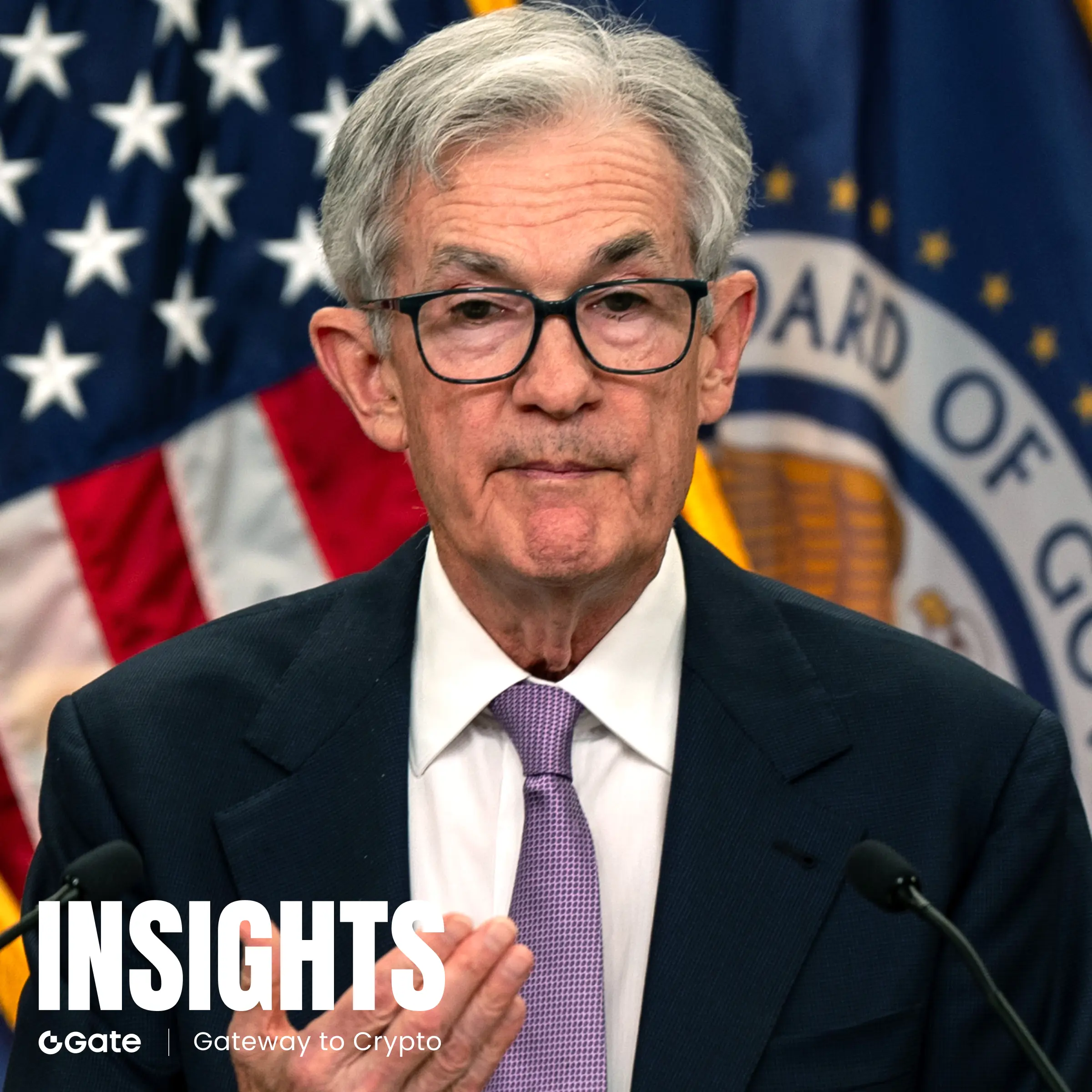
Institutional Background and Market Impact of Powell’s “Plain-Language” Communication Policy
Since 2019, Powell has pushed the Federal Reserve to hold press conferences after each policy meeting, using plain language to explain interest-rate decisions and the economic outlook. This system has significantly lowered the threshold for stock, bond, and crypto markets to interpret signals from macroeconomic policy. For the crypto industry, which lacks central trading hours, clear and high-frequency policy statements help reduce information asymmetry and shorten the duration of abnormal volatility after decisions are released. In practice, the plain-language communication strategy provides a macro anchor that the digital-asset market can reference.
Recap of Crypto Market Performance Around Major Policy Shifts During Powell’s Tenure
Looking back at the macro cycle since Powell officially took office as Federal Reserve Chair in February 2018, the crypto market exhibited recognizable patterns of price reactions at the following key points:
February 2018: Powell’s inauguration and first period of public comments. On February 1, 2018, after Yellen chaired the last FOMC meeting, Bitcoin fell by about 1.43% around the time of the policy statement’s release. After that, the U.S. dollar entered an uptrend cycle; BTC entered a bear market, with its maximum drawdown nearing 84%.
December 2018 to July 2019: End of the tightening cycle to the phase when rate-cut expectations heated up. In the window between the final rate hike and the start of rate cuts, the BTC price first traded sideways and then moved higher, rising from about 3,500 USD to 12,000 USD. The market began trading rate-cut expectations roughly 3 months in advance.
July 2019 to February 2020: The window when rate cuts took effect. On July 31, 2019, the Federal Reserve announced a 25-basis-point rate cut—its first since 2008. Bitcoin had already reacted in advance of the cut, climbing from 9,000 USD to above 13,000 USD; after the cut was implemented, it instead pulled back. Then, Bitcoin saw another pullback trend throughout the full phase of rate-cut delivery, as there were additional 25-basis-point cuts in September and October 2019—forming a typical “buy the expectation, sell the news” mechanism.
March 2020: Emergency rate cuts and quantitative easing amid the pandemic shock. On March 3, 2020, the Federal Reserve delivered an emergency 50-basis-point cut. Bitcoin initially jumped by about 2.2% after the news release, but then faced volatility. On March 12, BTC depreciated by about 50% in a single day, dropping from around 7,000 USD to about 3,800 USD. On March 15, the Federal Reserve delivered a second emergency rate cut to zero and rolled out $700 billion in QE. Within an hour, BTC surged from 5,150 USD to 5,950 USD (+15%), but later gave back part of those gains. The subsequent liquidity flood drove BTC higher from around 5,000 USD all the way up to a historical peak of about 69,000 USD in November 2021.
November 2021 to March 2022: Rate-hike rumors and the expectation-pricing phase. After Powell’s November FOMC meeting released tightening signals, the crypto market fell sharply due to expectation-driven trading. BTC dropped from an all-time high of about 69,000 USD to around 40,000 USD, with a cumulative decline of more than 40% within five months.
March 2022 to December 2022: The main stages of the rate-hike cycle. In March 2022, the Federal Reserve entered this round’s rate-hike cycle. At the same time, in June 2022 it began balance-sheet reduction. During this period, the BTC price fell from about 46,000 USD at the low to around 16,000 USD, for a cumulative decline of about 65%. After about nine months of decline, it began to rebound in early 2023. Notably, despite multiple large 75-basis-point hikes in mid-2022, Bitcoin’s selloff speed gradually slowed—shifting from a plunge to a downward drift with volatility.
By the end of 2022, the Federal Reserve’s rate-hike cycle entered its most concentrated phase, with Bitcoin in a deep bear market around 16,900 USD. In June 2023, after cumulative rate hikes of 500 basis points, the Federal Reserve paused rate hikes for the first time; the market interpreted it as a signal that the tightening cycle was nearing its end. In July, it completed the final 25-basis-point hike, bringing the policy rate to the 22-year high of 5.25%–5.50%. After the news was announced, Bitcoin rose against the tide to about 29,700 USD. After that, there were consecutive pauses in September and November, and in December Bitcoin broke above 42,000 USD, returning above 40,000 USD for the first time in 18 months.
Early 2024: Price gains were driven jointly by inflows into Bitcoin spot ETFs and warming rate-cut expectations; in March, it briefly touched a historical record near 74,000 USD. In August, Powell released dovish signals at the Jackson Hole Symposium, and Bitcoin rebounded to 65,000 USD. In September, the Federal Reserve officially cut rates by 50 basis points—the first cut in more than four years—and Bitcoin saw violent swings around 62,000 USD. After that, in December, it delivered a third consecutive 25-basis-point cut to 4.25%–4.50%, but Powell said it was “at or near the time to slow down rate cuts,” and also stated that “the Federal Reserve is not allowed to have Bitcoin.” Bitcoin promptly broke below 100,000 USD and recorded its largest single-day drop since August.
In April 2025, Bitcoin completed its fourth halving in history, with the halving of supply and rate-cut expectations resonating together. On September 18, after nine months, the Federal Reserve restarted its rate-cut cycle, lowering rates by 25 basis points to 4.00%–4.25%. On October 29, it cut rates again by 25 basis points to 3.75%–4.00%, and announced that as of December 1 it would formally end balance-sheet reduction, marking the end of more than two years of quantitative tightening. Driven by expectations of looser liquidity, Bitcoin touched a historical peak around 126,000 USD. In December, the third 25-basis-point cut brought rates to 3.50%–3.75%, and Bitcoin maintained a choppy range of 90,000–100,000 USD.
On January 29, 2026, the Federal Reserve decided to keep interest rates unchanged. After three consecutive rate cuts, it was the first time it hit the pause button. The statement said that “economic activity is expanding at a solid pace,” and two Trump-appointed governors voted against keeping rates unchanged. Bitcoin repeatedly tested 90,000 USD without success and fell back to roughly 89,000 USD.
As of April 27, 2026—on the eve of Powell’s last press conference of his tenure—Bitcoin is quoted at 79,200 USD, and the market is in a wait-and-see posture for the communication paradigm to change.
Comparison table of Federal Reserve policy and crypto market performance over the past 3 years
| Time Node |
Policy Event |
Bitcoin Market Characteristics |
| December 2022 |
Most concentrated phase of the rate-hike cycle |
About 16,900 USD, deep bear market |
| June 2023 |
First pause of rate hikes (after cumulative 500 bps of hikes) |
About 26,000 USD, a brief pullback followed by a rebound |
| July 2023 |
Final rate hike of 25 bps to 5.25% - 5.50% |
After the hike took effect, it rose to about 29,700 USD |
| December 2023 |
Three consecutive pauses of rate hikes |
Broke above 42,000 USD, back above 40,000 USD |
| March 2024 |
Rate-cut expectations continued to heat up + ETF inflows |
Touched a historical record high near 74,000 USD |
| August 2024 |
Powell released dovish signals at Jackson Hole Symposium |
Rebounded to 65,000 USD |
| September 2024 |
First rate cut of 50 bps in more than four years |
Violent swings around about 62,000 USD |
| December 2024 |
Third consecutive rate cut + Powell’s hawkish remarks |
Broke below 100,000 USD, largest single-day drop since August |
| April 2025 |
Bitcoin’s fourth halving |
Halving and rate-cut expectations overlapped, entering an upward channel |
| September 2025 |
Restarted rate cuts after nine months with 25 bps |
Upward push driven by expectations of liquidity expansion |
| October 2025 |
Second rate cut of 25 bps + formally ended balance-sheet reduction |
Set an all-time high around 126,000 USD |
| December 2025 |
Third rate cut of 25 bps |
Choppy trading maintained in the 90,000 - 100,000 USD range |
| January 2026 |
Hawkish pause on rate cuts (keep rates unchanged) |
90,000 USD repeatedly met resistance, once fell to about 60,000 USD |
| April 27, 2026 |
Eve of Powell’s last press conference |
79,200 USD, waiting for the event to play out |
The historical data above show that crypto markets exhibit an “expectations lead” feature in pricing changes to Federal Reserve policy—there is significant volatility before policy is implemented, and the price direction after policy is formally carried out does not always align with the direction implied by expectations.
The Basis for Successor Nominee Wosch’s Criticism of the Press Conference System
In a recent hearing of the Senate Banking Committee, successor nominee Kevin Wosch said that press conferences should be held only when there is “important news,” rather than being scheduled after every meeting. Wosch believes that excessive policy communication can cause the market to overanalyze every word, amplifying short-term noise rather than reflecting economic fundamentals. This position aligns with some academics and former Federal Reserve officials, who argue that there is a marginally diminishing effect from increasing a central bank’s communication transparency. If Wosch officially confirms a change to the press conference frequency, the Federal Reserve would likely return to a communication pattern closer to the Greenspan era.
The Transmission Path of Communication Paradigm Shifts to Expectations of U.S. Dollar Liquidity
The direction and timing of dollar liquidity are foundational variables for the overall valuation of crypto assets. If the Federal Reserve reduces the number of press conferences or shifts to more ambiguous wording, the market’s ability to anticipate key actions—such as rate hikes and balance-sheet reduction—will increase in difficulty. Historical data reflect a potential characteristic: during periods of high policy communication transparency, the crypto market can complete price discovery relatively quickly around policy events, and volatility tends to be shorter. After transparency declines, the market may face a longer window for absorbing information and pricing it. Based on experience from switching in past policy cycles, crypto market sensitivity to macro policy does not decrease due to changes in communication methods; rather, pricing efficiency changes somewhat.
Feasible Strategies for the Crypto Industry to Respond to Adjustments in Policy Information Transparency
Whether Wosch ultimately fully cancels regular press conferences or not, market participants have already begun preparing for a policy environment with lower transparency. Based on the crypto market reaction patterns reflected by multiple policy shifts during Powell’s tenure, the following strategies have been validated in practice as having reference value:
Diversify information sources. Move away from relying solely on the Federal Reserve’s press conference wording, and instead take an integrated approach using the full text of Federal Reserve meeting minutes, open market operation data, high-frequency inflation and employment data, and on-chain indicators (such as changes in stablecoin supply and staking ratios). The 2022 rate-hike cycle shows that market expectations were priced significantly more strongly before policy took effect than the immediate impact of the policy itself—suggesting that the weight of information forecasting should be higher than the interpretation after the fact.
Watch for the “buy the expectation, sell the news” effect. The BTC pullback after the rate cuts were implemented in 2019, and the early rebound in early 2023 BTC when the market’s expectations tightened-policy end were anticipated, both reflect the rule that policy expectations are priced first and actual effects come later.
Build an internal pricing reference framework based on interest-rate derivatives. Observing pricing signals from tools such as federal funds rate futures can help grasp the market’s collective expectations for the policy path even without an official communication window.
Cross-compare how different central banks communicate. Study the market-behavior characteristics of the European Central Bank and the Bank of England under different transparency settings, which can provide a reference framework for potential Federal Reserve changes.
FAQ
Q: Among the major policy shifts during Powell’s tenure, which one had the most prominent impact on the crypto market?
Data indicate that during the 2020 March pandemic period, the emergency rate cuts and the launch of QE had the most severe impact on the crypto market. After experiencing a brief deep selloff (roughly a 50% drop in a single day), BTC then rose steadily from around 5,000 USD to about 69,000 USD by November 2021, driving a complete bull market cycle. This case illustrates the delayed pull effect of extreme liquidity injections on crypto assets.
Q: If Wosch cancels fixed-frequency press conferences, how would the volatility pattern of crypto assets change?
Volatility might not necessarily rise significantly, but pricing efficiency would very likely decline. Historical data show that the more transparent the policy communication period is (such as the high-frequency press conferences initiated by Powell in 2019), the more concentrated and faster the market’s response to policy events. After transparency declines, the market may repeatedly price the same information over a longer time window, causing volatility patterns to switch from an “event-driven” mode to an “information gradually digested” mode.
Q: What impact did Powell’s last press conference have on the Federal Reserve’s current interest-rate policy?
According to the Federal Reserve’s publicly available schedule, this meeting will almost certainly make no adjustments to the federal funds rate. The main role of the press conference is to summarize economic conditions and convey signals about possible changes to the communication framework—not to announce new monetary policy actions.
Q: What structural changes have occurred in the current crypto market compared with the early period when Powell first took office?
The current crypto market’s level of institutional participation is significantly higher than in 2018. The approval of Bitcoin spot ETFs has made dollar-liquidity volatility affect the crypto market more directly and more significantly. Market participants have shifted from being retail-dominated to more diversified, and both the speed of policy information transmission and pricing efficiency have improved.


