

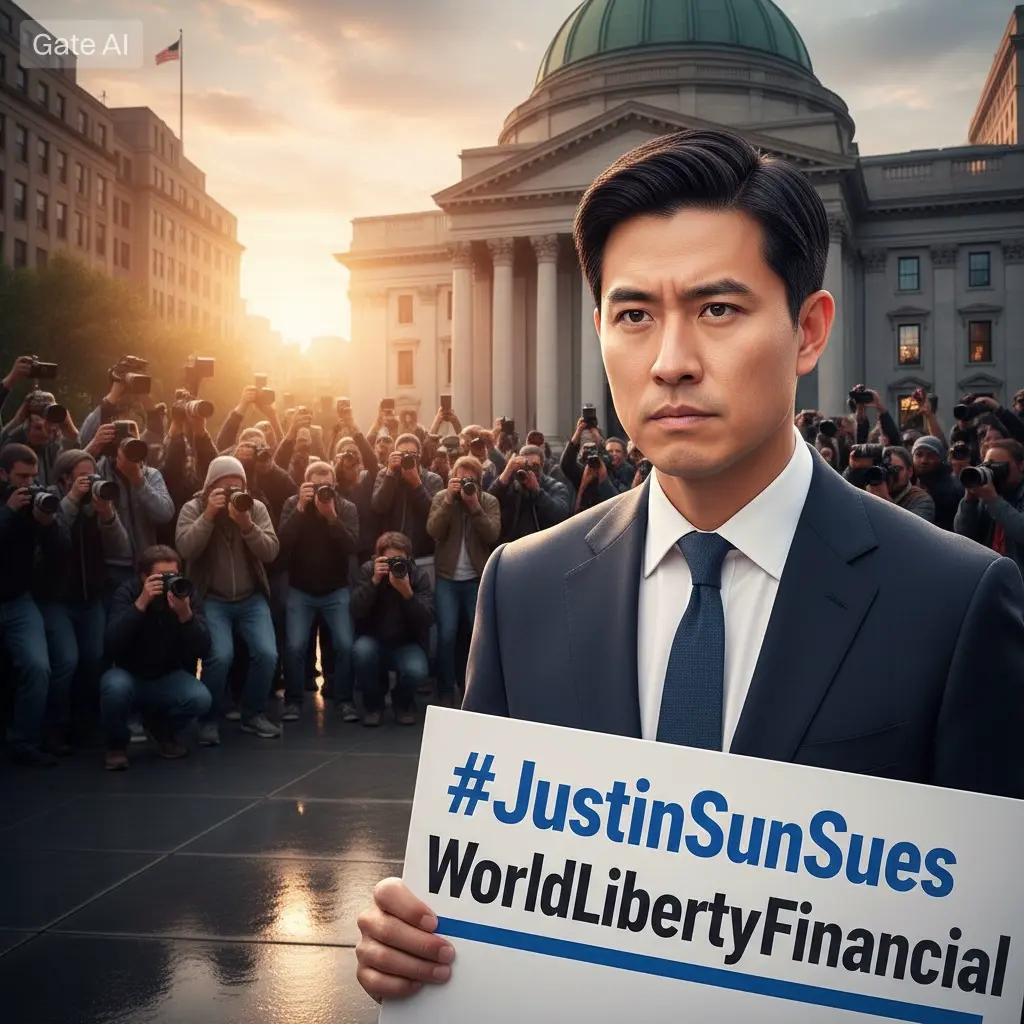

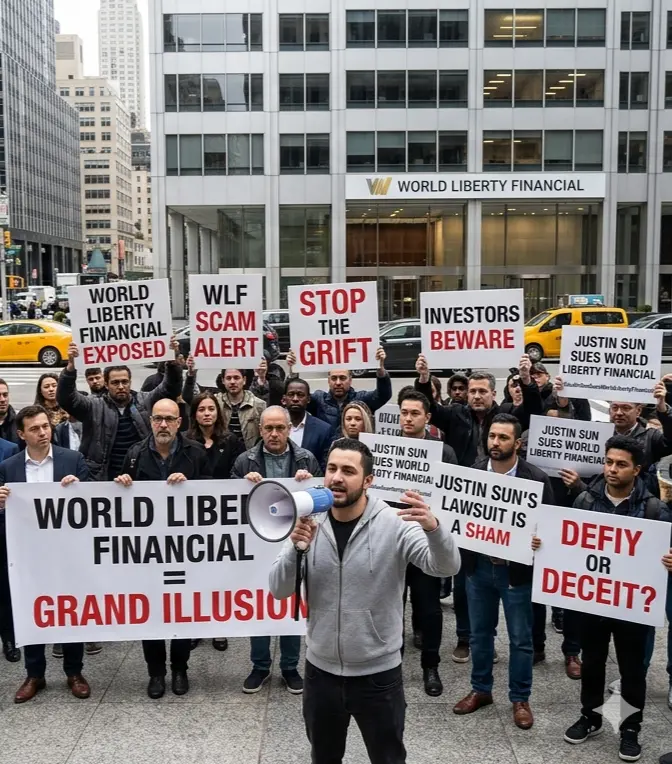
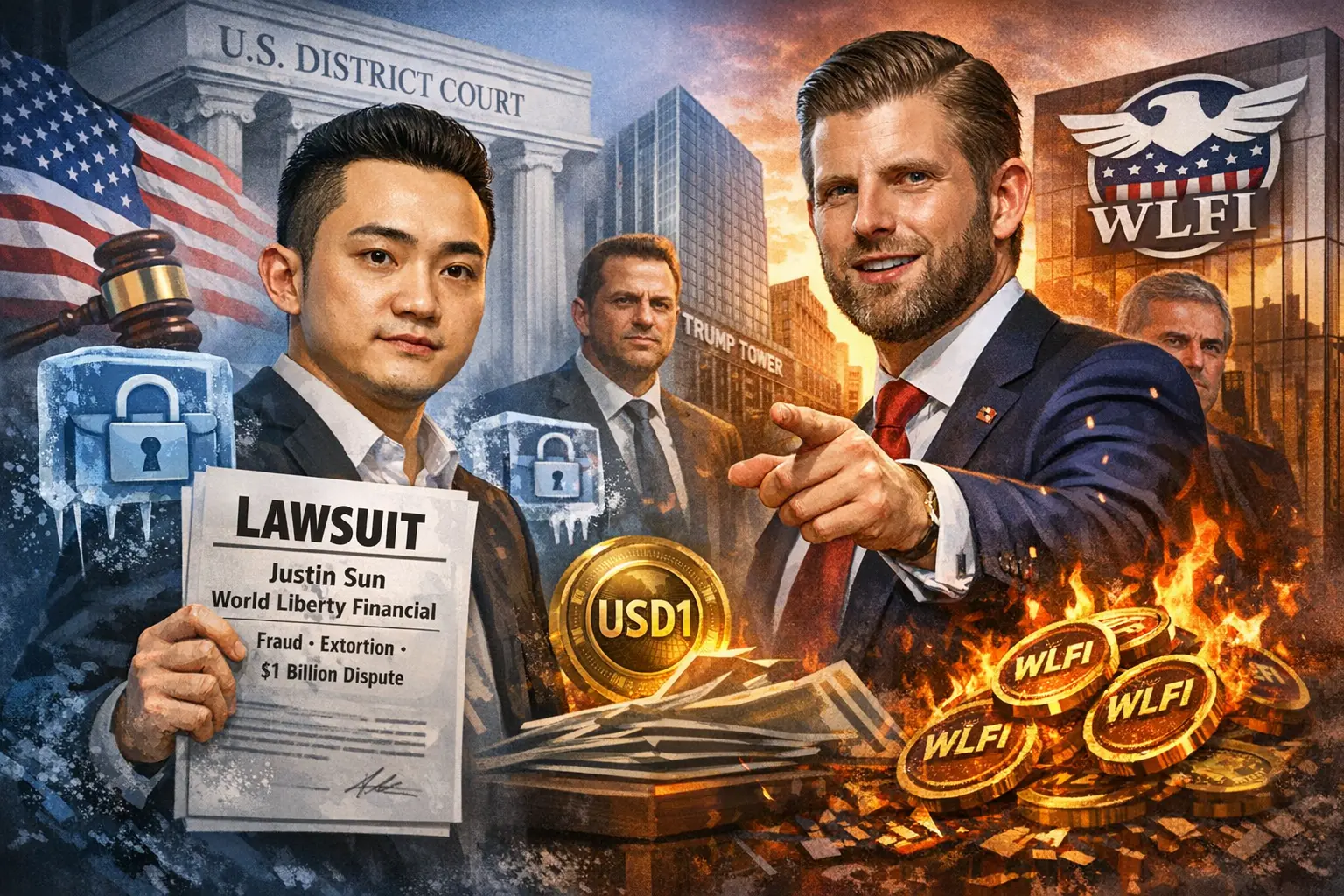


#JustinSunSuesWorldLibertyFinancial
A Defining Legal Clash in Crypto: Power, Control, and the Illusion of Decentralization
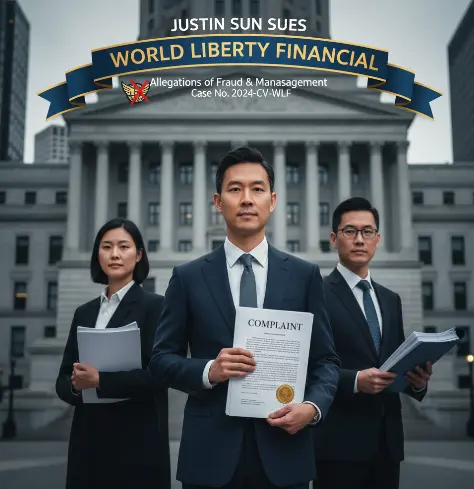
The lawsuit filed by Justin Sun against World Liberty Financial is more than a dispute over $75 million—it is a confrontation that exposes one of the deepest contradictions in the cryptocurrency industry: the gap between what projects claim to be and how they actually operate. At a time when the market is maturing and institutional capital is entering the space, this case arrives as a stress test for trust, governance, and accountability.
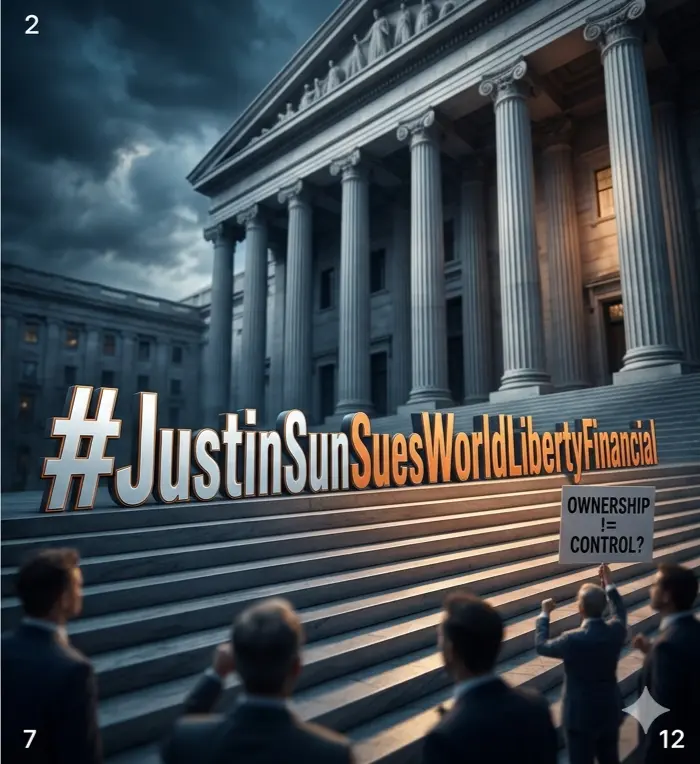
At its core, the conflict revolves around control. Crypto was built on the promise of decentralization—removing intermediaries and giving users sovereignty over their assets. Yet, allegations in this case suggest that centralized power structures may still exist beneath the surface of so-called decentralized systems. If proven true, the idea that a project could freeze billions of tokens through hidden mechanisms directly challenges the foundational principles of blockchain technology.
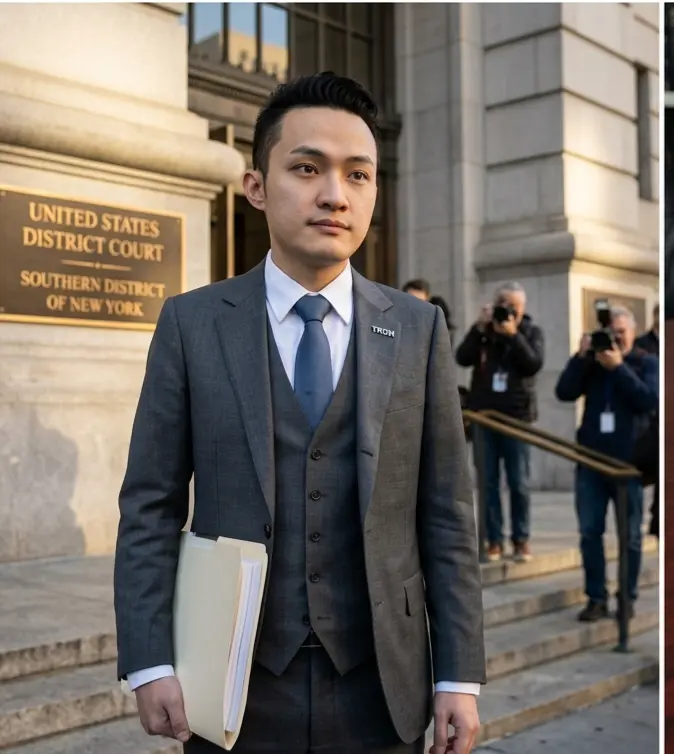
The involvement of a high-profile figure like Justin Sun amplifies the significance of the case. Known for building TRON into one of the largest blockchain ecosystems, Sun is not an inexperienced investor. The fact that even a seasoned player could face such a situation raises serious questions about transparency standards across the industry. It suggests that the risks are not limited to retail participants—structural vulnerabilities can impact anyone.
On the opposing side, World Liberty Financial’s association with Donald Trump and his family introduces a political and reputational dimension that extends beyond crypto. Projects tied to influential figures often attract attention and capital quickly, but they also carry heightened scrutiny. This case could influence how investors perceive politically connected crypto ventures in the future, especially if allegations of misrepresentation gain traction.
One of the most critical elements in the lawsuit is the concept of “backdoor control.” Smart contracts are often marketed as immutable and transparent, but in reality, many include administrative functions that allow developers to intervene under certain conditions. These functions are not inherently malicious—they can be used for upgrades, security responses, or compliance. However, when such controls are undisclosed or misused, they become a major point of contention.
This brings the conversation to a broader industry issue: the difference between code transparency and user understanding. Even when smart contracts are publicly available, very few participants have the technical expertise to fully analyze them. This creates an asymmetry where developers hold significantly more power than users, undermining the concept of trustless systems.
Another major theme emerging from this case is investor rights within crypto ecosystems. Traditionally, token holders have operated in a gray area—somewhere between users, investors, and community members. Unlike shareholders in traditional companies, they often lack clear legal protections. However, cases like this signal a shift. Courts are increasingly willing to treat token-related disputes under existing legal frameworks such as fraud, contract law, and property rights.
If the court rules in favor of Sun, it could establish a powerful precedent. Projects may be required to disclose all administrative controls explicitly, ensure fair access to liquidity, and uphold governance rights promised during token sales. This would push the industry toward higher standards of accountability and reduce the likelihood of similar disputes in the future.
On the other hand, if World Liberty Financial successfully defends its position, it may reinforce the idea that token issuers retain broad authority over their ecosystems. This could create uncertainty for investors, particularly in projects where governance and control structures are not clearly defined.
The economic implications are equally important. Freezing a large holder’s tokens does not just affect that individual—it impacts market dynamics. Liquidity, price discovery, and investor confidence are all influenced by the ability of major participants to enter and exit positions freely. Any restriction on this process introduces distortions that can affect the entire ecosystem.
Beyond the immediate case, this situation highlights the growing intersection between crypto and traditional finance. As digital assets become more integrated into global markets, legal disputes are no longer isolated incidents—they are systemic events that can influence regulation, investor behavior, and market structure.
Regulators are likely to pay close attention to this case. Issues such as undisclosed smart contract functions, investor protection, and market manipulation align closely with existing financial regulations. The outcome could accelerate the development of clearer rules governing token issuance and project transparency.
For everyday participants, the lessons are clear but often overlooked. The presence of a well-known founder, a strong narrative, or a powerful brand does not eliminate risk. In fact, it can sometimes obscure it. True due diligence requires understanding not just the surface-level promises of a project, but the underlying mechanics that govern how it operates.
This case also underscores the importance of decentralization as more than just a marketing term. A truly decentralized system should not allow unilateral control over user assets. Governance should be transparent, verifiable, and resistant to manipulation. Anything less introduces a level of trust that contradicts the original purpose of blockchain technology.
As the legal battle unfolds, the crypto industry finds itself at a crossroads. It must decide whether it will continue operating in a loosely defined environment where power is often concentrated behind the scenes, or move toward a more transparent and accountable structure that aligns with its foundational ideals.
The outcome of this case will not just determine the fate of $75 million in tokens. It will shape how projects design their systems, how investors evaluate opportunities, and how regulators approach the rapidly evolving world of digital assets.
In many ways, this is more than a lawsuit.
It is a reality check for an entire industry.
$BTC $ETH
A Defining Legal Clash in Crypto: Power, Control, and the Illusion of Decentralization
The lawsuit filed by Justin Sun against World Liberty Financial is more than a dispute over $75 million—it is a confrontation that exposes one of the deepest contradictions in the cryptocurrency industry: the gap between what projects claim to be and how they actually operate. At a time when the market is maturing and institutional capital is entering the space, this case arrives as a stress test for trust, governance, and accountability.
At its core, the conflict revolves around control. Crypto was built on the promise of decentralization—removing intermediaries and giving users sovereignty over their assets. Yet, allegations in this case suggest that centralized power structures may still exist beneath the surface of so-called decentralized systems. If proven true, the idea that a project could freeze billions of tokens through hidden mechanisms directly challenges the foundational principles of blockchain technology.
The involvement of a high-profile figure like Justin Sun amplifies the significance of the case. Known for building TRON into one of the largest blockchain ecosystems, Sun is not an inexperienced investor. The fact that even a seasoned player could face such a situation raises serious questions about transparency standards across the industry. It suggests that the risks are not limited to retail participants—structural vulnerabilities can impact anyone.
On the opposing side, World Liberty Financial’s association with Donald Trump and his family introduces a political and reputational dimension that extends beyond crypto. Projects tied to influential figures often attract attention and capital quickly, but they also carry heightened scrutiny. This case could influence how investors perceive politically connected crypto ventures in the future, especially if allegations of misrepresentation gain traction.
One of the most critical elements in the lawsuit is the concept of “backdoor control.” Smart contracts are often marketed as immutable and transparent, but in reality, many include administrative functions that allow developers to intervene under certain conditions. These functions are not inherently malicious—they can be used for upgrades, security responses, or compliance. However, when such controls are undisclosed or misused, they become a major point of contention.
This brings the conversation to a broader industry issue: the difference between code transparency and user understanding. Even when smart contracts are publicly available, very few participants have the technical expertise to fully analyze them. This creates an asymmetry where developers hold significantly more power than users, undermining the concept of trustless systems.
Another major theme emerging from this case is investor rights within crypto ecosystems. Traditionally, token holders have operated in a gray area—somewhere between users, investors, and community members. Unlike shareholders in traditional companies, they often lack clear legal protections. However, cases like this signal a shift. Courts are increasingly willing to treat token-related disputes under existing legal frameworks such as fraud, contract law, and property rights.
If the court rules in favor of Sun, it could establish a powerful precedent. Projects may be required to disclose all administrative controls explicitly, ensure fair access to liquidity, and uphold governance rights promised during token sales. This would push the industry toward higher standards of accountability and reduce the likelihood of similar disputes in the future.
On the other hand, if World Liberty Financial successfully defends its position, it may reinforce the idea that token issuers retain broad authority over their ecosystems. This could create uncertainty for investors, particularly in projects where governance and control structures are not clearly defined.
The economic implications are equally important. Freezing a large holder’s tokens does not just affect that individual—it impacts market dynamics. Liquidity, price discovery, and investor confidence are all influenced by the ability of major participants to enter and exit positions freely. Any restriction on this process introduces distortions that can affect the entire ecosystem.
Beyond the immediate case, this situation highlights the growing intersection between crypto and traditional finance. As digital assets become more integrated into global markets, legal disputes are no longer isolated incidents—they are systemic events that can influence regulation, investor behavior, and market structure.
Regulators are likely to pay close attention to this case. Issues such as undisclosed smart contract functions, investor protection, and market manipulation align closely with existing financial regulations. The outcome could accelerate the development of clearer rules governing token issuance and project transparency.
For everyday participants, the lessons are clear but often overlooked. The presence of a well-known founder, a strong narrative, or a powerful brand does not eliminate risk. In fact, it can sometimes obscure it. True due diligence requires understanding not just the surface-level promises of a project, but the underlying mechanics that govern how it operates.
This case also underscores the importance of decentralization as more than just a marketing term. A truly decentralized system should not allow unilateral control over user assets. Governance should be transparent, verifiable, and resistant to manipulation. Anything less introduces a level of trust that contradicts the original purpose of blockchain technology.
As the legal battle unfolds, the crypto industry finds itself at a crossroads. It must decide whether it will continue operating in a loosely defined environment where power is often concentrated behind the scenes, or move toward a more transparent and accountable structure that aligns with its foundational ideals.
The outcome of this case will not just determine the fate of $75 million in tokens. It will shape how projects design their systems, how investors evaluate opportunities, and how regulators approach the rapidly evolving world of digital assets.
In many ways, this is more than a lawsuit.
It is a reality check for an entire industry.
$BTC $ETH