
Pi Network’s official X account published a statement announcing that the Pi Network ecosystem currently has more than 18 million users who have completed identity verification (KYC), and it argues that its verified user base differs from unverified accounts on other networks in terms of real-world applicability. The Pi Network core team also stated that the ecosystem has built a “fully KYC-verified mainnet ecosystem” with the goal of improving the trustworthiness of transactions.
Statement from the Pi Network Core Team: Arguments for Verified Users
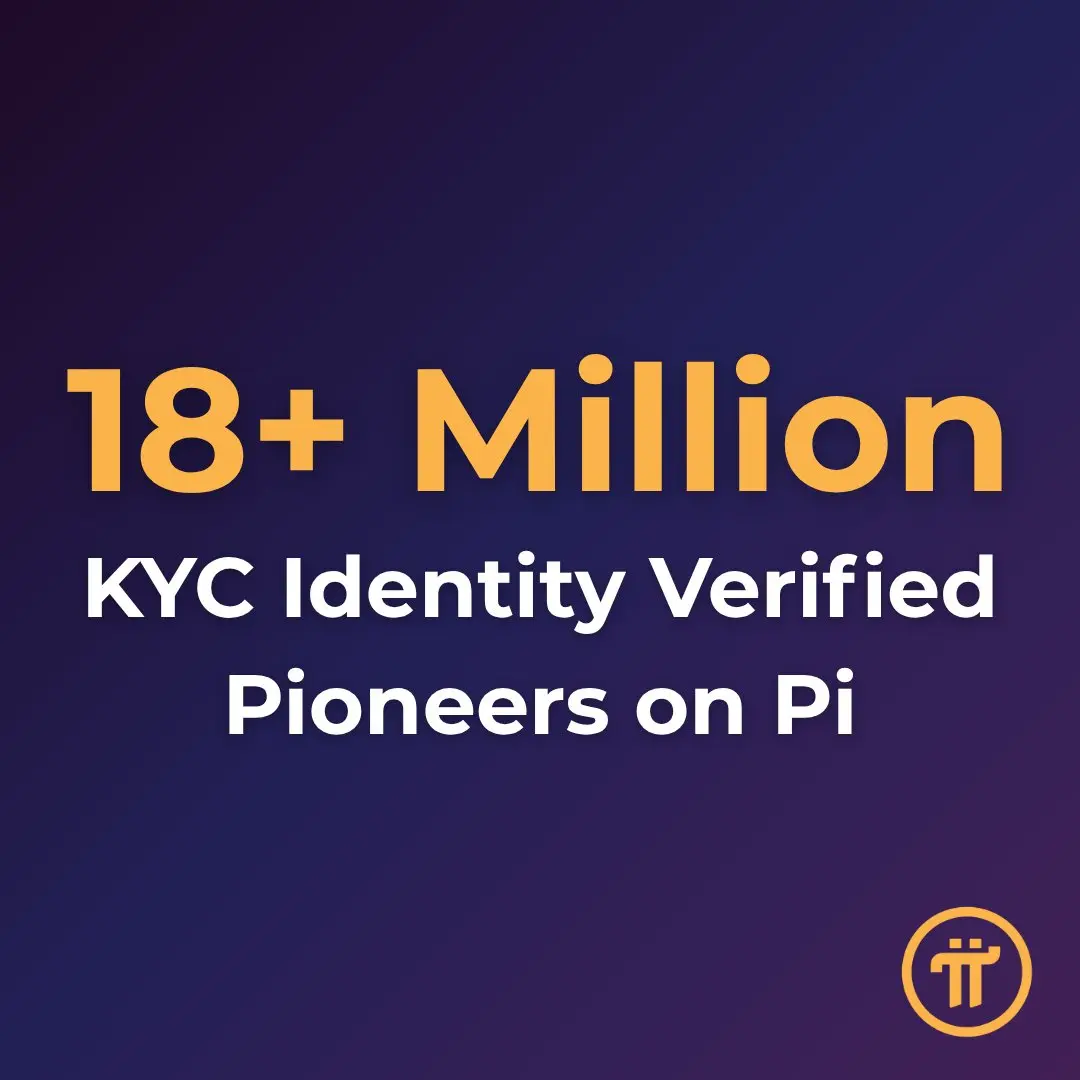 (Source: Pi Network core team)
According to the statement from Pi Network’s official X account, the Pi Network core team said that most blockchains measure growth by the total number of accounts and do not require users to complete identity verification; Pi Network “recognized very early on the importance of identity verification and believes that creating only unverified accounts is not enough.”
In the statement, the core team said: “1 million verified users on Pi ≠ 1 million users on other networks.” Its argument is that “any meaningful transaction requires identity verification, especially in economic activities in the real world”; each time an asset is transferred, it “raises a fundamental identity question: who is sending, who is receiving.” If identities are unknown, it is difficult to confirm the validity of the transfer and the correctness of the recipient.
Design Philosophy for a Fully KYC-Verified Mainnet Ecosystem
According to the Pi Network core team’s statement, the above considerations are the core reasons it built a “fully KYC-verified mainnet ecosystem,” to ensure that all parties’ identities can be verified and to reduce spam while improving the overall ecosystem’s credibility. Pi Network’s official mainnet has been launched for more than one year; user participation has been encouraged for more than five years. The user community name is Pioneers.
Frequently Asked Questions
How large is the KYC-verified user base Pi Network has announced at present?
According to Pi Network’s latest statement from its official X account, the Pi Network ecosystem currently has more than 18 million users who have completed identity verification (KYC).
How does the Pi Network core team explain the significance of verified users?
According to Pi Network’s official X statement, the core team said that most blockchains measure growth by the number of accounts without requiring identity verification; Pi Network believes that asset transfers involve “a fundamental identity issue,” and therefore it has established a fully KYC-verified mainnet ecosystem to ensure that all parties’ identities are known.
Why did Pi Network build a fully KYC-verified ecosystem?
According to the Pi Network core team’s statement, fully KYC-verified is intended to ensure that both the sender and recipient identities for every meaningful transaction are verifiable, thereby reducing the risk of spam and improving the credibility of economic activities in the real world.
Disclaimer: The information on this page may come from third parties and does not represent the views or opinions of Gate. The content displayed on this page is for reference only and does not constitute any financial, investment, or legal advice. Gate does not guarantee the accuracy or completeness of the information and shall not be liable for any losses arising from the use of this information. Virtual asset investments carry high risks and are subject to significant price volatility. You may lose all of your invested principal. Please fully understand the relevant risks and make prudent decisions based on your own financial situation and risk tolerance. For details, please refer to
Disclaimer.
Related Articles
RedotPay Adds SUI and Native USDC-Sui Support, Enabling Payments in 100+ Countries
RedotPay has integrated SUI and USDC-Sui, allowing users to spend tokens and transfer funds in local fiat across 100+ countries. With 7 million users and $10 billion in annual payments, RedotPay is already profitable. The integration highlights fintech's shift towards blockchain solutions for international transactions.
GateNews1h ago
Lido EarnETH Vault Exposed to $21.6M rsETH Following Kelp Bridge Exploit, DAO Sets $3M Loss Protection
On April 18, a Kelp cross-chain bridge exploit led to the theft of $292 million in rsETH. Lido reported $21.6 million in exposure via its EarnETH vault, prompting Aave to freeze relevant markets. EarnETH has paused transactions and is deleveraging, while Lido's DAO treasury implemented a $3 million protection mechanism to cover potential losses. The core staking protocol remains unaffected.
GateNews2h ago
Ripple Outlines Four-Phase Quantum-Safe Plan for XRP Ledger by 2028
Ripple has developed a four-phase roadmap to secure the XRP Ledger against quantum computing threats by 2028, addressing concerns over blockchain cryptography vulnerabilities. Key phases include researching quantum risks and implementing advanced security methods. XRP Ledger is currently better equipped than Bitcoin, with built-in key rotation enhancing safety.
GateNews7h ago
Hong Kong Launches 24/7 Trading Framework for Tokenized Funds, AUM Reaches $1.37B
Hong Kong's Securities and Futures Commission (SFC) has established a regulatory framework for round-the-clock trading of tokenized products on licensed platforms. With 13 tokenized products and approximately HK$10.7 billion in assets, this initiative aims to integrate traditional finance with Web3 through regulated stablecoins and tokenized deposits, enhancing liquidity.
GateNews9h ago
Japan launches the Canton network verification pilot and tests government bonds as digital collateral
JSCC, under the JPX Japan Exchange Group, partnered with Mizuho, Nomura, and Digital Asset to launch a concept proof-of-concept project based on the Canton network. The project will test the feasibility of Japanese government bonds as digital collateral, with the aim of improving liquidity and management efficiency in financial markets, and ensuring it does not conflict with existing regulations. The initiative also covers cross-border trading scenarios, signaling the application potential of Japanese government bonds in the digital asset space.
ChainNewsAbmedia10h ago
Vitalik Buterin Outlines Ethereum's 5-Year Roadmap Focused on Quantum Security and Scalability
Vitalik Buterin presented Ethereum's five-year roadmap, focusing on quantum security and scalability. Key goals include increasing gas limits, implementing Zero Knowledge Proofs, and enhancing transaction confirmation times by 2028, despite challenges with quantum-resistant signatures.
GateNews11h ago


