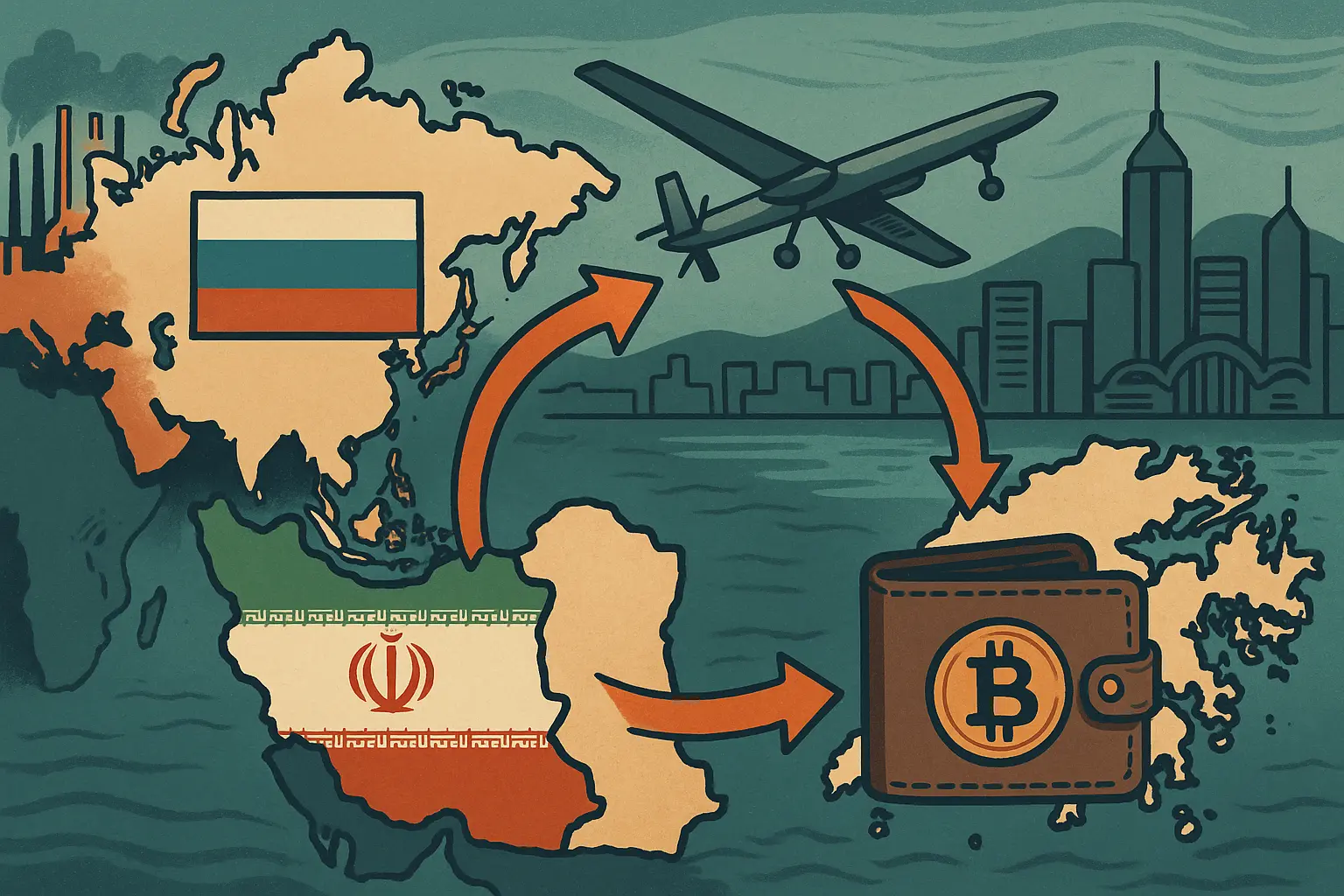
Blockchain analytics firm Chainalysis released a report on March 30, revealing that Russian- and Iran-linked organizations are using cryptocurrencies to buy low-cost military drones and parts. Commercial drones have become a core battlefield weapon; because they are widely sold on global e-commerce platforms, traditional methods make it difficult to identify buyers. However, research found that the on-chain traceability of cryptocurrency instead serves as an information-reconstruction tool, allowing investigators to trace the flow of funds from individual wallets.
Blockchain tracking mechanism: How to identify weapon-procurement intent from the digital ledger
Andrew Fierman, Chainalysis’ head of national security intelligence, explained that blockchain’s transparency enables investigators, after confirming a specific supplier, to track the full history of activity of its transaction counterparties, thereby clarifying the purpose and intent of the procurement. He said researchers were able to make an exact match between crypto transactions ranging from $2,200 to $3,500 and the precise listed prices of drones and parts on e-commerce platforms: “We saw their procurement needs for specific drone models and parts, the quantities they required, and then we saw photos of the goods they actually received.”
Fierman emphasized: “Blockchain can provide many insights that traditional methods may not be able to obtain. Once you confirm the supplier, you can look at the counterparty’s activity and assess the intent behind the purchase.”
Russia case: Complete tracking of an $8.3 million procurement chain tied to pro-Russia groups
Since Russia’s full-scale invasion of Ukraine in 2022, Chainalysis has traced the following key data:
Crypto donation scale: Pro-Russia groups raised more than $8.3 million in cryptocurrency, with drone procurement clearly specified as the intended use of the funds
Transaction amount matching: Crypto transactions between $2,200 and $3,500 precisely matched the listed prices of drones and parts on e-commerce platforms
Funding path reconstruction: Tracing from personal wallets associated with drone developers or quasi-military organizations to the specific orders from e-commerce platform suppliers
Procurement scale assessment: Although the total amount of drone procurement in cryptocurrency that can be identified so far is relatively limited, the report argues that this reflects the boundary of what has been identified, not the size of the underlying problem
The report notes that most drone procurement is still carried out through traditional financial channels, but the procurement network is increasingly intertwined with blockchain, and the share that can be tracked is rising.
Iran case: Revolutionary Guards wallet spotted, pointing to a Hong Kong supplier
The report disclosed cryptocurrency wallet activity linked to Iran’s Islamic Revolutionary Guard Corps (IRGC). Investigators identified that this wallet had purchased drone parts from a Hong Kong supplier, which is one of the most concrete on-chain pieces of evidence of sanctions evasion to date.
At the same time, organizations related to Iran were also found to sell military equipment through cryptocurrency, indicating that their use of cryptocurrency serves both procurement and sales functions, forming a more complete loop in the military supply chain.
Common questions
Why is cryptocurrency used for military drone procurement rather than traditional bank transfers?
Cryptocurrency enables instant cross-border transfers and does not require bank intermediaries, which may be an available option for countries facing financial sanctions to bypass traditional payment systems. Low-cost commercial drones are publicly sold on global e-commerce platforms, and crypto payments make it harder for the purchasers’ identities to be recognized by traditional financial monitoring systems—one of the common methods of sanctions evasion.
How can blockchain’s transparency be turned against itself to track a procurement chain?
Although cryptocurrency was once considered to have anonymity, public blockchains actually record the complete history of every transaction and are tamper-resistant. Companies such as Chainalysis can rebuild the full funding chain from fundraising to procurement by analyzing patterns of fund flows between wallet addresses, matching transaction amounts with the precise listed prices of e-commerce platform goods, and identifying the counterparties of known suppliers.
What does the identification of the IRGC cryptocurrency wallet mean for crypto compliance and regulatory enforcement?
The IRGC is subject to financial sanctions from multiple countries, and any financial dealings related to it are strictly restricted. This on-chain tracing shows that cryptocurrency is not an “untraceable” tool for sanctions evasion. It provides verifiable on-chain evidence of sanctions violations for law enforcement agencies, carries important precedent value for global crypto sanctions compliance and enforcement, and could prompt relevant platforms to strengthen transaction monitoring for sanctioned lists.
Disclaimer: The information on this page may come from third parties and does not represent the views or opinions of Gate. The content displayed on this page is for reference only and does not constitute any financial, investment, or legal advice. Gate does not guarantee the accuracy or completeness of the information and shall not be liable for any losses arising from the use of this information. Virtual asset investments carry high risks and are subject to significant price volatility. You may lose all of your invested principal. Please fully understand the relevant risks and make prudent decisions based on your own financial situation and risk tolerance. For details, please refer to
Disclaimer.


