What is CORE?
CORE is a blockchain based on Bitcoin that is fully compatible with EVM, and it is also the first protocol to successfully implement non-custodial Bitcoin staking. Bitcoin holders can lock their BTC on the Bitcoin chain without having to hand it over to any third party, providing security for the CORE chain and earning the native token CORE as a reward. Since its mainnet launch in 2023, CORE has accumulated:
- Over 21M+ on-chain addresses
- 279M+ transactions
- Over 411M in TVL
- Has approximately 55% of the hash power support from the Bitcoin mining network
This foundation enables CORE to play a key role in the BTCfi (Bitcoin DeFi) space.
A review of the price trends of CORE and predictive factors.
Historical Price Performance Overview
Since the mainnet launch in January 2023 and the start of Bitcoin staking in April 2024, the CORE price has been driven by the following factors:
- The Bitcoin trend is rising synchronously.
- The demand for non-custodial staking has surged.
- Institutional products launched (such as Valour’s BTC ETP)
- Major Technology Upgrade Expectation (Fusion)
Observing the price K-line trend, it can be found that CORE has shown a noticeable rebound after each major announcement (such as the Dual Staking integration and the launch of the Custodian platform).
The CORE indicators for predicting future prices
1. Bitcoin price trends
As a yield protocol based on BTC staking, the price of BTC directly affects users’ willingness to stake and the platform’s TVL.
2. The penetration rate of Dual Staking
This mechanism allows users holding CORE to interact with BTC staking, achieving higher returns, and is an innovative design that is currently receiving significant attention from institutions.
3. Progress of ecosystem product launch
The LstBTC product line, which will be launched after the Fusion upgrade, will further expand the application scenarios and capital inflows of CORE.
4. Increased Adoption Rate by Institutions
Copper integrates Dual Staking, Valour launches BTC ETP, and CORE is listed on Spotlight exchange, all of which are key adoption events. If more ETFs, exchanges, or institutions join in the future, they will become important driving forces for price increases.
5. On-chain activities and active user count
As TVL and daily active users continue to rise, the natural growth on the demand side will establish a fundamental support for the CORE price.
Bitcoin Staking vs. Re-Staking
The difference between staking and restaking
- Bitcoin Staking: Users directly lock BTC on the Bitcoin chain to participate in the Core chain validator election and receive native CORE rewards. This is a protocol-level income derived from on-chain activities, featuring sustainability and transparency.
- Re-Staking: This involves entrusting BTC to a third-party protocol, which then stakes the BTC to other chains or AVS (Application Validator Services) to earn external rewards. This model relies on business development and maintaining customer relationships, with relatively high risks and uncertainties.
Core’s current strategy is based on staking, and then builds re-staking applications through the existing staking infrastructure to avoid cold-start issues. This design makes the overall revenue model more robust.
Dual Staking
Traditional institutions hold a large amount of BTC assets but are unable to generate effective returns. Core’s Dual Staking provides a solution:
- BTC + CORE staking at the same time → Obtain higher yield
- Economic incentives bind dual tokens to enhance user stickiness.
- Avoid the dilution of returns caused by single-token staking.
This design not only provides better yield efficiency but also makes asset allocation strategies more flexible, which is why large custodians like Copper choose to integrate Dual Staking.
CORE price prediction
Through AI model data calculations, referencing past CORE prices and their related information, predictions are made for future prices, intended solely for data sharing and not as investment advice. Refer to the following chart:
CORE price prediction trend
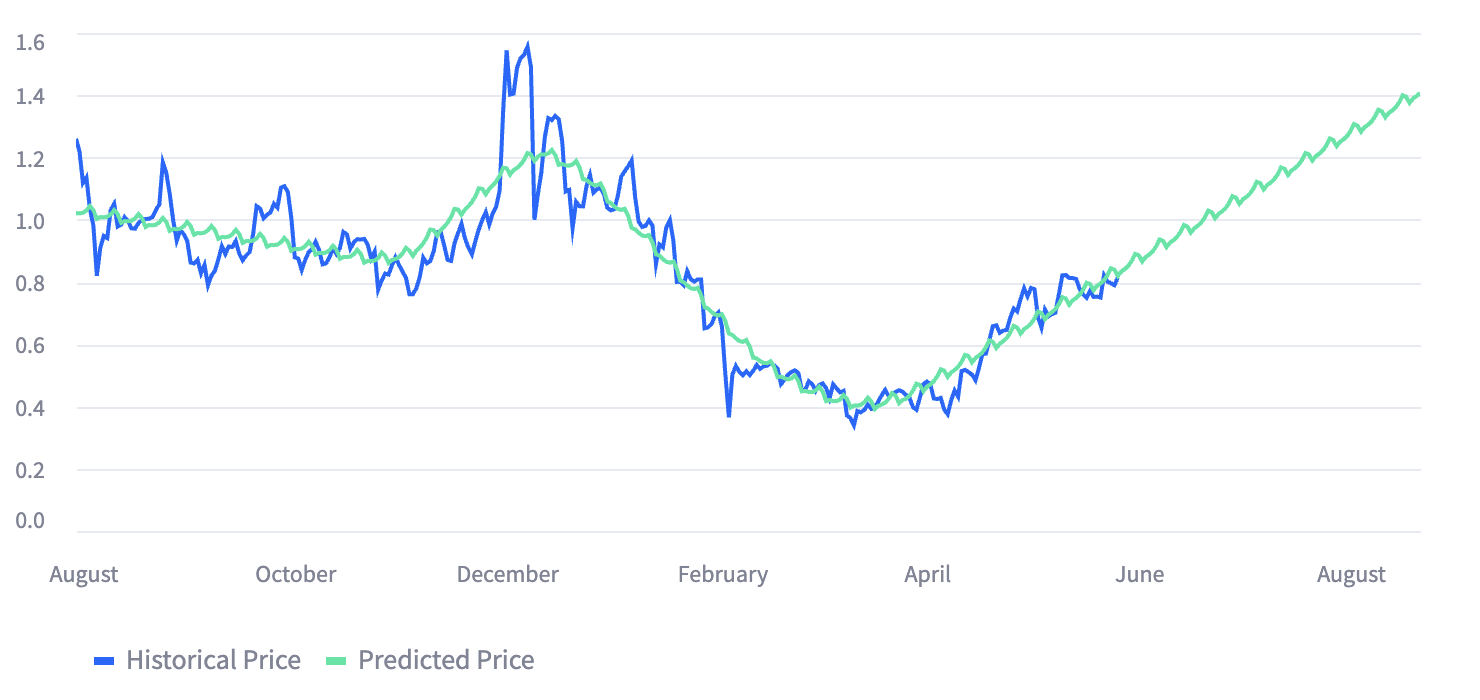
CORE Price Prediction and Confidence Interval

Start trading CORE spot immediately:https://www.gate.com/trade/CORE_USDT

The future challenges and potential risks of CORE
Even though CORE is currently performing strongly, it is necessary to pay attention to the following challenges:
- Rise of Competitors: With EigenLayer already emerging on Ethereum, if its restaking model is further imitated, CORE must maintain technological and product leadership.
- Macro market fluctuations: The overall risk in the crypto market and the decline in Bitcoin prices may drag down staking yields.
- Regulatory uncertainty: The debate over whether staking products are defined as securities remains unresolved.
Summary and Price Prediction Conclusion
Against the backdrop of the growing demand for Bitcoin monetization, CORE provides a path with decentralized, non-custodial, and securely verifiable sources of yield, particularly through Dual Staking which bridges the yield between BTC and CORE, bringing new possibilities for asset allocation and yield strategies. Observing the growth trend of its user base, the pace of ecosystem expansion, and institutional adoption, the price of CORE tokens is expected to show a medium to long-term upward trend within the next year. Based on the current fundamentals and market sentiment estimation:
- Short-term (3 months) target range: $2.5 ~ $3.2
- Medium-term (6 to 12 months) target range: $4.0 ~ $5.5 (depending on BTC trends and the effects of the Fusion upgrade)
- Long-term (over 12 months) potential range: Breakthrough $7, if large-scale institutional adoption occurs.