Kingbest

vip
Age 1.5 Year
Peak Tier 0
No content yet
RWA tokenization is accelerating hard.
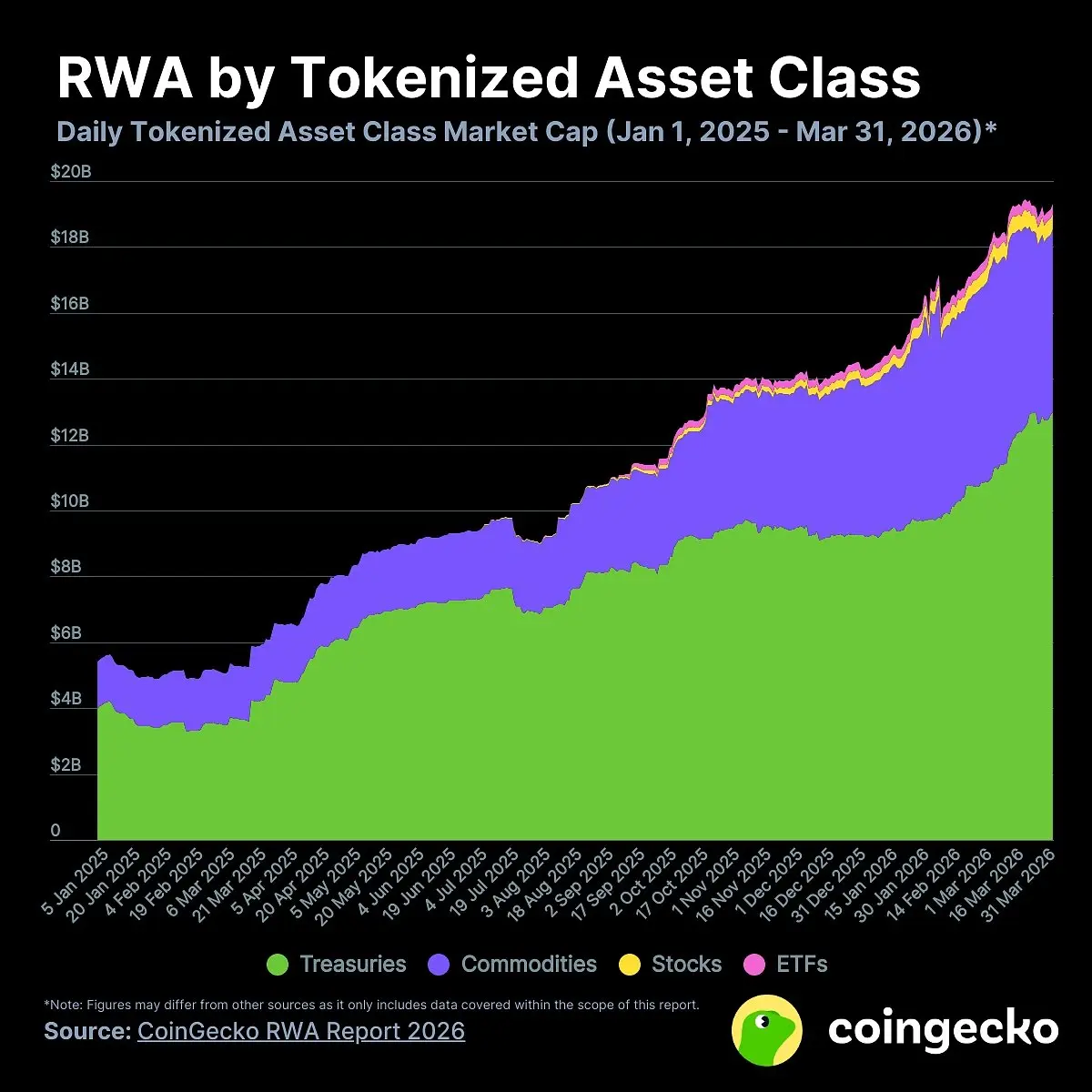
CoinGecko’s 2026 report shows tokenized RWAs more than tripled to $19.3B by end of Q1; up 256.7% from $5.42B at the start of 2025.
Key metrics:
> Tokenized Treasuries added $9B, still 67.2% of the sector
> Tokenized commodities exploded 289% to $5.5B, led by gold (XAUT + PAXG)
> Tokenized stocks scaled to $500M since mid-2025 launch, tech names leading
> Tokenized ETFs reached $0.3B with broad growth
Trading volumes are loud:
> Tokenized gold spot: $90.7B in Q1 (already beat full 2025)
> Tokenized stocks spot: $15.1B in Q1
> RWA perps: $524.8B in Q1 (vs $
RWA0.06%
XAUT-0.07%
PAXG-0.11%
post-image
  • Reward
  • Comment
  • Repost
  • Share
The stablecoin model most ecosystems rely on is quietly extractive.
Liquidity enters the chain.
Yield leaves it.
Issuers capture the reserve income.
Protocols provide the distribution.
Users provide the capital.
That loop has held for years.
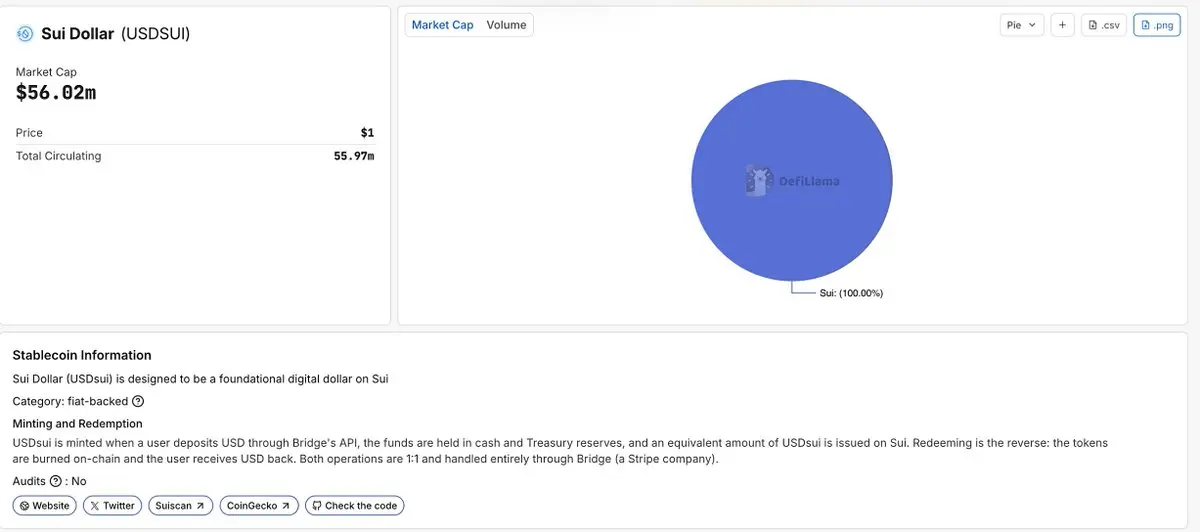
On Sui, USDsui starts to break it.
Not by changing the peg, but by changing where the yield flows.
α/ How USDsui Changes the Flow of Value
Traditional stablecoins behave like passive capital pools.
They scale supply.
They support trading and lending.
But the economic upside does not compound inside the network.
USDsui introduces a different design:
> Yield
SUI-0.57%
post-image
  • Reward
  • 1
  • Repost
  • Share
Ironed:
Hold tight 💪
The stablecoin model most ecosystems rely on is quietly extractive.
Liquidity enters the chain.
Yield leaves it.
Issuers capture the reserve income.
Protocols provide the distribution.
Users provide the capital.
That loop has held for years.
On Sui, USDsui starts to break it.
Not by changing the peg, but by changing where the yield flows.
α/ How USDsui Changes the Flow of Value
Traditional stablecoins behave like passive capital pools.
They scale supply.
They support trading and lending.
But the economic upside does not compound inside the network.
USDsui introduces a different design:
> Yield
SUI-0.57%
  • Reward
  • Comment
  • Repost
  • Share
𝐀𝐩𝐫𝐢𝐥 𝟐𝟎𝟐𝟔 𝐦𝐚𝐲 𝐠𝐨 𝐝𝐨𝐰𝐧 𝐚𝐬 𝐨𝐧𝐞 𝐨𝐟 𝐭𝐡𝐞 𝐦𝐨𝐬𝐭 𝐫𝐞𝐯𝐞𝐚𝐥𝐢𝐧𝐠 𝐦𝐨𝐧𝐭𝐡𝐬 𝐟𝐨𝐫 𝐜𝐫𝐲𝐩𝐭𝐨 𝐞𝐱𝐩𝐥𝐨𝐢𝐭𝐬.
Not because it had the most hacks.
But because it exposed how the system actually fails.
α/ The Data (what actually happened)
~21+ incidents
~$600M+ total losses
Top 2 exploits (Kelp + Drift): majority of losses
Breakdown:
> Kelp: ~$293M (bridge / interoperability failure)
> Drift: ~$285M (admin compromise + price manipulation)
> Grinex: ~$15M (hot wallet)
> Rhea: ~$18.4M (fake collateral)
Everything else:
> Mostly sub-$5M
> Many sub-$500K
This is not
DRIFT3.25%
ZRO-1.29%
  • Reward
  • Comment
  • Repost
  • Share
RWA isn’t a chain narrative, It’s an issuer narrative.
Everyone tracks which chain is “winning.”
Wrong layer.
RWAs don’t originate onchain, they’re brought onchain.
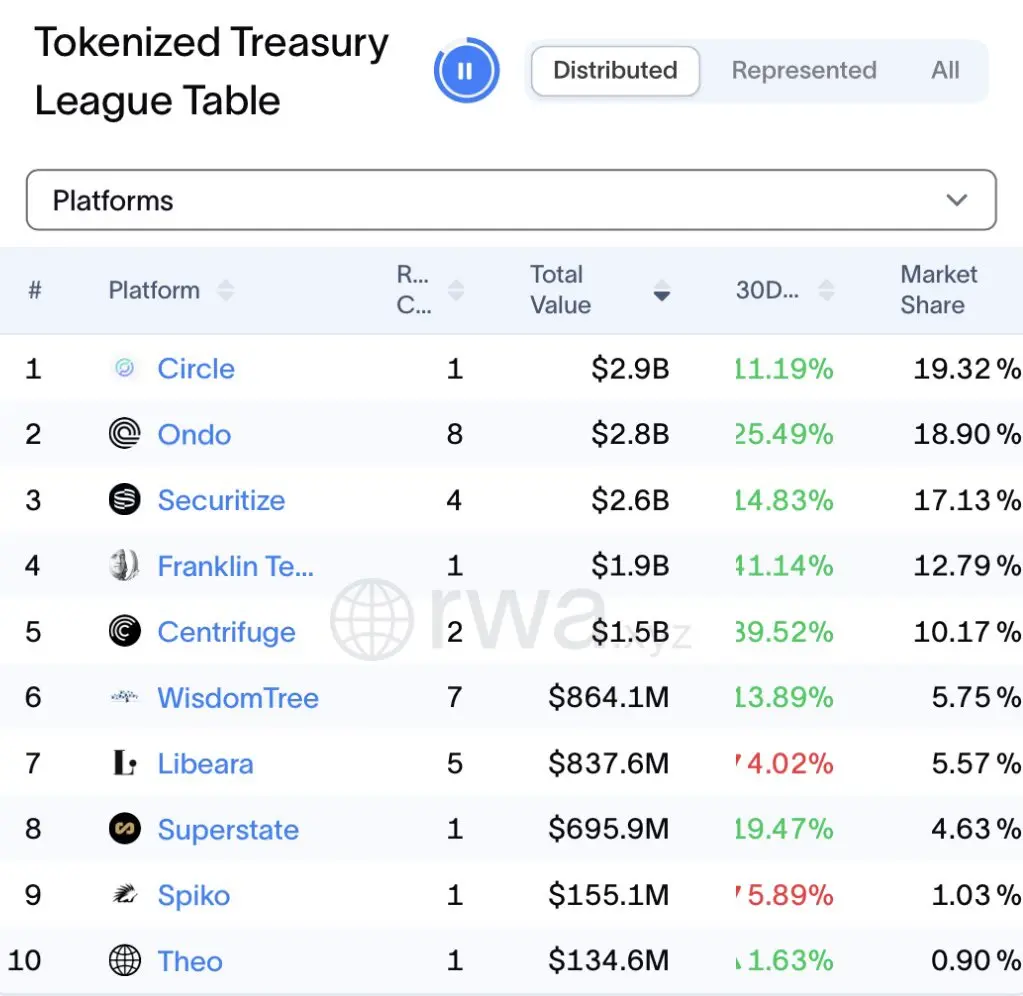
And that supply is controlled by a small set of issuers:
> @BlackRock — BUIDL, tokenized Treasuries
> @FranklnTempletn — onchain money market funds
> @OndoFinance — USDY, OUSG
> @maplefinance — private credit
> @centrifuge — asset-backed financing pools
These are the entities sourcing assets, structuring them, and pushing them into crypto rails.
Chains are just the venue, Issuers are the supply.
That’s the asymmetry most people mi
CFG-0.74%
post-image
  • Reward
  • Comment
  • Repost
  • Share
We’re watching a complete structural inversion in real time, and the “wait for the Fed” crowd is getting left at the station.
Pre-ETF, you could trade the lag.
Now, the lag is dead.
The Death of the Reaction
> The Stat: Correlation with Global Easing Breadth flipped from +0.21 to -0.778.
> The Meaning: $BTC isn’t reacting to easing anymore; it’s exhausting the easing before it even happens.
> The Shift: Inflows aren’t waiting for the pivot. They’re front-running the 6–12 month horizon.
If you’re still sitting on your hands waiting for the Fed Chair Powell to give you a “green light,” you’re fu
BTC-0.27%
  • Reward
  • 1
  • Repost
  • Share
mdmintukhan700:
Consistency is the key to success in crypto! 📈 Your results are truly inspiring. It's great to see how spot Bitcoin ETFs are impacting the market sentiment. Thanks for sharing this update! 🚀💎 #CryptoInvestment #BitcoinETF #MarketUpdate
$1.5B to $30.05B.
Read those numbers again.
While the rest of the market spent the last three years chasing ghost liquidity and “next-gen” L1s that nobody uses, Real World Assets (RWA) quietly pulled a 20×.
The chart doesn’t look like a crypto pump.
It looks like a sovereign adoption curve.
It’s linear.
It’s relentless.
It’s the only vertical that didn’t care about the 2021 blow-off top or the 2024 exhaustion.
α/ The Treasury Black Hole
Tokenized U.S. Treasuries are the “Trojan horse.”
We went from $5B in late ’24 to $15B today.
> The Play: Every dollar of “idle” stablecoin is now being cannib
RWA0.06%
  • Reward
  • Comment
  • Repost
  • Share
Sui activity is rising. Value capture isn’t.
The surface read looks strong.
> Weekly DEX volume: $450M (+20% WoW)
> Stablecoin base: $526M
> Fees vs revenue: ~4x spread
There’s flow. There’s usage. There’s throughput.
But look at how that activity behaves.
Volume is high relative to the capital base.
Fees are generated, but very little is retained.
That suggests something specific:
capital is interacting with the system,
not accumulating inside it.
The same dollars are moving repeatedly across the stack.
Trades clear. Positions rotate. Activity prints.
But the system isn’t holding that capital
SUI-0.57%
  • Reward
  • Comment
  • Repost
  • Share
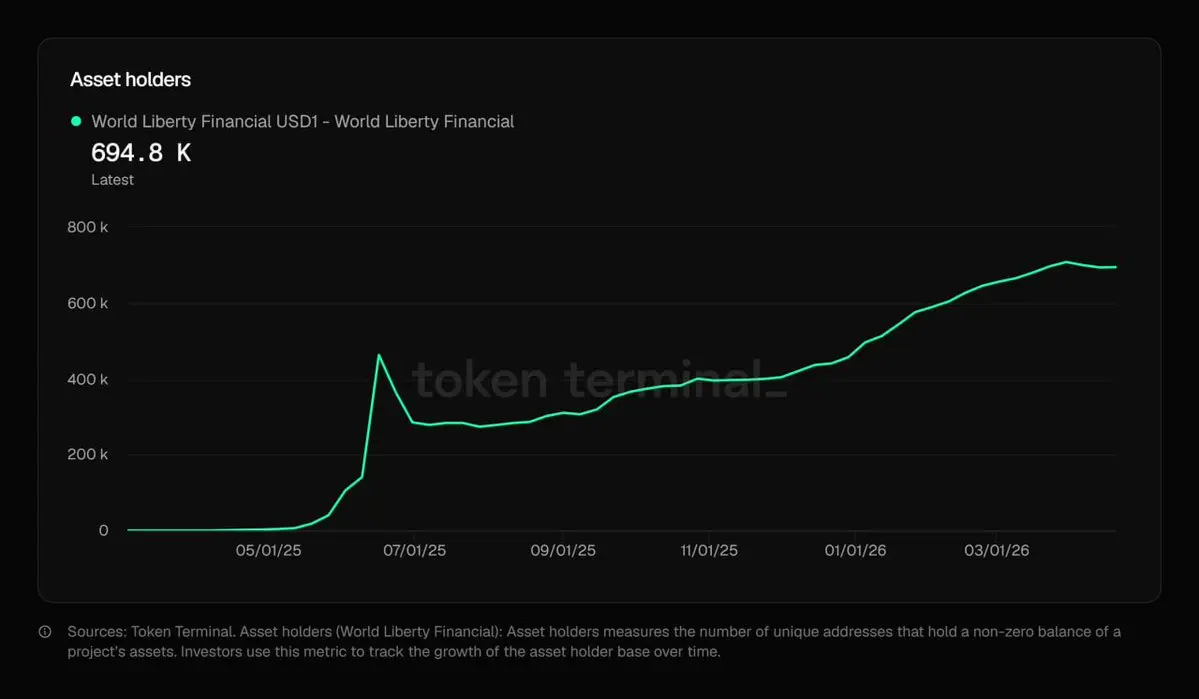
Since the start of the year, $USD1 holders have increased steadily by nearly 55%.
This matters because stablecoins grow through usage and distribution, not price action.
More holders means more demand. It shows that users are choosing to keep their capital in USD1 rather than rotating out.
Also, in stablecoin, trust is the everything. When the number of holders rises, it usually reflects growing trust in the asset.
The onchain dollar economy remains strong, and $USD1 is earning its place in it.
post-image
  • Reward
  • Comment
  • Repost
  • Share
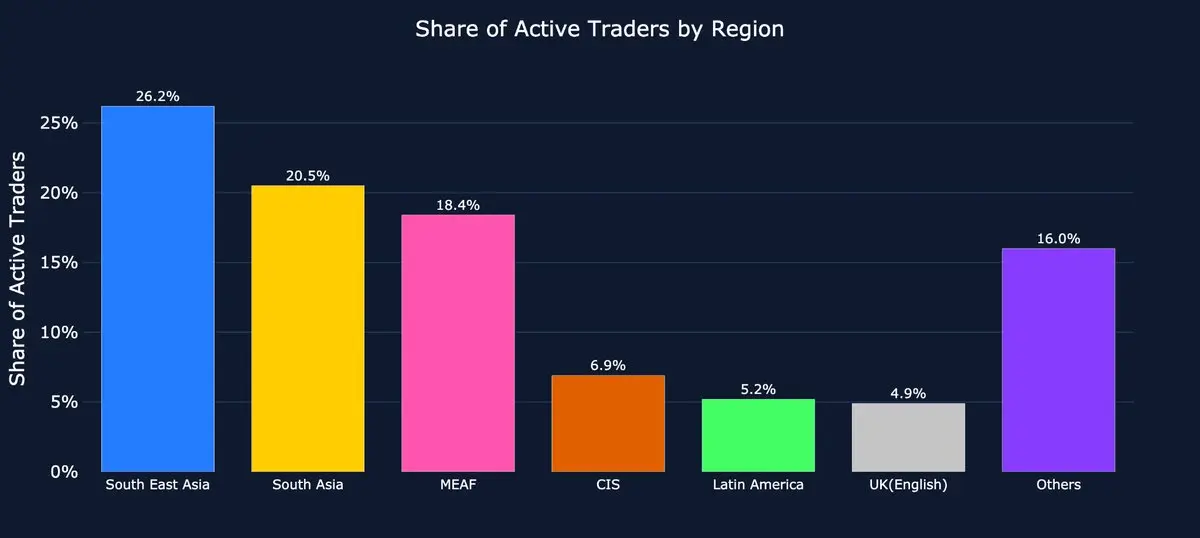
The casino just expanded
> RWA volume ramping to $6B daily
> Southeast asia ~82% of flow
> Everything trading 24/7 now
This isn’t about RWAs.
It’s about traders not waiting anymore.
Stocks, gold, crypto. Same screen, same trade.
Attention moves faster than markets open.
post-image
  • Reward
  • Comment
  • Repost
  • Share
Stress events don’t introduce new risks.
They reveal existing design choices.
This week did exactly that.
Aave saw ~$8.45B in deposit outflows following the rsETH incident.
Morpho reported ~$1M in exposure, confined to two isolated markets.
No spillover.
No systemic bleed.
Same asset shock.
Completely different outcomes.
1/ What Was Being Tested
The rsETH event wasn’t just a collateral failure.
It was a propagation test.
How far does bad debt travel once it enters the system?
For most lending protocols, the answer is structural:
Shared liquidity → shared risk.
Morpho’s answer is different:
Iso
AAVE-0.65%
MORPHO0.19%
  • Reward
  • Comment
  • Repost
  • Share
• Liquidations
• Protocol Sunsets
• Hacks & Security Breaches
The last 9 months have been brutal. At this point, staying safe is more important than ever to survive in this market.
  • Reward
  • Comment
  • Repost
  • Share
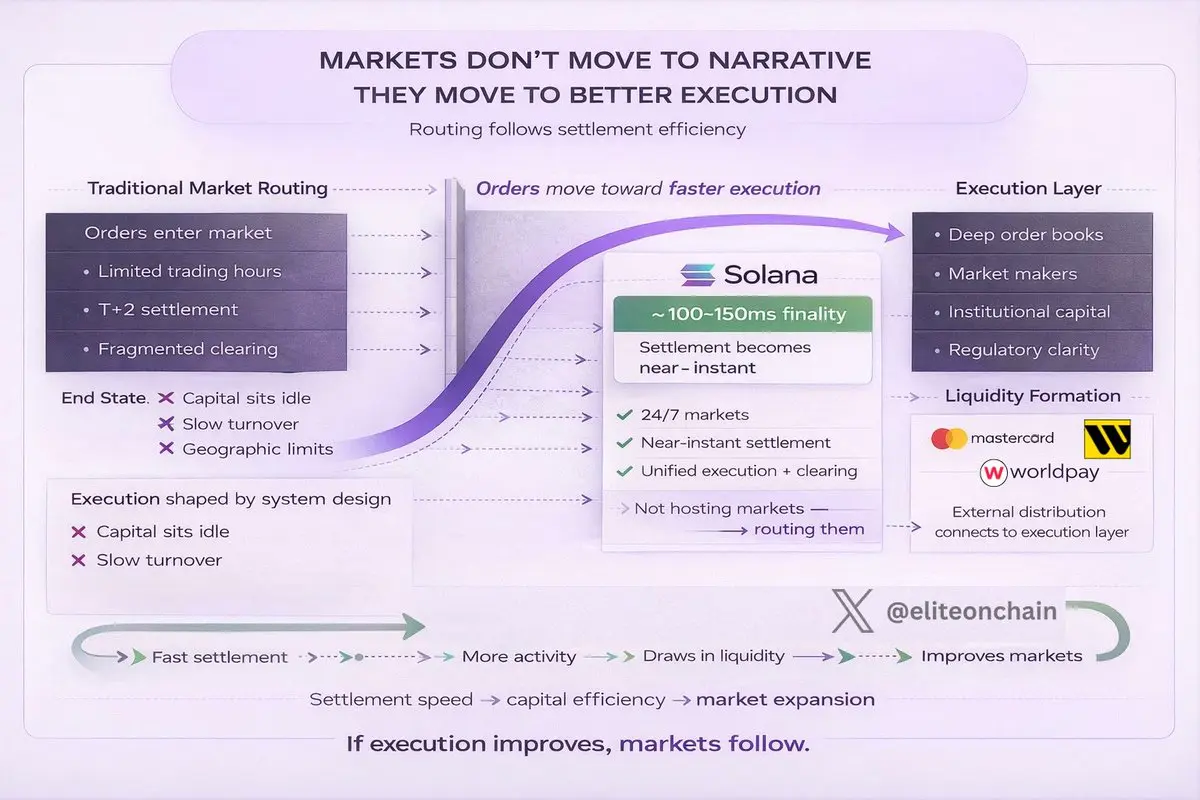
Solana isn’t trying to “host” tokenized stocks.
It’s trying to become where they route.
It’s trying to be a better Nasdaq.
Tokenized stocks have always been treated as a future narrative.
But the core pieces are already here:
• sub-second finality
• 24/7 markets
• integrated payment rails
The constraint isn’t tech anymore. It’s everything around it.
Start with the core advantage:
~100–150ms finality.
That moves Solana out of the “blockchain” category and into execution infrastructure.
Traditional equities run on:
• limited trading hours
• T+2 settlement
• fragmented clearing layers
A chain lik
SOL-0.44%
post-image
  • Reward
  • Comment
  • Repost
  • Share
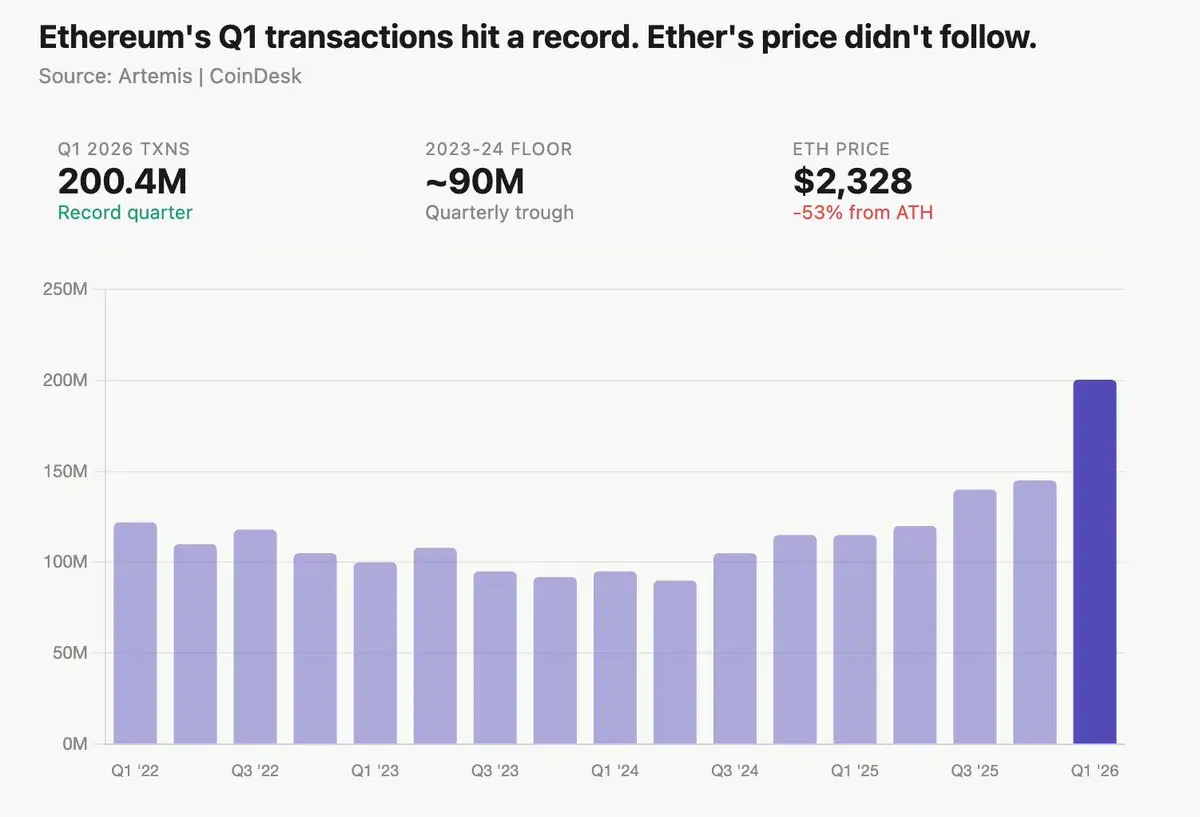
Ethereum completed its activity recovery after having its busiest quarter ever.
> 200.4M transactions Q1
> 3-year high
> L2 settlement driving growth
> stablecoins ~$180B
This is a full U-shaped rebound in usage.
But the architecture changed.
Value accrues at the edges.
Not necessarily at the base layer anymore.
ETH0.11%
post-image
  • Reward
  • Comment
  • Repost
  • Share
This was one of those weeks that changed how the market should read regulation.
Not because a single law was passed.
Because four major jurisdictions moved at once.
Japan moved to classify crypto as a financial product within a stricter legal framework.
Hong Kong granted its first stablecoin licences.
South Korea advanced its Digital Asset Basic Act, introducing bank-style rules for stablecoins and issuer oversight.
The U.S. Treasury proposed new AML and sanctions compliance requirements for permitted payment stablecoin issuers under the GENIUS Act.
That is not random policy noise.
That is a m
GENIUS19.72%
  • Reward
  • Comment
  • Repost
  • Share
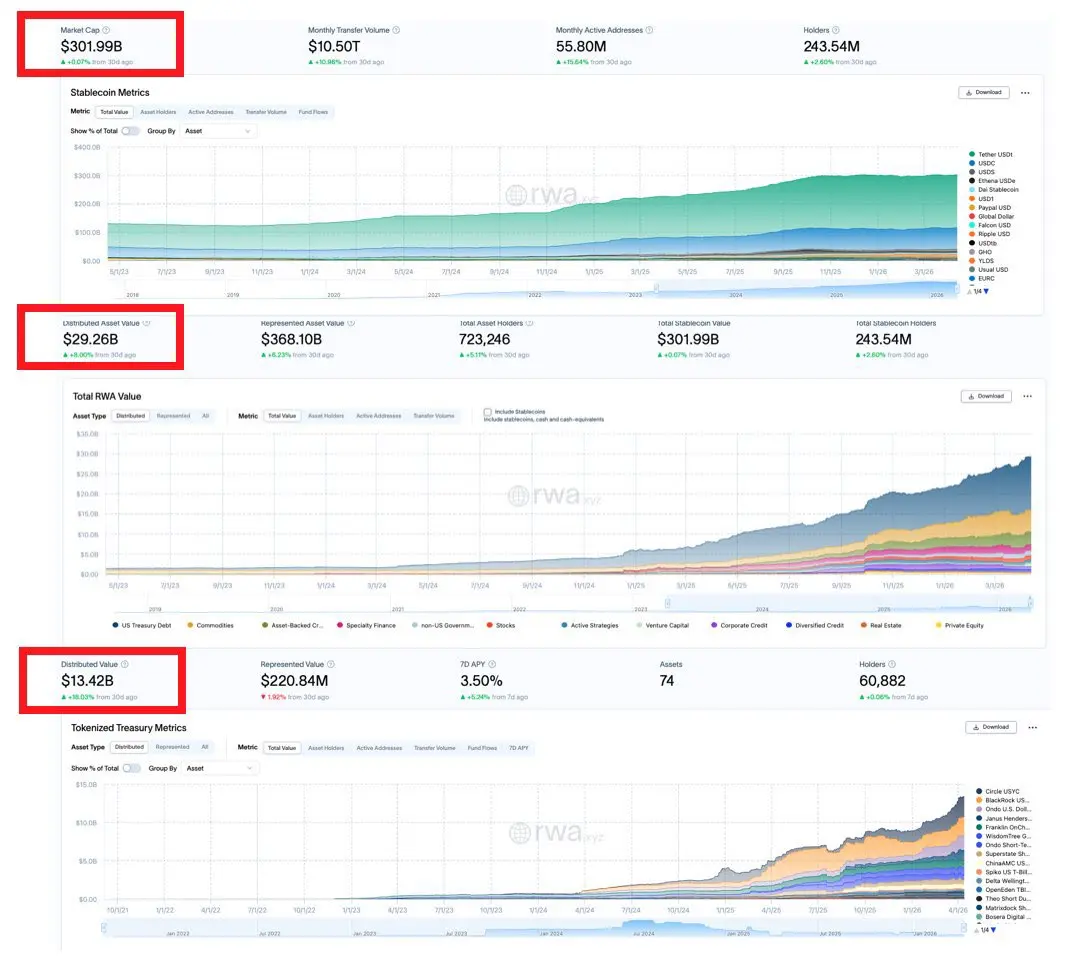
RWA is quietly becoming the biggest use case of crypto.
Stablecoin flows now power crossborder payments at speeds banks still struggle to match, while tokenization is making hard-to-trade assets easy to move and use.
Institutions are already using blockchain rails for settlement, making transactions faster and more reliable.
On the corporate side, treasury management is shifting onchain with firms optimizing yield and liquidity in real time.
Meanwhile, remittances are being rebuilt from the ground up. Cheaper. Faster. This is what the new generation knows crypto to be.
RWA0.06%
post-image
  • Reward
  • Comment
  • Repost
  • Share
Selling pressure is fading quietly.
> whale flows dropping below $3B.
> coins not moving to exchanges.
> LTHs buying into weakness.
> leverage stable, no forced unwind.
This isn’t aggressive demand yet.
It’s supply stepping away from the market.
That’s the first phase of a turn.
Price doesn’t need buyers to rally.
It just needs fewer sellers.
And right now, that condition is starting to show.
  • Reward
  • Comment
  • Repost
  • Share
Payments won’t look different.
But the system that settles them already is.
That’s where the shift is happening.
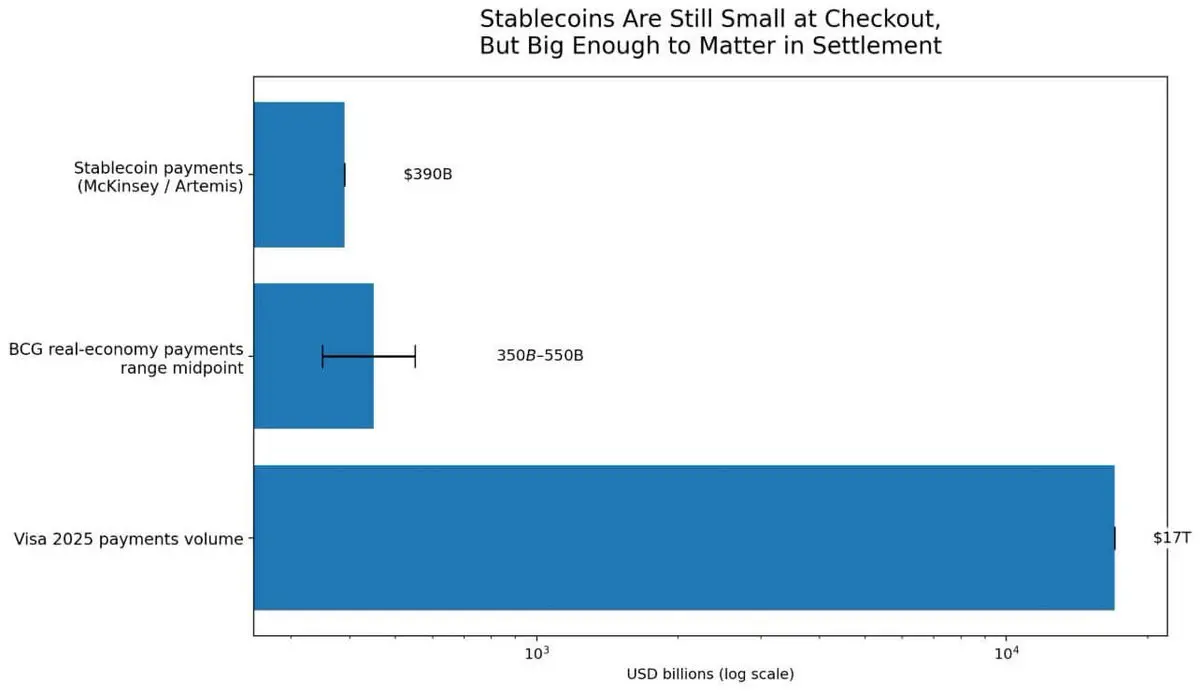
Right now, stablecoins process roughly:
• $350B–$550B in real payment volume
• $390B annualized (McKinsey / Artemis range)
That’s only 2–3% of global payment volume.
But that’s already enough to reshape the economics.
Because checkout and settlement are not the same layer.
You can keep the same cards.
The same UX.
And completely replace what happens underneath.
That’s exactly what’s happening.
• Visa is settling in $USDC.
• Stripe acquired Bridge to own stablecoin infrastructure.
USDC0.01%
post-image
  • Reward
  • 1
  • Repost
  • Share
GateUser-2393d371:
To The Moon 🌕
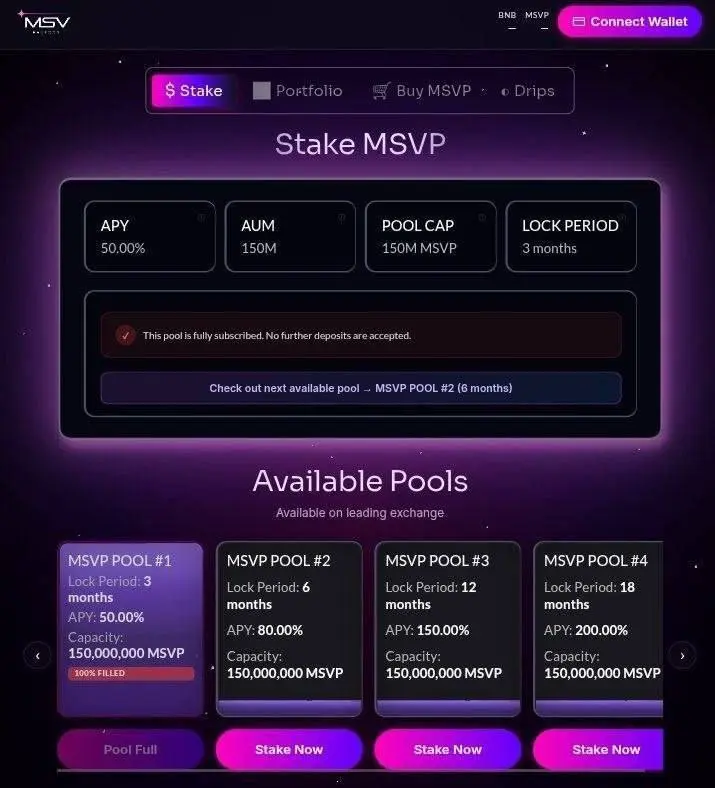
200% APY. Fixed pools. First round already gone.
Yeah… this isn’t staying unnoticed for long
$MSVP staking just went live and early traction is strong
Simple setup, structured locks, real demand
Live on LBank, BingX + DEXs
Stake here
LONG-12.59%
ON-5.72%
post-image
  • Reward
  • Comment
  • Repost
  • Share
  • Pin