
𝗦𝗽𝗮𝗰𝗲𝗫 𝗜𝗣𝗢 𝗮𝘁 $𝟭.𝟳𝟱 𝗧𝗿𝗶𝗹𝗹𝗶𝗼𝗻 — 𝗔 𝗡𝗲𝘄 𝗖𝗮𝗽𝗶𝘁𝗮𝗹 𝗠𝗮𝗴𝗻𝗲𝘁 𝗧𝗵𝗮𝘁 𝗥𝗲𝗱𝗲𝗳𝗶𝗻𝗲𝘀 𝗚𝗹𝗼𝗯𝗮𝗹 𝗟𝗶𝗾𝘂𝗶𝗱𝗶𝘁𝘆
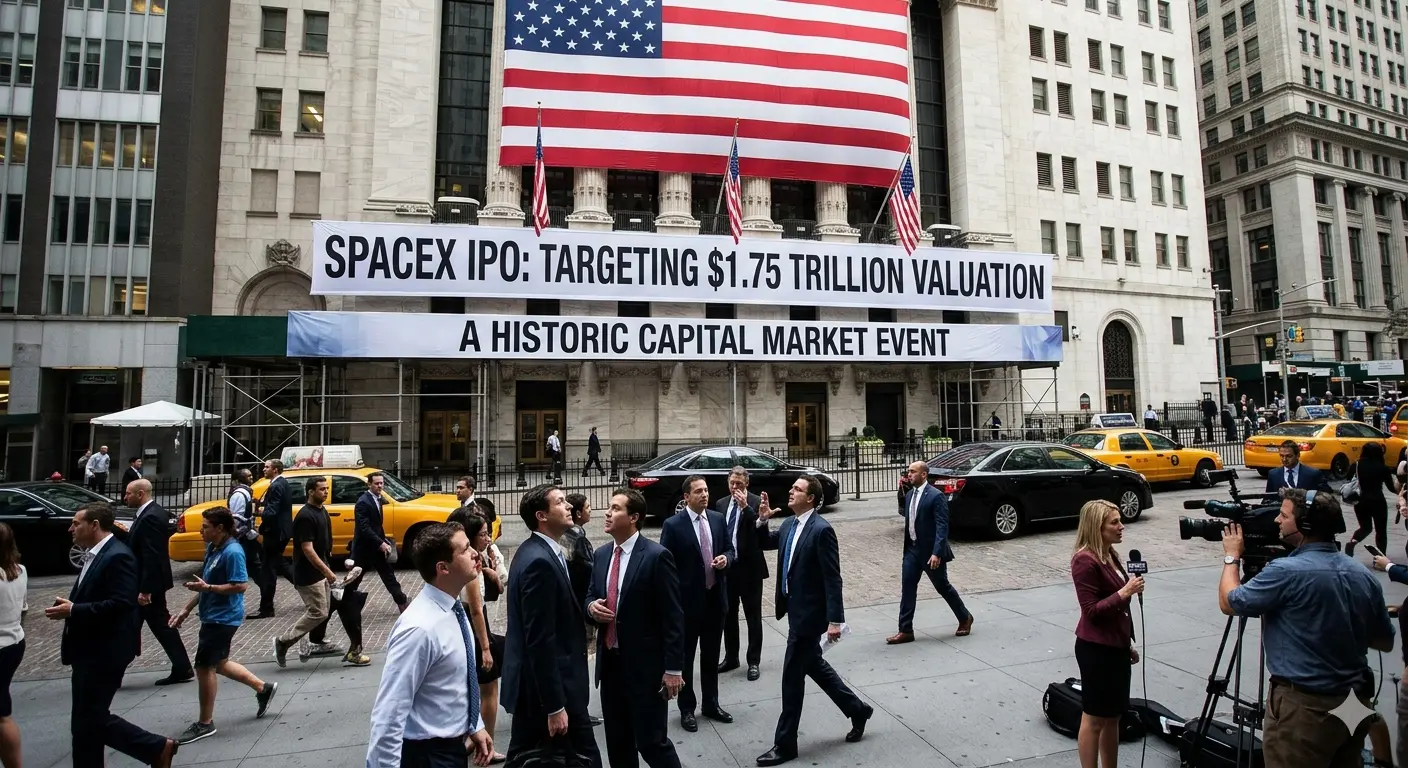
The upcoming SpaceX IPO targeting a $1.75 trillion valuation represents one of the most significant capital market events in modern financial history. Beyond the headline number, the listing reflects a deeper transformation in how capital is allocated globally, where technology, infrastructure, AI, and digital assets are increasingly bundled into single mega-entities that compete directly for institutional liquidity.
This is no longer just a space company entering public markets — it is a multi-sector capital platform being priced as a convergence of satellite internet, launch systems, AI infrastructure, defense contracts, and digital asset exposure.
---
𝗧𝗵𝗲 𝗦𝗰𝗮𝗹𝗲 𝗼𝗳 𝗖𝗮𝗽𝗶𝘁𝗮𝗹 𝗔𝗹𝗹𝗼𝗰𝗮𝘁𝗶𝗼𝗻
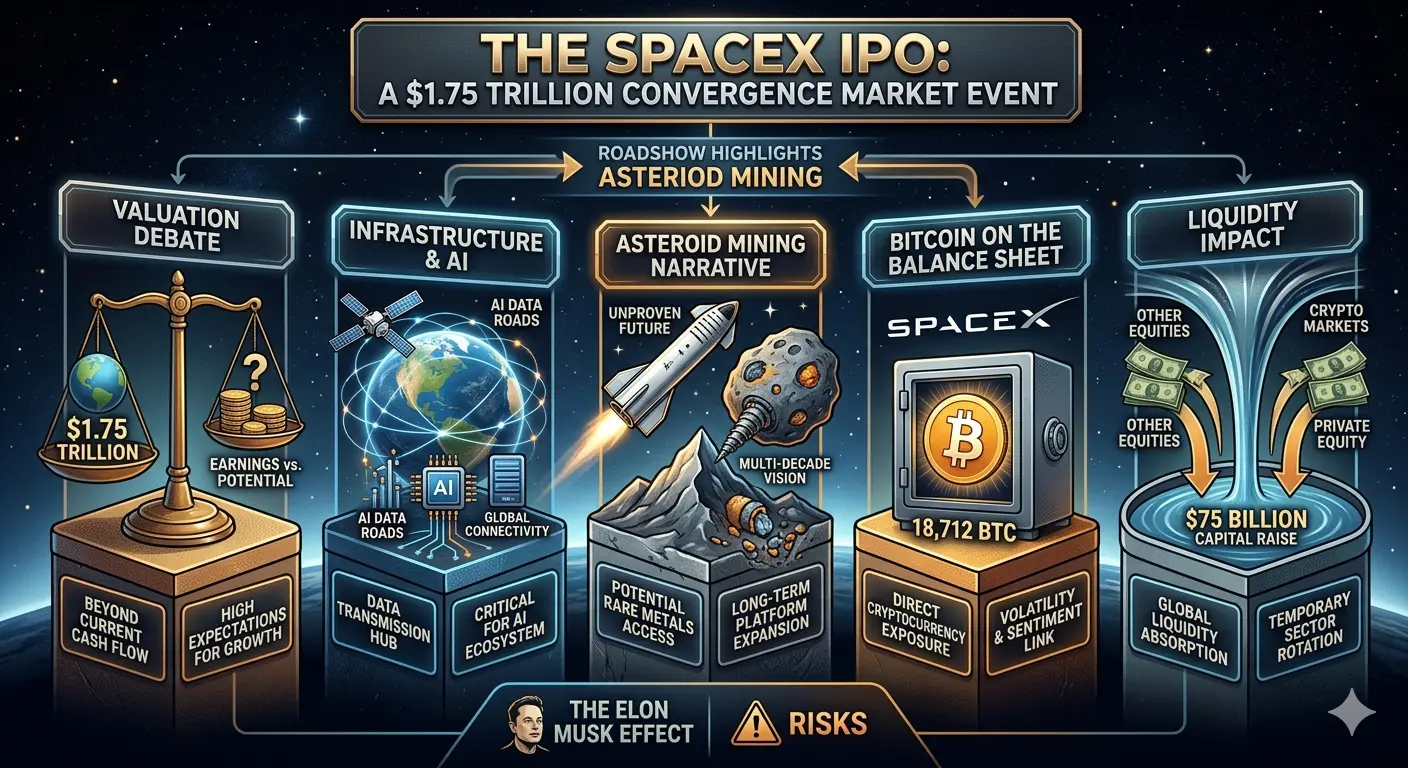
The IPO is structured around a massive capital raise of approximately $75 billion, making it one of the largest liquidity absorption events ever recorded. At a fixed reference price of $135 per share, the listing immediately places SpaceX among the top tier of global public companies, competing directly with the largest technology and semiconductor giants.
This scale matters because capital of this magnitude does not exist in isolation. It competes across asset classes — equities, crypto, bonds, and private markets — for the same pool of global risk appetite.
---
𝗧𝗵𝗲 𝗦𝘂𝗺-𝗼𝗳-𝘁𝗵𝗲-𝗣𝗮𝗿𝘁𝘀 𝗣𝗿𝗶𝗰𝗶𝗻𝗴 𝗠𝗼𝗱𝗲𝗹
The valuation reflects a layered structure of interconnected business units rather than a single revenue stream.
Starlink broadband is positioned as the largest contributor, supported by global satellite internet expansion and rapidly scaling subscriber growth. Enterprise, maritime, and aviation connectivity add another high-margin layer built on premium data services. Defense contracts and government partnerships provide long-duration cash flow visibility backed by large backlog commitments.
Meanwhile, Starship represents a forward option value, pricing in future interplanetary logistics and ultra-low-cost orbital transport. Falcon launch services still anchor current revenue dominance, while direct-to-cell connectivity expands the addressable mobile infrastructure market.
Together, these segments form a valuation architecture that blends current cash flow with speculative long-term optionality.
---
𝗧𝗵𝗲 𝗔𝗜 𝗮𝗻𝗱 𝗗𝗮𝘁𝗮 𝗟𝗮𝘆𝗲𝗿 𝗘𝗳𝗳𝗲𝗰𝘁
A major structural shift in this IPO is the increasing weight of AI infrastructure within the valuation narrative. SpaceX is no longer positioned purely as a space logistics company, but as a data transmission and compute infrastructure node connecting orbital systems, satellite networks, and AI-driven communications platforms.
This transforms the company into part of the broader AI supply chain — where connectivity, latency reduction, and global data routing become as important as physical rocket launches.
---
𝗕𝗶𝘁𝗰𝗼𝗶𝗻 𝗢𝗻 𝘁𝗵𝗲 𝗕𝗮𝗹𝗮𝗻𝗰𝗲 𝗦𝗵𝗲𝗲𝘁
One of the most significant disclosures is SpaceX’s Bitcoin holdings of approximately 18,712 BTC. This introduces a direct bridge between traditional equity markets and digital asset exposure at institutional scale.
At current valuation levels, these holdings represent a meaningful treasury asset that links company performance to crypto market cycles. This creates a dual sensitivity:
- Rising Bitcoin → enhances balance sheet strength and investor sentiment
- Falling Bitcoin → introduces mark-to-market pressure on financial perception
This structure effectively embeds crypto volatility inside a top-tier equity instrument.
---
𝗟𝗶𝗾𝘂𝗶𝗱𝗶𝘁𝘆 𝗖𝗼𝗺𝗽𝗲𝘁𝗶𝘁𝗶𝗼𝗻 𝗜𝗺𝗽𝗮𝗰𝘁
The most immediate market consequence of this IPO is liquidity absorption. A $75 billion capital raise removes a substantial amount of risk capital from circulation at a time when global markets are already experiencing rotation between equities, crypto, and AI-driven investment themes.
This creates a competitive environment where:
- Growth equities compete with mega IPO demand
- Crypto competes with institutional equity allocation
- AI narratives compete across both asset classes
The result is a temporary tightening of liquidity conditions in risk markets.
---
𝗠𝗮𝗿𝗸𝗲𝘁 𝗦𝗲𝗻𝘁𝗶𝗺𝗲𝗻𝘁 𝗔𝗻𝗱 𝗡𝗮𝗿𝗿𝗮𝘁𝗶𝘃𝗲 𝗣𝗼𝘄𝗲𝗿
Beyond fundamentals, the IPO carries strong narrative influence. The association with Elon Musk amplifies attention across technology, AI, space, and crypto markets simultaneously. This creates a highly reactive sentiment environment where price discovery will be influenced not only by financial performance but also by perception, media momentum, and early trading behavior.
A strong debut could reinforce AI-driven capital rotation into mega-cap innovation assets, while a weak start could temporarily dampen broader risk appetite across correlated sectors.
---
𝗕𝗿𝗼𝗮𝗱𝗲𝗿 𝗖𝗿𝘆𝗽𝘁𝗼 𝗠𝗮𝗿𝗸𝗲𝘁 𝗜𝗺𝗽𝗹𝗶𝗰𝗮𝘁𝗶𝗼𝗻𝘀
For digital assets, the IPO introduces both opportunity and pressure. On one side, SpaceX validates Bitcoin as a legitimate corporate treasury asset at the highest level of global enterprise scale. On the other side, the massive capital requirement competes directly with crypto liquidity pools.
This dual effect creates a complex environment where:
- Bitcoin gains long-term institutional legitimacy
- Short-term liquidity is redirected toward equity markets
- Altcoins face amplified sensitivity to capital rotation
---
𝗙𝗶𝗻𝗮𝗹 𝗦𝘁𝗿𝘂𝗰𝘁𝘂𝗿𝗮𝗹 𝗜𝗻𝘁𝗲𝗿𝗽𝗿𝗲𝘁𝗮𝘁𝗶𝗼𝗻
The SpaceX IPO represents more than a listing event — it represents a repricing of global innovation capital. Space, AI, connectivity, and crypto are no longer separate investment themes but interconnected layers of the same financial system.
The outcome of this IPO will influence:
- Equity market liquidity cycles
- AI investment flows
- Crypto market sentiment
- Institutional risk allocation strategies
In essence, SpaceX is not just entering the market — it is actively reshaping how global capital is priced, allocated, and rotated across the entire risk spectrum.
#SpaceXTargets1.75TrillionIPO
The upcoming SpaceX IPO targeting a $1.75 trillion valuation represents one of the most significant capital market events in modern financial history. Beyond the headline number, the listing reflects a deeper transformation in how capital is allocated globally, where technology, infrastructure, AI, and digital assets are increasingly bundled into single mega-entities that compete directly for institutional liquidity.
This is no longer just a space company entering public markets — it is a multi-sector capital platform being priced as a convergence of satellite internet, launch systems, AI infrastructure, defense contracts, and digital asset exposure.
---
𝗧𝗵𝗲 𝗦𝗰𝗮𝗹𝗲 𝗼𝗳 𝗖𝗮𝗽𝗶𝘁𝗮𝗹 𝗔𝗹𝗹𝗼𝗰𝗮𝘁𝗶𝗼𝗻
The IPO is structured around a massive capital raise of approximately $75 billion, making it one of the largest liquidity absorption events ever recorded. At a fixed reference price of $135 per share, the listing immediately places SpaceX among the top tier of global public companies, competing directly with the largest technology and semiconductor giants.
This scale matters because capital of this magnitude does not exist in isolation. It competes across asset classes — equities, crypto, bonds, and private markets — for the same pool of global risk appetite.
---
𝗧𝗵𝗲 𝗦𝘂𝗺-𝗼𝗳-𝘁𝗵𝗲-𝗣𝗮𝗿𝘁𝘀 𝗣𝗿𝗶𝗰𝗶𝗻𝗴 𝗠𝗼𝗱𝗲𝗹
The valuation reflects a layered structure of interconnected business units rather than a single revenue stream.
Starlink broadband is positioned as the largest contributor, supported by global satellite internet expansion and rapidly scaling subscriber growth. Enterprise, maritime, and aviation connectivity add another high-margin layer built on premium data services. Defense contracts and government partnerships provide long-duration cash flow visibility backed by large backlog commitments.
Meanwhile, Starship represents a forward option value, pricing in future interplanetary logistics and ultra-low-cost orbital transport. Falcon launch services still anchor current revenue dominance, while direct-to-cell connectivity expands the addressable mobile infrastructure market.
Together, these segments form a valuation architecture that blends current cash flow with speculative long-term optionality.
---
𝗧𝗵𝗲 𝗔𝗜 𝗮𝗻𝗱 𝗗𝗮𝘁𝗮 𝗟𝗮𝘆𝗲𝗿 𝗘𝗳𝗳𝗲𝗰𝘁
A major structural shift in this IPO is the increasing weight of AI infrastructure within the valuation narrative. SpaceX is no longer positioned purely as a space logistics company, but as a data transmission and compute infrastructure node connecting orbital systems, satellite networks, and AI-driven communications platforms.
This transforms the company into part of the broader AI supply chain — where connectivity, latency reduction, and global data routing become as important as physical rocket launches.
---
𝗕𝗶𝘁𝗰𝗼𝗶𝗻 𝗢𝗻 𝘁𝗵𝗲 𝗕𝗮𝗹𝗮𝗻𝗰𝗲 𝗦𝗵𝗲𝗲𝘁
One of the most significant disclosures is SpaceX’s Bitcoin holdings of approximately 18,712 BTC. This introduces a direct bridge between traditional equity markets and digital asset exposure at institutional scale.
At current valuation levels, these holdings represent a meaningful treasury asset that links company performance to crypto market cycles. This creates a dual sensitivity:
- Rising Bitcoin → enhances balance sheet strength and investor sentiment
- Falling Bitcoin → introduces mark-to-market pressure on financial perception
This structure effectively embeds crypto volatility inside a top-tier equity instrument.
---
𝗟𝗶𝗾𝘂𝗶𝗱𝗶𝘁𝘆 𝗖𝗼𝗺𝗽𝗲𝘁𝗶𝘁𝗶𝗼𝗻 𝗜𝗺𝗽𝗮𝗰𝘁
The most immediate market consequence of this IPO is liquidity absorption. A $75 billion capital raise removes a substantial amount of risk capital from circulation at a time when global markets are already experiencing rotation between equities, crypto, and AI-driven investment themes.
This creates a competitive environment where:
- Growth equities compete with mega IPO demand
- Crypto competes with institutional equity allocation
- AI narratives compete across both asset classes
The result is a temporary tightening of liquidity conditions in risk markets.
---
𝗠𝗮𝗿𝗸𝗲𝘁 𝗦𝗲𝗻𝘁𝗶𝗺𝗲𝗻𝘁 𝗔𝗻𝗱 𝗡𝗮𝗿𝗿𝗮𝘁𝗶𝘃𝗲 𝗣𝗼𝘄𝗲𝗿
Beyond fundamentals, the IPO carries strong narrative influence. The association with Elon Musk amplifies attention across technology, AI, space, and crypto markets simultaneously. This creates a highly reactive sentiment environment where price discovery will be influenced not only by financial performance but also by perception, media momentum, and early trading behavior.
A strong debut could reinforce AI-driven capital rotation into mega-cap innovation assets, while a weak start could temporarily dampen broader risk appetite across correlated sectors.
---
𝗕𝗿𝗼𝗮𝗱𝗲𝗿 𝗖𝗿𝘆𝗽𝘁𝗼 𝗠𝗮𝗿𝗸𝗲𝘁 𝗜𝗺𝗽𝗹𝗶𝗰𝗮𝘁𝗶𝗼𝗻𝘀
For digital assets, the IPO introduces both opportunity and pressure. On one side, SpaceX validates Bitcoin as a legitimate corporate treasury asset at the highest level of global enterprise scale. On the other side, the massive capital requirement competes directly with crypto liquidity pools.
This dual effect creates a complex environment where:
- Bitcoin gains long-term institutional legitimacy
- Short-term liquidity is redirected toward equity markets
- Altcoins face amplified sensitivity to capital rotation
---
𝗙𝗶𝗻𝗮𝗹 𝗦𝘁𝗿𝘂𝗰𝘁𝘂𝗿𝗮𝗹 𝗜𝗻𝘁𝗲𝗿𝗽𝗿𝗲𝘁𝗮𝘁𝗶𝗼𝗻
The SpaceX IPO represents more than a listing event — it represents a repricing of global innovation capital. Space, AI, connectivity, and crypto are no longer separate investment themes but interconnected layers of the same financial system.
The outcome of this IPO will influence:
- Equity market liquidity cycles
- AI investment flows
- Crypto market sentiment
- Institutional risk allocation strategies
In essence, SpaceX is not just entering the market — it is actively reshaping how global capital is priced, allocated, and rotated across the entire risk spectrum.
#SpaceXTargets1.75TrillionIPO