

Trade
Basic
Futures
Futures
Hundreds of contracts settled in USDT or BTC
TradFi
Gold
Trade global traditional assets with USDT in one place
Options
Hot
Trade European-style vanilla options
Unified Account
Maximize your capital efficiency
Demo Trading
Futures Kickoff
Get prepared for your futures trading
Futures Events
Participate in events to win generous rewards
Demo Trading
Use virtual funds to experience risk-free trading
Earn
Launch
CandyDrop
Collect candies to earn airdrops
Launchpool
Quick staking, earn potential new tokens
HODLer Airdrop
Hold GT and get massive airdrops for free
Launchpad
Be early to the next big token project
Alpha Points
Trade on-chain assets and enjoy airdrop rewards!
Futures Points
Earn futures points and claim airdrop rewards
Investment
Simple Earn
Earn interests with idle tokens
Auto-Invest
Auto-invest on a regular basis
Dual Investment
Buy low and sell high to take profits from price fluctuations
Soft Staking
Earn rewards with flexible staking
Crypto Loan
0 Fees
Pledge one crypto to borrow another
Lending Center
One-stop lending hub
VIP Wealth Hub
Customized wealth management empowers your assets growth
Private Wealth Management
Customized asset management to grow your digital assets
Quant Fund
Top asset management team helps you profit without hassle
Staking
Stake cryptos to earn in PoS products
Smart Leverage
New
No forced liquidation before maturity, worry-free leveraged gains
GUSD Minting
Use USDT/USDC to mint GUSD for treasury-level yields

More




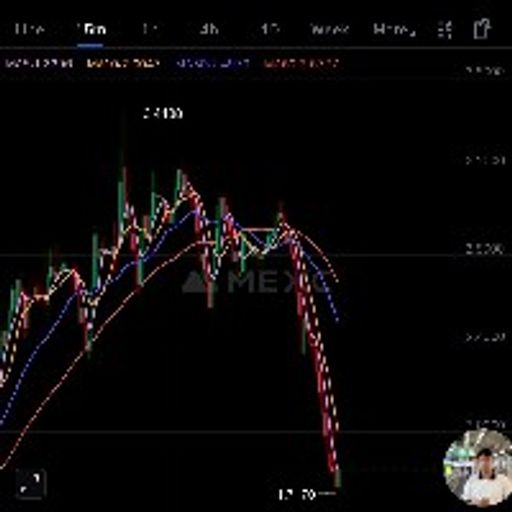

Solved! The culprit behind $BTC 's epic plunge isn't actually ETF redemptions? This data reveals Wall Street's true "meat grinder."
When the market experiences a sharp decline, people always look for a simple attribution. Recent discussions about the February 5 crash and the subsequent rebound have focused on BlackRock’s $IBIT. Some analyses point out that this volatility is more closely linked to the spot $ETF system than it appears on the surface.
Jeff Park, an advisor at Bitwise, observed that on February 5, $IBIT hit record levels in trading volume and options activity, with a structure leaning toward puts. Counterintuitively, during a double-digit price drop, the market did not see panic redemptions; instead, there was net share creation and capital inflow. This phenomenon of “crash and net creation co-occurring” weakens the explanation that retail redemptions caused selling pressure.
It aligns more with internal risk reduction mechanisms within traditional financial systems. Market makers and multi-asset portfolios are forced to de-risk within a derivatives framework. Selling pressure stems from adjustments in paper-based positions and hedge chain squeezes, ultimately transmitting shocks to $BTC prices through the secondary market and options via $IBIT.
Many equate “$IBIT institutional liquidation” directly with “market crash,” but this may invert causality. The secondary market trading of $ETF shares involves the shares themselves, while primary market creation and redemption correspond to changes in the underlying $BTC held in custody. Mapping secondary market volume linearly to equivalent spot sell-offs misses a key step.
A common narrative focuses on net outflows in the primary market, suggesting redemptions force issuers to sell underlying $BTC. But this overlooks a key fact: only authorized participants can create or redeem shares in the secondary market. Daily net inflow/outflow data reflect changes in total share count, not automatically in the underlying $BTC. Large secondary market trading volume only changes who holds the shares, not the total amount of shares or directly alter the custodied $BTC.
Market analyst Phyrex Ni points out that the liquidation discussed is actually the liquidation of the $IBIT spot $ETF, not $BTC itself. The buy and sell activity in the secondary market involves only the $IBIT “ticket,” with its price anchored to $BTC, but the trades occur only within the securities market.
The actual interaction with $BTC occurs only in the primary market, executed by authorized participants. When creating shares, $BTC enters a regulated custody system; when redeeming, $BTC is returned to the authorized participant. An ETF is essentially a two-tier market: the primary market is mainly provided by authorized participants, whose behavior is similar to generating stablecoins with USD.
Authorized participants rarely circulate $BTC through exchanges; their selling actions may not go through the public spot market. They might use inventory or arrange flexible settlement within the clearing window. Therefore, even on February 5, when volatility was high, the $BTC redeemed by BlackRock investors was less than 3,000 coins, and the total redemption volume of all US spot ETF institutions was less than 6,000 coins.
Not all of these 6,000 coins necessarily flowed into exchanges. Meanwhile, the total secondary market trading volume on $IBIT that day reached $10.7 billion, and the liquidation triggered was limited to the ETF shares themselves, not effectively transmitted to the primary market. The sharp decline in $BTC caused $IBIT to liquidate, but $IBIT did not cause $BTC to liquidate.
So, how is the pressure transmitted? Some believe that when long positions in $IBIT are liquidated, causing concentrated selling in the secondary market, if buy orders are insufficient, $IBIT’s net asset value (NAV) may trade at a discount. This discount creates arbitrage opportunities, prompting professional funds like authorized participants to step in and buy.
After taking over, authorized participants face price fluctuation risks during the redemption process, so they hedge immediately. Hedging might involve selling spot inventory or establishing short positions in $BTC futures. The former directly suppresses spot prices; the latter influences derivatives spreads, indirectly affecting the spot.
Once hedged, authorized participants hold neutral positions and can choose how to handle these $IBIT shares: redeem them on the same day, reflected in next-day net outflow data; or hold off on redemption, waiting for secondary market sentiment to recover before selling directly. Even if the final disposition occurs in the secondary market, and no significant net redemption is observed in the primary market, the transmission to $BTC can still happen through hedging activities.
Data shows that on February 5, $BTC price dropped over 14%, but the net outflow from $ETF was only 0.46% of its total holdings of 1.273 million coins, or about 5,952 coins. This confirms that the main selling pressure was not due to $BTC redemptions from the ETF itself. Market volatility is more a complex reflection of traditional financial risk transmission mechanisms in the crypto space.
Follow me for more real-time analysis and insights into the crypto market! $BTC $ETH $SOL
#GateSquareCreatorSpringFestivalIncentive