

Trade
Basic
Futures
Futures
Hundreds of contracts settled in USDT or BTC
TradFi
Gold
Trade global traditional assets with USDT in one place
Options
Hot
Trade European-style vanilla options
Unified Account
Maximize your capital efficiency
Demo Trading
Futures Kickoff
Get prepared for your futures trading
Futures Events
Participate in events to win generous rewards
Demo Trading
Use virtual funds to experience risk-free trading
Earn
Launch
CandyDrop
Collect candies to earn airdrops
Launchpool
Quick staking, earn potential new tokens
HODLer Airdrop
Hold GT and get massive airdrops for free
Launchpad
Be early to the next big token project
Alpha Points
Trade on-chain assets and enjoy airdrop rewards!
Futures Points
Earn futures points and claim airdrop rewards
Investment
Simple Earn
Earn interests with idle tokens
Auto-Invest
Auto-invest on a regular basis
Dual Investment
Buy low and sell high to take profits from price fluctuations
Soft Staking
Earn rewards with flexible staking
Crypto Loan
0 Fees
Pledge one crypto to borrow another
Lending Center
One-stop lending hub
VIP Wealth Hub
Customized wealth management empowers your assets growth
Private Wealth Management
Customized asset management to grow your digital assets
Quant Fund
Top asset management team helps you profit without hassle
Staking
Stake cryptos to earn in PoS products
Smart Leverage
New
No forced liquidation before maturity, worry-free leveraged gains
GUSD Minting
Use USDT/USDC to mint GUSD for treasury-level yields

More






The Ironclad Definition of Victory: Why Most Crypto Investors Fail Before They Even Begin
After navigating over a decade of market cycles since first acquiring Bitcoin in 2013, one uncomfortable truth emerges with undeniable clarity: the way most people measure success in cryptocurrency is fundamentally broken. They confuse temporary profit with actual winning, and therein lies the root of their destruction.
Here’s the ironclad definition that separates the survivors from the casualties: Victory isn’t how much money you make in any single cycle. Nearly everyone who touches this space makes money at least once. A novice with minimal capital can ride a bull run and feel like a genius for a few months. The real measure of winning is whether you keep that money. Can you still hold it three years later? Five years? Does it compound? The distinction may seem subtle, but it determines everything.
This isn’t a competition of “who earns the most” or “who doubles fastest.” It’s a competition of “who survives to the next cycle”—and then the next one, and the one after that. Most of the self-proclaimed “geniuses” become collateral damage. A tiny fraction persist. Among those survivors, even fewer achieve the compounding effect that transforms wealth.
The Hidden Pattern Behind Market Cycles
When market sentiment enters familiar doldrums—like October 11th brought many crypto friendships to an abrupt end—reflection becomes unavoidable. Thousands exit the space. New “old friends” disappear. Yet this cycle of devastation has repeated countless times before. The question worth asking: What separates those who emerge from the wreckage intact from those who are swept away entirely?
The answer requires forgetting most conventional wisdom about what drives markets. It demands returning to first principles.
Most participants blame stagnation on obvious culprits:
These factors matter, but they’re not the real story. Navigate through enough cycles and a clearer pattern emerges: Crypto markets revive not when they become more like traditional systems, but when they remind people why traditional systems suffocate them.
The actual drivers of cycles aren’t found in price charts. They exist at a deeper level where three conditions must align simultaneously:
When all three fail together, prices collapse not because the technology died—but because there’s no new element creating synergy among fresh participants.
Consensus Upgrades: The Real Catalyst for Growth
This distinction explains why most people chase false signals. They’re looking for better products, shinier features, new narratives. But these are effects, not causes. The genuine turning points arrive only after consensus itself has evolved.
Consensus and narrative are not synonyms—this is where most investors develop fatal blind spots:
Narratives are spoken; consensus is built through repeated behavior. Narratives attract eyeballs; consensus retains participants. A narrative without action creates brief euphoria that evaporates when the incentive dries up. Action without narrative happens invisibly, leaving no trail. Only when both exist simultaneously does a true major cycle emerge.
To illustrate: examine how cryptocurrency has evolved its organizing mechanisms across major cycles.
The 2017 ICO Revolution: Financializing Dreams
ICOs represented the first time the crypto world achieved global coordination around shared belief. Before this, fundraising was ad hoc. Early attempts like Mastercoin (2013) and Ethereum’s crowdfunding (2014) remained niche experiments.
Then 2017 arrived. Ethereum’s ERC-20 standard made token creation industrial-scale. Suddenly:
Yes, most ICOs were scams or Ponzi schemes—but that’s beside the point. The behavioral coordination mechanism itself had permanently shifted. Even after the collapse, nobody reverted to the old model. The idea that anyone anywhere could crowdfund a protocol had taken root. This consensus upgrade survived even after the bubble burst.
The 2020 DeFi Summer: Economic Productivity Without Permission
This cycle introduced something more profound: the concept that crypto holders could perform actual financial labor. Before DeFi, post-ICO experience meant: buy, hold, trade, pray.
Suddenly people learned:
The radical breakthrough? Even when ETH and BTC traded sideways, the entire ecosystem felt alive. Activity levels stopped depending on price explosions. The “pure casino” image shattered because for the first time, crypto resembled a productive financial system rather than speculative theater.
Projects like Uniswap, Aave, Compound, and Yearn Finance became “internet banks.” This wasn’t temporary hype. Even after the cycle cooled, these behavioral patterns endured. The 2026 world still operates on DeFi’s foundational architecture.
Then came the copycats. Projects named after food items (Pasta, Spaghetti, Kimchi) emerged. They possessed no new coordinated behaviors—mostly they vanished as quickly as they appeared. These represented the cycle’s “last gasp” rather than genuine upgrades.
The 2021 NFT Era: Rebuilding Digital Identity
If DeFi was the geeks’ cycle, 2021 marked crypto’s emergence into mainstream personality. The market stopped being purely about yield and began pursuing atmosphere, identity, belonging.
For the first time, digital items carried verifiable provenance. A blockchain receipt proved “you are the original owner.” This seemingly minor technical detail rewrote entire social scripts. People stopped outmaneuvering each other through calculations; they started displaying status.
Profile pictures became passports. Owning a CryptoPunk or BAYC signaled membership in a digital elite. Wallets became membership cards. Without the right assets, you couldn’t access private channels, exclusive events, or airdrops.
BAYC’s commercial rights grant was revolutionary—it expanded the “ownership revolution” beyond speculation. Strangers began collaborating around their digital ape to create merchandise, music, streetwear. Artists, gamers, and creators discovered wallets without caring about liquidation mechanics.
Crypto transformed from pure finance into a native cultural layer of the internet.
But the cycle’s imitative phase proved predictable. Once the BAYC model succeeded, countless “Boring Apes with different characters” flooded the market—all promise, no soul. Most became worthless air with price tags.
Then platforms like LooksRare applied DeFi’s “mining” logic to NFTs through transaction mining. The result? Bots engaged in wash trading to exploit loopholes while genuine investors escaped. Apparent trading volume masked algorithmic self-dealing.
Celebrity projects arrived next. A-list stars launched collections because agents promised money machines. Without authentic community or consensus backing them, these projects vanished faster than TikTok trends.
Yet the behavioral patterns survived the collapse. Crypto wasn’t merely a digital bank anymore—it had become a native cultural layer. The lesson: When cycles recede, the behavioral coordination mechanisms often persist. New users still organize around digital identity and cultural belonging exactly as 2021 established.
Identifying Real Opportunities Before They Explode
By now, a pattern becomes visible. Every genuine cycle begins with an outside group—people joining not for speculation but for creation, building, or identity. If a phenomenon only attracts traders engaged in pure PvP competition, the room is essentially empty.
To distinguish between a “last gasp” and genuine upgrade, stop examining price charts. Examine behavior instead.
Ask five critical questions:
1. Have genuine “outsiders” arrived? Look for participants whose primary motivation isn’t profit extraction. Are creators, builders, or identity-seekers entering the ecosystem? If only traders remain, speculation alone cannot sustain expansion.
2. Does it pass the “incentive decay” test? Watch what happens when rewards evaporate or prices plateau. If people remain and continue participating, a habit has formed—a real upgrade. If they vanish the moment free lunch ends, you’re examining air with a price tag.
3. Are participants building “daily habits” rather than taking “positions”? Beginners stare at candlesticks. Experts observe what people do every day. Habits indicate permanence; positions indicate speculation.
4. Does “behavior precede experience”? True transformations often arrive when technology is still primitive, fragmented, and inefficient. If people tolerate poor UX to participate, the behavior is genuine. Once applications become polished, the opportunity window closes.
5. Can the system “generate electricity with love”? This question matters most. Real shifts complete when people defend a system because it shapes their identity—not because they’ll lose money. If you only fantasize about aggressive buying at specific prices, you’re likely the person who “sells the big trend too early,” “can’t hold positions,” “breaks psychologically,” and “can’t sleep with open orders.”
The explosive candlestick arrives because behavioral patterns changed months prior. Prices are the lagging indicator confirming the world already moved forward.
The Framework That Separates Survivors
Survival requires building three interconnected foundations: understanding cycle logic, developing investigative skills, and constructing personal belief anchors.
Part One: Cycle Logic (Complete)
You now understand how genuine upgrades differ from imitative bubbles, how consensus coordinates behavior, and how to spot emerging patterns before prices reflect them.
Part Two: The Investigator’s Toolkit
Those who navigate this space without becoming “liquidity” develop specific skills:
Learn to identify organized attacks. Examine wallet histories, holding distributions, bundled transactions, and fund flows. Develop instincts for suspicious on-chain activity before it destroys you. In 2026, most experienced participants automate anomaly detection using custom tools—anyone without this automation still relies on manual information hunting.
Understand market mechanics. Study order book depth, exchange flows, token unlock schedules, Mcap/TVL ratios, funding rates, and macroeconomic liquidity patterns. A single liquidation cascade has ruined more accounts than scams.
Comprehend MEV and sandwich attacks. The “dark forest” of blockchain extracts value from the uninitiated constantly. If you don’t understand this, you won’t recognize when it’s happening to you—a costly blind spot.
Master forensic analysis. Identify volume manipulation, wash trading, fake transaction patterns. Spot low-liquidity/high-FDV traps before entering. If you’re hunting airdrops, understand anti-Sybil mechanisms.
Build personal research infrastructure. In 2026, nearly everyone uses custom-built tools for data anomaly alerts, news filtering, and narrative scanning. If you’re still manually hunting information, you’re perpetually one step behind. This doesn’t require computer science backgrounds—Vibe Coding has democratized entry.
Part Three: The Multi-Dimensional Value Anchoring System
Surviving multiple cycles requires anchoring belief across four levels simultaneously:
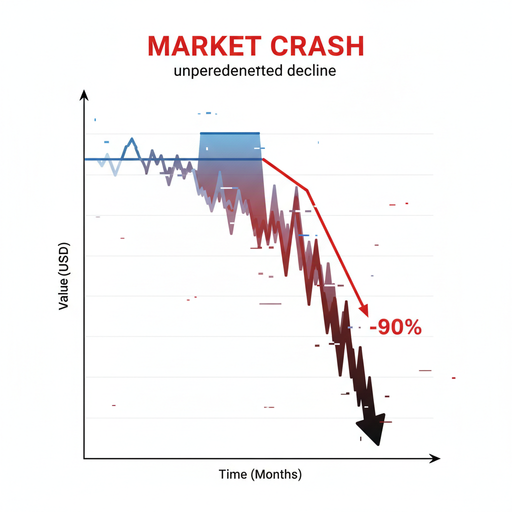
Level 1: Conceptual Anchoring Stop obsessing over candlesticks. Start examining core principles. Ask: What makes this worth holding if prices crash 90%? Review your last ten trades. How many will “exist” in two years? How many will actually “matter”?
If you can’t explain your position without invoking “community vibes” or “moon shots,” you don’t possess conviction—you’ve merely captured a position. Real conviction survives price devastation.
Level 2: Time Dimension Anchoring Most investors operate chaotically across timeframes, emotions dictating decisions:
This isn’t strategy; it’s handing money to someone else. Short-term speculation, medium-term positioning, and long-term investment require completely different behavioral disciplines. Those who navigate cycles understand which timeframe each position belongs to and never allow emotions to spread across dimensions.
Establish this boundary ruthlessly: Long-term beliefs don’t negate due to short-term price noise. Long-term narratives never excuse impulsive short-term operations.
Level 3: Behavioral Anchoring Before executing any trade, run through this gauntlet of uncomfortable questions:
These questions don’t predict candlesticks. They reveal whether your future self will betray your present self under psychological pressure. Calm deliberation establishes guardrails preventing reckless desperation.
Level 4: Belief Anchoring The loudest voices during bull markets vanish fastest when reversals arrive:
“Now is the final chance to buy XX!” “Bitcoin will never see sub-$100K again!” “If you don’t buy this, you oppose the future!”
Their “faith” apparently never existed. The get-rich-quick mentality doesn’t just destroy portfolios through excessive trading—it erodes entire belief systems. Reconstructing faith proves far harder than rebuilding capital.
Ask yourself: If someone vehemently attacked my position right now, could I defend it calmly? Could I confront sharp questions head-on or would I evade?
Your beliefs should be deeply personal and unique. For some, it’s cypherpunk philosophy: radical rebellion against centralized control. For others, it’s monetary history: recognition that fiat cycles repeat, and crypto represents the only genuine hedge against collapsed systems.
For many, it’s sovereignty itself—the simple right to move value without permission.
Find your own “why.” Don’t adopt borrowed beliefs from influencers.
One personal anchor: Bitcoin represents the first system in human history that asks nothing about identity. It doesn’t care about race, nationality, language, or birthplace. No priests, no politics, no borders, no permission required—only a private key.
The previous three great covenants all failed ordinary people. The Old Testament bound itself to bloodlines. The New Testament promised redemption to all but delivered it only to privileged populations. The Declaration of Independence pledged freedom and equality but only within certain lands with certain passports.
Bitcoin asks something revolutionary: What if everyone faced identical rules and equal access simultaneously? This isn’t an investment thesis. It’s not a trade or gamble. It’s the foundation supporting thirteen years of market turbulence, silence, doubt, ridicule, and despair.
The Ironclad Definition Emerges
After years of observation, the pattern crystallizes: The mindset that draws people into crypto—the desperate desire for overnight wealth—is precisely the mechanism that destroys them.
Those who became wealthy rarely entered with get-rich-quick expectations. Those who survive cycles share opposite characteristics:
The cruel honesty of this space cannot be overstated: Crypto forces out your internal demons. It discovers your weakest traits—greed, impatience, laziness—then charges catastrophic tuition fees.
The survivors have paid their tuition. The question is: Will you learn without the same bruises?
Final Truth
If you’ve read this entirely instead of requesting AI summaries, you’ve already demonstrated the quality separating successful navigators from casualties: you’re willing to invest genuine time in understanding.
The crypto world remains frustrating, often exasperating. Yet it’s worth building and loving because the ironclad definition of victory—surviving cycles, compounding gains, maintaining conviction through devastation—represents something humanity hasn’t achieved before: systems where ordinary people can participate on truly equal terms.
The next consensus upgrade is coming. Then the one after that. Countless cycles stretch ahead. The question isn’t whether opportunities will emerge. The question is whether you’ll possess the conviction, the discipline, and the belief to recognize them when they arrive.
Meet me then.