

Trade
Basic
Futures
Futures
Hundreds of contracts settled in USDT or BTC
Options
HOT
Trade European-style vanilla options
Unified Account
Maximize your capital efficiency
Demo Trading
Futures Kickoff
Get prepared for your futures trading
Futures Events
Participate in events to win generous rewards
Demo Trading
Use virtual funds to experience risk-free trading
Earn
Launch
CandyDrop
Collect candies to earn airdrops
Launchpool
Quick staking, earn potential new tokens
HODLer Airdrop
Hold GT and get massive airdrops for free
Launchpad
Be early to the next big token project
Alpha Points
NEW
Trade on-chain assets and enjoy airdrop rewards!
Futures Points
NEW
Earn futures points and claim airdrop rewards
Investment
Simple Earn
Earn interests with idle tokens
Auto-Invest
Auto-invest on a regular basis
Dual Investment
Buy low and sell high to take profits from price fluctuations
Soft Staking
Earn rewards with flexible staking
Crypto Loan
0 Fees
Pledge one crypto to borrow another
Lending Center
One-stop lending hub
VIP Wealth Hub
Customized wealth management empowers your assets growth
Private Wealth Management
Customized asset management to grow your digital assets
Quant Fund
Top asset management team helps you profit without hassle
Staking
Stake cryptos to earn in PoS products
Smart Leverage
NEW
No forced liquidation before maturity, worry-free leveraged gains
GUSD Minting
Use USDT/USDC to mint GUSD for treasury-level yields

More

Trending Topics
View More28.85K Popularity
29.07K Popularity
54.57K Popularity
18.64K Popularity
107.86K Popularity




Pin
Gate Square New & Returning Creator Rewards are ongoing!
Your ideas may be more valuable than you think!
Make your first post or come back post to share a $20,000 monthly prize pool!
Post with #MyFirstPostOnSquare to receive a $50 Position Voucher each
Monthly Top Posters and Top Engagers will each earn an extra $50 reward
Your crypto insights could inspire many—start creating today!
👉 https://www.gate.com/postGate Square “Creator Certification Incentive Program” — Recruiting Outstanding Creators!
Join now, share quality content, and compete for over $10,000 in monthly rewards.
How to Apply:
1️⃣ Open the App → Tap [Square] at the bottom → Click your [avatar] in the top right.
2️⃣ Tap [Get Certified], submit your application, and wait for approval.
Apply Now: https://www.gate.com/questionnaire/7159
Token rewards, exclusive Gate merch, and traffic exposure await you!
Details: https://www.gate.com/announcements/article/47889Your First Words Matter!
Share your first post on and split $10,000 in New Year rewards.
Post with #My2026FirstPost to share your New Year wish
2026U Position Voucher, Gate New Year boxes, F1 Red Bull merch await you!
Ends on Jan 15, 2026, 16:00 UTC
2026 starts with this post!Gate 2025 Year-End Gala Square TOP50 List Announced!
The final ranking phase is now live.
Earn Votes by watching live streams and posting.
30 Votes = 1 chance — support your favorite creators now!
👉 https://www.gate.com/activities/community-vote-2025
iPhone 17 Pro Max, JD gift cards, Mi Band, Gate merch await you!
Creators are welcome to rally fans to climb the rankings and win rewards!
Voting ends: Jan 20, 02:00 UTC
Details: https://www.gate.com/announcements/article/48693
Iran's Currency Crashes, Signaling a Major Economic Breakdown
Source: Coindoo Original Title: Iran’s Currency Crashes, Signaling a Major Economic Breakdown Original Link: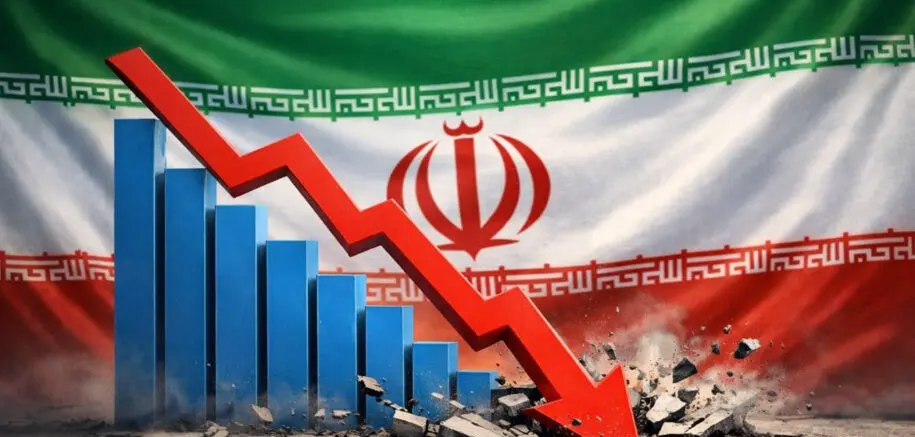
In Iran, the rial is increasingly treated less like a currency and more like a temporary placeholder. People use it to transact, but not to save, plan, or measure value. That behavioral shift explains more about the current crisis than the exchange rate itself.
In recent days, the rial crossed another threshold in informal markets, trading at levels that would have seemed implausible even a few years ago. But the real story is not the number. It is the near-total loss of confidence that now defines how money functions inside the economy.
Key Takeaways
Inflation Has Rewritten Incentives
With prices rising at an annual pace exceeding 40%, holding rials has become a guaranteed way to lose purchasing power. As a result, households and businesses behave rationally: they minimize exposure to the local currency wherever possible.
Income is converted quickly into dollars, gold, or property. Even short delays carry a cost. This constant demand for alternatives drains liquidity from the rial and accelerates its decline, regardless of official policy intentions.
In this environment, the currency no longer anchors the economy. It chases it.
The rial’s deterioration did not happen overnight. It unfolded over decades, punctuated by moments of sharp repricing when inflation surged or foreign currency access tightened. Each episode reset expectations lower.
What once required dozens of rials now requires millions. That change is not just numerical; it has reshaped how Iranians think about wages, savings, and prices. The currency’s long-term decline has normalized instability to the point where extreme moves no longer shock.
Imports Turn Currency Weakness Into Daily Pain
Iran’s dependence on imported essentials ensures that exchange-rate weakness is immediately felt at the household level. Food staples, medical supplies, and agricultural inputs all rely heavily on foreign sourcing.
As the rial weakens, import costs rise. Businesses respond by raising prices, which feeds directly back into inflation. This loop reinforces itself: higher prices increase demand for foreign currency, which weakens the rial further. There is no delay mechanism left in the system.
Stopping this cycle would require more than technical fixes. Inflation would need to slow decisively, foreign currency inflows would need to become predictable, and confidence in monetary management would need rebuilding.
International estimates, including those from the International Monetary Fund, suggest inflation accelerated again last year rather than easing. That trend makes currency stabilization mathematically difficult, even before political or external constraints are considered.
As long as domestic prices rise much faster than those of trading partners, depreciation remains embedded in everyday transactions.
A Signal, Not a Surprise
The rial’s latest drop is not a sudden crisis moment. It is confirmation that the economy has crossed into a phase where expectations, not policy announcements, dominate outcomes.
When people no longer expect money to hold value, the currency reflects that belief with brutal efficiency. In Iran’s case, the exchange rate is no longer leading the story – it is following it.