Multi-layer Structure of Klaytn
Klaytn’s architecture is designed to optimize both the performance needs of large-scale applications and the trustless, decentralized nature of blockchain technology. This multi-layered approach allows Klaytn to offer high scalability, robust security, and enhanced user accessibility, which are crucial for enterprise adoption and operation of high-performance DApps.
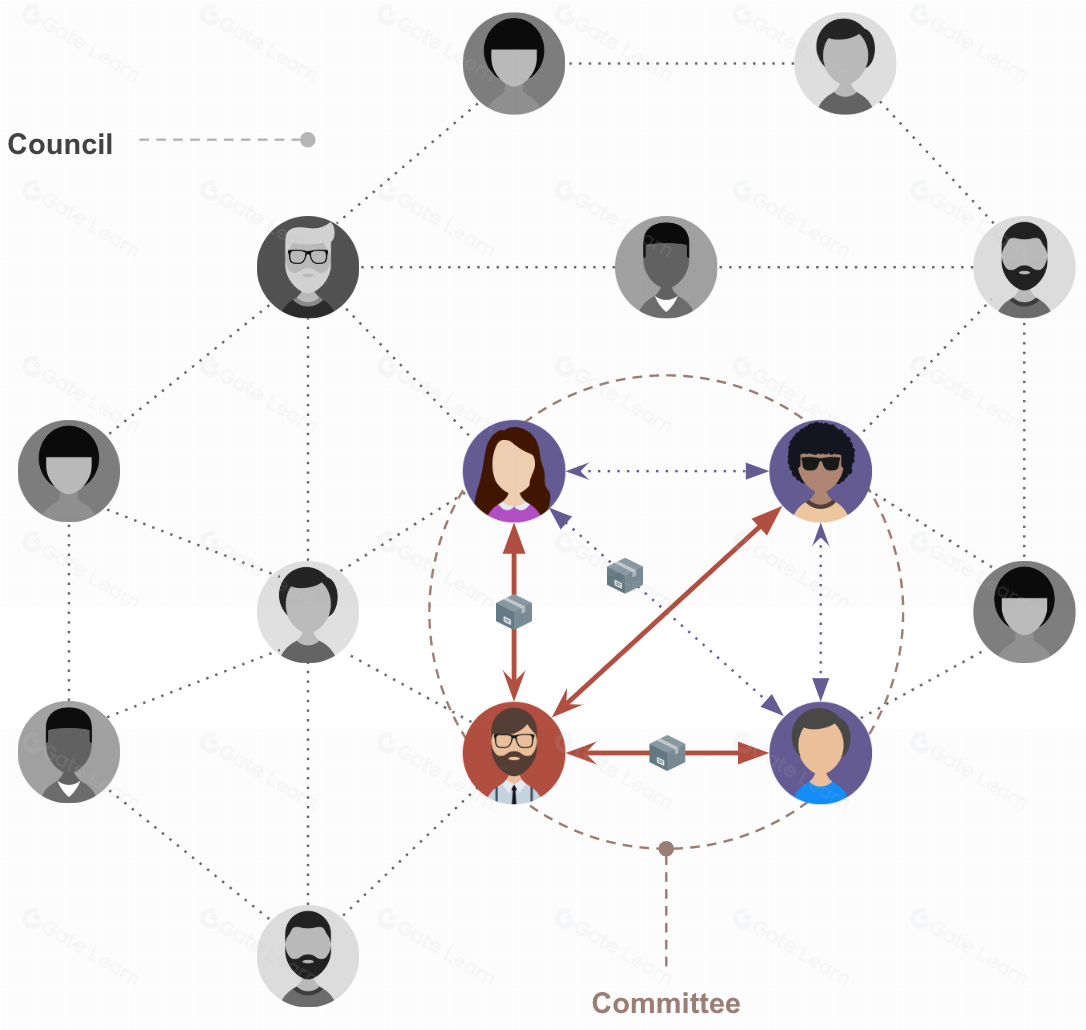
Consensus Layer
The consensus layer is the core of Klaytn’s network, utilizing the Istanbul Byzantine Fault Tolerance (IBFT) algorithm to achieve consensus among network nodes. This layer ensures quick finality of transactions, meaning that once a transaction is added to the blockchain, it is considered confirmed without the possibility of reversal, making the network efficient and suitable for high-throughput requirements.
Execution Layer
This layer is where all transactions are processed and smart contracts are executed. Klaytn supports compatibility with the Ethereum Virtual Machine (EVM), which allows for seamless migration and execution of Ethereum-based applications. This layer handles the computational operations, and smart contract executions, and manages the state of all accounts on the blockchain.
Data Layer
Klaytn’s data layer manages how data is structured, stored, and retrieved. It includes the blockchain database which records all transactions, smart contracts, and changes in state. This layer uses a decentralized storage system to ensure data integrity and availability. Modifications in this layer, like account updates or smart contract deployments, are propagated across the network to maintain consistency.
Network Layer
This layer deals with all the communication between nodes in the Klaytn network. It includes mechanisms for data propagation, node discovery, and maintaining network connectivity. This layer ensures that new transactions and blocks are efficiently distributed to all nodes in the network, maintaining the blockchain’s overall health and responsiveness.
Governance Layer
Klaytn’s governance layer is integral to its decentralized control mechanism. It encompasses the governance council, a collective of various stakeholders including enterprises, which oversee major decisions regarding the network’s updates, parameter adjustments, and protocol upgrades. This layer utilizes on-chain voting to ensure transparency and inclusivity in the decision-making process.
Key Components
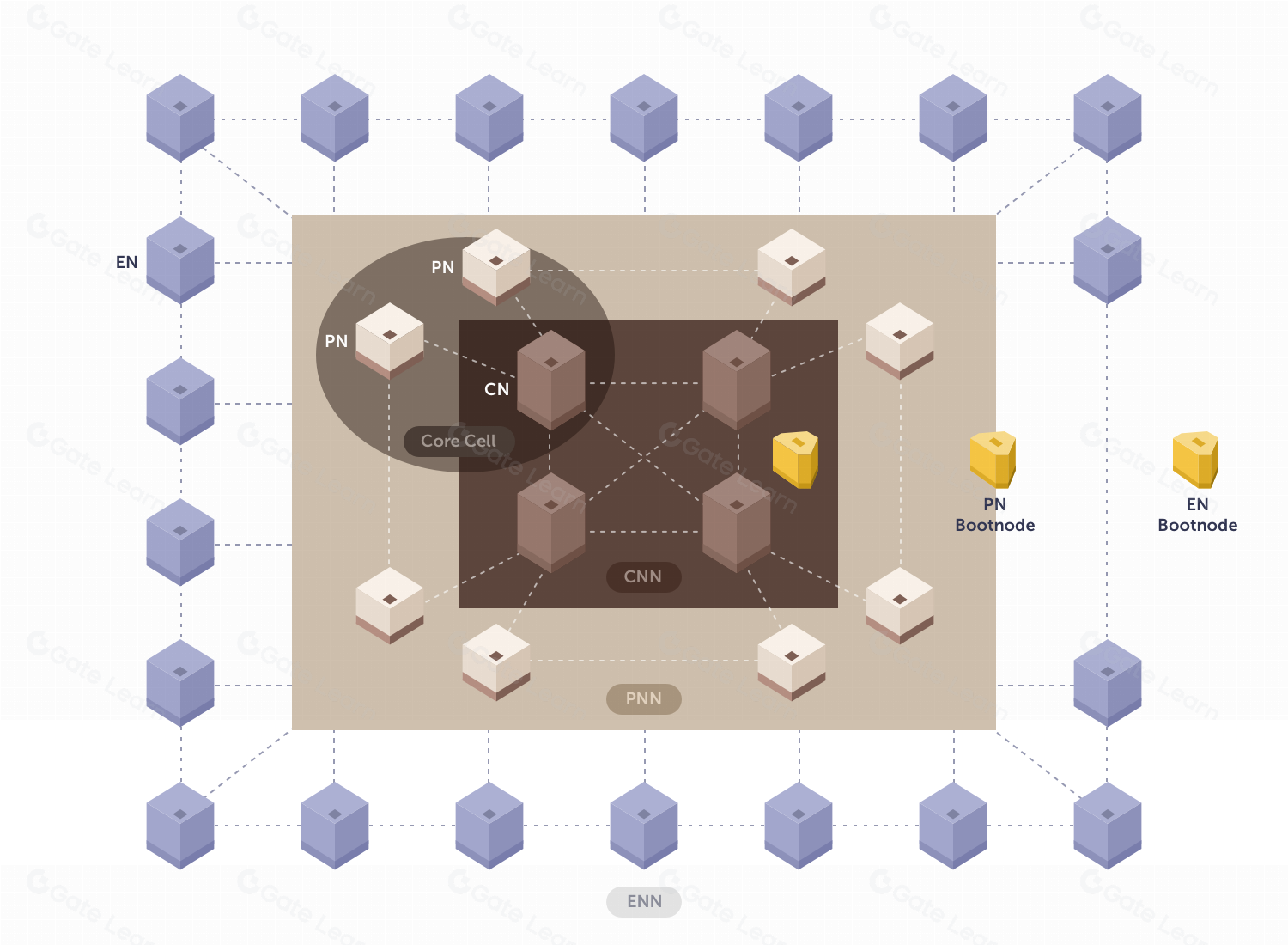
Klaytn’s network is structured around a unique tiered architecture designed to optimize processing speeds and network scalability. This architecture is divided into several components, each playing a specific role in the network’s functionality:
Core Cell Network (CNN)
The backbone of Klaytn’s network architecture, the Core Cell Network consists of Core Cells. Each Core Cell is made up of one Consensus Node (CNN) and multiple Proxy Nodes (PNNs). The Consensus Nodes are responsible for block generation and achieving consensus across the network, which is crucial for maintaining the integrity and security of the blockchain.
Proxy Nodes (PNNs)
These nodes act as intermediaries between the Consensus Nodes and the Endpoint Nodes. They play a critical role in managing data flow, enhancing security by preventing direct external access to the Consensus Nodes, and improving scalability by distributing workload.
Endpoint Nodes (ENNs)
Endpoint Nodes connect directly to the end-users’ applications, handling all external API requests and serving as the access points to the Klaytn network. They are crucial for interfacing with the blockchain, allowing users to execute transactions, deploy smart contracts, and interact with the blockchain.
This tiered setup allows Klaytn to manage and optimize the flow of transactions and data across its network, enhancing overall performance and scalability while maintaining a high level of security.
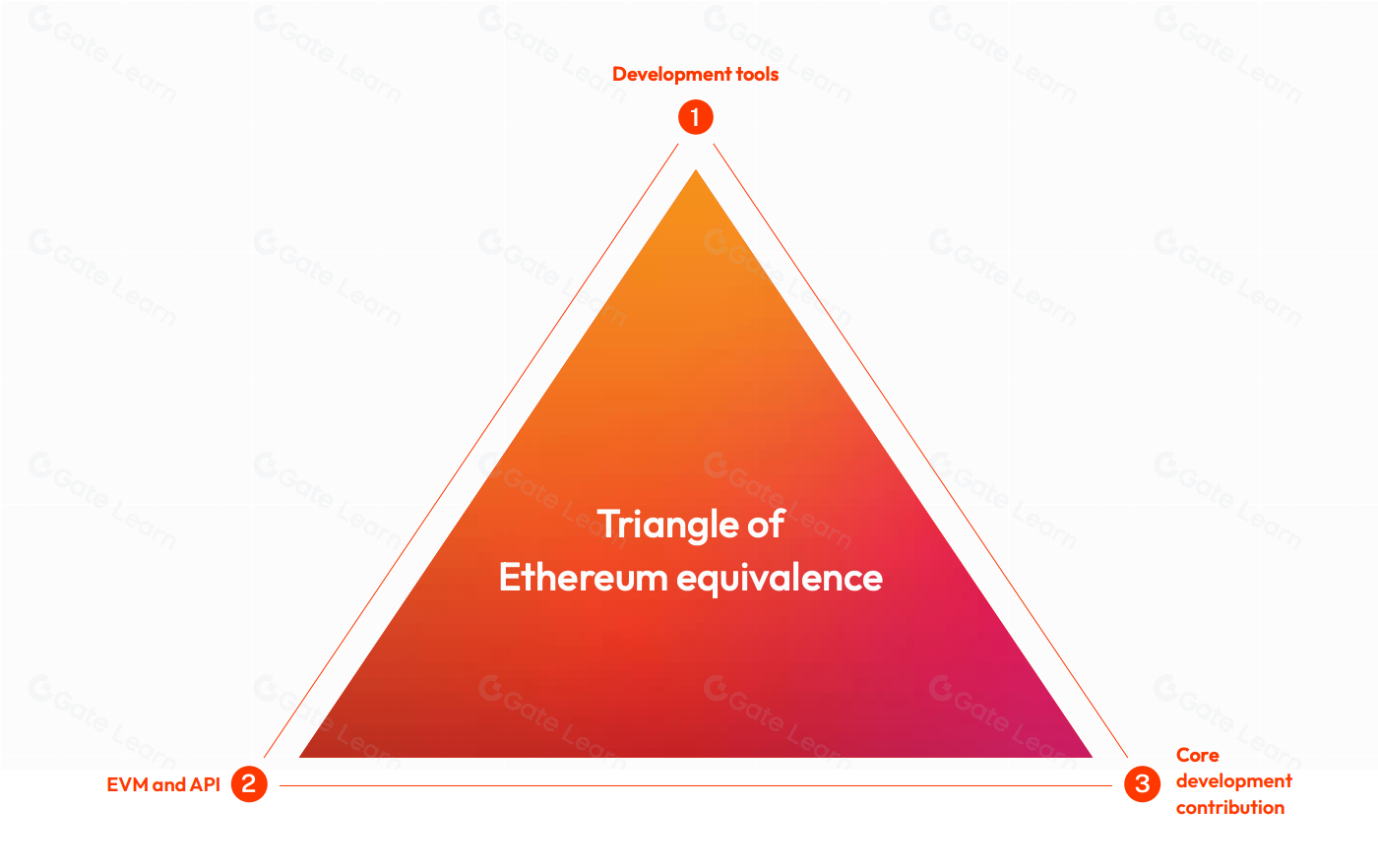
Klaytn’s network design incorporates several optimizations to maintain high performance even under heavy load:
The IBFT consensus mechanism not only ensures transaction finality but also maintains network throughput and stability. It achieves consensus without consuming excessive computational power, which helps in keeping the network fast and responsive.
The separation of duties among different types of nodes (Consensus, Proxy, and Endpoint Nodes) allows Klaytn to optimize processing and data flow, ensuring that the network can handle large volumes of transactions without bottlenecks.
Klaytn’s compatibility with the Ethereum Virtual Machine (EVM) ensures that it can execute smart contracts efficiently. This compatibility also allows developers to deploy Ethereum-based applications on Klaytn with minimal changes, benefiting from Klaytn’s performance enhancements.
While managing high throughput, Klaytn addresses typical blockchain challenges such as network congestion and latency. The platform has implemented solutions such as efficient transaction routing and load balancing across nodes to mitigate these issues. Furthermore, ongoing improvements and updates are focused on enhancing the network’s capacity to handle more transactions, reducing latency, and increasing overall efficiency.