GateUser-37edc23c

vip
Age 0.4 Year
Peak Tier 0
No content yet
#BitcoinMiningIndustryUpdates
The Bitcoin mining industry continues to evolve at a rapid pace, shaped by technology, regulation, and shifting market dynamics. From large-scale mining farms to independent miners, the landscape is becoming more competitive—and more complex—than ever before.
One of the biggest developments in recent times is the increasing focus on efficiency. With rising energy costs and growing environmental concerns, miners are under pressure to optimize operations. This means investing in more advanced hardware, improving cooling systems, and r
BTC-0.03%
  • Reward
  • 3
  • Repost
  • Share
discoveryvip:
LFG 🔥
View More
#SpaceXIPOTargets$2TValuation
The conversation around SpaceX potentially targeting a $2 trillion valuation in a future IPO is capturing global attention—and for good reason. If this becomes reality, it wouldn’t just be another stock market debut; it could redefine how we think about innovation, private space companies, and the future of the global economy.
Founded by Elon Musk, SpaceX has already disrupted the aerospace industry in ways few thought possible. From reusable rockets to ambitious missions aimed at Mars, the company has consistently pushed boundaries
  • Reward
  • 1
  • Repost
  • Share
discoveryvip:
2026 GOGOGO 👊
#OilPricesRise
#OilPricesRise
Oil prices are on the rise again, and the ripple effects are being felt across the globe. From higher fuel costs to increased transportation and production expenses, this isn’t just a headline—it’s something that impacts everyday life, businesses, and entire economies.
But what’s really driving this surge?
A combination of factors is at play. Supply constraints, geopolitical tensions, production decisions by major oil-exporting nations, and shifting global demand are all influencing the market. Even small disruptions can create significant price movements becaus
  • Reward
  • 2
  • Repost
  • Share
discoveryvip:
LFG 🔥
View More
#CryptoMarketSeesVolatility
The crypto market is once again reminding everyone of one simple truth: volatility is the name of the game. One moment prices are surging with optimism, and the next, they’re correcting just as fast—leaving both new and experienced investors trying to make sense of the swings.
But here’s the reality: this isn’t new. Volatility has always been part of the crypto space. It’s what creates opportunity—but also risk. The recent movements we’re seeing are being driven by a mix of global economic uncertainty, regulatory discussions, investor se
  • Reward
  • 2
  • Repost
  • Share
discoveryvip:
To The Moon 🌕
View More
#GateSquareAprilPostingChallenge
April is here, and with it comes a fresh chance to reset, refocus, and reignite the goals we once promised ourselves we’d chase. This month, I’m showing up with intention—no more waiting for the “perfect time,” because the truth is, the perfect time is something we create through action, not hesitation.
Every day in April is an opportunity to build something meaningful. Whether it’s working on personal growth, improving skills, strengthening relationships, or simply learning to slow down and appreciate life’s little moments—progress is progress, no matter how
  • Reward
  • 2
  • Repost
  • Share
discoveryvip:
LFG 🔥
View More
#CreatorLeaderboard
Ethereum Outlook 2026 My Prediction, Deep Reasons, Risks, and How My Friend Can Profit
My prediction is that Ethereum is likely to show strong upward growth into 2026, but unlike simple price-driven assets, its movement will be shaped by both market cycles and real ecosystem expansion, meaning it will rise in phases with deep corrections but maintain a long-term bullish structure.** Ethereum is not just a currency; it is the backbone of decentralized applications, smart contracts, and the broader Web3 ecosystem, which makes its price behavior more complex and fundamentall
ETH-0.59%
EagleEyevip
#CreatorLeaderboard
Ethereum Outlook 2026 My Prediction, Deep Reasons, Risks, and How My Friend Can Profit
My prediction is that Ethereum is likely to show strong upward growth into 2026, but unlike simple price-driven assets, its movement will be shaped by both market cycles and real ecosystem expansion, meaning it will rise in phases with deep corrections but maintain a long-term bullish structure.** Ethereum is not just a currency; it is the backbone of decentralized applications, smart contracts, and the broader Web3 ecosystem, which makes its price behavior more complex and fundamentally driven. This means that while volatility will remain high, the underlying growth drivers are stronger and more diversified, allowing Ethereum to build value not only through speculation but also through actual usage, development, and adoption across multiple sectors.
The strongest reason behind Ethereum’s bullish outlook is its utility-driven demand, which differentiates it from assets that rely purely on scarcity or store-of-value narratives. Ethereum powers decentralized finance, NFTs, gaming ecosystems, and a wide range of blockchain-based applications, all of which require ETH to function. As these sectors continue to grow and evolve, demand for ETH naturally increases, creating a continuous flow of usage-based buying pressure. This makes Ethereum’s growth more sustainable over time, as it is supported by real economic activity within its network rather than just external speculation. The more the ecosystem expands, the stronger the foundation for long-term price appreciation becomes.
Another critical factor is the evolution of Ethereum’s network efficiency and scalability, which directly impacts its adoption and usability. As improvements in transaction speed, cost efficiency, and overall performance continue to develop, Ethereum becomes more accessible to both developers and users. Lower costs and better performance encourage more projects to build on the network, which in turn increases demand for ETH as the primary fuel of the ecosystem. This creates a feedback loop where technological improvement leads to higher adoption, and higher adoption leads to increased value, reinforcing the long-term bullish case.
From a macro perspective, Ethereum also benefits from the same liquidity and capital flow dynamics that influence the broader crypto market, but with an added layer of innovation-driven demand. When global liquidity increases or when investors become more open to risk, capital flows into assets that offer both growth potential and real-world use cases. Ethereum sits at the center of this narrative, attracting not only traders but also developers, institutions, and businesses looking to build and participate in the Web3 economy. This dual appeal strengthens its position and increases the likelihood of sustained growth into 2026.
For your friend who wants to join Ethereum, the key is to understand that this is not just a price game but an ecosystem-driven opportunity, which requires a slightly different mindset compared to purely speculative assets. Entering during periods of correction or consolidation is still the smartest approach, as it reduces risk and allows for better positioning within the market cycle. However, your friend should also pay attention to developments within the Ethereum ecosystem, such as new applications, partnerships, and technological upgrades, as these factors can significantly influence price trends over time. Joining with knowledge rather than hype is the first step toward long-term success.
When it comes to making profits, your friend has multiple pathways depending on their level of understanding and risk tolerance. Short-term trading can be effective due to Ethereum’s volatility, as price movements often create opportunities for quick gains. However, this approach requires strong technical skills, discipline, and the ability to manage risk effectively. Long-term holding, on the other hand, allows your friend to benefit from the overall growth of the Ethereum ecosystem without needing to predict every market movement. This strategy is generally more stable and aligns well with Ethereum’s fundamental strength as a platform for innovation.
A more advanced and balanced strategy involves combining long-term holding with selective short-term trading, allowing your friend to capture both macro growth and micro opportunities. By holding a core position, they remain exposed to Ethereum’s long-term potential, while using a smaller portion of capital for trading to take advantage of market fluctuations. This approach not only increases potential returns but also provides practical experience in understanding market behavior, helping your friend develop skills over time without excessive risk exposure.
Risk management remains the most important factor in ensuring profitability, especially in a market as dynamic as Ethereum. Your friend should avoid investing all capital at once, use proper position sizing, and always be prepared for unexpected volatility. Emotional control is critical, as fear during market dips and greed during rallies can lead to poor decisions. By maintaining discipline, setting clear goals, and following a structured approach, your friend can protect their capital while still taking advantage of opportunities for growth.
Looking toward the future, Ethereum’s benefits extend beyond price appreciation, as it continues to play a central role in shaping the digital economy. Its ability to support decentralized applications, enable programmable money, and facilitate innovation across industries makes it one of the most important platforms in the blockchain space. As adoption increases and new use cases emerge, Ethereum’s relevance and demand are likely to grow, further supporting its long-term value. This positions Ethereum not just as an investment, but as a foundational technology for the future of finance and digital interaction.
At the same time, it is important to acknowledge the risks that come with investing in Ethereum, including regulatory uncertainty, competition from other blockchain platforms, and potential technological challenges. Market volatility can also lead to significant price swings, which may test the patience and confidence of investors. Understanding these risks and preparing for them is essential for long-term success, as it allows your friend to navigate challenges without making impulsive decisions.
In conclusion, Ethereum’s outlook for 2026 is strongly bullish due to its utility, ecosystem growth, and macro positioning, but success depends on strategy, discipline, and continuous learning. Your friend should approach the market with a clear plan, enter at the right time, and manage risk carefully to maximize the chances of profit. The opportunity is substantial, but only those who combine knowledge with patience and adaptability will be able to fully benefit from what Ethereum has to offer in the years ahead.

repost-content-media
  • Reward
  • Comment
  • Repost
  • Share
#CreatorLeaderboard
Gold Outlook 2026 My Prediction, Deep Structural Reasons, Risks, and How My Friend Can Build Real Profit
My prediction is that gold will continue its long-term upward trajectory into 2026, but in a controlled, macro-driven structure rather than explosive speculative rallies, with extended accumulation phases, gradual breakouts, and disciplined corrections that reset the market before continuation.** Unlike highly volatile assets that move based on hype cycles or rapid liquidity shifts, gold operates within a broader economic framework where its price reflects deep-rooted
EagleEyevip
#CreatorLeaderboard
Gold Outlook 2026 My Prediction, Deep Structural Reasons, Risks, and How My Friend Can Build Real Profit
My prediction is that gold will continue its long-term upward trajectory into 2026, but in a controlled, macro-driven structure rather than explosive speculative rallies, with extended accumulation phases, gradual breakouts, and disciplined corrections that reset the market before continuation.** Unlike highly volatile assets that move based on hype cycles or rapid liquidity shifts, gold operates within a broader economic framework where its price reflects deep-rooted global conditions such as inflation expectations, currency stability, geopolitical uncertainty, and institutional capital allocation. This means that gold’s movement may appear slow compared to crypto or high-growth equities, but its strength lies in consistency, resilience, and its ability to preserve and gradually increase value over long periods of time. Understanding this difference is critical, because success in gold is not about chasing fast gains, but about aligning with macro trends that unfold steadily and predictably over time.
The most powerful foundation behind gold’s bullish outlook is its role as the ultimate safe-haven asset in a world that is becoming increasingly uncertain, fragmented, and economically complex. Whenever global systems experience stress—whether due to geopolitical conflict, financial instability, or economic slowdown—capital naturally flows toward assets that are perceived as stable and reliable, and gold consistently sits at the top of that hierarchy. This demand is not temporary or speculative; it is deeply rooted in historical trust and psychological confidence that spans centuries. Investors, institutions, and even governments turn to gold not because they expect rapid profits, but because they seek protection against scenarios where other assets may fail or lose value. As global uncertainty remains a persistent feature of the modern economy rather than a temporary condition, gold’s role as a protective asset becomes even more significant, reinforcing its long-term upward bias.
Another critical driver is the ongoing erosion of purchasing power in fiat currencies, which continues to shape investor behavior on a global scale. As central banks manage economic cycles through monetary expansion, interest rate adjustments, and liquidity injections, the long-term effect is often a gradual decline in currency value. Gold, by contrast, exists outside of this system and is not subject to the same inflationary pressures, making it a natural hedge against currency devaluation. Over time, this dynamic creates a steady flow of capital into gold, as individuals and institutions seek to preserve wealth in an environment where traditional currencies are losing real value. This is not a short-term trade but a long-term structural shift in how wealth is stored and protected, and it provides a strong underlying support for gold prices moving into 2026 and beyond.
Central bank accumulation adds another layer of depth to gold’s bullish case, as many countries are actively increasing their gold reserves as part of a broader strategy to diversify away from over-reliance on specific currencies or financial systems. This trend reflects a shift in global financial thinking, where nations are seeking to strengthen their economic resilience by holding assets that are universally recognized and not dependent on any single country’s policies. Unlike retail investors, central banks operate with long-term horizons and strategic objectives, meaning their buying activity is consistent, deliberate, and less sensitive to short-term price fluctuations. This creates a strong base of demand that supports gold prices even during periods of market weakness, making it one of the most structurally supported assets in the global financial system.
For your friend who is considering entering the gold market, the most important mindset shift is understanding that gold rewards patience, discipline, and strategic accumulation rather than impulsive decision-making or short-term speculation. Entering the market during periods of consolidation or mild correction provides a more favorable risk-reward balance, as it allows for positioning at relatively stable price levels rather than chasing upward momentum. Your friend should approach gold as a long-term asset that builds value over time, rather than expecting immediate returns. This perspective reduces emotional stress and increases the likelihood of consistent profitability, as it aligns expectations with the natural behavior of the asset.
In terms of profit generation, your friend has multiple pathways, but each requires a clear understanding of gold’s unique characteristics. Short-term trading can be profitable during periods of heightened volatility, particularly when gold reacts to major economic data releases or geopolitical events, but it requires technical knowledge, discipline, and the ability to act quickly under pressure. Long-term investing, on the other hand, focuses on capturing the broader macro trend by holding gold over extended periods, allowing the underlying drivers of value to play out. This approach is generally more stable and less demanding, making it suitable for those who prefer a lower-risk, more predictable investment strategy.
A more advanced and effective approach involves combining both strategies in a balanced manner, where your friend maintains a core long-term position while allocating a smaller portion of capital for tactical trades during market fluctuations. This hybrid strategy allows for participation in gold’s long-term growth while also taking advantage of shorter-term opportunities, creating a more dynamic and flexible investment framework. It also helps in building experience and confidence over time, as your friend learns how gold reacts to different economic conditions and develops a deeper understanding of market behavior.
Risk management remains a fundamental pillar of success, even in a relatively stable asset like gold, as market conditions can still change unexpectedly. Interest rate shifts, currency strength, and changes in investor sentiment can all influence gold prices, sometimes leading to temporary declines. Your friend should adopt a disciplined approach by spreading investments over time, avoiding overexposure at a single price level, and maintaining a long-term perspective that reduces the impact of short-term volatility. Emotional control is particularly important, as reacting impulsively to price movements can undermine even the most well-planned strategies.
Looking ahead, gold’s relevance is likely to increase as the global financial system continues to evolve and face new challenges. Its role as a hedge against uncertainty, a store of value, and a stabilizing force within investment portfolios ensures that demand will remain strong across different market conditions. As economic cycles become more complex and interconnected, gold provides a level of security and reliability that few other assets can match, reinforcing its importance in both individual and institutional investment strategies.
At the same time, it is essential to maintain realistic expectations, as gold is not designed to deliver rapid or exponential returns. Its strength lies in consistency, preservation, and gradual growth, making it an ideal asset for those who prioritize stability over high-risk, high-reward opportunities. Your friend should understand that profits in gold are built over time through disciplined accumulation and strategic positioning, rather than quick trades or speculative bets.
In conclusion, gold’s outlook for 2026 is strongly supported by macroeconomic trends, institutional demand, and its enduring role as a safe-haven asset. Your friend can achieve meaningful profits by entering the market with a clear strategy, maintaining patience, and focusing on long-term growth while managing risk effectively. The opportunity in gold is not about speed or excitement, but about building устойчив and reliable wealth in an uncertain world, making it one of the most dependable assets for the future.
repost-content-media
  • Reward
  • Comment
  • Repost
  • Share
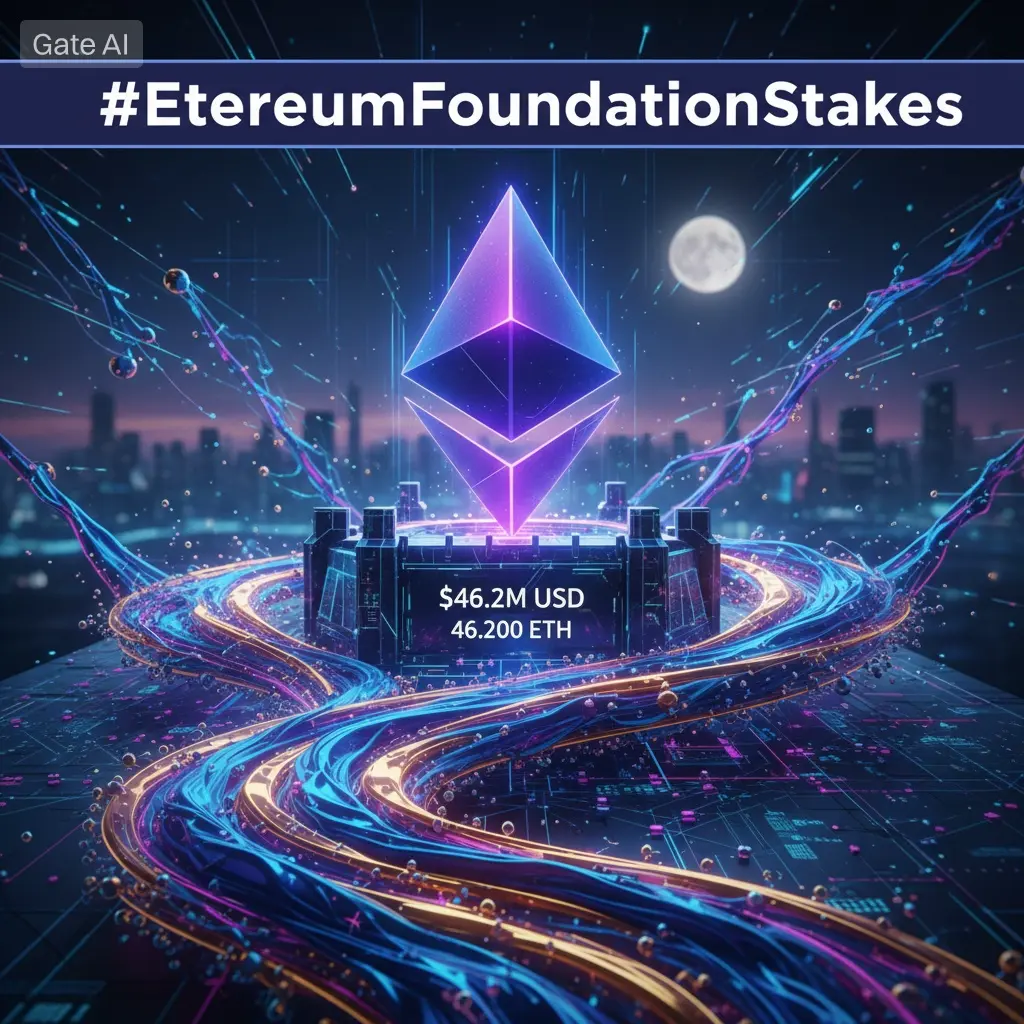
#EthereumFoundationStakes$46.2METH
Strategic Capital Optimization: Large-Scale ETH Staking Signals Long-Term Confidence in Network Economics
The decision by the Ethereum Foundation to stake a massive amount of Ethereum—valued at approximately $46.2 million—should not be interpreted as a simple operational move, but rather as a deeply strategic signal about long-term confidence in the network’s economic model, security framework, and future growth trajectory. In modern crypto markets, actions taken by foundational entities carry significant weight, as they reflect not only internal expectation
ETH-0.59%
EagleEyevip
#EthereumFoundationStakes$46.2METH
Strategic Capital Optimization: Large-Scale ETH Staking Signals Long-Term Confidence in Network Economics
The decision by the Ethereum Foundation to stake a massive amount of Ethereum—valued at approximately $46.2 million—should not be interpreted as a simple operational move, but rather as a deeply strategic signal about long-term confidence in the network’s economic model, security framework, and future growth trajectory. In modern crypto markets, actions taken by foundational entities carry significant weight, as they reflect not only internal expectations but also influence broader market perception. This staking activity demonstrates a clear alignment between the foundation’s long-term vision and the structural evolution of Ethereum, particularly in an era where staking has become a core component of network functionality and value generation.
At a structural level, staking represents a commitment to network security and stability, as it involves locking up assets to support transaction validation and consensus mechanisms. By allocating such a substantial amount of ETH to staking, the Ethereum Foundation is effectively reducing circulating supply while simultaneously strengthening the network’s operational integrity. This dual impact is important because it contributes to both price stability and ecosystem resilience, creating a more robust environment for developers, users, and investors. The reduction in liquid supply can also have indirect effects on market dynamics, particularly during periods of increased demand, where limited availability may amplify price movements.
From a financial perspective, staking can be viewed as a yield-generating strategy that aligns with long-term capital efficiency. Instead of holding assets in a passive state, staking allows the foundation to generate returns while maintaining exposure to Ethereum’s price appreciation. This reflects a broader shift within the crypto industry, where capital is increasingly deployed in ways that maximize utility and productivity rather than remaining idle. For market participants, this move reinforces the idea that Ethereum is not just a speculative asset but a functional financial instrument capable of generating sustainable returns through participation in the network.
The psychological impact of this development on the market should not be underestimated, as large-scale staking by a core entity can influence sentiment and reinforce confidence among investors. When a foundational organization demonstrates commitment by locking up significant capital, it sends a message that the long-term outlook remains strong and that short-term volatility does not alter the underlying strategy. This can encourage other participants to adopt similar approaches, increasing overall staking participation and further strengthening the network. In this way, the action creates a reinforcing cycle where confidence leads to participation, and participation enhances stability.
Another important dimension to consider is the broader context of Ethereum’s transition toward a more mature and sustainable economic model, where staking plays a central role in balancing supply, demand, and network incentives. As more ETH is staked, the circulating supply available for trading decreases, which can influence price dynamics, particularly during periods of heightened demand. At the same time, staking rewards provide an incentive for long-term holding, reducing the likelihood of rapid sell-offs and contributing to a more stable market structure. This shift represents a move away from purely speculative behavior toward a more structured and utility-driven ecosystem.
From a macro perspective, this development also aligns with the growing institutional interest in Ethereum as an asset class that combines technological innovation with financial utility. Large-scale staking activities demonstrate that Ethereum is capable of supporting complex financial strategies, making it more attractive to institutional investors who seek both growth and yield opportunities. This dual appeal positions Ethereum uniquely within the broader financial landscape, bridging the gap between traditional investment models and emerging digital economies.
However, it is important to acknowledge that such moves are not without risks or complexities, as staking involves locking assets for extended periods, reducing liquidity and limiting flexibility in responding to market changes. While this can support long-term stability, it also means that participants must be prepared for periods of reduced access to their capital. Additionally, changes in network conditions, reward structures, or regulatory environments could impact the overall effectiveness of staking strategies, highlighting the importance of adaptability and ongoing evaluation.
For individual participants and observers, this event provides valuable insight into how major players are positioning themselves within the Ethereum ecosystem, offering a framework for understanding broader market trends. Rather than reacting to short-term price movements, it encourages a focus on long-term fundamentals, network participation, and strategic capital allocation. This perspective can help in making more informed decisions, particularly in a market where noise and volatility often obscure underlying developments.
Ultimately, the Ethereum Foundation’s decision to stake a significant amount of ETH represents more than just a financial action; it is a statement about the future direction of the network and the evolving role of staking within its economic model. It highlights the increasing sophistication of the crypto market, where value is derived not only from price appreciation but also from active participation and strategic alignment with network dynamics. For those who understand these signals, it offers a deeper perspective on where Ethereum is heading and how its ecosystem is likely to develop in the years ahead.
repost-content-media
  • Reward
  • Comment
  • Repost
  • Share
#CLARITYBillMayHitDeFi
Regulatory Shockwave Incoming: How the CLARITY Bill Could Reshape the Future of DeFi
The emergence of the CLARITY Act as a serious regulatory framework signals a pivotal moment for decentralized finance, where the industry is transitioning from an experimental, loosely governed environment into a phase of structured oversight and institutional integration. This is not just another policy discussion; it represents a structural shift that could redefine how DeFi protocols operate, how users interact with them, and how capital flows through the ecosystem. The core question
DEFI-5.14%
EagleEyevip
#CLARITYBillMayHitDeFi
Regulatory Shockwave Incoming: How the CLARITY Bill Could Reshape the Future of DeFi
The emergence of the CLARITY Act as a serious regulatory framework signals a pivotal moment for decentralized finance, where the industry is transitioning from an experimental, loosely governed environment into a phase of structured oversight and institutional integration. This is not just another policy discussion; it represents a structural shift that could redefine how DeFi protocols operate, how users interact with them, and how capital flows through the ecosystem. The core question is no longer whether regulation will come, but how deeply it will penetrate a system that was originally designed to operate without centralized control, creating a tension between innovation and compliance that will shape the next phase of Web3 evolution.
At its foundation, decentralized finance was built on the principles of permissionless access, transparency, and disintermediation, allowing users to engage in financial activities without relying on traditional institutions. However, as the scale of DeFi has grown, so too have concerns around security, fraud, systemic risk, and investor protection, prompting regulators to step in with frameworks like the CLARITY Bill. This shift introduces a new reality where protocols may need to adapt to requirements such as identity verification, transaction monitoring, and reporting standards, fundamentally altering how these systems function. The challenge lies in maintaining the core ethos of decentralization while addressing legitimate regulatory concerns, a balance that is inherently difficult to achieve.
One of the most immediate impacts of such regulation is likely to be on liquidity and participation within the DeFi ecosystem, as increased compliance requirements can create barriers to entry for certain users while simultaneously attracting more risk-averse institutional capital. On one hand, stricter rules may discourage anonymous or high-risk participants, reducing overall activity in some areas of the market. On the other hand, greater clarity and oversight can provide the confidence needed for larger, more traditional players to enter the space, bringing significant capital and stability. This dual effect creates a transitional period where the market may experience both contraction and expansion simultaneously, depending on how different segments respond to the new environment.
Another critical aspect to consider is how DeFi protocols will be classified under the new regulatory framework, as this classification will determine the level of responsibility placed on developers, operators, and users. If protocols are treated as financial intermediaries, they may be required to implement compliance mechanisms similar to traditional institutions, which could limit their decentralized nature. Alternatively, if they are recognized as software or infrastructure, the regulatory burden may be lighter, allowing for greater flexibility and innovation. The outcome of this classification debate will have long-term implications for the structure and evolution of the entire DeFi landscape.
From a technological perspective, the introduction of regulation could drive innovation in new directions, as developers seek to create solutions that align with compliance requirements while preserving decentralization. This may lead to the emergence of hybrid models that combine elements of centralized oversight with decentralized infrastructure, as well as new tools for identity verification, risk management, and transaction transparency. While some may view regulation as a constraint, it can also act as a catalyst for innovation, pushing the industry to develop more sophisticated and resilient systems that can operate within a regulated framework.
Market sentiment is also likely to be significantly influenced by the progress and implementation of the CLARITY Bill, as uncertainty around regulation often leads to volatility and cautious positioning among investors. In the short term, the introduction of new rules can create fear and hesitation, particularly among participants who are unsure how their activities will be affected. However, as clarity emerges and the market adjusts, sentiment can shift toward optimism, especially if the regulatory framework is perceived as fair, balanced, and supportive of long-term growth. This evolution in sentiment is a key factor in determining how the market responds over time.
Institutional involvement is another area where the impact of regulation becomes particularly evident, as large financial entities typically require clear legal frameworks before committing significant capital. The CLARITY Bill has the potential to unlock new levels of institutional participation by providing the legal certainty needed to engage with DeFi in a meaningful way. This influx of capital could lead to increased liquidity, improved infrastructure, and greater integration with traditional financial systems, ultimately contributing to the maturation of the ecosystem. However, it also raises questions about whether increased institutional presence could shift the balance of power within DeFi, potentially reducing its decentralized nature.
For individual users and participants, adapting to this new environment will require a greater focus on compliance, security, and strategic decision-making. Understanding the implications of regulatory changes, choosing platforms that align with legal requirements, and maintaining transparent transaction histories will become increasingly important. While this may introduce additional complexity, it also provides an opportunity to operate within a more stable and secure framework, reducing the risks associated with unregulated environments. Education and awareness will be key factors in navigating this transition successfully.
Ultimately, the potential impact of the CLARITY Bill on DeFi is both transformative and inevitable, as the industry moves toward a more structured and integrated role within the global financial system. While this transition may challenge some of the foundational principles of decentralization, it also opens the door to new opportunities for growth, stability, and broader adoption. The future of DeFi will likely be defined by its ability to adapt, innovate, and find a balance between freedom and regulation, creating a system that can thrive in an increasingly complex and interconnected world.
repost-content-media
  • Reward
  • Comment
  • Repost
  • Share
let's go for it
EagleEyevip
#AreYouBullishOrBearishToday?
Today, I’m cautiously bullish — but with strong awareness of short-term volatility.
The current market structure across major assets like Bitcoin and Ethereum still shows underlying strength, especially with liquidity slowly stabilizing and buyers defending key support zones. This suggests that the broader trend has not broken down, and there is still potential for upward continuation if momentum builds.
However, the market is not in a clean bullish breakout phase yet. It is more of a transition zone* where price can move both ways depending on macro triggers like interest rate expectations, geopolitical developments, and institutional flows. That means sudden drops (liquidity sweeps) are still possible before any strong upward move.
From a sentiment perspective, fear and uncertainty are still present, which is actually a healthy sign for a potential upside. Markets usually move higher when most participants are cautious, not when everyone is overly confident. This creates room for upside surprise if positive catalysts appear.
So the real stance is:
Short-term → Neutral to slightly bearish volatility
Mid-term → Bullish structure still intact
Smart positioning right now is not about chasing the market, but about waiting, observing, and entering on dips rather than highs
repost-content-media
  • Reward
  • Comment
  • Repost
  • Share
awareness of short-term volatility.
The current market structure across major assets like Bitcoin and Ethereum still shows underlying strength, especially with liquidity slowly stabilizing and buyers defending key support zones. This suggests that the broader trend has not broken down, and there is still potential for upward continuation if momentum builds.
However, the market is not in a clean bullish breakout phase yet. It is more of a transition zone* where price can move both ways depending on macro triggers like interest rate expectations, geopolitical developments, and institutional flow
BTC-0.03%
ETH-0.59%
EagleEyevip
#AreYouBullishOrBearishToday?
Today, I’m cautiously bullish — but with strong awareness of short-term volatility.
The current market structure across major assets like Bitcoin and Ethereum still shows underlying strength, especially with liquidity slowly stabilizing and buyers defending key support zones. This suggests that the broader trend has not broken down, and there is still potential for upward continuation if momentum builds.
However, the market is not in a clean bullish breakout phase yet. It is more of a transition zone* where price can move both ways depending on macro triggers like interest rate expectations, geopolitical developments, and institutional flows. That means sudden drops (liquidity sweeps) are still possible before any strong upward move.
From a sentiment perspective, fear and uncertainty are still present, which is actually a healthy sign for a potential upside. Markets usually move higher when most participants are cautious, not when everyone is overly confident. This creates room for upside surprise if positive catalysts appear.
So the real stance is:
Short-term → Neutral to slightly bearish volatility
Mid-term → Bullish structure still intact
Smart positioning right now is not about chasing the market, but about waiting, observing, and entering on dips rather than highs
repost-content-media
  • Reward
  • Comment
  • Repost
  • Share
#PreciousMetalsPullBackUnderPressure
Here’s a detailed, long-form post for your topic:
---
After a period of strength, precious metals like gold, silver, and platinum are experiencing a notable pullback, reflecting growing market pressures and shifting investor sentiment. Analysts point to a combination of rising interest rates, a stronger U.S. dollar, and renewed optimism in equities as key factors putting downward pressure on these traditionally safe-haven assets.
Gold, long viewed as a hedge against inflation and economic uncertainty, has retraced from recent highs, signaling that some inv
  • Reward
  • 3
  • Repost
  • Share
discoveryvip:
LFG 🔥
View More
#DriftProtocolHacked
Here’s a long, detailed social media-style post for your topic:
The crypto world is reeling as news breaks of a major security breach in the Drift Protocol. Early reports indicate that hackers have exploited a vulnerability, potentially resulting in significant losses for users and liquidity providers. While investigations are still underway, the incident underscores once again the inherent risks of decentralized finance (DeFi) platforms and the critical importance of robust security measures.
DeFi, by design, offers transparency and decentralized control, but it also exp
DRIFT-13.15%
  • Reward
  • 3
  • Repost
  • Share
discoveryvip:
LFG 🔥
View More
#CeasefireExpectationsRise
Here’s a much longer, more in-depth version of your post
After weeks of heightened tensions, there is a growing sense of cautious optimism as expectations for a ceasefire rise. Governments, international organizations, and mediators are intensifying their efforts to bring warring parties to the negotiation table. While the path to peace is never simple, the global focus on dialogue and diplomacy reflects the urgent need to prevent further loss of life and human suffering.
For civilians in conflict zones, even a temporary ceasefire can mean the difference between sur
  • Reward
  • 3
  • Repost
  • Share
discoveryvip:
LFG 🔥
View More
#OilPricesRise
Global oil prices are climbing once again, and the ripple effects are being felt across every corner of the economy. From rising transportation costs to increasing prices of everyday goods, this surge is more than just a headline—it’s something that directly impacts our daily lives.
For consumers, it means tighter budgets and difficult choices. Fuel expenses are going up, electricity costs may follow, and businesses are likely to pass on higher operational costs to customers. For developing economies especially, the pressure can be even more intense, affecting inflation, curren
  • Reward
  • 3
  • Repost
  • Share
discoveryvip:
LFG 🔥
View More
#CryptoMarketSeesVolatility
The crypto market is once again reminding everyone of one simple truth: nothing moves in a straight line.
One moment, everything feels unstoppable—prices rising, confidence high, timelines filled with optimism.
The next moment, uncertainty takes over—sharp drops, sudden reversals, and questions everywhere.
This is volatility.
And while many see it as chaos, experienced participants see it differently.
They see movement.
They see opportunity.
They see a test of mindset.
Because in markets like this, emotions can become your biggest enemy
  • Reward
  • 2
  • Repost
  • Share
discoveryvip:
LFG 🔥
View More
#CryptoMarketsRiseBroadly
— Momentum is Back!
The crypto market is showing strong signs of recovery as prices climb across the board. From major assets to emerging altcoins, the bullish sentiment is becoming harder to ignore. Increased trading volume, renewed investor confidence, and positive macro signals are all contributing to this upward movement.
What’s driving the surge?
• Growing institutional interest and capital inflows
• Improved global economic outlook boosting risk assets
• Expanding adoption of blockchain technology across industries
• Market optimism fueled by recent regulatory
  • Reward
  • 2
  • Repost
  • Share
discoveryvip:
To The Moon 🌕
View More
#CryptoMarketsRiseBroadly
— A New Chapter in the Digital Economy
The cryptocurrency market is entering what many are calling a transformative phase, where growth is no longer limited to isolated assets but is instead spreading across the entire ecosystem. From established giants like Bitcoin and Ethereum to a wide array of altcoins, the upward movement reflects more than just price action—it signals a shift in confidence, adoption, and long-term belief in blockchain technology.
Over the past few months, market dynamics have evolved significantly. Institutional players are re-entering the spac
BTC-0.03%
ETH-0.59%
  • Reward
  • 1
  • Repost
  • Share
discoveryvip:
To The Moon 🌕
#AprilMarketOutlook
April is shaping up to be a defining month for the markets, with momentum building across multiple sectors and investors closely watching macro signals. After a volatile first quarter, there’s a noticeable shift in sentiment—cautious optimism is replacing uncertainty.
Key themes to watch this month:
🔹 Interest Rates & Inflation
Markets remain sensitive to central bank signals. Any hints of rate cuts or continued tightening will directly impact equities, bonds, and currency movements. Inflation data releases could act as major catalysts.
🔹 Earnings Season Kickoff
April ma
  • Reward
  • 3
  • Repost
  • Share
discoveryvip:
LFG 🔥
View More
#PowellDovishRemarksReviveRateCutHopes
Markets are listening closely—and the tone just shifted.
Recent dovish remarks from Jerome Powell have reignited optimism across financial markets, bringing renewed hope that interest rate cuts may be closer than previously expected. And just like that, sentiment is changing
For months, investors have navigated uncertainty, balancing inflation concerns with the pressure of high interest rates. But now, even a subtle shift in language is enough to spark momentum—because in today’s environment, words matter as much as actions.
So what does this really mea
  • Reward
  • 3
  • Repost
  • Share
discoveryvip:
To The Moon 🌕
View More
  • Pin