Exploring Decentralized Trading: A Comprehensive Guide to Cosmos Platform
What is Cosmos?
Cosmos represents a significant evolution in blockchain technology, offering a decentralized protocol that enables developers to create interconnected cryptocurrency projects. The platform has attracted considerable attention from both the cryptocurrency community and institutional investors, notably receiving recognition from major asset management firms through comprehensive analytical reports highlighting its transformative potential in the digital assets space.
What is the Cosmos Cryptocurrency Project?
Cosmos is a decentralized cryptocurrency blockchain that provides third-party developers with comprehensive tools to design and launch independent crypto projects. Unlike traditional blockchain platforms, Cosmos offers developers unprecedented flexibility and sovereignty over their protocols. The project was founded by Jae Kwon and Ethan Buchman, who first developed the Tendermint proof-of-stake validation system before launching Cosmos.
What distinguishes Cosmos from platforms like Ethereum is its architectural approach. Rather than relying on smart contracts that tie applications to the underlying blockchain, Cosmos separates its executive and application functions into two distinct layers: Tendermint Core and the Application BlockChain Interface (ABCI). This separation grants developers greater autonomy to create self-sovereign chains while maintaining security and reliability. The Swiss nonprofit Interchain Foundation oversees the funding activities for the Cosmos blockchain, ensuring sustainable development and governance.
How Does Cosmos Work?
The Cosmos architecture operates on a sophisticated dual-layer system that balances security with flexibility. Tendermint Core serves as the foundation layer, handling critical functions including transaction validation, recording, on-chain governance, and protocol security. Validators on this layer stake ATOM coins to process transactions and receive ATOM rewards for their contributions to network security.
The Application BlockChain Interface (ABCI) layer provides developers with substantial autonomy while benefiting from Tendermint Core's security infrastructure. Developers using Cosmos aren't constrained by specific token standards like Ethereum's ERC-20, nor must they conform to predetermined governance structures or fee models. Instead, Cosmos provides a comprehensive Software Development Kit (SDK) featuring tools such as Go coding samples, enabling developers to construct fully independent blockchains.
A crucial innovation is the Inter-Blockchain Communication (IBC) protocol, which facilitates seamless interaction between different blockchain networks. The IBC employs a "hub/zone" architecture where individual blockchains (zones) connect through shared blockchains (hubs). The Cosmos Hub serves as the network's primary connection point, enabling low-fee, high-speed cryptocurrency transfers across the ecosystem and facilitating cosmos exchange operations between different chains.
What's the Purpose of Cosmos?
Cosmos addresses one of the cryptocurrency industry's most significant challenges: the interoperability problem. Currently, blockchain networks operate with incompatible coding standards that prevent direct communication between different protocols. For instance, Bitcoin cannot be directly sent to an Ethereum wallet address due to fundamental differences in their coding standards.
The platform's mission extends beyond creating an interconnected ecosystem within its own network. Cosmos envisions becoming the foundational infrastructure for an "internet of blockchains," where all blockchain protocols and decentralized applications can seamlessly transfer data and assets through cosmos exchange mechanisms. This ambitious goal positions Cosmos as the Web3 equivalent of the internet itself—a universal protocol connecting self-sovereign blockchains across the entire cryptocurrency landscape.
What is ATOM and What is it Used for?
ATOM serves as the native cryptocurrency of the Cosmos network, playing essential roles in security, governance, and network operations. All transactions on the Cosmos blockchain require small ATOM payments to cover transaction fees, ensuring network sustainability.
For network security, validators must stake ATOM on Tendermint Core to participate in transaction validation. The proof-of-stake algorithm selects validators to broadcast new transaction blocks, rewarding them with ATOM percentages. A 21-day lock-up period applies to staked ATOM, requiring validators to wait three weeks for withdrawal requests to process.
To become a validator, participants must stake more ATOM than the 175th largest staking provider. However, the network accommodates smaller participants through delegation, allowing anyone to stake as little as 1 ATOM through staking pools available on various cryptocurrency trading platforms, wallets, and DeFi protocols.
ATOM also grants governance rights, enabling validators to vote on network upgrades and protocol changes. Delegators, however, don't possess voting privileges and risk losing cryptocurrency if their chosen validator engages in malicious behavior.
Where can You Buy ATOM?
ATOM enjoys widespread availability across major cryptocurrency trading platforms due to Cosmos's prominent market position. Leading centralized trading platforms offer ATOM trading pairs, providing easy access for investors and users seeking to participate in cosmos exchange activities.
For comprehensive market information, cryptocurrency price aggregator websites like CoinMarketCap and CoinGecko maintain updated lists of trading platforms offering ATOM trading pairs. Users can search for "Cosmos" or "ATOM" on these platforms and navigate to the "Markets" tab to view all available trading venues, enabling informed decisions about where to purchase the cryptocurrency for cosmos exchange purposes.
Examples of Cosmos Crypto Projects
The Cosmos ecosystem hosts numerous innovative blockchain projects built using the Cosmos SDK and Tendermint software. Several high-profile projects demonstrate the platform's versatility and scalability.
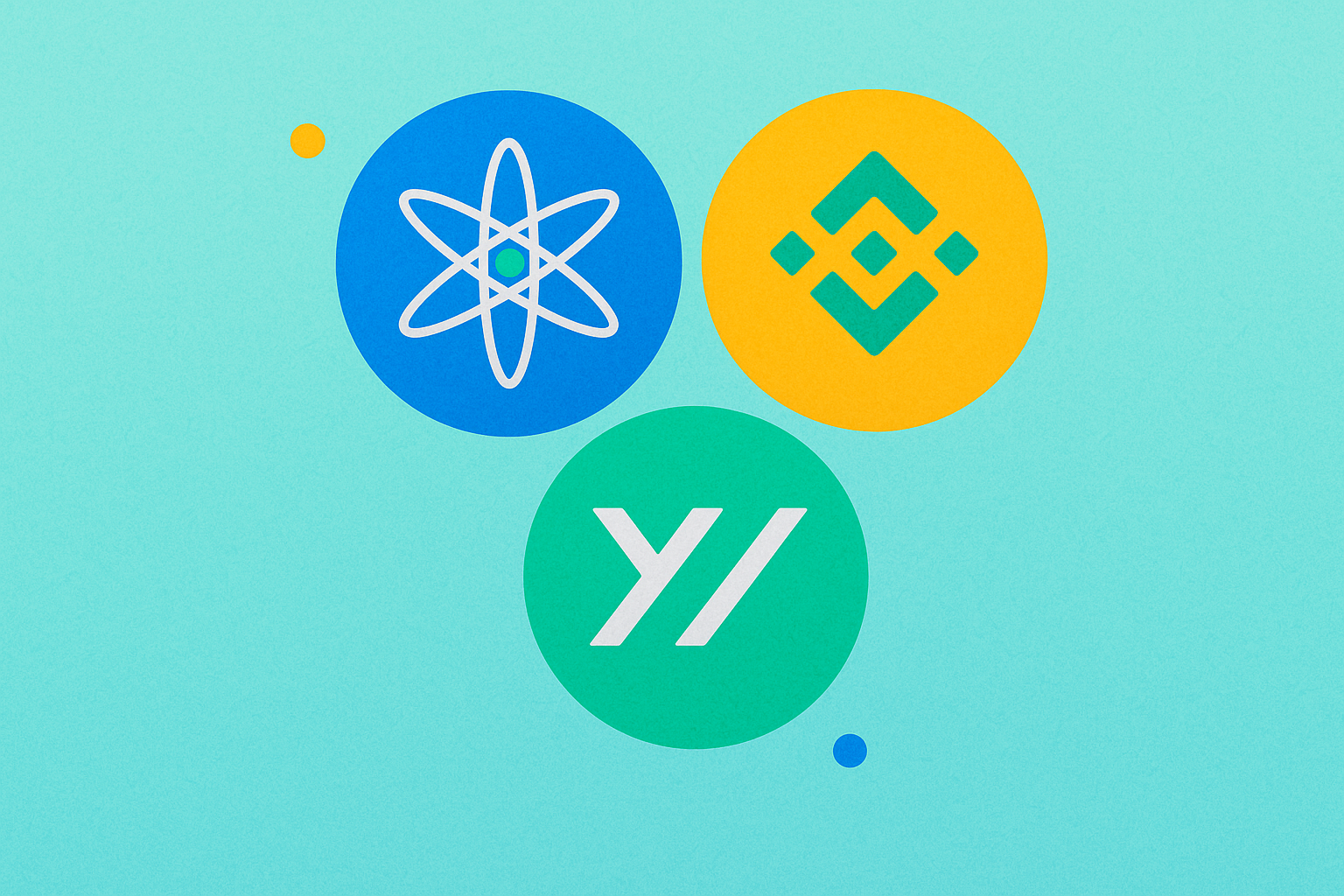
BSC (BNB Smart Chain), developed by a major cryptocurrency platform, represents one of the largest Cosmos-based blockchains. This proof-of-stake blockchain mirrors Ethereum's functionality, offering users access to diverse decentralized applications spanning play-to-earn games, decentralized finance protocols, and NFT trading platforms, all benefiting from cosmos exchange interoperability.
Cronos, associated with a prominent crypto platform, provides another major ecosystem built on Cosmos technology. Like BSC, Cronos offers low-fee decentralized services including cryptocurrency trading, NFT collection, and metaverse gaming experiences.
Osmosis stands as one of the largest peer-to-peer trading platforms within the Cosmos Network. The platform enables peer-to-peer cryptocurrency swaps through wallet connections and offers yield farming opportunities where users can lock cryptocurrency in liquidity pools to earn trading fees, serving as a prime example of cosmos exchange functionality.
Notably, dYdX has chosen to launch its v4 blockchain on the Cosmos Network, citing the platform's security, speed, and scalability as ideal for providing traders with fast, low-fee crypto derivatives trading experiences while maintaining full decentralization and leveraging cosmos exchange capabilities.
Conclusion
Cosmos represents a paradigm shift in blockchain technology, addressing critical interoperability challenges while empowering developers with unprecedented autonomy. Through its innovative dual-layer architecture combining Tendermint Core and ABCI, along with the Inter-Blockchain Communication protocol, Cosmos creates a sustainable foundation for an interconnected blockchain ecosystem that enables efficient cosmos exchange between diverse networks. The ATOM cryptocurrency serves multiple essential functions, from securing the network through staking to enabling governance participation. With major projects like BNB Smart Chain, Cronos, and dYdX's v4 chain built on its infrastructure, Cosmos demonstrates practical success in realizing its vision of becoming the internet of blockchains. As the platform continues evolving, it positions itself as a fundamental protocol for the future of Web3, facilitating seamless cosmos exchange, communication, and value transfer across diverse blockchain networks.
FAQ
Can Cosmos reach $1 000?
While ambitious, reaching $1,000 is unlikely for Cosmos in the near future. It would require an enormous market cap, far beyond current projections.
Is Cosmos crypto a good investment?
Yes, Cosmos (ATOM) is a promising investment. Its interoperability features and growing ecosystem make it well-positioned for future growth in the blockchain space.
Why is Cosmos staking apy so high?
Cosmos offers high APY due to its flexible inflation model, which adjusts to maintain target staking rates. The network's strategic position in the blockchain ecosystem also attracts investors, contributing to high rewards.
Share
Content
How to Buy Cryptocurrency


Trending Cryptocurrencies



XZXX: A Comprehensive Guide to the BRC-20 Meme Token in 2025

Bitcoin Fear and Greed Index: Market Sentiment Analysis for 2025
Top Crypto ETFs to Watch in 2025: Navigating the Digital Asset Boom

5 ways to get Bitcoin for free in 2025: Newbie Guide
Bitcoin Market Cap in 2025: Analysis and Trends for Investors

2025 Bitcoin Price Prediction: Trump's Tariffs' Impact on BTC

Is Falcon Finance (FF) a good investment?: A Comprehensive Analysis of Returns, Risks, and Market Potential
Is Zebec Protocol (ZBCN) a good investment?: A Comprehensive Analysis of Tokenomics, Use Cases, and Market Potential in 2024
Is Audiera (BEAT) a good investment?: A Comprehensive Analysis of Tokenomics, Market Potential, and Risk Factors

Is zkSync (ZK) a good investment?: A Comprehensive Analysis of Layer 2 Scaling Solutions and Future Prospects

TBC vs MANA: A Comprehensive Comparison of Two Leading Blockchain Governance Tokens