

Trade
Trading Type
Spot
Trade crypto freely
Pre-Market
Trade new tokens before they are officially listed
Margin
Magnify your profit with leverage
Convert & Block Trading
0 Fees
Trade any size with no fees and no slippage
Alpha
Points
Get promising tokens in streamlined on-chain trading
Leveraged Tokens
Get exposure to leveraged positions simply
Futures
Futures
Hundreds of contracts settled in USDT or BTC
Options
HOT
Trade European-style vanilla options
Unified Account
Maximize your capital efficiency
Demo Trading
Futures Kickoff
Get prepared for your futures trading
Futures Events
Participate in events to win generous rewards
Demo Trading
Use virtual funds to experience risk-free trading
Earn
Launch
CandyDrop
Collect candies to earn airdrops
Launchpool
Quick staking, earn potential new tokens
HODLer Airdrop
Hold GT and get massive airdrops for free
Launchpad
Be early to the next big token project
Alpha Points
NEW
Trade on-chain assets and enjoy airdrop rewards!
Futures Points
NEW
Earn futures points and claim airdrop rewards
Investment
Simple Earn
Earn interests with idle tokens
Auto-Invest
Auto-invest on a regular basis
Dual Investment
Buy low and sell high to take profits from price fluctuations
Soft Staking
Earn rewards with flexible staking
Crypto Loan
0 Fees
Pledge one crypto to borrow another
Lending Center
One-stop lending hub
VIP Wealth Hub
Customized wealth management empowers your assets growth
Private Wealth Management
Customized asset management to grow your digital assets
Quant Fund
Top asset management team helps you profit without hassle
Staking
Stake cryptos to earn in PoS products
BTC Staking
HOT
Stake BTC and earn 10% APR
GUSD Minting
Use USDT/USDC to mint GUSD for treasury-level yields


More
Promotions
Activity Center
Join activities and win big cash prizes and exclusive merch
Referral
20 USDT
Earn 40% commission or up to 500 USDT rewards
Announcements
Announcements of new listings, activities, upgrades, etc
Gate Blog
Crypto industry articles
VIP Services
Huge fee discounts
Proof of Reserves
Gate promises 100% proof of reserves

A Review of the 2025 Cryptocurrency Market: $290 Billion Market Cap Evaporated, Privacy Coins Soar 12 Times
7h ago
Rick Rieder: BlackRock's Chief Managing $2.4 Trillion Eyes Fed Chair
7h ago
Trending Topics
View More141.86K Popularity
11.69K Popularity
79.81K Popularity
1.59K Popularity
2.06K Popularity




Pin
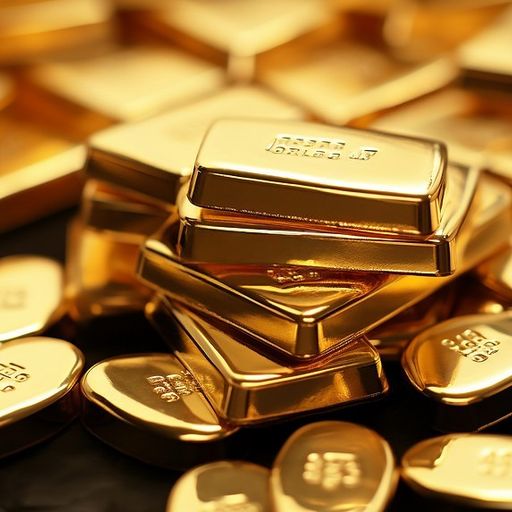
Smart money enters the market: Gold breaks through $4,500, silver surges 150%. Why are precious metals the "trading of the year" in 2025?
In 2025, gold and silver have become the most dazzling stars in global asset allocation. After hitting over 50 all-time highs within the year, gold prices recently broke through the $4,500 per ounce mark; silver surged by 150%, reaching the $70 level, both likely to record their strongest annual performance since 1979. This epic rally is driven by multiple factors including persistent central bank gold purchases, a weakening dollar, expectations of lower interest rates, and industrial demand. Analysts point out that this signals investors are becoming “smarter,” diversifying their portfolios with strategic precious metals assets. Despite the market enthusiasm, seasoned strategists also issue warnings, reminding investors not to forget to “take profits” amid the frenzy.
Historic Rally: Why Did Precious Metals Become the 2025 “Trade of the Year”?
In 2025, a year filled with AI stocks, cryptocurrencies, and global stock rotations, traditional precious metals gold and silver unexpectedly broke through the noise, being hailed by many Wall Street strategists as the “Trade of the Year.” This strength is not a fleeting phenomenon but built on a solid and sustained buying base. Gold prices have refreshed historical records over 50 times within a year, ultimately stabilizing above the psychological threshold of $4,500 per ounce. Silver’s performance is even more astonishing, with a year-to-date increase of 150%, with futures prices once surpassing $72. The driving forces behind this include the shared financial attributes with gold, as well as robust industrial demand in sectors like photovoltaics and electronics, coupled with global physical shortages.
Behind this precious metals feast lies a profound shift in macro investment paradigms. Phil Streible, Chief Market Strategist at Blue Line Futures, succinctly explains: “Investors are just becoming smarter. They realize the need to add strategic commodities like gold, silver, and copper to their portfolios for diversification.” The traditional “60/40” stock-bond allocation model has faced challenges in recent years of high volatility and low interest rates, prompting investors to seek “ballast” assets that hedge against currency depreciation, geopolitical risks, and economic uncertainties. Shree Kargutkar, Senior Portfolio Manager at Sprott Asset Management, further notes that under this new paradigm, gold is increasingly viewed as a “currency” rather than an ordinary commodity. This elevated perception opens up new valuation space for gold prices.
Meanwhile, industrial metals like copper have also hit historic highs, though they have subsequently retreated. This reinforces a broader narrative: in the context of reshoring manufacturing, green energy transitions, and supply chain tensions, physical assets are regaining capital favor. This gold bull market reflects both risk aversion and the long-term pricing of global fiscal and monetary policies.
Multiple Drivers: Unveiling the Four Pillars of the Gold Price Surge
The ability of gold to break through $4,500 and continue climbing is not due to a single factor but is the result of four powerful forces creating an almost perfect bullish environment. These drivers are interconnected and show no signs of weakening in the near to medium term.
The primary pillar is continued central bank purchases. Countries like China, India, and Poland have been net buyers of gold for multiple consecutive quarters. This behavior is not a short-term tactical move but part of a long-term strategy to de-dollarize foreign exchange reserves, strengthen monetary credibility, and enhance financial sovereignty. The World Gold Council notes that central bank demand is “sticky”, providing a stable and robust support floor for the market.
The second is the proliferation of investment instruments that amplify capital inflows. Gold ETFs offer convenient, low-threshold channels for retail and institutional investors, with fund flow data serving as an important market sentiment indicator. Expectations of declining interest rates reduce the opportunity cost of holding zero-yield gold, further boosting ETF allocations.
Third, the macro monetary environment provides a crucial backdrop. The weakening dollar index (significant decline in 2025) makes dollar-denominated gold cheaper for holders of other currencies, stimulating global buying power. Additionally, strong market expectations of Fed rate cuts push real interest rates lower, which is typically bullish for gold, given its negative correlation with real rates.
Fourth, political and policy expectations inject new imagination into the market. U.S. President Trump is expected to nominate a new Fed chair to replace Powell, with widespread market anticipation that this could lead to a more dovish, “pro-growth” monetary policy stance. Such expectations further reinforce the logic of rate cuts and dollar weakness, fueling gold’s ascent.
2025 Precious Metals Bull Market Core Drivers Analysis
Caution in the Frenzy: Lessons from History and the Wisdom of Taking Profits
When gold prices soar and market sentiment becomes overwhelmingly optimistic, the calm voices of experienced observers are especially valuable. Mike McGlone, Senior Commodity Strategist at Bloomberg Intelligence and a long-time gold bull, affirms that gold can “easily reach $5,000” but also issues a crucial warning. He notes that based on momentum, gold could surge to $5,000; but based on mean reversion, it could also retreat to $3,500. “When prices are stretched this far, be cautious,” he advises.
McGlone draws lessons from history: after a major rally in 1979, gold peaked in 1980, then plummeted over 50% in 1982. This history reminds investors that no asset’s price only goes up; even the ultimate safe haven like gold, after extreme valuation stretches, must face sharp corrections and consolidations. His core advice to all investors is succinct: “Take profits”.
This warning does not imply a long-term bearish outlook but emphasizes risk management and disciplined investing. For those already holding profitable positions, trimming some gains and reducing positions is a prudent way to prepare for future high volatility; for those yet to enter or chasing the high, it’s essential to recognize the downside risks embedded in current levels and avoid buying at short-term peaks driven by emotion. Joe Cavatoni, Senior Market Strategist at the World Gold Council, offers a balanced perspective: if economic growth slows and rates continue to decline, gold may see moderate gains; but if a more severe global slowdown and rising risks occur, gold could perform strongly. This suggests that gold allocation should be based on macroeconomic outlooks rather than simply chasing the rally.
Insights for the Cryptocurrency Market: Risk Asset Rotation and Narrative Competition
The frenzy in gold’s bull market offers rich insights and narrative competition for adjacent crypto markets, especially Bitcoin. Often called “digital gold” by its advocates, Bitcoin’s core narrative is as a scarce store of value to hedge fiat devaluation and inflation. The outstanding performance of traditional gold in 2025 validates the huge demand for non-sovereign, scarce value storage tools, creating a favorable macro environment for similar narratives in Bitcoin.
Furthermore, this sparks discussions about “funds rotation”. In certain market phases, traditional safe-haven assets (gold) and digital safe-haven assets (Bitcoin) may compete. When gold’s profit-making effect is so prominent, it might attract some marginal funds originally intended for crypto. However, a more mature view sees them as complementary diversification tools. They hedge different risks: gold mainly against geopolitical risks and financial system crises, while Bitcoin is more about technological monetary over-issuance and providing censorship-resistant transfer capabilities.
For crypto investors, gold’s trend is an important macro indicator. The sustained strength of gold often signals deepening concerns about sovereign credit and currency purchasing power, which can spill over into Bitcoin markets. Monitoring capital flows between gold ETFs and Bitcoin spot ETFs can also reveal preferences among different capital segments. Currently, savvy investors might consider not choosing between “gold or Bitcoin” but rather how to allocate reasonable weights to both within their inflation-hedging asset baskets.
Outlook for 2026: Can the Bull Market Continue? Key Variables and Strategies
Looking ahead to 2026 from the high of $4,500, market outlooks for gold are both optimistic and cautious. Goldman Sachs reaffirms its “structurally bullish” view, setting a target of $4,900 by the end of 2026, noting that if under-allocated private investors increase their purchases, there is upside risk. The World Gold Council suggests that more fiscal spending, central bank demand, and low interest rates could push gold prices up 5% to 15% next year.
However, the future depends on several key variables: first, whether central bank gold purchases will continue as expected; second, the Fed’s monetary policy path and how dovish it becomes, and whether the dollar continues to weaken; third, whether geopolitical and economic risks escalate or ease unexpectedly. Any reversal of these expectations could trigger sharp revaluations.
Different types of investors should adopt tailored strategies:
In summary, the brilliance of the 2025 precious metals rally results from the resonance of multiple era-defining factors. It is both a delayed reaction to years of monetary experimentation and an early pricing of larger uncertainties ahead. For the “smarter” investor, understanding these underlying dynamics is more important than simply asking “Will it go higher?” Remembering the wisdom of “taking profits” amid market euphoria may be the key to protecting oneself and ultimately winning in this historic bull market.