Bitcoin, as the first decentralized digital currency network, pioneered peer-to-peer value transfer without central authority involvement. However, as its user base grew, the Bitcoin network began to face transaction congestion and rising trading fees. Limited block capacity restricts the number of transactions per block, decreasing on-chain payment efficiency.
The community has explored various technical solutions for scalability. Some believe in maintaining smaller block sizes to lower node operation thresholds and preserve network decentralization, while others advocate increasing block capacity to enhance on-chain throughput and improve payment experience. Bitcoin Cash emerged in this context, adopting the "large block scalability" approach.
Overview and Key Differences: Bitcoin vs. Bitcoin Cash
Bitcoin is a decentralized digital currency network built on blockchain technology, utilizing Proof of Work (PoW) to secure its ledger. It enables value transfer without a central authority and serves as a foundational element for blockchain-based payments.
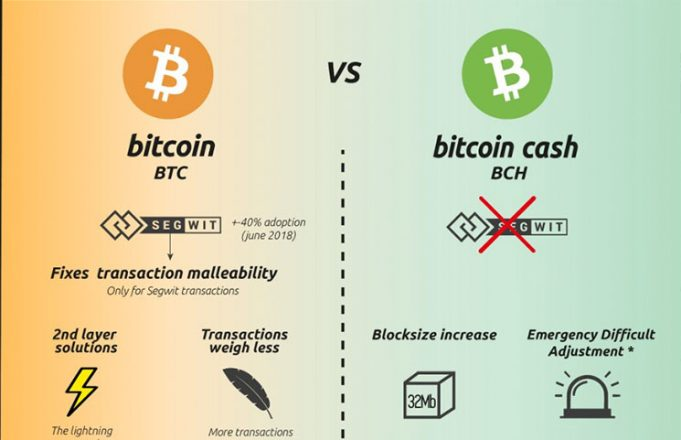 Image source: Jonathan Willems
Bitcoin Cash, a blockchain network forked from Bitcoin, also employs the Proof of Work mechanism and UTXO model, but its primary aim is to enhance on-chain payment efficiency. To achieve this, Bitcoin Cash features a larger block size, enabling each block to process more transactions, which lowers trading fees and boosts transfer efficiency. Its design is geared toward high-throughput payment scenarios.
| Comparison Dimension |
Bitcoin (BTC) |
Bitcoin Cash (BCH) |
| Main Objective |
Store of value |
On-chain payments |
| Scalability Approach |
Controlled block size |
Increased block size |
| Trading Fee Level |
Highly volatile |
Lower |
| Payment Efficiency |
Stable, but congested during peaks |
Higher |
| Node Threshold |
Lower |
Higher |
| Network Positioning |
Digital gold |
Payment-focused cryptocurrency |
Positioning of Bitcoin and Bitcoin Cash in Blockchain Payment Systems
Although Bitcoin and Bitcoin Cash share the same technical roots, their development priorities differ. Bitcoin places greater emphasis on security and store of value, designing its network to maintain a stable node participation threshold and ensure a high degree of decentralization.
In contrast, Bitcoin Cash prioritizes payment efficiency. By expanding block size, it reduces transaction congestion and trading fees, thus improving on-chain payment capacity. This distinction gives Bitcoin the role of a "digital store of value," while Bitcoin Cash serves as an "on-chain payment tool."
How Do Bitcoin and Bitcoin Cash Differ in Scalability Mechanisms?
Bitcoin’s scalability strategy centers on controlling block size to lower hardware requirements for node operation, enabling broader participation in network maintenance. This supports decentralization but can lead to congestion during peak transaction periods.
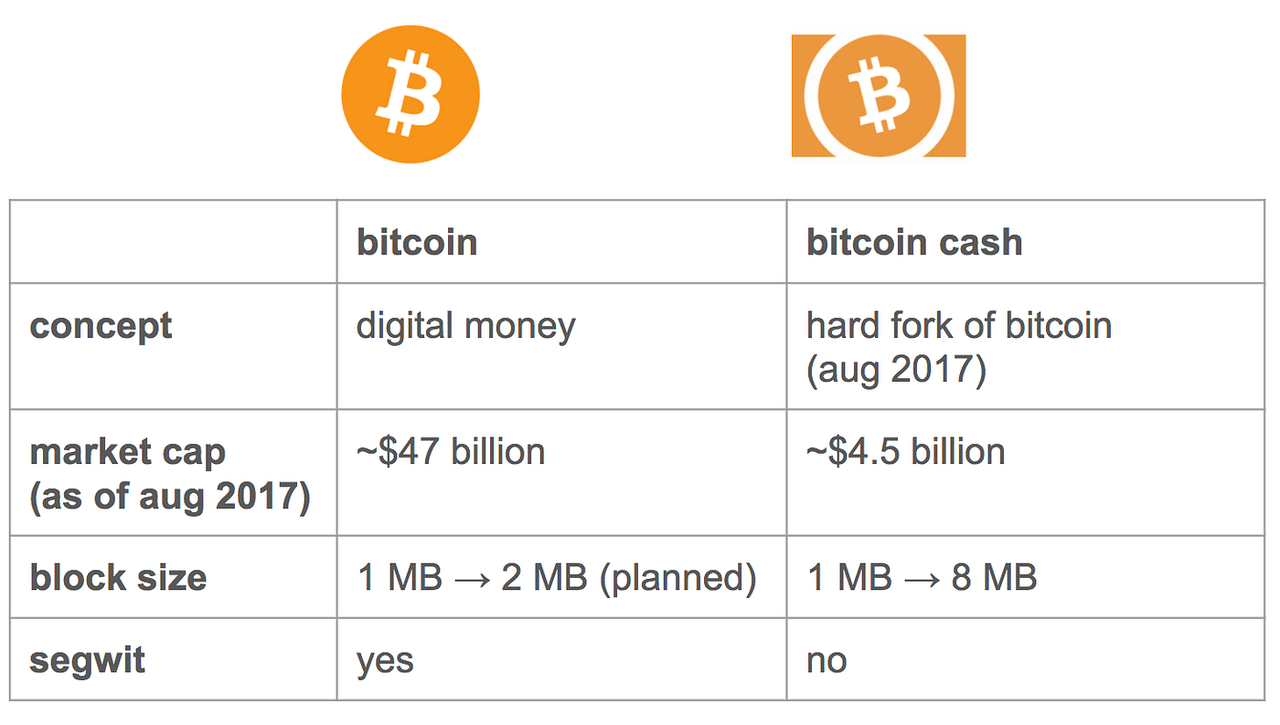 Image source: Linda Xie
Bitcoin Cash increases block size to boost on-chain throughput. Larger blocks allow simultaneous processing of more transactions, reducing wait times and trading fees. While this design benefits payment use cases, it also raises hardware and bandwidth requirements for node operation.
Fundamentally, the difference represents a trade-off between prioritizing decentralization and prioritizing payment efficiency.
Why Are Bitcoin Cash Trading Fees Typically Lower?
Trading fees are mainly determined by the supply and demand for block space. When block capacity is limited, users must pay higher fees to secure priority confirmation.
Bitcoin Cash’s larger block size provides ample block space, reducing transaction competition and resulting in generally lower trading fees. This makes BCH well-suited for small payments and frequent transfers.
Bitcoin, with its limited block space, can see trading fees rise during periods of high network activity, making it better suited for high-value transfers and store of value.
What Is the Difference in Payment Logic Between Bitcoin and Bitcoin Cash?
Bitcoin’s payment logic emphasizes secure confirmation and network stability. With limited block capacity, transaction confirmation priority is largely determined by fee competition, leading to higher payment costs during peak periods.
Bitcoin Cash reduces transaction congestion by expanding block size, making it easier for transactions to be promptly included in blocks. This lowers fee volatility and enhances payment efficiency.
From a payment logic perspective, Bitcoin is better suited for high-value settlements, while Bitcoin Cash is optimal for everyday payments and small-value transfers.
Network Security Trade-Offs: Bitcoin vs. Bitcoin Cash
Bitcoin’s network security relies on substantial miner hash rate and broad node participation. Lower node operation thresholds help increase network distribution and strengthen decentralized security.
With increased block size, Bitcoin Cash nodes must process more data, requiring greater hardware and bandwidth. This raises node operation costs and may limit network participation.
As a result, Bitcoin is "security-prioritized," while Bitcoin Cash is "efficiency-prioritized," representing distinct approaches to network design balance.
Summary
Bitcoin and Bitcoin Cash are based on the same blockchain infrastructure, but diverge in scalability and payment logic. Bitcoin maintains network security and decentralization by controlling block size, emphasizing its role as a store of value. Bitcoin Cash increases on-chain throughput by expanding block size, focusing on payment efficiency and low trading fee experience.
These contrasting design paths highlight the balance between efficiency, security, and decentralization in blockchain systems, and define different roles for each within the crypto asset ecosystem.
FAQs
What is the biggest difference between Bitcoin Cash and Bitcoin?
The biggest difference lies in their scalability approach. Bitcoin Cash increases block size to improve payment efficiency, while Bitcoin focuses on network security and decentralization.
Why are Bitcoin Cash trading fees lower?
Because BCH’s larger block size accommodates more transactions, reducing block space competition and resulting in lower trading fees.
Which is more suitable for payments: Bitcoin or Bitcoin Cash?
For on-chain payment efficiency, Bitcoin Cash is better for high-frequency and small-value payments due to its lower fees and higher throughput.
Is Bitcoin Cash faster than Bitcoin?
In terms of on-chain transaction processing, Bitcoin Cash is generally faster, as its larger block size reduces transaction congestion.
Do Bitcoin and Bitcoin Cash use the same consensus mechanism?
Yes, both utilize Proof of Work (PoW), with miners packaging transactions and maintaining network security.







