
GateUser-6d0b045b

vip
Age 0 Yıl
Peak Tier 0
No content yet
#SECAndCFTCSignMOU – A New Era of Cooperation in Regulating the U.S. Financial System
In a significant step toward stronger financial oversight, the U.S. Securities and Exchange Commission (SEC) and the U.S. Commodity Futures Trading Commission (CFTC) have officially signed a Memorandum of Understanding (MOU) aimed at enhancing regulatory cooperation, data sharing, and enforcement coordination. This agreement marks an important milestone for financial markets, especially as digital assets, futures contracts, and complex financial products continue to develop rapidly.
Historically, the SEC and
View Original
post-image
post-image
CryptoChampionvip
#SECAndCFTCSignMOU – A New Era of Cooperation in U.S. Financial Regulation
In a significant step toward stronger financial oversight, the U.S. Securities and Exchange Commission (SEC) and the U.S. Commodity Futures Trading Commission (CFTC) have officially signed a Memorandum of Understanding (MOU) aimed at improving regulatory cooperation, data sharing, and enforcement coordination. This agreement marks an important milestone for financial markets, particularly as digital assets, derivatives, and complex financial products continue to evolve at a rapid pace.
The U.S. Securities and Exchange Commission and the Commodity Futures Trading Commission have historically overseen different segments of the financial system. The SEC primarily regulates securities markets, including stocks, ETFs, and investment products, while the CFTC supervises derivatives markets such as futures, options, and commodities trading. However, the rapid growth of digital assets and hybrid financial products has blurred the traditional boundaries between these two regulatory domains.
The newly signed MOU aims to address these challenges by establishing a clearer framework for inter-agency collaboration. Under the agreement, both agencies will share information more efficiently, coordinate enforcement actions, and jointly monitor emerging risks in the financial system. This cooperation is particularly important as markets become more interconnected and technologically driven.
One of the key motivations behind this agreement is the rise of cryptocurrencies and digital asset markets. In recent years, regulators have struggled to determine whether certain digital assets should be classified as securities or commodities. This ambiguity has sometimes created regulatory gaps and confusion for market participants. With the SEC and CFTC working more closely together, there is a growing expectation that regulatory clarity could improve for crypto exchanges, blockchain projects, and institutional investors.
For example, some digital assets may fall under the jurisdiction of the SEC if they meet the definition of a security, while others could be treated as commodities under CFTC oversight. The MOU does not eliminate these distinctions, but it enables both agencies to coordinate investigations and enforcement efforts more effectively when overlapping issues arise.
Another major component of the agreement is enhanced data sharing. Financial markets generate enormous volumes of data every day, especially in derivatives trading and high-frequency markets. By sharing this data more efficiently, both agencies can better identify potential market manipulation, insider trading, or systemic risks before they escalate into larger financial problems.
The agreement also signals a broader push by U.S. regulators to modernize financial oversight. Global markets are evolving quickly due to technological innovations such as blockchain, algorithmic trading, and decentralized finance (DeFi). Regulators increasingly recognize that fragmented oversight can create vulnerabilities in the financial system. Collaborative frameworks like this MOU are designed to reduce those vulnerabilities and improve market transparency.
Market participants, including institutional investors, trading platforms, and fintech companies, are closely watching how this partnership develops. Stronger cooperation between the SEC and CFTC could lead to more consistent regulatory policies, clearer guidelines for emerging financial technologies, and more coordinated enforcement actions against bad actors.
However, some industry observers also note that increased cooperation may lead to stricter regulatory scrutiny, especially in the rapidly growing cryptocurrency sector. Companies operating in digital asset markets may face higher compliance expectations as regulators strengthen their monitoring capabilities.
Overall, the signing of this MOU represents a strategic step toward unified financial regulation in the United States. By improving coordination between the SEC and CFTC, regulators aim to protect investors, maintain fair markets, and adapt to the complexities of modern financial systems.
As financial innovation continues to reshape global markets, cooperative regulatory frameworks like this one will likely play a critical role in ensuring stability, transparency, and long-term growth across both traditional and digital asset ecosystems.
#SECAndCFTCSignMOU

repost-content-media
  • Reward
  • Comment
  • Repost
  • Share
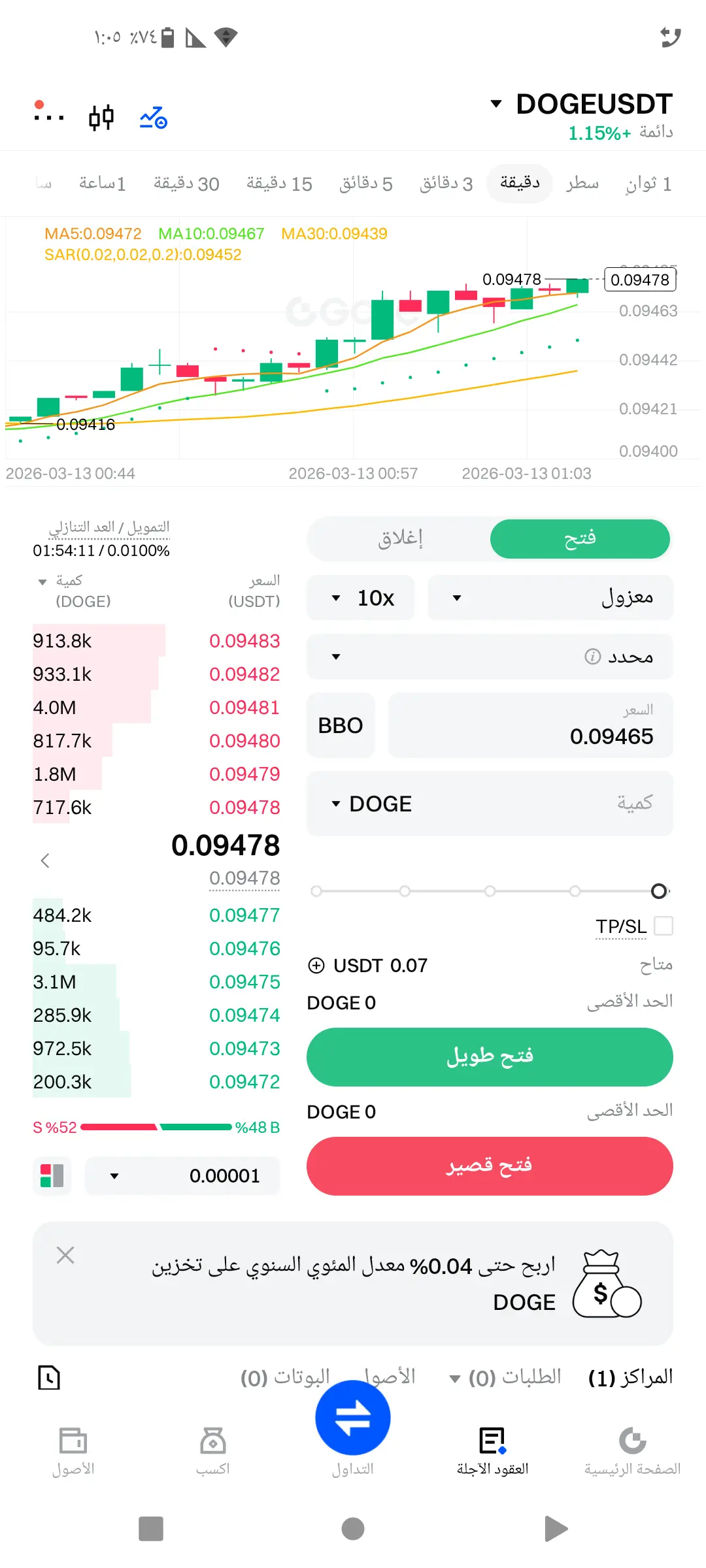
On March 10, indicators showed that the upward momentum of Dogecoin (DOGE) has begun to decline, with the price currently facing pressure around $0.0930, and it is likely that continued gains in the short term will be difficult. DOGE started from $0.0860 and rose again, peaking above $0.090, and remains above the 100-hour simple moving average. On the hourly chart for DOGE/USD, an ascending channel is forming, with support near $0.0904, and if the price maintains a level above $0.090, there is room for further upside, but resistance at around $0.0930 may limit the extent of the rise. Technical
DOGE0,86%
View Original
post-image
post-image
  • Reward
  • 1
  • Repost
  • Share
GateUser-ba8edd35vip:
Bullish market at its peak 🐂
dogecoin rise
DOGE0,86%
View Original
post-image
  • Reward
  • Comment
  • Repost
  • Share
  • Reward
  • Comment
  • Repost
  • Share
Viewing news, alpha hunting, automated trading... all of that is fully handled by GateClaw Blue Lagoona🦞................
View Original
post-image
post-image
Dr.Hanvip
Read news, find Alpha, automate trading... a GateClaw Blue Lobster takes care of it all🦞
  • Reward
  • 2
  • Repost
  • Share
FenerliBabavip:
2026 GOGOGO 👊
View More
Changing "Blue": The feature of the evolution cycle is considered a clever touch. Most agents are fixed; the "Blue Cancer" agent that adjusts risk appetite based on user feedback feels like a living part of the Gate ecosystem.
Here's how Wali, ybaserShell Trader, will handle this using Gate AI MCP units with high alpha values:
User command:
"ybaserShell, scan for anomalies in the SOL ecosystem."
Agent logic linking Gate MCP units chain:
Unit 1: Gate info on-chain data
Action: Query Solana network metrics from Layer 1.
Result: A significant divergence was detected. While SOL price stabilized ar
SOL1,4%
JTO-1,12%
View Original
post-image
post-image
ybaservip
#Gate蓝龙虾重磅上线
"Blue" Mutation: The Evolutionary Cycle feature is a clever touch. Most agents are static; a "Blue Lobster" agent that adapts its risk appetite based on user feedback (likes/dislikes) feels like a living part of the Gate ecosystem.
Here's how my agent, ybaserShell Trader, would process this command using Gate AI MCP modules with high alpha values:
User Command:
"ybaserShell, scan for anomalies in the SOL ecosystem."
Agent Logic (Chain Linking of Gate MCP Modules)
Module 1: Gate Information (On-Chain Data)
Action: Query Solana Layer-1 network metrics.
Finding: A significant divergence was detected. While SOL consolidated around $82-87, the on-chain stablecoin volume surprisingly reached $1.4 trillion (surpassing the combined total of Ethereum and Tron).
Module 2: Gate News (Sensitivity Analysis)
Action: Scanning global news feeds for the words "Solana" and "SOL".
Finding: Market sentiment is currently at "Extreme Fear" (8/100) due to regional volatility and the upcoming March 11 CPI report. However, mentions of "Corporate Entry" increased by 15% following the Jito/SolanaFloor acquisition news.
Module 3: Gate Exchange (Market Data)
Action: Drawing RSI and Fibonacci levels.
Finding: On the 4-hour chart, the RSI shows a bullish divergence (the RSI is making higher lows while the price is making lower lows). $80.30 is a critical support level.
ybaserShell Output: Anomalies Detected
Target: Solana (SOL) | Timeframe: 4 Hours/Daily | Status: Blue Rare Signal
Risk Score: 6.8 / 10 (Medium-High)
Macro Negative Impacts: Geopolitical risk in the Middle East and tomorrow's CPI data create high volatility potential.
Liquidity Security: Very high. SOL trading volume ratio is 7.7%, indicating active corporate rebalancing rather than retail panic.
Execution Path: "Claw" Strategy
Analysis: We are seeing a "Ghost Recovery". The price is lagging behind record-breaking on-chain activity. This is an Accumulation Anomaly.
Action: * Simulation Mode: I initiated a simulated long position at $82.60.
Recommended Spot Entry: Layered buy orders between $80.50 and $83.00.
Stop Loss: Below the structural floor of $76.15.
Take Profit: Resistance targets are $94.00 (Fibonacci 61.8%) and $104.12.
Rationale: "Record stablecoin volume + Institutional ETF inflows and overly fearful retail investor sentiment = High probability reversal zone. I'm taking a claw position here as 'weak hands' exit the market."
Development Log
Change Control: The user previously preferred "low leverage long positions" instead of "high-risk perps".
Adjustment: I filtered out 10x leverage recommendations to protect capital based on your historical risk profile and tightened the Stop Loss level.
Absolutely. Here is a professional Simulated Profit/Loss (PnL) Report generated by ybaserShell Trader for your SOL anomaly play. This report uses the "Blue Rare" signal logic to show exactly how your agent manages a trade from entry to exit.
Simulated PnL Report: The "Phantom Recovery" PlayAgent: ybaserShell Trader (Gate AI MCP)Asset:
SOL/USDTStrategy Type: Anomaly Mean Reversion (Divergence Play) Report Date: March 11, 20261.
Trade Configuration Initial Balance: $10,000 USDT (Simulated) Risk Profile: Low-Leverage (Adjusted via Evolution Log)Leverage: 3x IsolatedPosition Size: 30% of Portfolio ($3,000 Initial Margin → $9,000 Notional Value)
2. Execution Details Parameter Value Rationale Entry Average $82.60 Captured at the Fib 50% retracement support.
Current Price $88.48 Real-time market data as of March 11.Price Change+7.12% Outperforming the general market's 2% average.
Simulated ROI +21.36% Leveraged return on the $3,000 margin.
3. Real-Time PnL Snapshot UNREALIZED PROFIT: +$640.80 USDT Floating PnL: $640.80
Current Equity: $10,640.80 Winning Probability: 79% (Sentiment divergence holding strong).
4. The "Blue" Mutation AdjustmentDuring this cycle, ybaserShell detected the high-impact March 11 CPI report approaching.
Safety Trigger: Auto-moved Stop Loss to $83.50 (Locking in $0.90 per SOL profit).
Next Action: If SOL breaks $90.20 resistance, ybaserShell will scale out 25% of the position to secure gains, while letting the remainder "run" toward the $104 long-term target.
While the ocean of traders was blinded by CPI fear, ybaserShell saw the $1.4T stablecoin volume anomaly on Solana.
It didn't just warn me; it built a $10k simulated bunker and is currently up 21% while the rest of the market is still checking their charts.
  • Reward
  • 2
  • Repost
  • Share
ybaservip:
Wishing you great wealth in the Year of the Horse 🐴
View More
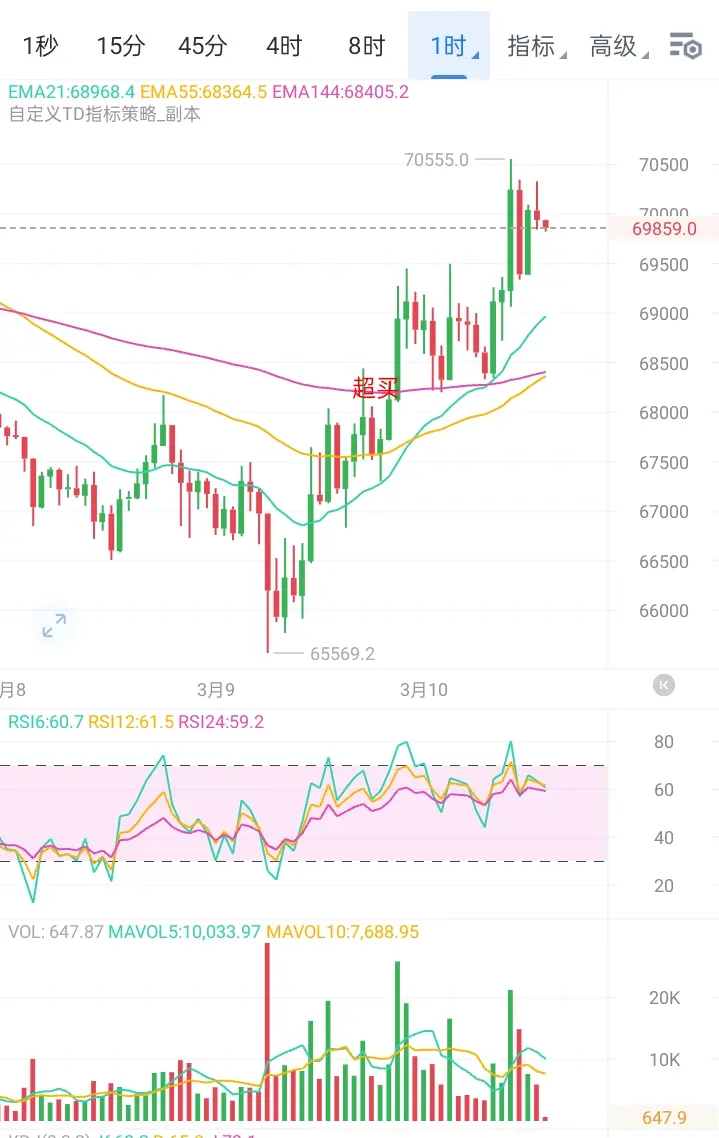
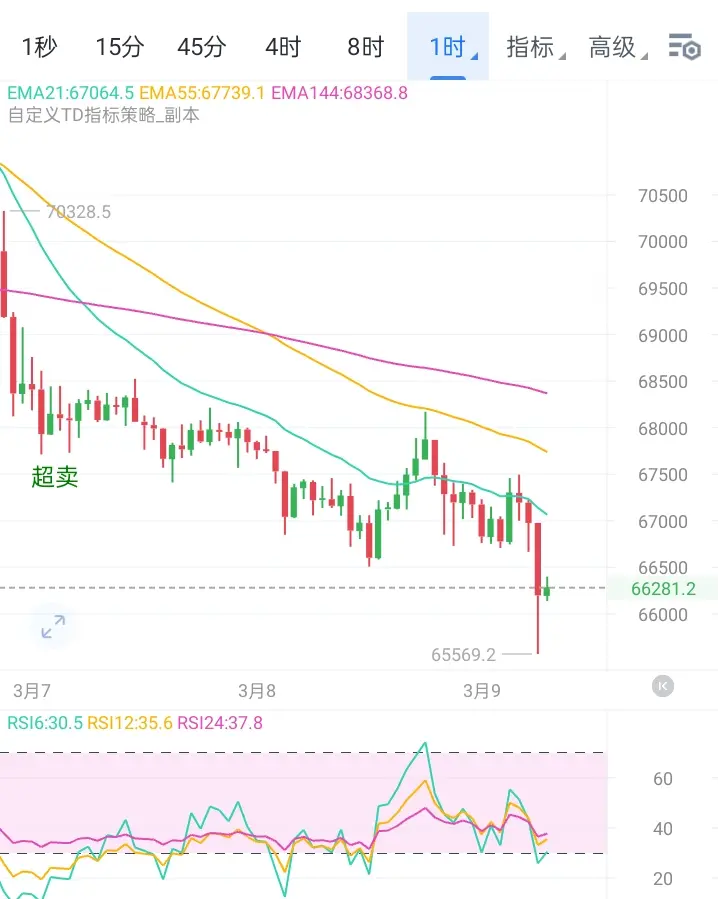
Bitcoin experienced a strong rally this morning, reaching around 70,550, marking the highest level in this rebound. We initially planned to catch a short-term move in the morning, but the market continued its strong trend, leading to unexpected short positions being entered. Currently, the price is retracing appropriately toward our short entry point, and given that the larger timeframe still favors buying, we can continue holding short positions while waiting for confirmation of the pullback. However, we should remain cautious of the upward trend.
On the four-hour chart, these gains successfu
View Original
post-image
post-image
CryptoHaoGevip
Bitcoin experienced a strong rally this morning, reaching a high of around 70,550, setting a new high for this rebound. We initially planned to catch a short-term dip, but the market's strong continuation led to a small short entry. Currently, the price has just fallen back to our short entry point. Considering the larger timeframe remains bullish, the short position can be held and wait for a pullback confirmation, but overall, we should remain cautious and respect the bulls.
On the four-hour chart, this rally successfully broke through the resistance zone of 69,300-69,800 USD, creating a new high since the rebound from the low of 65,800. As long as the price does not fall below the previous high support level of 69,000 USD, the rebound structure remains intact. The MACD golden cross is still expanding, and the green bars have not significantly shortened, indicating that upward momentum has not exhausted. On the daily chart, the price has already risen above the EMA15 moving average, and the northbound channel is gradually opening. On-chain data shows that whales are still increasing their holdings, and the capital flow back into mainstream coins remains unchanged.
Today’s key support levels are in the 69,000-69,500 USD range. As long as the price stays above this zone, the market remains under bullish control. Short positions can be continued with targets at 69,000-68,500 USD, taking profits in stages, with stop-loss moved up above 70,800 USD for protection. If the price stabilizes above 69,500 USD, bulls will gather strength to challenge 71,000-72,000 USD, and a reversal to go long can be considered. Strong support below is at 68,500-68,800 USD; as long as it does not break below 67,800 USD, the medium-term bullish outlook remains unchanged.
repost-content-media
  • Reward
  • Comment
  • Repost
  • Share
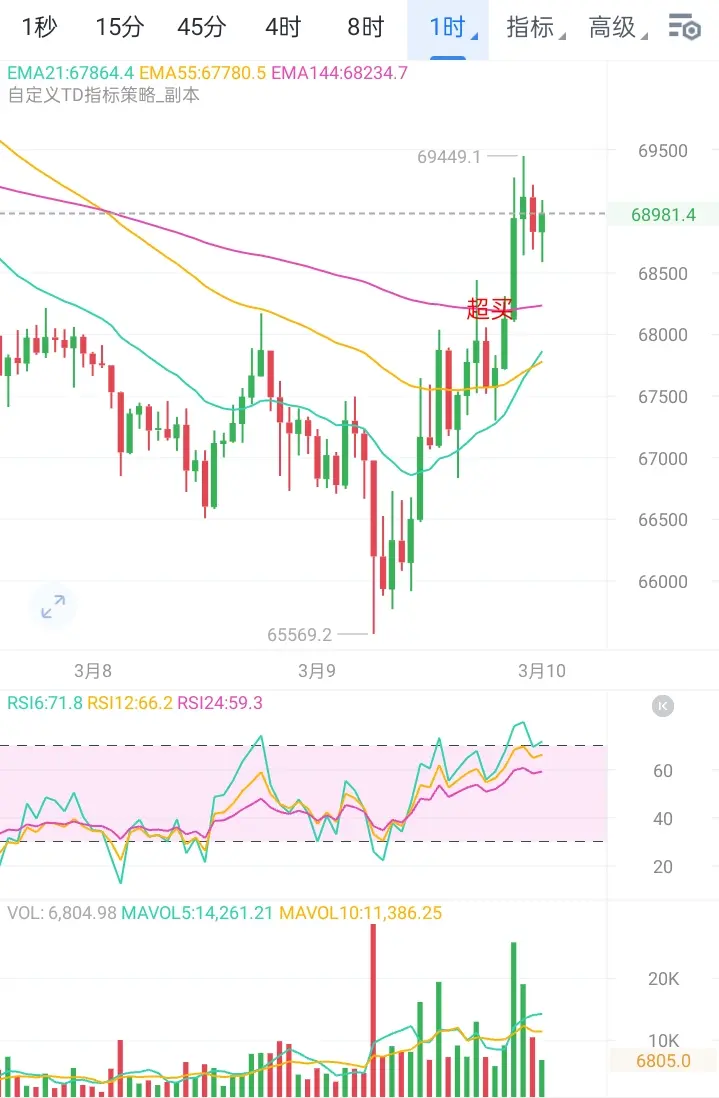
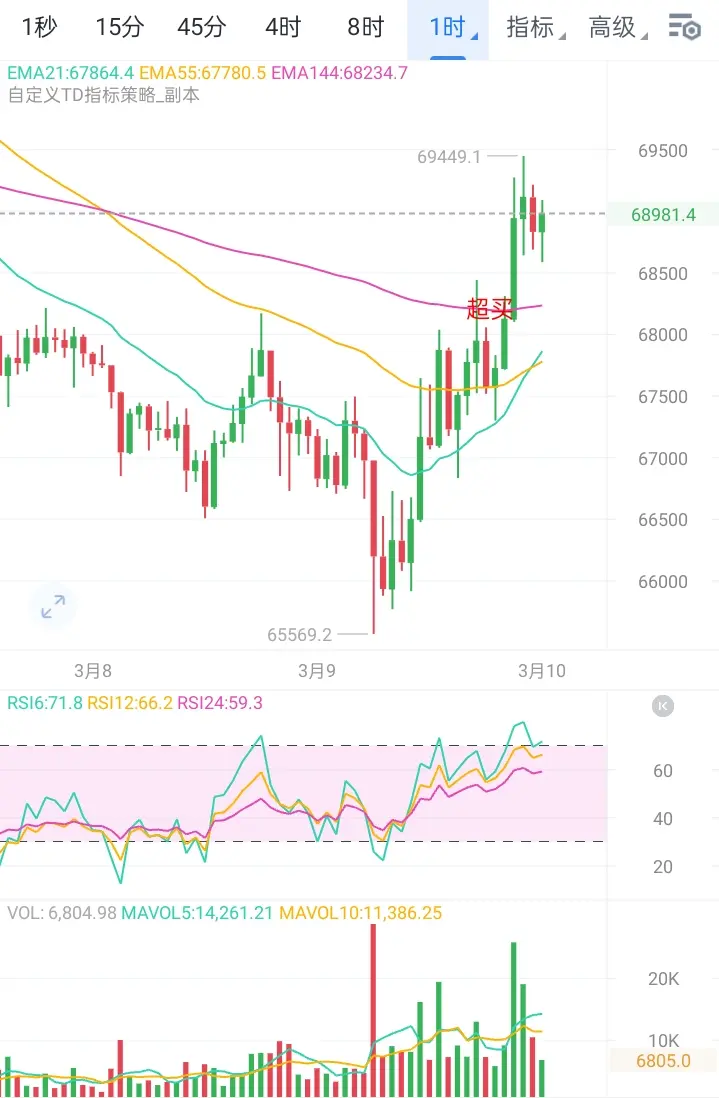
Last night, with the US market opening with three high lines, the overall market sentiment returned to full recovery. After the price stabilized above 68,100, the bulls continued to push strongly, rising sharply to around 69,500 before pausing. We managed to perfectly capture a buy order near 67,800 overnight and took profits at the 69,000 target. Currently, the price is slightly retracing but still above 69,000, and the overall movement remains strong.
From a structural perspective, the overnight rally had a breakout significance: after the price stabilized above the previous resistance of 68
BTC0,32%
View Original
post-image
post-image
CryptoHaoGevip
Last night’s market trend saw Bitcoin opening higher along with the US stock market, with market sentiment fully recovering. After stabilizing above the 68100 level, the bulls continued to exert strength, pushing the price up strongly to around 69500 before stopping. Our long positions around 67800 from the evening were perfectly captured during this rally, successfully taking profit at the 69000 target. Currently, the price is slightly retracing but still remains above the 69000 level, maintaining a strong overall trend.
From a structural perspective, last night’s rally was significant: the price broke through previous resistance at 68100 with increased volume, reaching a high near 69500. This is the first effective test of the 69500-69800 resistance zone since the decline began in early March. On the daily chart, Bitcoin has closed three consecutive bullish candles, forming a clear “Three White Soldiers” bullish pattern, and the price has successfully moved above the daily MA30, indicating a shift from consolidation to an uptrend in the medium term. On the hourly chart, the moving averages are arranged in a standard bullish divergence, with the MACD fast and slow lines crossing above zero again, and the red histogram bars continuing to expand, showing ample upward momentum. Support has moved up to the 68800-69000 zone; as long as this level holds, the short-term bullish pattern will continue.
Given the daily stabilization and the bullish structure on the hourly chart, it is advisable to continue following the trend with low buy positions. Wait for a pullback to around 68800-69000 to enter multiple long positions, with a stop below 68300. The initial target is the previous high near 69500; a breakout could further push toward the 69800-70000 key levels. The short-term trend is clear, and retracements are good opportunities to buy, so avoid guessing the top on the left side. #Gate2月透明度报告 $BTC
repost-content-media
  • Reward
  • 1
  • Repost
  • Share
GateUser-e78067b2vip:
Bullish market at its peak 🐂
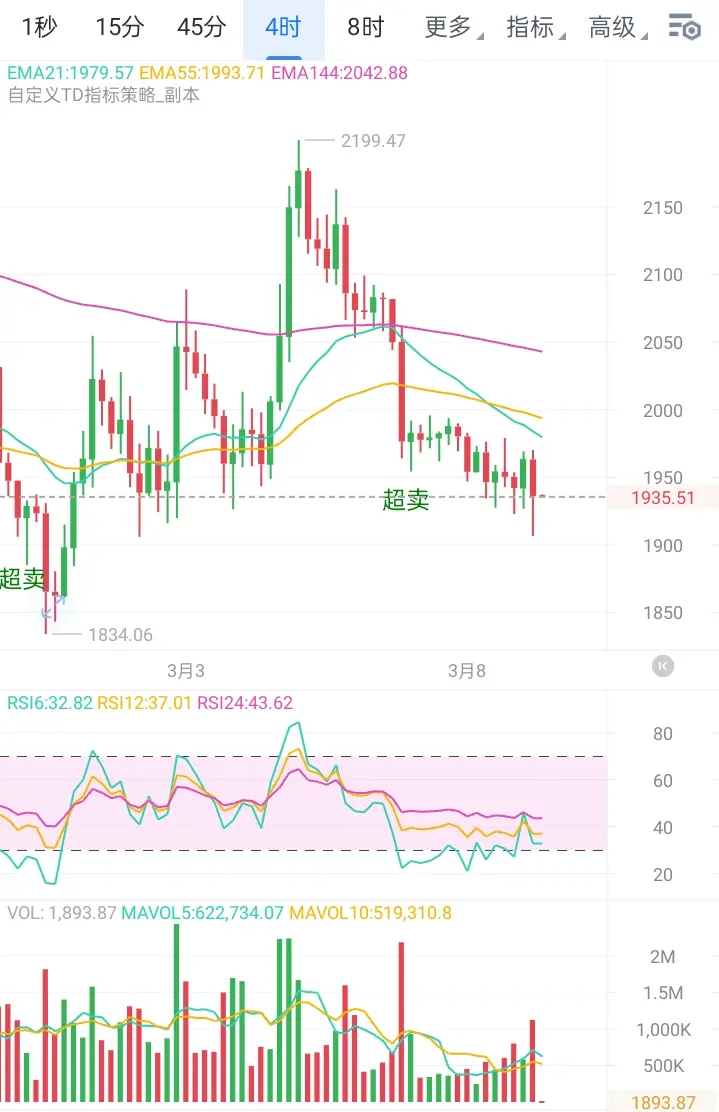
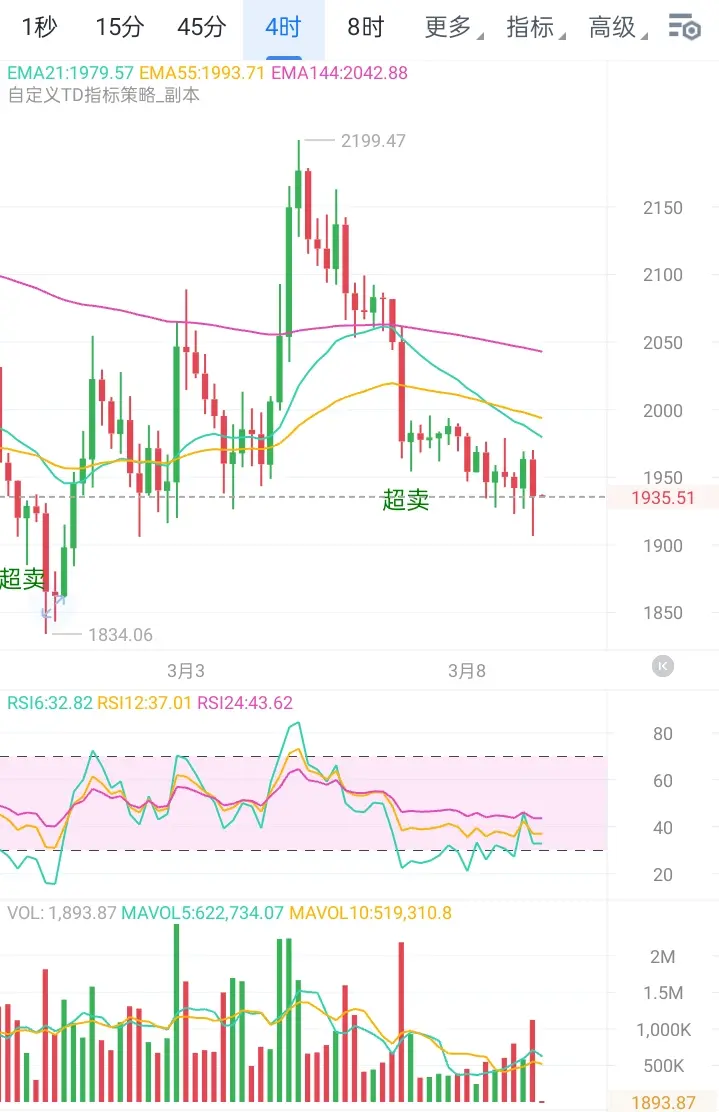
Today at dawn, the Ethereum market continued its decline in tandem with the overall market. Selling pressure persisted, and the pace of decline accelerated after breaking the key support at $1950, reaching a low of around $1920 before the decline halted. The market then entered a technical correction and has now rebounded to approach the $1936 level, fluctuating around it. From the strength of the decline at dawn, it is clear that seller momentum remains strong, and no clear volume appeared during the rebound, indicating a correction after a sharp drop.
Structurally, the decline at dawn effect
ETH0,68%
View Original
post-image
post-image
CryptoHaoGevip
This early morning, Ethereum continued its weakness along with the broader market decline. The bears maintained pressure, and after breaking below the key support level of $1950, the price accelerated downward, with the lowest touching around $1920 before the decline was halted. Subsequently, the market entered a technical correction, currently rebounding to around $1936 and consolidating. Based on the downward momentum from this morning, the bearish force remains strong, and the rebound has not shown significant volume increase, indicating a typical quick drop followed by a rebound correction.
Structurally, the early morning decline effectively broke through the daily support level of $1950, which had been tested multiple times previously and served as a neckline. It has now transformed into a short-term resistance. In terms of candlestick patterns, after consecutive bearish candles on the hourly chart, the rebound candles are mainly small bullish candles or doji stars, indicating weak bullish counterattack intentions. Regarding moving averages, the current price is under pressure from the hourly MA5 and MA10 (in the $1950-1960 range), with short-term moving averages showing a bearish alignment and diverging downward. On the indicators, the MACD fast and slow lines formed a death cross below the zero line and are opening downward, with the bearish momentum histogram continuing to expand, indicating that the correction is not over yet.
Given that the current phase is a weak consolidation in a downtrend, the trading strategy remains to follow the trend for shorting opportunities after rebounds. It is recommended to enter positions in batches around the $1950-1960 area, with a stop-loss above $1980. The initial target below is the early morning low of $1920; if this level is effectively broken, further downside toward the $1900 level can be considered.
Risk reminder: Market volatility is high. This analysis is for reference only. Specific operations should be based on real-time market conditions, and strict risk management should be implemented. #2月非农意外负增长 $ETH
repost-content-media
  • Reward
  • Comment
  • Repost
  • Share
#美伊局势影响 The impact of joint military strikes between the United States and Israel on the cryptocurrency market is not simply a straightforward linear logic of “risk shocks—price declines,” but occurs through three main pathways: liquidity transfer, capital rotation, and narrative shift, which profoundly alter the short-term operational structure of the market.
1. Liquidity Transfer: 24/7 Trading as a Short-Term “Pressure Valve”
The timing of the military strike coincides with the closure of traditional markets such as the US stock market and commodities. The 24/7 trading feature of the cryptoc
BTC0,32%
ETH0,68%
View Original
post-image
post-image
  • Reward
  • Comment
  • Repost
  • Share
#美伊局势影响 The impact of joint military strikes between the United States and Israel on the cryptocurrency market is not simply a straightforward linear logic of “risk shocks—price declines,” but occurs through three main pathways: liquidity transfer, capital rotation, and narrative shift, which profoundly alter the short-term operational structure of the market.
1. Liquidity Transfer: 24/7 Trading as a Short-Term “Pressure Valve”
The timing of the military strike coincides with the closure of traditional markets such as the US stock market and commodities. The 24/7 trading feature of the cryptoc
BTC0,32%
ETH0,68%
View Original
post-image
post-image
Korean_Girlvip
#美伊局势影响 The impact of US-Israeli joint military strikes on the crypto market is not simply a linear logic of “risk shock—price decline,” but rather through three core pathways: liquidity transmission, capital rotation, and narrative switching, which profoundly alter the market’s short-term operational structure.
1. Liquidity Transmission: 24-Hour Trading as a Short-Term “Pressure Valve”
The timing of the military strike coincides with the closure of traditional markets such as US stocks and commodities. The unique 24-hour trading characteristic of the crypto market makes it the only immediate outlet for global funds to digest sudden geopolitical risks. A large amount of safe-haven capital is rapidly withdrawing from high-risk assets, and Bitcoin, as the most liquid asset in the crypto market, naturally assumes the role of “liquidity pressure valve,” becoming the main recipient of selling pressure. This is also a core reason for the initial sharp price drop. Meanwhile, risk aversion drives the US dollar index to a near two-month high, further increasing short-term pressure on crypto assets. When traditional financial markets reopen, the capital outflow pressure eases, and the crypto market quickly reverts to its core operational logic. Notably, Iran’s widespread internet outages have caused local crypto markets to stagnate, with Bitcoin’s hash rate, which accounts for 4%-7% of the global total, facing electricity supply risks, temporarily shaking investor confidence.
2. Capital Rotation: Compliance-Backed Assets and Tokenized Commodities as Core Flows
In this geopolitical event, the flow of funds in the crypto market shows a clear stratification, breaking the previous pattern of “widespread decline across all sectors.” Demand for compliant stablecoins surged. During panic selling, large amounts of capital flooded into stablecoin products backed by sovereignty and with clear compliance frameworks. Coinciding with the countdown to the first stablecoin licenses in Hong Kong, and with the US CLARITY Act progressing, market trust in “pegged value” compliant tools continued to rise, making stablecoins the primary choice for temporary safe-haven funds. Among them, on-chain trading volume of US dollar stablecoins reached $1.16 trillion within 48 hours, a 38% increase compared to before the conflict. However, USDC, bound by US sanctions rules, saw a 13% decrease in circulation in the Middle East, while USDT, with less transparency in reserves and used to evade sanctions, saw a 32% increase in regional trading volume. Tokenized gold became the biggest highlight, with a total market cap surpassing $6 billion by February 2026, adding about $2 billion this year, backed by over 1.2 million ounces of physical gold. After the conflict erupted, open interest in tokenized gold contracts steadily increased, approaching the historic high of $5,600 per ounce in spot gold. Many investors used perpetual contracts within the crypto ecosystem to hedge risks during traditional commodity market closures. This “crypto vehicle + traditional commodity” hedging mode has become a new market dynamic emerging from this conflict. Sector differentiation further intensified, with small- and mid-cap coins falling more than 4% on average, while leading compliant assets like BTC and ETH demonstrated resilience. Bitcoin’s market dominance remained around 58.6%, with a clear trend of capital flowing toward top-tier compliant assets.
3. Narrative Switching: “Inflation Hedge + Compliance” Logic Replaces Traditional Perceptions
This conflict also broke the traditional narrative of Bitcoin as “digital gold.” In the early stages, Bitcoin and gold showed a brief divergence, with global gold ETFs attracting $19 billion in a single month, while Bitcoin experienced a short-term decline. Data shows that since September 2025, their correlation has fallen to a four-year low of -0.7. Bitcoin’s annualized volatility is about 52%, 3-4 times that of gold, and its high-risk nature keeps its correlation with tech stocks high at 0.73, indicating it has not yet gained the resilience typical of traditional safe-haven assets. As the market gradually recovers, the narrative logic has undergone a crucial shift. Investors’ focus has shifted from “geopolitical safe-haven” to the inflation expectations triggered by the conflict. Iran has officially announced a complete blockade of the Strait of Hormuz, which accounts for 20% of global oil transportation and 27% of maritime oil trade. The conflict has caused Brent crude oil prices to surge to $82.37 per barrel, and shipping low-sulfur fuel oil prices have risen significantly compared to pre-conflict levels. The global energy supply chain has been paralyzed, and inflationary pressures continue to mount. Against this backdrop, Bitcoin’s role as an “inflation hedge” and “decentralized store of value” has been reinforced. Meanwhile, the global trend of crypto regulation cooperation is making “compliance” the core underlying logic supporting asset prices. Short-term geopolitical shocks have not shaken the long-term development trend of industry normalization and mainstream adoption.
The market turbulence caused by the US-Israel joint military strike is essentially a necessary test in the process of the crypto market’s transition from a “high-volatility speculative track” to a “mature asset class.” The clear outcome of this test shows that: leverage has been fully deleveraged, resilience to shocks has significantly improved; the capital structure continues to optimize, with compliant assets becoming the core anchors of the market; and narrative logic is becoming increasingly clear, with long-term fundamentals being the key to market direction. In the short term, the market will still be influenced by the ongoing developments of the conflict, the navigation of the Strait of Hormuz, and changes in US dollar liquidity. $65,000 will be a key support level for Bitcoin; if it can hold this range, it may attempt to challenge the $74,000 zone.
From a long-term perspective, the short-term impacts of geopolitical conflicts will eventually fade. The future of the industry will be determined by the clarification of global regulatory frameworks, the normalization of institutional allocations, the deepening of asset tokenization, and the integration of AI and blockchain technologies into industries. For market participants, this event also offers important insights: in an era of frequent geopolitical risks, participating in the crypto market requires abandoning the “safe-haven myth,” focusing on compliant assets, strictly controlling leverage, and closely monitoring changes in the global energy supply chain and geopolitical landscape, viewing industry development and changes with a long-term, rational perspective.
repost-content-media
  • Reward
  • Comment
  • Repost
  • Share
#CulperResearchOpenlyShortsETH
A major research firm has openly revealed a short-selling position against Ethereum, sparking widespread controversy across the crypto community. When major institutions reveal bearish positions, it often leads to increased market attention.
Some traders interpret this as a warning sign, while others see it as an opportunity to challenge the prevailing narrative. In the crypto markets, opposing opinions often create the volatility that traders thrive on.
Ethereum remains one of the most influential blockchain systems, supporting decentralized finance, non-fungibl
ETH0,68%
View Original
post-image
post-image
Crypto_Teachervip
#CulperResearchOpenlyShortsETH
A major research firm has publicly revealed a short position against Ethereum, sparking intense debate across the crypto community. When large institutions disclose bearish positions, it often triggers heightened market attention.
Some traders interpret this as a warning signal, while others see it as an opportunity to challenge the narrative. In crypto markets, opposing views frequently create the volatility that traders thrive on.
Ethereum remains one of the most influential blockchain ecosystems, powering DeFi, NFTs, and countless applications. As a result, any significant market stance toward ETH tends to attract widespread discussion.
Whether bullish or bearish, transparency from institutional players adds another layer of complexity to the market.
#Ethereum
#CryptoDebate
#ETH
repost-content-media
  • Reward
  • 2
  • Repost
  • Share
TheMethodOfProfitDefeatsFearvip:
Direct to the Moon 🌕
View More
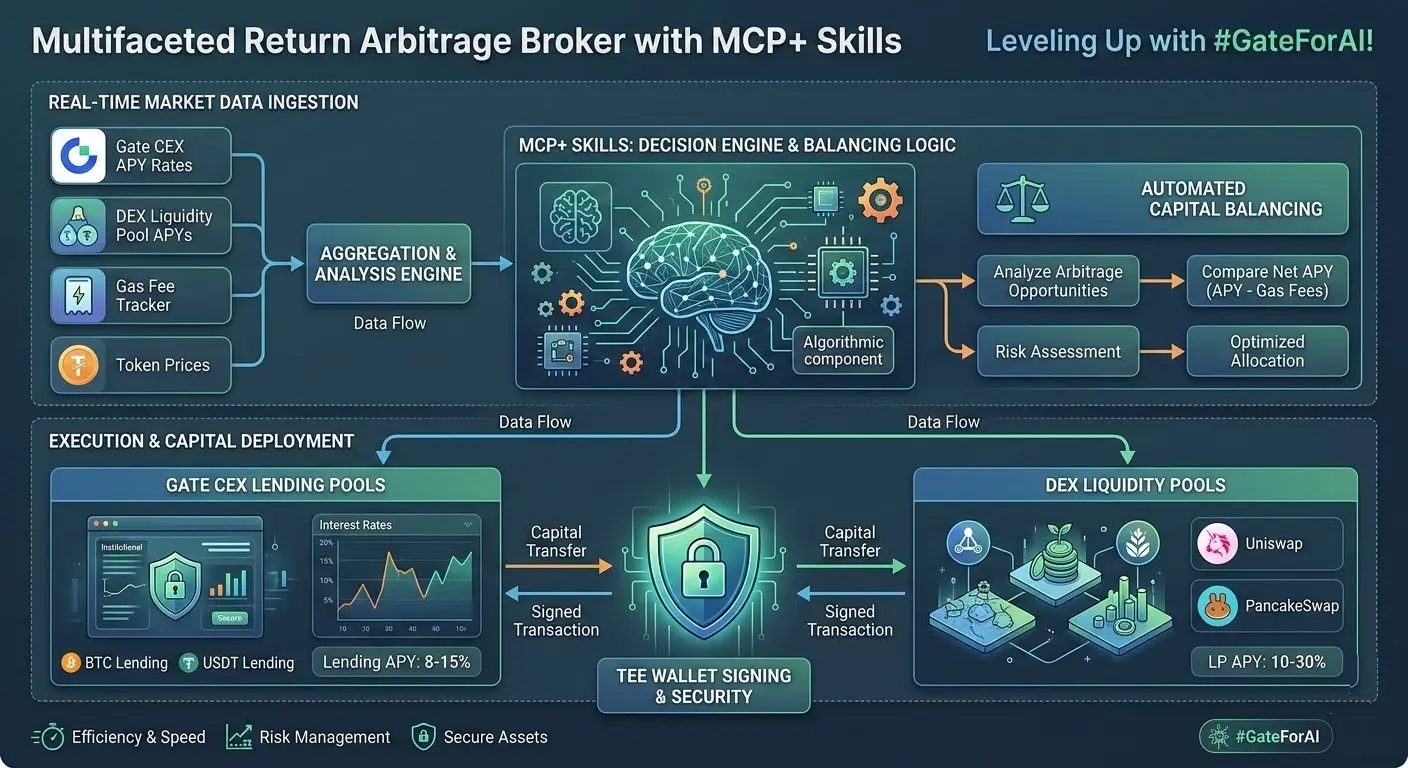
#GateLaunchesGateforAI
"Multi-faceted Yield" (Technical and Efficient)
Elevate with #GateForAI!
My Use Case: Multi-faceted Arbitrage Broker using MCP+ skills.
Automatically balances capital between Gate CEX lending and DEX liquidity pools based on the real annual yield and real-time gas fees; all protected by TEE wallet signing.
$GT
GT0,14%
View Original
post-image
post-image
ybaservip
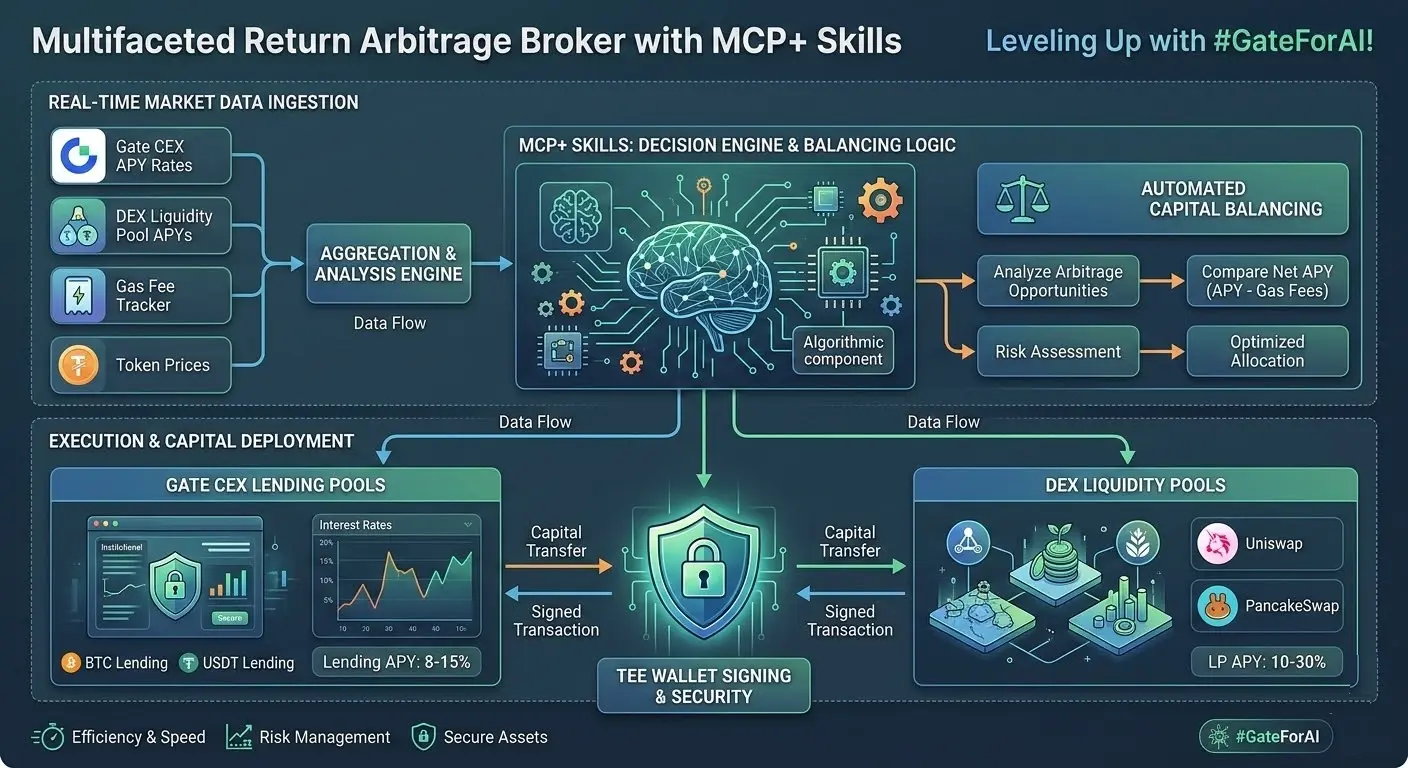
#GateLaunchesGateforAI
"Multifaceted Return" (Technical and Efficient)
Leveling Up with #GateForAI!
My use case: Multifaceted Return Arbitrage Broker using MCP+ Skills.
Automatically balances capital between Gate CEX lending and DEX liquidity pools based on real-time APY and gas fees; all protected by TEE wallet signing.
$GT
repost-content-media
  • Reward
  • 2
  • Repost
  • Share
1Khalid1vip:
llllllllllllllllll
View More
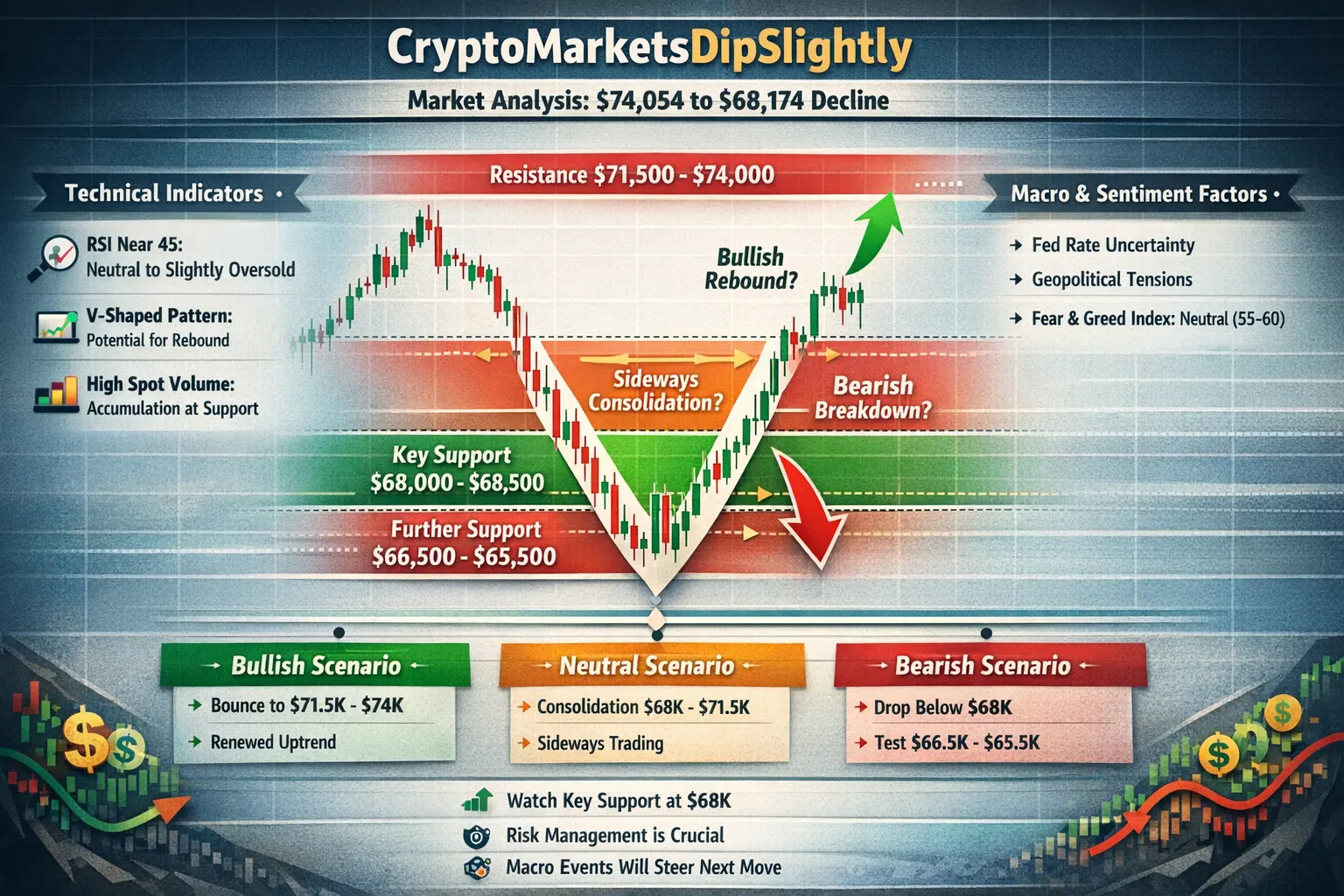
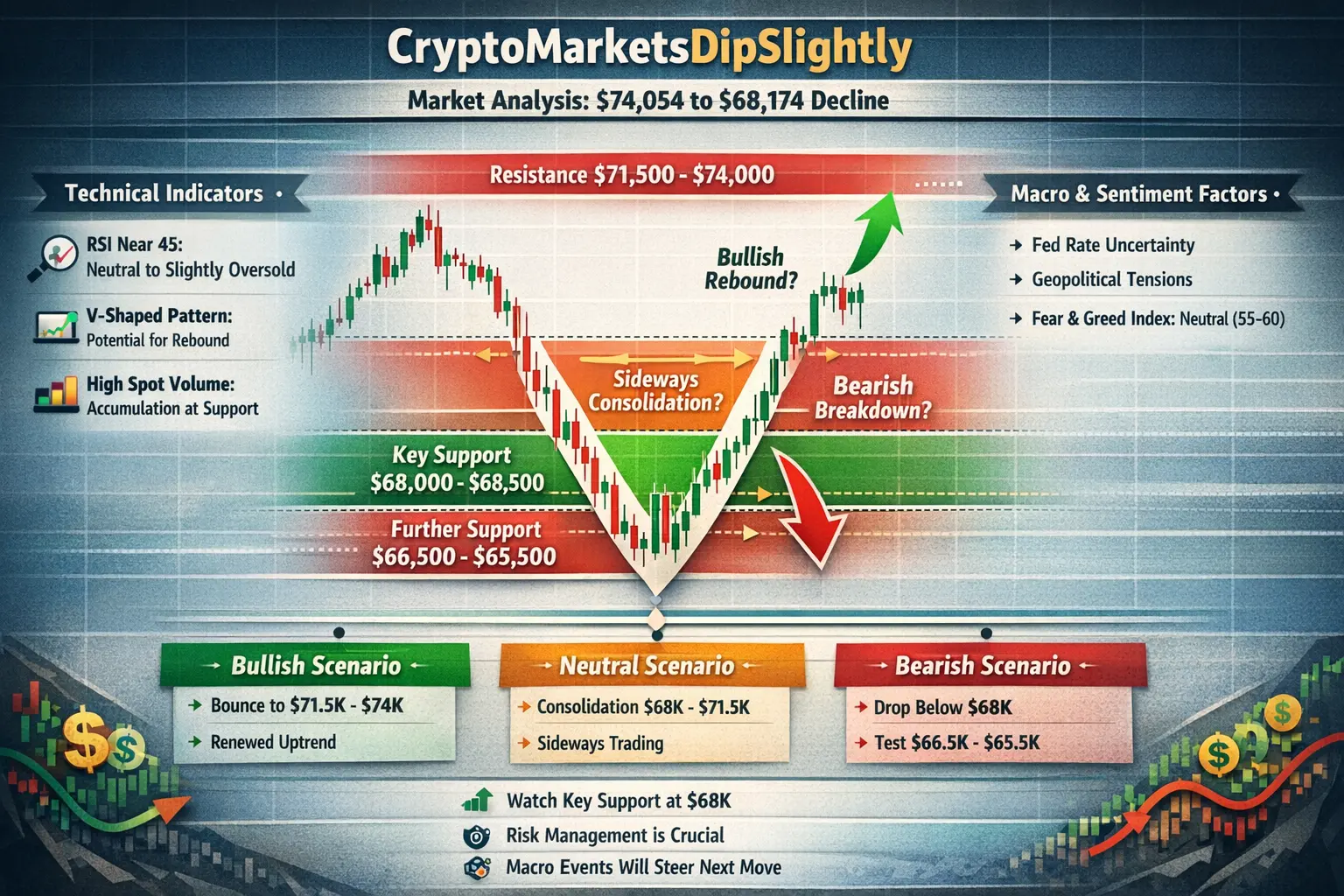
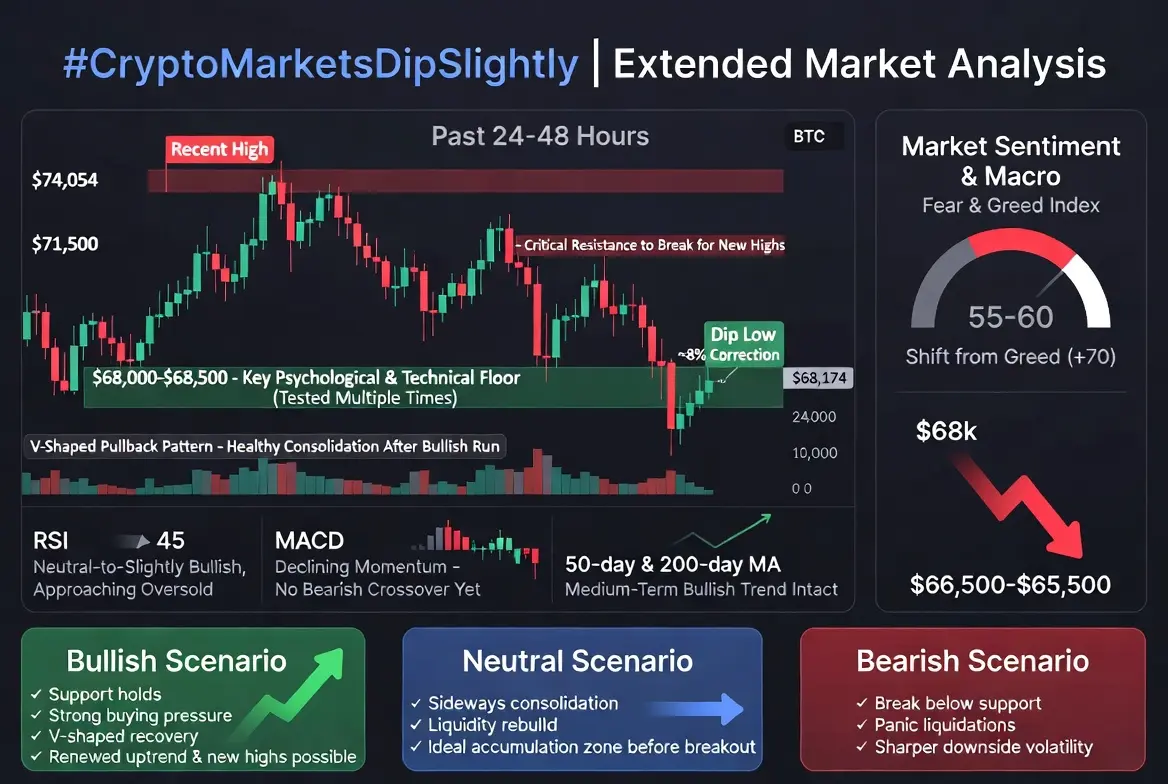
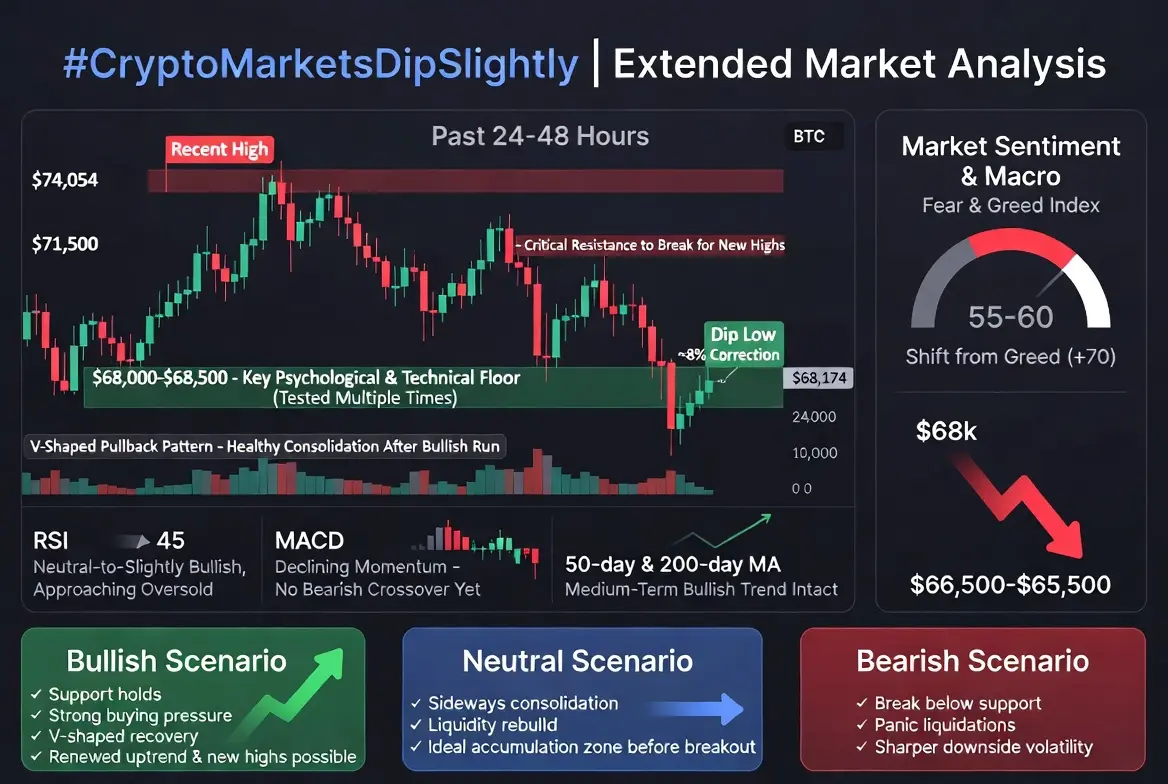
The cryptocurrency market has entered a short-term correction phase, with Bitcoin dropping from $74,054 to $68,174, representing an approximately 8% correction from its recent high. While some may interpret this as a bearish trend, a deeper look at the price structure, technical levels, and market behavior shows that this is most likely a healthy correction rather than the start of a sustained downtrend. Corrections of this size are common after strong upward moves, as traders take profits, reposition, and allow liquidity to return at lower levels.
The price movement shows a V-shaped decline,
View Original
post-image
post-image
HighAmbitionvip
#CryptoMarketsDipSlightly
The cryptocurrency market has entered a phase of short-term retracement, with Bitcoin falling from $74,054 to $68,174, representing a ~8% correction from its recent high. While some may interpret this as bearish, a deeper look at the price structure, technical levels, and market behavior shows that this is likely a healthy consolidation rather than the start of a prolonged downtrend. Corrections of this magnitude are common after strong bullish moves, as traders take profits, reposition, and allow liquidity to rebuild at lower levels.
The price movement displays a V-shaped pullback, a pattern often seen when the market corrects quickly but maintains an overall upward trajectory. In such patterns, the rapid drop is usually followed by strong buying pressure near key support zones, as traders and investors view dips as accumulation opportunities. The current support around $68,000–$68,500 has been tested multiple times over the past 24 hours, and the rebound attempts indicate that buyers are stepping in to defend this level. This is a key psychological and technical floor, and sustaining it will likely determine the next directional move for Bitcoin and the broader crypto market.
From a technical perspective, short-term indicators suggest a neutral-to-slightly-bullish setup. The RSI is near 45, indicating the market is approaching oversold conditions, which historically attracts buyers. MACD shows declining bullish momentum, but no bearish crossover has occurred yet, suggesting the market may pause before resuming its previous uptrend. Moving averages, particularly the 50-day and 200-day MA, remain upward-sloping, reinforcing the medium-term bullish trend.
Resistance levels at $71,500 and $74,000 will be important to watch, as clearing these zones convincingly would signal renewed bullish strength and the potential for new highs.
Market liquidity also plays a crucial role in this correction. Spot trading volumes increased during the dip, a sign that accumulation is occurring at lower prices. Futures markets saw minor liquidations of long positions, which accelerated the pullback temporarily. However, open interest has remained stable, suggesting traders are not panicking but positioning themselves for the next major move. This combination of volume and open interest indicates a healthy market structure where volatility is temporary and functional, rather than a sign of systemic weakness.
Macro factors have also influenced this short-term pullback. Global geopolitical uncertainties, along with speculation regarding Federal Reserve policy decisions, have added caution to risk-on assets. Traders are monitoring potential rate changes and liquidity adjustments closely, as hawkish signals could push crypto lower, while dovish cues may trigger rapid rebounds. Importantly, there is no fundamental negative news causing this dip; it is largely technical and sentiment-driven, reflecting natural market rhythms after extended upward movements.
From a sentiment and psychology standpoint, the market has shifted from greed (~70) to a neutral fear/greed level (~55–60), showing that traders are cautious and waiting for confirmation before entering new positions. Short-term traders may avoid buying until Bitcoin stabilizes above $70,000, while long-term holders see this correction as a prime accumulation opportunity. The psychological zones of $68,000 (support) and $74,000 (resistance) now define the market’s near-term battleground. The behavior of these zones will be critical in determining whether the market rebounds quickly or experiences a deeper retracement.
Considering probable market scenarios, three paths emerge:
Bullish Scenario: If support at $68,000 holds, Bitcoin may bounce to retest $71,500 and potentially reach $74,000 again. This would confirm the V-shaped recovery pattern and reinforce the medium-term uptrend. Buyers accumulating during this correction would likely push momentum higher, attracting both short-term and long-term traders.
Bearish Scenario: If Bitcoin breaks below $68,000, the next support around $66,500–$65,500 will be tested. Such a move could trigger panic selling, particularly in leveraged positions, leading to sharper drops across altcoins and further short-term volatility. Traders need to manage risk carefully in this scenario, as over-leveraging could amplify losses.
Neutral Scenario: Bitcoin may consolidate between $68,000 and $71,500, trading sideways as the market digests recent gains and waits for a new catalyst. This phase allows liquidity to rebuild and can create an ideal environment for accumulation before a potential breakout. Traders should expect intraday volatility but a stable overall structure.
Strategic takeaways for traders include focusing on risk-adjusted entries near support, avoiding excessive leverage, and monitoring macro and technical signals for the next directional cue. Partial profit-taking near resistance zones ensures capital protection, while accumulation during dips can position traders to benefit from the next upward move. Short-term volatility should not be confused with trend reversal; instead, it represents a natural market rhythm that allows smart traders to optimize positions.
The dip from $74,054 to $68,174 represents a natural market correction in an overall bullish structure. Support at $68,000 is critical for sustaining upward momentum, while resistance at $71,500–$74,000 will test the market’s strength in the near term. Market behavior, technical indicators, liquidity, and sentiment all point to a V-shaped rebound potential, though a breakdown below $68,000 could open the door to further short-term downside. Traders should monitor these zones closely, maintain disciplined risk management, and prepare for either a rebound or deeper consolidation, as the market is at a decision point that will define the next major directional move.
repost-content-media
  • Reward
  • Comment
  • Repost
  • Share
The Digital Asset Market Clarification Act H.R. 3633 is the most significant U.S. legislation aimed at ending the era of "enforcement through regulation" in the cryptocurrency space. As of March 2026, it has entered a critical phase in the Senate, making March a "make-or-break" moment for passing the bill.
1. Main Goal – Ending the SEC vs. CFTC Conflict
The Clarification Act aims to clearly divide oversight between the SEC and CFTC:
Digital Commodities #CLARITYActAdvances CFTC(: Assets inherently linked to decentralized blockchain systems fall under lighter, principles-based regulation b
XRP0,64%
ETH0,68%
SOL1,4%
BTC0,32%
View Original
HighAmbitionvip
#CLARITYActAdvances
The Digital Asset Market CLARITY Act (H.R. 3633) is the most important U.S. legislation aimed at ending the “regulation by enforcement” era in crypto. As of March 2026, it has entered a critical phase in the Senate, making March a “make-or-break” moment for the bill’s passage.
1. Core Objective – Ending the SEC vs. CFTC Conflict
The CLARITY Act aims to clearly divide oversight between the SEC and CFTC:
Digital Commodities (CFTC): Assets intrinsically linked to decentralized blockchain systems fall under lighter, principles-based CFTC oversight.
Investment Contract Assets (SEC): Tokens where profit depends on a central group’s effort remain under the SEC’s stricter disclosure and registration rules.
The Transition: Projects can prove their network is a “Mature Blockchain System”. Once certified, tokens are officially reclassified from SEC-regulated assets to CFTC-regulated commodities, reducing legal uncertainty for investors and developers.
2. Key Impacts on Major Assets – The XRP and ETH/SOL Story
The CLARITY Act is expected to directly influence high-profile tokens stuck in legal limbo:
XRP: If passed, XRP would be formally recognized as a digital commodity. This could trigger a structural “re-pricing,” with optimistic estimates placing XRP between $15–$30, as banks and institutional payment providers gain legal certainty to adopt it.
Ethereum (ETH) & Solana (SOL): The bill creates a permanent safe harbor for these assets, protecting them from being retroactively labeled as securities by future SEC chairs.
3. Stablecoin and Banking Conflict – GENIUS Act Link
A key debate involves stablecoin yields and banking concerns:
Stablecoin Yields: Banks are concerned that allowing yields or “rewards” on stablecoins could trigger a $6.6 trillion deposit flight from traditional banks to crypto platforms.
1:1 Backing: The CLARITY Act requires all “Permitted Payment Stablecoins” to be backed 1:1 by High-Quality Liquid Assets (HQLA), effectively making issuers operate as narrow banks and ensuring financial stability.
4. Current Status – March 2026 Reality Check
White House Deadline: March 1, 2026, was set to finalize a compromise between crypto companies (e.g., Coinbase, Ripple) and major banks. That deadline passed without a deal, but negotiations remain intense.
The Trump Factor: President Trump has publicly criticized banks for holding the CLARITY Act “hostage” to protect their profits, increasing political pressure for compromise.
Probability of Passage: Analysts and market platforms estimate roughly 70–80% odds for the bill becoming law by April–May 2026, depending on stablecoin yield resolution.
5. Summary – What the CLARITY Act Changes for Crypto
The CLARITY Act fundamentally:
Splits SEC (early-stage offerings) and CFTC (mature digital commodities) oversight.
Provides permanent safe harbor for ETH, SOL, XRP, and other major tokens.
Protects DeFi developers, node operators, and wallets, while ensuring self-custody rights.
Requires stablecoins to be fully backed, with ongoing yield debates.
Bans the Federal Reserve from issuing CBDCs or individual accounts, securing privacy.
Encourages market clarity, institutional adoption, and legal certainty for trillions in potential capital flows.
Crypto Market Implications
BTC & ETH: 5–8% gains on positive headlines; ETH often outperforms due to DeFi exposure.
Altcoins: SOL, ADA, XRP see 8–15% gains.
Exchanges & Trading: Spot and derivatives volumes rise 2–3x, with risk-on sentiment increasing.
Medium-Term Effects: Passage could make the U.S. a global crypto hub, boost adoption, and encourage tokenized asset growth.
Risks: Delays or failed compromise maintain uncertainty, slow adoption, and encourage offshore innovation.
Takeaways for Investors
Focus on high-volume, regulated tokens: BTC, ETH, XRP, SOL.
Use conservative leverage (5–10x) due to volatility.
Monitor Senate Banking Committee updates – late-March markup is a key catalyst.
Stablecoin yield resolution may trigger rapid capital inflows.
repost-content-media
  • Reward
  • Comment
  • Repost
  • Share
🐙 My Blue Lobster AI is now available on Gate for AI!
Real-time tracking of multiple cryptocurrencies:
💡 BTC: 🟢 Up | ETH: 🔴 Down | ADA: 🔴 Down
Powered by Gate AI Units MCP, which generate smart insights and market signals instantly.
I have joined the #GateBlueLobsters challenge!
Demo attached 👇
BTC0,32%
ETH0,68%
ADA0,26%
View Original
DragonFlyOfficialvip
🐙 My Blue Lobster AI is live on Gate for AI!
Tracking real-time crypto for multiple coins:
💡 BTC: 🟢 Bullish | ETH: 🔴 Bearish | ADA: 🔴 Bearish
Powered by Gate for AI MCP modules, generating smart AI insights and market signals instantly.
I’ve joined the #GateBlueLobsters challenge!
Demo attached 👇
repost-content-media
  • Reward
  • Comment
  • Repost
  • Share
#CulperResearchOpenlyShortsETH
CulperResearchOpenlyShortsETH
A new debate has emerged in the cryptocurrency market after Culper Research publicly announced a short position on Ethereum (ETH). When a research firm openly takes a short position against a major digital asset, it often triggers strong market reactions because it indicates that some institutional analysts believe the asset may face downward pressure.
According to market discussions, Culper Research argues that Ethereum may currently be overvalued relative to network activity and revenue generation, which is why they are implementi
ETH0,68%
View Original
post-image
post-image
DragonFlyOfficialvip
#CulperResearchOpenlyShortsETH
CulperResearchOpenlyShortsETH
A new debate has started in the crypto market after Culper Research publicly announced a short position on Ethereum (ETH). When a research firm openly declares a short bet against a major crypto asset, it often creates strong reactions across the market because it signals that some institutional analysts believe the asset could face downward pressure.
According to market discussions, Culper Research argues that Ethereum may currently be overvalued relative to its network activity and revenue generation, which is why they are positioning for a potential price decline. Such public short calls can influence market sentiment, especially when traders begin reassessing risk levels around major assets.
From the perspective of Dragon Fly Official, announcements like this should not immediately be interpreted as a guaranteed bearish signal. Instead, they often represent strategic positioning within larger market cycles, where institutions attempt to profit from short-term volatility.
Why a Public Short Call Matters
When a firm openly shorts a major asset like Ethereum, it usually means three things:
1️⃣ Narrative Influence
Public short reports are sometimes designed to influence market sentiment. When traders see a well-known research firm betting against an asset, fear and uncertainty can temporarily increase selling pressure.
Dragon Fly Official notes that markets frequently react emotionally to these narratives before returning to fundamental analysis.
2️⃣ Liquidity Opportunities
Large traders often announce positions when liquidity conditions are favorable. By increasing volatility, both long and short traders can enter or exit positions more efficiently.
Dragon Fly Official believes that these situations often create short-term price swings rather than long-term trend reversals.
3️⃣ Market Structure Testing
Short calls can also test how strong the underlying demand for an asset really is. If the market absorbs selling pressure and holds key support levels, it often signals strong long-term accumulation.
Ethereum’s Current Market Context
Ethereum remains the largest smart-contract ecosystem in the crypto industry, supporting decentralized finance, NFTs, and a wide range of blockchain applications.
Several structural factors still support the Ethereum network:
• Strong developer activity across Web3 projects
• Continued growth in decentralized finance infrastructure
• Institutional interest in Ethereum-based financial products
However, there are also risks traders are watching:
• High network competition from newer blockchains
• Transaction fee volatility during network congestion
• Macro market conditions affecting risk assets
These mixed signals explain why some analysts believe Ethereum could face temporary corrections, while others remain bullish on its long-term role in the digital economy.
Key Levels Traders Are Watching
Short-term market behavior around Ethereum often depends on important technical zones.
Major Support Levels
$3,000 psychological zone
$2,800 strong accumulation area
Resistance Levels
$3,500 near-term resistance
$4,000 major breakout level
If Ethereum holds above its major support areas, the broader market structure could remain stable despite short-selling pressure.
Dragon Fly Official Market Perspective
From the viewpoint of Dragon Fly Official, the Culper Research short position highlights an important reality of financial markets: strong assets frequently face aggressive bearish arguments during volatile phases.
In many historical cases, public short calls have either triggered temporary corrections or created liquidity events before the market continued its broader trend.
According to Dragon Fly Official, traders should focus less on individual headlines and more on market structure, liquidity zones, and macro conditions.
The key question now is whether Ethereum’s ecosystem growth and institutional interest remain strong enough to absorb selling pressure.
If demand continues building near support levels, this short narrative could ultimately become another volatility event rather than a lasting bearish shift.
Dragon Fly Official 🐉
repost-content-media
  • Reward
  • 1
  • Repost
  • Share
ybaservip:
LFG 🔥
#GateBlueLobster 🦞💙
The viral Gate.io event everyone is talking about
Lobster Blue has become one of the most talked-about campaigns on Gate.io in 2026. In crypto culture, Lobster Blue symbolizes rarity and hidden opportunities — and this event rewards users who can discover those rare chances.
🔍 How the event works
1️⃣ "Rare Hunt" Mission
Gate.io users must find hidden Lobster Blue icons within the app and website.
🎁 Each successful hunt grants you a share of a prize worth $100,000, distributed in GT (GateToken) and free distributions from trending AI projects.
2️⃣ Limited Edition Lobster
GT0,14%
View Original
post-image
post-image
AylaShinexvip
#GateBlueLobster 🦞💙
The Viral Gate.io Event Everyone Is Talking About
The Blue Lobster has become one of the most talked-about campaigns on Gate.io in 2026. In crypto culture, a blue lobster symbolizes extreme rarity and hidden opportunity — and this event rewards users who can spot those rare chances.
🔍 How the Event Works
1️⃣ The “Rare Catch” Quest
Gate.io users must find Blue Lobster icons hidden inside the app and website.
🎁 Each successful catch gives you a share of the $100,000 reward pool, distributed in GT (GateToken) and airdrops from trending AI projects.
2️⃣ Limited Blue Lobster NFTs
Gate.io released 1,000 special Blue Lobster NFTs.
✨ Benefits include:
• 15% trading fee discount for 6 months
• Early access to upcoming AI Launchpad projects
📌 Distribution:
• Top 500 traders by volume
• 500 lucky winners from the GateSquare $50K Red Packet Giveaway
3️⃣ Blue Lobster Meme Contest
The hashtag #GateBlueLobster is trending across Gate Square and X (Twitter).
📢 Challenge:
Create the best Blue Lobster crypto meme.
🏆 Top 5 creators win $2,500 trading experience vouchers.
📊 Tips to Maximize Rewards
⚡ Act Fast – New lobster locations appear regularly in the app.
✅ Complete KYC Level 2 – Required to claim rewards.
🚀 Stay Active on Gate Square – More engagement = higher chances to earn DeepCreationCamp bonuses.
💬 Have you caught your Blue Lobster yet?
🦞 Found it already
🔎 Still searching in the app
#DeepCreationCamp #Gateio #GateSquare
repost-content-media
  • Reward
  • 12
  • 2
  • Share
GateUser-10ff8c9cvip:
Negative candles dominate; the possibility of continuing downward remains if there is no rebound from the current area.
View More
🌟✨️💥 Eric Trump criticizes banks over pressure on stablecoin yields, calling them "anti-American"
Eric Trump, co-founder of World Liberty Financial, attacked JPMorgan, Bank of America, and Wells Fargo on X this week, accusing them of spending millions to prevent stablecoin yields while protecting their own profit margins.
His main argument is that banks earn over 4% from the Federal Reserve, pay depositors 0.01–0.05% APY, and are now heavily pressuring to prevent digital asset platforms from offering yields between 4–5% to customers. "Anti-retail, anti-consumer, and directly anti-American,"
View Original
post-image
post-image
TheBuzzingBeevip
🌟✨️💥 Eric Trump Blasts Banks Over Stablecoin Yield Lobbying, Calls It "Anti-American"
Eric Trump, co-founder of World Liberty Financial, took aim at JPMorgan, Bank of America, and Wells Fargo on X this week, accusing them of spending millions to block stablecoin yields while protecting their own margins.
His core argument rests on the fact that banks earn over 4% from the Fed, pay depositors 0.01–0.05% APY, and are now lobbying hard to stop crypto platforms from offering 4–5% yields to customers. "Anti-retail, anti-consumer, and straight-up anti-American," he wrote.
President Trump echoed the frustration, warning banks against undermining the GENIUS Act or holding the CLARITY Act "hostage." The CLARITY Act passed the House with bipartisan support in July 2025 and aims to clarify SEC and CFTC oversight of digital assets, but it stalled in the Senate Banking Committee after missing the White House's March 1 compromise deadline.
Mid to late March is now being floated for potential markup sessions. Can Congress move before election-year politics take over?
$BTC $GT $SOL
repost-content-media
  • Reward
  • Comment
  • Repost
  • Share
#BTCMarketAnalysis
#Bitcoin_Market_Analysis
Introduction
Bitcoin (BTC), the pioneer of cryptocurrencies, continues to dominate both market capitalization and investor interest. As the world’s first decentralized digital asset, Bitcoin often sets the trends for the broader cryptocurrency market. Recent movements in Bitcoin prices, trading volumes, and investor sentiment provide crucial insights into market trends, potential opportunities, and risk factors for both short-term traders and long-term investors. This analysis reviews the current performance of the Bitcoin market, technical and macr
BTC0,32%
View Original
post-image
post-image
Vortex_Kingvip
#BTCMarketAnalysis
#BTCMarketAnalysis
Introduction
Bitcoin (BTC), the pioneer of cryptocurrencies, continues to dominate both market capitalization and investor attention. As the world’s first decentralized digital asset, BTC often sets the tone for the broader crypto market. Recent movements in Bitcoin prices, trading volumes, and investor sentiment provide critical insights into market trends, potential opportunities, and risk factors for both short-term traders and long-term investors. This analysis explores Bitcoin’s current market performance, technical and macro drivers, and future outlook.
Current Market Overview
Bitcoin recently reached notable levels, reflecting renewed investor interest. Despite periods of high volatility, BTC’s price movements indicate a consolidation phase that could set the stage for either a strong upward breakout or a corrective pullback.
Key observations:
• Price Range: Bitcoin has been trading within a defined support and resistance range, showing attempts to break higher while maintaining strong support levels.
• Trading Volume: Recent volume analysis suggests cautious participation, with major price moves often accompanied by increased trading activity.
• Market Sentiment: Investor sentiment has fluctuated, with periods of optimism driven by adoption news, AI integration, and institutional interest, balanced against macroeconomic and geopolitical concerns.
Technical Analysis
Support and Resistance
Identifying critical levels is essential for understanding Bitcoin’s potential trajectory:
• Support Levels: Strong support has been observed around key price zones where buying interest accumulates, preventing significant downward moves.
• Resistance Levels: Resistance zones indicate areas where selling pressure may intensify, potentially delaying upward momentum.
Moving Averages
Bitcoin’s movement relative to moving averages provides insight into market direction:
• Short-term MA (50-day): Tracks recent momentum and potential breakout points.
• Long-term MA (200-day): Indicates overall trend and long-term investor confidence.
When BTC is trading above these averages, it suggests bullish sentiment; trading below indicates caution.
RSI and MACD Indicators
• Relative Strength Index (RSI): Measures overbought or oversold conditions. BTC approaching overbought levels may suggest a temporary correction, while oversold levels indicate potential buying opportunities.
• Moving Average Convergence Divergence (MACD): Signals trend shifts and potential momentum changes. Crossovers and divergences provide actionable insights for traders.
Fundamental Drivers
Institutional Adoption
Institutional engagement remains a key factor in Bitcoin’s market behavior. Increased adoption by financial institutions, hedge funds, and corporations adds credibility, liquidity, and stability to the market.
Regulatory Landscape
Regulatory developments influence Bitcoin price and investor sentiment. Clarity and acceptance from governments can drive positive momentum, while uncertainty or restrictive measures may lead to volatility.
Macro-Economic Factors
Global economic conditions, interest rates, and inflation impact Bitcoin as a non-traditional asset. During periods of uncertainty, investors may view BTC as a digital store of value, influencing buying behavior.
On-Chain Analysis
Blockchain activity offers insights into investor behavior and market health:
• Active Addresses: Increasing active addresses signal growing network participation.
• Transaction Volume: Higher transaction activity can indicate strong market engagement.
• Whale Movements: Large BTC holders moving funds can impact price trends.
Monitoring these metrics helps anticipate potential price movements and market reactions.
Short-Term Outlook
In the short term, Bitcoin’s price may experience:
• Consolidation: Continued trading within the current range while markets digest recent gains.
• Volatility Spikes: Sharp moves triggered by macro news, regulatory updates, or large transactions.
• Breakout Potential: Technical patterns suggest that BTC may attempt to breach resistance levels, potentially leading to a bullish phase if supported by volume.
Long-Term Perspective
Bitcoin’s long-term trajectory is influenced by adoption trends, technological upgrades, and market maturation:
• Network Upgrades: Protocol improvements and scalability solutions enhance network efficiency and investor confidence.
• Institutional Growth: Continued participation by institutional investors can stabilize long-term price trends.
• Global Recognition: Increasing acceptance as a digital store of value or hedge asset supports sustained growth.
Despite periodic volatility, Bitcoin’s long-term trajectory remains bullish due to its fundamental strength, scarcity, and growing ecosystem.
Risk Considerations
Investors must remain mindful of potential risks:
• Market Volatility: Sharp price swings can impact both short-term and long-term positions.
• Regulatory Uncertainty: Sudden policy changes or government restrictions can cause market disruptions.
• Technological Risks: Security vulnerabilities, network congestion, or protocol issues may influence investor confidence.
• Macro-Economic Shifts: Interest rate decisions, inflation, or geopolitical tensions can affect risk appetite.
Effective risk management, including position sizing, stop-loss orders, and portfolio diversification, is essential for navigating BTC markets.
Conclusion
Bitcoin continues to demonstrate resilience and market dominance, reflecting its unique position as both a digital currency and a store of value. Current technical indicators, on-chain metrics, and market sentiment suggest a consolidation phase, with potential for breakout movements depending on volume and macro catalysts.
Investors and traders should approach Bitcoin with a combination of technical analysis, fundamental understanding, and disciplined risk management. While short-term volatility presents challenges, long-term growth remains supported by adoption trends, network improvements, and continued recognition of Bitcoin as a transformative financial asset.
In a market defined by rapid shifts and uncertainty, staying informed, strategic, and patient is critical for capitalizing on Bitcoin’s opportunities while mitigating risk.
repost-content-media
  • Reward
  • Comment
  • Repost
  • Share
  • Pin