






#US-IranTalksStall
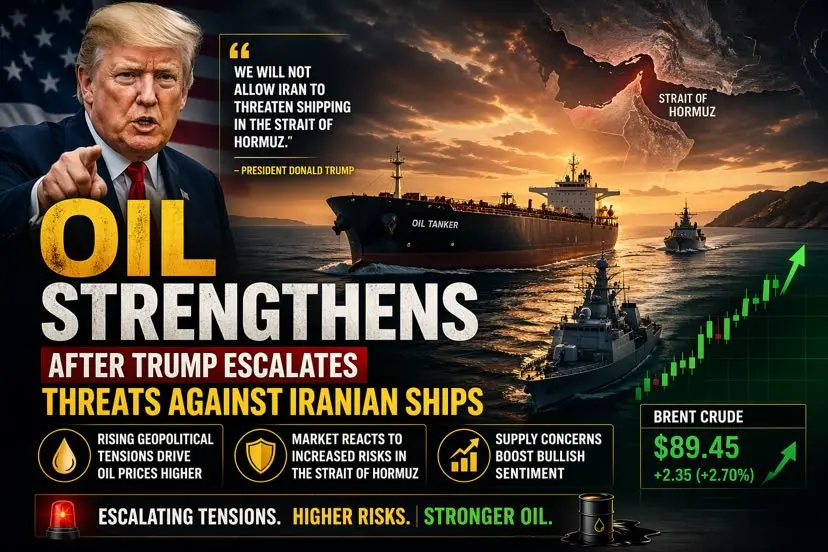
Crude Oil Rises After Trump Raises Threats Against Iranian Ships
Crude Oil Focus:
Trump orders the U.S. Navy to shoot and kill Iranian ships laying mines in the Strait of Hormuz.
Lebanon and Israel agree to extend the ceasefire for three weeks, Trump said after a meeting in Washington.
************************************************************
Friday, April 24, 2026 - At the close of this morning's session, oil prices are observed to be bullish supported by sentiment from increasing signals of tension in the Strait of Hormuz and intense airstrikes in Iran. However, the extension of the Lebanon-Israel ceasefire limits further price movement.
President Donald Trump on Thursday said he has ordered the U.S. Navy to shoot and kill Iranian ships laying mines in the Strait of Hormuz. Additionally, the U.S. military will increase efforts to remove explosives from this strategic waterway, Trump added.
Further support comes from Iran's Mehr news agency, reporting that Tehran's air defense systems attacked enemy targets in several parts of the Iranian capital on Thursday night, following earlier reports that air defense batteries had been activated in the city.
Meanwhile, on Thursday, Trump announced that Lebanon and Israel have agreed to extend the ceasefire for three weeks, after a meeting between the two countries facilitated by the U.S. in Washington. Trump also added that the U.S. will work with Lebanon to protect itself from Hezbollah.
Adding to the price pressure, S&P Global Energy estimates that global oil demand in 2026 is expected to decrease by 700,000 barrels per day due to the U.S.-Iran war, said consultant Ethan Ng on Thursday. Global oil demand growth is projected to shrink to 400,000 bpd compared to the previous estimate of 1.1 million bpd before the war.
From a technical perspective, oil prices may encounter the nearest resistance at $100 per barrel. However, if negative catalysts occur, prices could fall to the nearest support at $95 per barrel.
Crude Oil Rises After Trump Raises Threats Against Iranian Ships
Crude Oil Focus:
Trump orders the U.S. Navy to shoot and kill Iranian ships laying mines in the Strait of Hormuz.
Lebanon and Israel agree to extend the ceasefire for three weeks, Trump said after a meeting in Washington.
************************************************************
Friday, April 24, 2026 - At the close of this morning's session, oil prices are observed to be bullish supported by sentiment from increasing signals of tension in the Strait of Hormuz and intense airstrikes in Iran. However, the extension of the Lebanon-Israel ceasefire limits further price movement.
President Donald Trump on Thursday said he has ordered the U.S. Navy to shoot and kill Iranian ships laying mines in the Strait of Hormuz. Additionally, the U.S. military will increase efforts to remove explosives from this strategic waterway, Trump added.
Further support comes from Iran's Mehr news agency, reporting that Tehran's air defense systems attacked enemy targets in several parts of the Iranian capital on Thursday night, following earlier reports that air defense batteries had been activated in the city.
Meanwhile, on Thursday, Trump announced that Lebanon and Israel have agreed to extend the ceasefire for three weeks, after a meeting between the two countries facilitated by the U.S. in Washington. Trump also added that the U.S. will work with Lebanon to protect itself from Hezbollah.
Adding to the price pressure, S&P Global Energy estimates that global oil demand in 2026 is expected to decrease by 700,000 barrels per day due to the U.S.-Iran war, said consultant Ethan Ng on Thursday. Global oil demand growth is projected to shrink to 400,000 bpd compared to the previous estimate of 1.1 million bpd before the war.
From a technical perspective, oil prices may encounter the nearest resistance at $100 per barrel. However, if negative catalysts occur, prices could fall to the nearest support at $95 per barrel.