AbuTurab

vip
On-chain Analyst
Market Analyst
Diamond Hands
No content yet
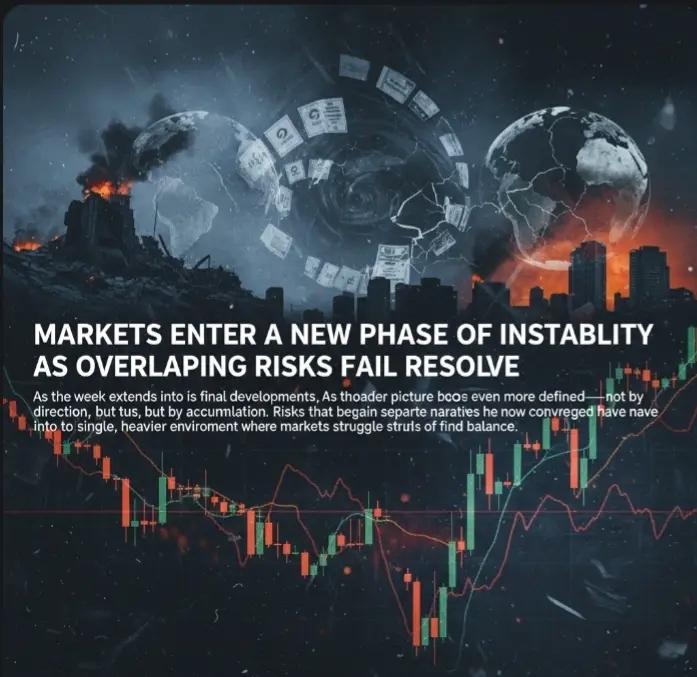
Markets Enter a New Phase of Instability as Overlapping Risks Fail to Resolve
As the week extends into its final developments, the broader picture becomes even more defined—not by direction, but by accumulation. Risks that began as separate narratives have now converged into a single, heavier environment where markets struggle to find balance.
What stands out most is the lack of resolution across all major fronts. Geopolitical tension around the ceasefire expiration has not fully escalated, but it has also not de-escalated. That in-between state is often where markets become most sensitive, be
BTC1,39%
ETH1,21%
CryptoSelf
Markets Enter a New Phase of Instability as Overlapping Risks Fail to Resolve
As the week extends into its final developments, the broader picture becomes even more defined—not by direction, but by accumulation. Risks that began as separate narratives have now converged into a single, heavier environment where markets struggle to find balance.
What stands out most is the lack of resolution across all major fronts. Geopolitical tension around the ceasefire expiration has not fully escalated, but it has also not de-escalated. That in-between state is often where markets become most sensitive, because uncertainty persists without clarity. It keeps risk pricing unstable and reactions inconsistent.
At the same time, Federal Reserve expectations remain fluid. The leadership hearing and shifting rate cut probabilities have not produced a clear policy path. Instead, they have reinforced the idea that monetary direction is still under negotiation. And in markets where liquidity is the foundation, ambiguity around interest rates translates directly into hesitation.
Energy markets continue to act as a secondary pressure point. Oil volatility feeds into inflation expectations, and inflation expectations feed into rate outlooks. This chain reaction has been one of the key underlying drivers of the week, even when not always visible on the surface.
Crypto markets reflect this layered uncertainty in a very specific way. Instead of trending, they oscillate. Bitcoin reacts to macro pressure but fails to establish follow-through. Ethereum shows moments of conviction through large positions, but those moves exist in contrast to broader caution. Altcoins experience localized pressure from unlocks and liquidity shifts, but without a unified direction.
DeFi, in particular, has become a microcosm of this environment. Protocol-level stress, liquidity withdrawals, and trust recalibration events are not isolated anymore—they interact. Each incident feeds into the next, creating a feedback loop where confidence is constantly being tested but rarely fully restored.
What makes this phase particularly important is that it is not driven by a single shock. It is driven by accumulation of uncertainty. When multiple moderate risks overlap without resolution, their combined effect becomes more powerful than any individual event.
From a behavioral perspective, this leads to a market that is reactive but not committed. Participants respond quickly to news, but hesitate to build sustained positions. This creates volatility without trend, movement without direction.
In many ways, this is the defining characteristic of the current phase: not crisis, but instabiity without closure. And markets tend not to resolve such conditions gradually—they resolve them abruptly, once a dominant catalyst finally breaks the equilibrium.
Until that happens, hesitation remains the default state.
#GateSquare #CreatorCarnival #ContentMining #GatePreIPOsLaunchesWithSpaceX #Gate13thAnniversaryLive
repost-content-media
  • Reward
  • 4
  • Repost
  • Share
CryptoShadow:
DYOR 🤓
View More
Aave Shaken by KelpDAO Fallout: $8.4 Billion TVL Drop Raises Questions on DeFi Stability
The recent shock following the KelpDAO hack has started to ripple through the DeFi ecosystem, and one of the clearest impacts is being seen in Aave. A drop of $8.4 billion in total value locked is not just a number—it’s a signal. It reflects how quickly confidence can shift when risk becomes real instead of theoretical.
What makes this situation particularly striking is the speed of the reaction. DeFi users are known for being agile, but movements of this scale suggest something deeper than routine reposit
AAVE-0,25%
CryptoSelf
Aave Shaken by KelpDAO Fallout: $8.4 Billion TVL Drop Raises Questions on DeFi Stability
The recent shock following the KelpDAO hack has started to ripple through the DeFi ecosystem, and one of the clearest impacts is being seen in Aave. A drop of $8.4 billion in total value locked is not just a number—it’s a signal. It reflects how quickly confidence can shift when risk becomes real instead of theoretical.
What makes this situation particularly striking is the speed of the reaction. DeFi users are known for being agile, but movements of this scale suggest something deeper than routine repositioning. It’s not just about avoiding immediate exposure—it’s about reassessing trust in interconnected systems.
Aave, as one of the foundational protocols in decentralized finance, doesn’t operate in isolation. Its strength has always come from being deeply integrated into the broader ecosystem. But that same integration becomes a vulnerability when one part of the system fails. The KelpDAO incident doesn’t directly redefine Aave’s fundamentals, yet it influences how users perceive risk across the board.
From a structural perspective, this kind of TVL drop highlights how liquidity behaves under stress. Capital in DeFi is fluid by design. It moves quickly, often preemptively, seeking safety before clarity emerges. And once that movement begins, it tends to accelerate, not stabilize.
There is also a psychological layer that can’t be ignored. Trust in DeFi is not built solely on code—it’s built on consistency. When a major disruption occurs, even in a related protocol, users begin to question assumptions they previously took for granted. The system doesn’t need to break entirely; it only needs to feel uncertain.
At the same time, I don’t see this as a collapse. It feels more like a stress test. Moments like this force protocols to prove resilience—not just technically, but in terms of communication, transparency, and response speed. Recovery, if it comes, will depend less on the absence of risk and more on how that risk is managed.
What I find most compelling is how events like this reshape behavior going forward. Users become more selective, more cautious, and more aware of systemic connections. This doesn’t weaken DeFi—it refines it. But that refinement often comes through discomfort.
In the end, the $8.4 billion drop is not just about capital leaving. It’s about confidence being temporarily withdrawn. And in a system built on trustless technology, moments like this remind us how much trust still matters.
#GateSquare #CreatorCarnival #ContentMining #GatePreIPOsLaunchesWithSpaceX #Gate13thAnniversaryLive

repost-content-media
  • Reward
  • 4
  • Repost
  • Share
CryptoShadow:
Ape In 🚀
View More
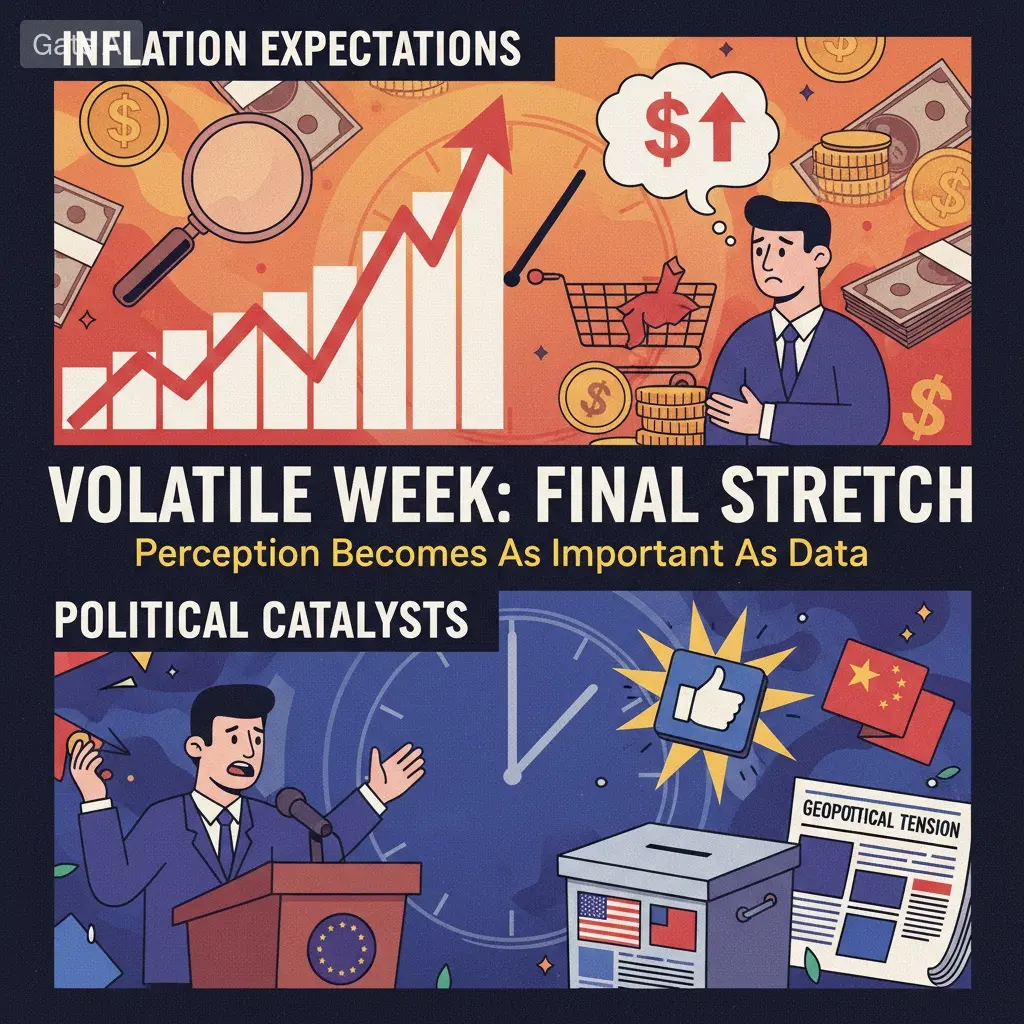
Inflation Expectations and Political Catalysts Dominate the Final Stretch of a Volatile Week
As the week moves toward its conclusion, attention shifts toward two key forces that often define short-term market direction: inflation expectations and politically driven sentiment events. After a sequence of geopolitical tension, macro uncertainty, and sector-specific volatility, the market now enters a phase where perception becomes just as important as data.
The U.S. 1-year inflation expectations release becomes a critical reference point. Unlike backward-looking indicators, this metric reflects h
TRUMP0,38%
CryptoSelf
Inflation Expectations and Political Catalysts Dominate the Final Stretch of a Volatile Week
As the week moves toward its conclusion, attention shifts toward two key forces that often define short-term market direction: inflation expectations and politically driven sentiment events. After a sequence of geopolitical tension, macro uncertainty, and sector-specific volatility, the market now enters a phase where perception becomes just as important as data.
The U.S. 1-year inflation expectations release becomes a critical reference point. Unlike backward-looking indicators, this metric reflects how consumers and markets anticipate future price pressure. If expectations remain elevated, it reinforces the idea that inflation is not fully under control, which in turn limits the flexibility of central banks to ease policy. And in a liquidity-sensitive environment, that has direct implications for risk assets.
What makes this particularly important is timing. Inflation expectations don’t exist in isolation—they interact with everything that has unfolded earlier in the week. Geopolitical uncertainty, energy price fluctuations, and shifting Fed expectations all feed into how this number is interpreted. Even a neutral reading can feel meaningful when the broader context is unstable.
At the same time, attention turns toward a politically charged event involving Trump and a luncheon for $TRUMP holders. While this may appear symbolic on the surface, markets increasingly treat such events as sentiment catalysts, especially for niche segments like meme assets. These types of gatherings blur the line between political branding and market influence, creating short bursts of attention and volatility.
What stands out to me is how fragmented the market has become. Traditional macro indicators are still powerful, but they no longer operate alone. Political narratives, social sentiment, and speculative positioning all coexist and interact in real time. This creates an environment where reactions are often asymmetrical—strong in pockets, muted in others.
From a broader perspective, this phase of the week reflects a transition from data-driven uncertainty to sentiment-driven positioning. Inflation expectations provide the structural backdrop, while political events inject short-term volatility. Between the two, the market struggles to establish a clear directional bias.
I find it particularly interesting how quickly focus can shift at this stage. Earlier in the week, geopolitical risk dominated the narrative. Now, attention is dispersing across inflation data and politically linked catalysts. This shift itself signals something important: markets are searching for a new anchor.
Until that anchor forms, movement is likely to remain reactive rather than decisive. And in reactive markets, even small surprises can create outsized responses.
#GateSquare #CreatorCarnival #ContentMining #GatePreIPOsLaunchesWithSpaceX #Gate13thAnniversaryLive
repost-content-media
  • Reward
  • 4
  • Repost
  • Share
CryptoShadow:
Buy To Earn 💰️
View More
BTC Market Outlook: Cautiously Bullish, but Fragile Beneath the Surface
Bitcoin is currently trading around $76,232, showing a 2.1% daily increase and a 2.8% weekly gain. Price action has been consolidating within a tight range between $73,700 and $76,500, with buyers consistently defending the $72,000 region. This structure signals underlying strength, but also highlights a market that is still searching for direction rather than fully committing to a trend.
---
Price Structure
The most important observation in the current structure is the sustained hold above key support levels. Repeated def
BTC1,39%
CryptoSelf
BTC Market Outlook: Cautiously Bullish, but Fragile Beneath the Surface
Bitcoin is currently trading around $76,232, showing a 2.1% daily increase and a 2.8% weekly gain. Price action has been consolidating within a tight range between $73,700 and $76,500, with buyers consistently defending the $72,000 region. This structure signals underlying strength, but also highlights a market that is still searching for direction rather than fully committing to a trend.
---
Price Structure
The most important observation in the current structure is the sustained hold above key support levels. Repeated defenses of the $72,000 area suggest that demand is active during dips, preventing deeper breakdowns. At the same time, the market has struggled to establish a decisive breakout above the $76,500–$78,000 zone, where supply continues to emerge.
This creates a compression-like structure where volatility is building, but resolution has not yet occurred.
---
Technical Picture
Positive technical alignment is present across multiple timeframes:
Short, medium, and higher timeframes show moving averages aligned in bullish order, indicating trend continuation pressure remains intact
Volume expansion over the last 24 hours suggests participation is increasing rather than fading
RSI behavior shows signs of positive divergence, often associated with early-stage reversals or continuation after correction phases
However, these bullish signals are not without friction.
Warning signals are also emerging:
Overbought readings across shorter timeframes indicate momentum may be stretched
MACD divergence suggests that while price is pushing higher, momentum strength is not fully confirming the move
Market sentiment remains cautious, with the Fear & Greed Index still in “fear” territory despite upward price movement
This combination typically reflects a market that is advancing, but not comfortably.
---
Institutional and Fundamental Flow
One of the strongest supporting elements in the current structure is institutional participation.
Recent large-scale accumulation activity from major corporate holders has reinforced the narrative that long-term positioning remains intact. At the same time, ETF inflows continue to act as a consistent demand source, with traditional financial channels increasingly integrated into Bitcoin exposure.
Additional developments in regulated finance access, including broader brokerage and institutional product expansion, are strengthening structural demand over time.
On-chain data also supports this view, particularly through evidence of significant BTC changing hands within the current price range. This suggests that a distribution zone is being actively absorbed rather than rejected.
---
Headwinds and Risk Factors
Despite strong demand signals, several pressure points remain:
Mining sector activity shows continued stress, with elevated BTC sales reflecting profitability constraints. This introduces a steady source of supply into the market.
Additionally, broader cycle behavior still reflects a more muted performance compared to previous expansion phases, suggesting that while demand exists, acceleration is not yet fully dominant.
Sentiment indicators remain cautious, which creates an interesting contrast with price strength. Historically, this type of divergence often appears during transitional phases rather than strong trend continuation phases.
---
Market Interpretation
Overall, Bitcoin is in a constructive but delicate phase.
The structure suggests accumulation and controlled upward pressure, but momentum is not yet strong enough to confirm a clean breakout. Instead, the market is balancing between absorption of supply and hesitation near resistance.
This type of environment often leads to one of two outcomes:
A continuation breakout if institutional demand strengthens further
Or a corrective pullback toward liquidity zones before continuation
---
Conclusion
The current outlook remains cautiously bullish, but not without risk.
Support zone: $72,000–$74,000 remains critical for trend preservation
Resistance zone: $78,000–$80,000 defines the next major breakout threshold
Invalidation risk: Loss of $72,000 could shift structure back into a broader correction phase
For now, the market is still building direction rather than confirming it.
#GateSquare #CreatorCarnival #ContentMining #GatePreIPOsLaunchesWithSpaceX #Gate13thAnniversaryLive

repost-content-media
  • Reward
  • 4
  • Repost
  • Share
CryptoShadow:
1000x VIbes 🤑
View More
ETH Market Outlook: Cautiously Bullish With Building Structural Pressure Beneath the Surface
Ethereum is currently trading around $2,327.03, marking a 1.91% daily increase, supported by a moderate but noticeable rise in trading activity at approximately $456 million. Price action has remained relatively stable within a tight intraday range between $2,252.5 and $2,344.2, suggesting that the market is in a controlled consolidation phase rather than a directional breakout.
This kind of structure often reflects a market that is absorbing previous volatility while waiting for a stronger catalyst to
ETH1,21%
BTC1,39%
ADX-3,15%
DEFI-0,85%
CryptoSelf
ETH Market Outlook: Cautiously Bullish With Building Structural Pressure Beneath the Surface
Ethereum is currently trading around $2,327.03, marking a 1.91% daily increase, supported by a moderate but noticeable rise in trading activity at approximately $456 million. Price action has remained relatively stable within a tight intraday range between $2,252.5 and $2,344.2, suggesting that the market is in a controlled consolidation phase rather than a directional breakout.
This kind of structure often reflects a market that is absorbing previous volatility while waiting for a stronger catalyst to define the next trend leg.
---
Technical Structure
Short-term technical conditions remain supportive of upward continuation. On lower timeframes, moving averages are aligned in a bullish structure, indicating that momentum buyers are still active. This alignment suggests that the immediate trend has not been broken, even if it is not accelerating aggressively.
The ADX reading above 30 reinforces the idea that a trending environment is currently in place rather than a sideways chop. With directional indicators favoring buyers, Ethereum is still operating within a controlled bullish phase.
In addition, price positioning relative to trend-following indicators such as SAR suggests that the market is still technically supported from a risk management perspective, with pullbacks being treated as potential continuation zones rather than breakdown signals.
However, despite this constructive structure, momentum behavior is not fully aligned with price expansion. The presence of divergence patterns on higher timeframes suggests that while price is rising, momentum strength is not fully confirming the move. This is often an early sign that the trend may be maturing rather than accelerating.
---
Volume and Participation
One of the more supportive elements in the current structure is volume behavior. The recent increase in ETH traded volume indicates that participation is expanding alongside price movement. This is important because price increases without volume often lack sustainability, while volume-backed moves tend to reflect more genuine market interest.
That said, the quality of this participation matters as much as the quantity. While inflows are present, they are not yet at levels that suggest aggressive breakout positioning. Instead, the market appears to be in a steady accumulation phase rather than a momentum-driven expansion phase.
---
Sentiment Environment
Sentiment data presents a more complex picture.
Social engagement has increased significantly over recent days, and the majority of discussion tone remains positive. This reflects improving attention and renewed interest in Ethereum following recent volatility.
At the same time, broader market sentiment indicators remain in “fear” territory. This contrast is important because it shows a disconnect between social activity and macro sentiment. Historically, this type of environment often appears during early recovery phases, where participation begins to return before full confidence is restored.
---
Fundamental Drivers
Institutional activity remains one of the strongest underlying supports for Ethereum. Large-scale accumulation from major holders continues to reinforce the idea that long-term positioning is intact. This kind of consistent inflow is often more important than short-term price fluctuations because it reflects strategic allocation rather than speculative trading.
ETF-related flows also remain supportive, with steady institutional participation providing a structural demand base.
However, this positive backdrop is partially offset by recent ecosystem stress. Security-related incidents affecting DeFi infrastructure have introduced short-term confidence disruptions. Even when not directly linked to Ethereum’s core protocol, these events tend to influence perception across the entire ecosystem due to interconnected liquidity and collateral structures.
---
Risk Layer
Despite the constructive structure, there are several caution signals that should not be ignored.
Momentum divergence on higher timeframes suggests that upside acceleration may be slowing. This does not confirm reversal, but it does indicate that continuation strength is not yet fully aligned.
Relative underperformance compared to Bitcoin also highlights a subtle rotation dynamic, where ETH is participating in the broader move but not leading it.
Additionally, the longer-term context still reflects recovery conditions rather than a fully established uptrend. This means that while short-term strength exists, the market has not yet fully transitioned into a mature bullish cycle.
---
Market Interpretation
Ethereum is currently in a cautiously bullish phase, characterized by:
Strong but not explosive technical structure
Improving participation without euphoria
Institutional accumulation balancing short-term uncertainty
Momentum signals that are supportive but not fully confirming
This combination typically reflects a transitional environment where the market is building structure rather than expanding aggressively.
---
Key Levels
Support zone: $2,250 remains critical for maintaining short-term structure
Immediate resistance: $2,344 defines the current local ceiling
Psychological extension: $2,400 remains the first major breakout threshold
---
Conclusion
Ethereum remains technically supported with a constructive medium-term outlook, but the market is not yet in a fully confirmed bullish expansion phase.
The structure suggests accumulation and stabilization, with institutional demand acting as a stabilizing force. However, momentum divergence and relative weakness versus BTC indicate that caution is still warranted.
The market is moving forward—but not yet decisively.
#GateSquare #CreatorCarnival #ContentMining
#GatePreIPOsLaunchesWithSpaceX #Gate13thAnniversaryLive

repost-content-media
  • Reward
  • 4
  • Repost
  • Share
CryptoShadow:
Buy To Earn 💰️
View More
what is Gate TradFi?
Gate TradFi is a multi-asset trading module that connects traditional financial instruments with the crypto ecosystem. You can trade:
- **Metals**: Gold (XAUUSD), Silver (XAGUSD), Platinum (XPTUSD)
- **Forex**: Various currency pairs
- **Indices**: NASDAQ 100 (NAS100) and more
- **Commodities**: WTI Crude Oil (XTIUSD)
- **Stock CFDs**
how to Get Started
step 1: Update Your App
- Update your Gate App to **version 8.4.0 or above**
- Restart the app after updating
step 2: Activate TradFi
1. Open the Gate App and log in
2. Tap **"Futures"** in the bottom navigation bar
3. Sele
CryptoSelf
what is Gate TradFi?
Gate TradFi is a multi-asset trading module that connects traditional financial instruments with the crypto ecosystem. You can trade:
- **Metals**: Gold (XAUUSD), Silver (XAGUSD), Platinum (XPTUSD)
- **Forex**: Various currency pairs
- **Indices**: NASDAQ 100 (NAS100) and more
- **Commodities**: WTI Crude Oil (XTIUSD)
- **Stock CFDs**
how to Get Started
step 1: Update Your App
- Update your Gate App to **version 8.4.0 or above**
- Restart the app after updating
step 2: Activate TradFi
1. Open the Gate App and log in
2. Tap **"Futures"** in the bottom navigation bar
3. Select **"TradFi"**
4. Check the agreement to activate your TradFi account
step 3: Fund Your Account
1. Tap the **"Transfer"** button at the top
2. Transfer USDT to your TradFi account
step 4: Start Trading
1. Select the traditional asset trading pair you want to trade
2. Choose your trading side: **Buy (Long)** or **Sell (Short)**
3. Enter the trading amount and place your order
important Notes
- **Prerequisites**: You need to complete KYC and enable TradFi permissions
- **Available Assets**: Gold, Silver, Platinum, Oil, Stock Indices, and more
- **Pricing**: Gold token prices are pegged to international gold prices (CFD-based)
#GateSquare #CreatorCarnival #ContentMining
repost-content-media
  • Reward
  • 4
  • Repost
  • Share
CryptoShadow:
Ape In 🚀
View More
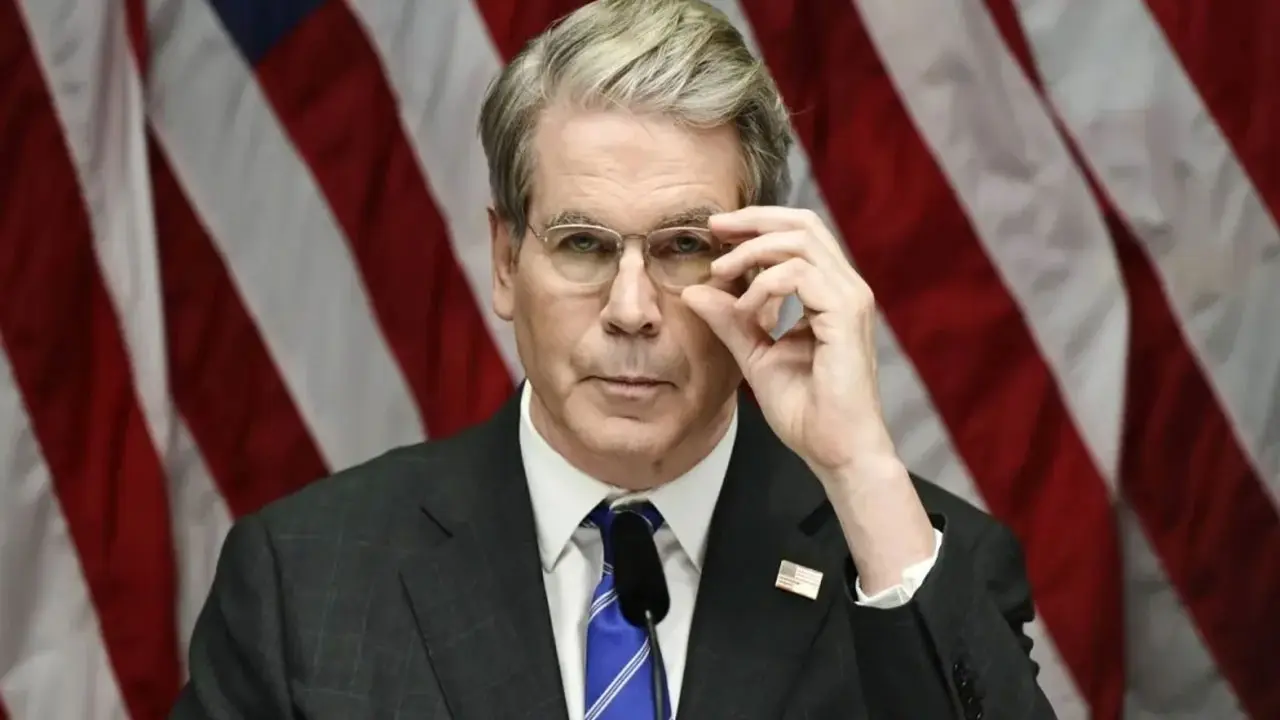
Rate Cut Expectations Rise as War Slows Growth: A Subtle Shift in Market Psychology
The latest remarks from U.S. Treasury Secretary Scott Bessent point toward a changing macro landscape—one where delayed action may now translate into a more aggressive phase of rate cuts. At the same time, the acknowledgment of war-driven economic slowdown introduces a layer of fragility that markets cannot easily ignore.
What stands out to me is the timing of this shift. When policymakers begin to openly discuss stronger rate cuts, it often signals that the system has already absorbed a certain level of pressu
BTC1,39%
CryptoSelf
Rate Cut Expectations Rise as War Slows Growth: A Subtle Shift in Market Psychology
The latest remarks from U.S. Treasury Secretary Scott Bessent point toward a changing macro landscape—one where delayed action may now translate into a more aggressive phase of rate cuts. At the same time, the acknowledgment of war-driven economic slowdown introduces a layer of fragility that markets cannot easily ignore.
What stands out to me is the timing of this shift. When policymakers begin to openly discuss stronger rate cuts, it often signals that the system has already absorbed a certain level of pressure. The delay itself becomes part of the narrative. It suggests that the adjustment is not proactive, but reactive—a response to conditions that have already tightened more than expected.
This creates a complex dynamic for markets, especially for crypto. On one side, lower interest rates are typically supportive for risk assets, as they ease liquidity conditions and reduce the opportunity cost of holding non-yielding assets like Bitcoin. On the other side, the reason behind those cuts—slowing growth and geopolitical tension—introduces caution.
That duality is where things become psychologically interesting. Markets don’t move on single variables; they move on the interaction between them. A rate cut driven by strength feels different from a rate cut driven by weakness. In this case, the signal feels mixed—supportive in structure, but cautious in context.
The mention of falling gasoline prices adds another layer. Lower energy costs can ease inflationary pressure, potentially giving central banks more flexibility. But again, it depends on why prices are falling. If it’s driven by weakening demand, then it reflects a broader slowdown rather than a healthy adjustment.
From my perspective, this moment reflects a transition from tight conditions to uncertain easing. Liquidity may improve, but confidence does not necessarily return at the same speed. Investors begin to question not just what is happening, but why it is happening.
For crypto markets, this kind of environment often leads to uneven behavior. Short-term optimism around rate cuts can trigger upward momentum, but underlying macro uncertainty tends to limit sustained conviction. The result is a market that moves, but hesitates—a structure built on partial confidence.
In the end, the most important shift here is not the rate cuts themselves, but the reason behind them. Because in financial systems, cause and effect rarely carry the same emotional weight.
#GateSquare #CreatorCarnival #ContentMining
repost-content-media
  • Reward
  • 4
  • Repost
  • Share
CryptoShadow:
Buy To Earn 💰️
View More
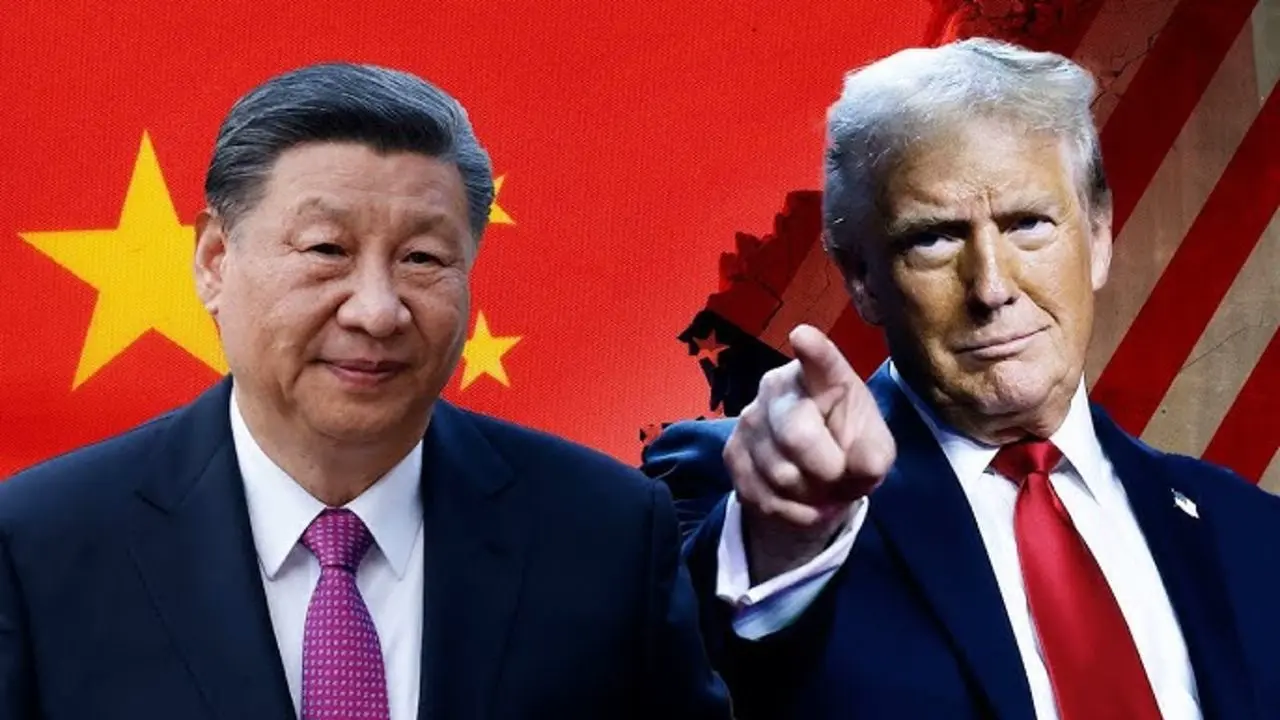
Geopolitics Softens, Markets Recalibrate: Trump Signals a Shift in US–China–Iran Dynamics
Trump’s latest remarks suggest a temporary easing in one of the most sensitive geopolitical fault lines—energy routes, Iran, and the strategic positioning of China. At first glance, these statements might feel diplomatic, even optimistic. But in markets, especially in crypto, what matters is not just what is said, but what it implies about risk.
The mention of keeping the Strait of Hormuz open is not a minor detail. It directly touches the stability of global energy supply. For weeks, markets have been pr
CryptoSelf
Geopolitics Softens, Markets Recalibrate: Trump Signals a Shift in US–China–Iran Dynamics
Trump’s latest remarks suggest a temporary easing in one of the most sensitive geopolitical fault lines—energy routes, Iran, and the strategic positioning of China. At first glance, these statements might feel diplomatic, even optimistic. But in markets, especially in crypto, what matters is not just what is said, but what it implies about risk.
The mention of keeping the Strait of Hormuz open is not a minor detail. It directly touches the stability of global energy supply. For weeks, markets have been pricing in uncertainty around this region. The idea that this pressure point could remain open introduces a subtle release in that tension. Not a resolution, but a pause.
What I find particularly interesting is the tone around cooperation. When the narrative shifts from confrontation to coordination—especially between major powers like the U.S. and China—it changes how risk is perceived globally. Markets don’t need perfect stability; they need predictability. Even partial alignment can reduce the intensity of fear-driven reactions.
The statement about China agreeing not to send weapons to Iran adds another layer. It signals a containment of escalation, at least at the surface level. And containment, in geopolitical terms, often translates into reduced immediate volatility in financial systems.
For crypto, this kind of development creates a nuanced effect. Reduced geopolitical stress can improve overall risk appetite, allowing capital to flow more freely into speculative assets. But at the same time, it removes one of the drivers of uncertainty-based narratives that sometimes fuel alternative asset demand.
From a psychological standpoint, this is where the market becomes difficult to read. When tension decreases, clarity does not immediately replace it. Instead, the market enters a recalibration phase—reassessing what level of risk is appropriate under the new conditions.
I see this less as a turning point and more as a temporary shift in tone. Geopolitics rarely moves in straight lines. What feels like stability today can quickly revert back into tension tomorrow. And markets are aware of that.
Ultimately, these statements don’t eliminate uncertainty—they reshape it. And in that reshaping, the market adjusts its expectations, not with certainty, but with cautious flexibility.
#GateSquare #CreatorCarnival #ContentMining
repost-content-media
  • Reward
  • 3
  • Repost
  • Share
CryptoShadow:
To The Moon 🌕
View More
Bitcoin at a Crossroads: Between Institutional Strength and Short-Term Fragility
Bitcoin moves into 2026 carrying a layered and somewhat contradictory structure. On one side, there is undeniable institutional momentum building beneath the surface. On the other, short-term pressure and macro uncertainty continue to weigh on sentiment. What makes this phase particularly complex is not the presence of opposing forces, but how balanced they currently feel.
Institutional demand remains one of the strongest pillars supporting the market. The scale of capital flowing through Bitcoin ETFs and the cont
BTC1,39%
CryptoSelf
Bitcoin at a Crossroads: Between Institutional Strength and Short-Term Fragility
Bitcoin moves into 2026 carrying a layered and somewhat contradictory structure. On one side, there is undeniable institutional momentum building beneath the surface. On the other, short-term pressure and macro uncertainty continue to weigh on sentiment. What makes this phase particularly complex is not the presence of opposing forces, but how balanced they currently feel.
Institutional demand remains one of the strongest pillars supporting the market. The scale of capital flowing through Bitcoin ETFs and the continued integration of crypto products into traditional finance signal a deeper shift. This is no longer early adoption—it feels closer to normalization. Large players are not just experimenting; they are positioning. And that kind of behavior rarely happens without long-term intent.
Yet despite this structural strength, the market does not move with full confidence. There are moments where inflows slow, where positioning becomes inconsistent, and where even large players appear cautious. This creates a fragmented environment where conviction exists, but it is not fully synchronized.
At the macro level, the situation becomes even more nuanced. Inflation remains a persistent concern, and monetary policy continues to influence liquidity conditions. When capital becomes more expensive, risk appetite naturally adjusts. Bitcoin, despite its independent narrative, does not operate in isolation from this reality. It reacts, sometimes indirectly, but always meaningfully.
At the same time, there are moments where Bitcoin’s identity as a hedge begins to resurface. Periods of geopolitical tension or uncertainty tend to revive the “digital gold” narrative, even if only temporarily. This dual role—both a risk asset and a potential hedge—creates a dynamic that is difficult to define, yet central to understanding its behavior.
Looking at the market structure, there is a clear sense of compression. Price moves within defined ranges, struggling to break through key resistance levels while finding support from underlying demand. This kind of environment often reflects indecision, but it can also signal preparation. Markets tend to compress before they expand.
On-chain data adds another layer to this interpretation. Long-term holders continue to show signs of accumulation, and exchange reserves remain relatively low. These are not signals of panic. They suggest patience. But at the same time, short-term participants appear more reactive, contributing to intermittent selling pressure and increased volatility.
The derivatives market reflects a similar duality. Open interest remains elevated, indicating strong participation, yet positioning is not overwhelmingly directional. This creates a sensitive structure where small shifts in sentiment can lead to amplified moves.
Mining dynamics also play a subtle role in this balance. While network strength remains high, operational pressures and cost considerations occasionally push miners toward selling, adding another layer of short-term supply into the system.
All of these elements come together to form a market that feels suspended between phases. Not fully bullish, not clearly bearish. Instead, it exists in a state of tension—where long-term confidence meets short-term hesitation.
What I find most compelling is that this kind of structure often precedes clarity. When too many opposing forces coexist for too long, the system eventually resolves itself. Not gradually, but decisively.
And perhaps that is where Bitcoin stands right now—not at the peak of a move, nor at the bottom of a cycle, but at a point where direction is being quietly decided beneath the surface.
#GateSquare #CreatorCarnival #ContentMining #AltcoinsRallyStrong #GatePreIPOsLaunchesWithSpaceX
repost-content-media
  • Reward
  • 4
  • Repost
  • Share
CryptoShadow:
Buy To Earn 💰️
View More
Escalation in the Strait of Hormuz: Ceasefire Breach Claims, Economic Pressure on Iran, and Signals of Possible Military Action
In his latest statements regarding Iran, former U.S. President Donald Trump highlighted a sharp escalation in tensions surrounding the Strait of Hormuz, framing recent developments as a direct violation of the ceasefire agreement. According to his remarks, gunfire was reported in the strait, which was described as a breach of the truce and a sign of deteriorating stability in the region.
The statements further claim that French and British vessels were targeted in the
CryptoSelf
Escalation in the Strait of Hormuz: Ceasefire Breach Claims, Economic Pressure on Iran, and Signals of Possible Military Action
In his latest statements regarding Iran, former U.S. President Donald Trump highlighted a sharp escalation in tensions surrounding the Strait of Hormuz, framing recent developments as a direct violation of the ceasefire agreement. According to his remarks, gunfire was reported in the strait, which was described as a breach of the truce and a sign of deteriorating stability in the region.
The statements further claim that French and British vessels were targeted in the Strait of Hormuz, expanding the scope of the situation beyond a bilateral confrontation. Such developments, if confirmed, would indicate a broader international dimension to the crisis, potentially involving multiple allied naval presences in the region.
Despite the rising tensions, Trump noted that U.S. representatives are set to travel to Islamabad for discussions, suggesting that diplomatic channels remain active. However, the tone of the statements indicates a significant hardening in position, particularly with the assertion that the era of “goodwill behavior” regarding Iran has now ended.
A major emphasis was placed on the economic impact of the situation. It was stated that Iran is losing approximately $500 million per day due to disruptions in the Strait of Hormuz. This level of financial pressure, if sustained, could have significant implications for Iran’s internal economic stability and decision-making processes.
In contrast, the U.S. was described as being unaffected economically by the disruptions in the region, highlighting a perceived imbalance in exposure to the crisis. This framing reinforces the strategic narrative that different parties are experiencing the consequences of the situation in fundamentally unequal ways.
Most notably, the statements included warnings that military action could be considered if Iran rejects a potential agreement, and that operational steps may follow if negotiations fail. This introduces a conditional escalation framework, where diplomatic failure is directly linked to the possibility of force.
Overall, the situation in the Strait of Hormuz continues to evolve into a highly sensitive geopolitical flashpoint, with implications not only for regional security but also for global energy routes and broader market stability. The coming period is likely to be defined by both diplomatic engagement and heightened uncertainty on the ground.
#GateSquare #CreatorCarnival #ContentMining #US-IranTalksVSTroopBuildup #KalshiFacesNevadaRegulatoryClash
repost-content-media
  • Reward
  • 3
  • Repost
  • Share
CryptoShadow:
LFG 🔥
View More
Charles Schwab Launches Schwab Crypto: Spot Bitcoin and Ethereum Trading Rolls Out to Millions of Clients
Investment giant **Charles Schwab** has released detailed plans for its new **Schwab Crypto** platform, marking a major step into direct cryptocurrency trading. Starting with a phased rollout in the coming weeks, the platform will initially offer **spot trading** only for **Bitcoin (BTC)** and **Ethereum (ETH)** — the two largest cryptocurrencies that together represent about 75% of the total crypto market capitalization.
Clients will be onboarded gradually to ensure a smooth experience. O
BTC1,39%
ETH1,21%
CryptoSelf
Charles Schwab Launches Schwab Crypto: Spot Bitcoin and Ethereum Trading Rolls Out to Millions of Clients
Investment giant **Charles Schwab** has released detailed plans for its new **Schwab Crypto** platform, marking a major step into direct cryptocurrency trading. Starting with a phased rollout in the coming weeks, the platform will initially offer **spot trading** only for **Bitcoin (BTC)** and **Ethereum (ETH)** — the two largest cryptocurrencies that together represent about 75% of the total crypto market capitalization.
Clients will be onboarded gradually to ensure a smooth experience. Once fully integrated, users will be able to manage their crypto, stocks, ETFs, and other investments seamlessly within a single, familiar Schwab account. This unified approach aims to provide a holistic investing experience with added educational resources and professional support.
Custody of client assets will be handled securely by **Charles Schwab Premier Bank**, while the technical infrastructure, trade execution, and sub-custody services will be powered by **Paxos**, a leading OCC-regulated blockchain infrastructure provider. Trading fees are expected to be competitive at approximately **0.75%** per transaction.
With Schwab managing around **$12 trillion** in client assets and serving millions of retail investors, this launch is seen as a significant boost for mainstream crypto adoption. It positions Schwab to compete more directly with platforms like Robinhood and Coinbase by bringing easy, regulated crypto access to traditional investors.
The announcement comes at a time when Bitcoin is trading near two-month highs and institutional interest in crypto continues to grow, potentially opening the door for even stronger inflows in the near term.
#GateSquare #CreatorCarnival #ContentMining #Gate13thAnniversaryLive #US-IranTalksVSTroopBuildup
repost-content-media
  • Reward
  • 5
  • Repost
  • Share
CryptoShadow:
LFG 🔥
View More
Iran Declares Strait of Hormuz Completely Open for Commercial Shipping During Ceasefire
Iran's Foreign Minister Abbas Araghchi announced that the **Strait of Hormuz** is now "completely open" for all commercial vessels during the remaining period of the Lebanon ceasefire. The declaration aligns with the truce in Lebanon and aims to restore normal maritime traffic through the critical waterway, which handles roughly one-fifth of global oil and LNG shipments.
President Donald Trump responded positively on Truth Social, acknowledging the move and stating "THANK YOU!" while noting that a broader d
BTC1,39%
ETH1,21%
CryptoSelf
Iran Declares Strait of Hormuz Completely Open for Commercial Shipping During Ceasefire
Iran's Foreign Minister Abbas Araghchi announced that the **Strait of Hormuz** is now "completely open" for all commercial vessels during the remaining period of the Lebanon ceasefire. The declaration aligns with the truce in Lebanon and aims to restore normal maritime traffic through the critical waterway, which handles roughly one-fifth of global oil and LNG shipments.
President Donald Trump responded positively on Truth Social, acknowledging the move and stating "THANK YOU!" while noting that a broader deal with Iran could be close. However, questions remain about full freedom of passage, as Iran has emphasized that ships must follow coordinated routes set by its Ports and Maritime Organisation, and the US maintains its naval blockade on Iranian ports and vessels until a comprehensive agreement is reached.
The announcement triggered a sharp drop in crude oil prices, easing energy market tensions and supporting a risk-on sentiment in global markets. This geopolitical relief has provided short-term tailwinds for cryptocurrencies, with Bitcoin holding near recent highs around $75,000–$76,000 and Ethereum trading steadily above $2,350 amid reduced volatility expectations.
Analysts are watching closely whether this opening sustains or if renewed tensions — including any restrictions on transit or threats to close the strait again — could quickly reverse the positive momentum. For now, the news offers a welcome de-escalation signal in a region vital to global energy flows and broader macroeconomic stability.
#GateSquare #CreatorCarnival #ContentMining #US-IranTalksVSTroopBuildup #AnthropicvsOpenAIHeatsUp
repost-content-media
  • Reward
  • 6
  • Repost
  • Share
CryptoShadow:
Buy To Earn 💰️
View More
Iran Claims 11 Million Barrels of Oil Shipped via Sea of Oman Despite US Naval Blockade
According to **Fars News Agency**, Iranian oil tankers have successfully transported approximately **11 million barrels** of crude oil through the **Sea of Oman** toward their destinations since the United States imposed its naval blockade. The shipments reportedly continued without major interruptions, using alternative routes and tactics to bypass heightened US enforcement in the region.
This development comes amid ongoing tensions following the US blockade on Iranian ports and vessels. While some sanctio
BTC1,39%
ETH1,21%
CryptoSelf
Iran Claims 11 Million Barrels of Oil Shipped via Sea of Oman Despite US Naval Blockade
According to **Fars News Agency**, Iranian oil tankers have successfully transported approximately **11 million barrels** of crude oil through the **Sea of Oman** toward their destinations since the United States imposed its naval blockade. The shipments reportedly continued without major interruptions, using alternative routes and tactics to bypass heightened US enforcement in the region.
This development comes amid ongoing tensions following the US blockade on Iranian ports and vessels. While some sanctioned supertankers have been intercepted, the reported volume highlights Iran's ability to maintain a portion of its oil exports, primarily through the Gulf of Oman corridor. Independent tracking data from firms like TankerTrackers and Kpler have shown similar figures, with around 9–11 million barrels moved from floating storage in recent days.
The news provides partial relief to global oil supply concerns, contributing to the recent sharp decline in crude prices and supporting a broader **risk-on sentiment** in financial markets. Lower energy costs reduce inflationary pressures, which in turn benefits risk assets including cryptocurrencies. Bitcoin continues to hold near its two-month highs around $76,000–$78,000, while Ethereum trades steadily above $2,350 as investors price in reduced volatility from the energy sector.
However, analysts caution that the situation remains fluid. Any escalation in enforcement, new interceptions, or changes in ceasefire dynamics could quickly tighten supply and reverse the current oil price drop. For crypto markets, sustained geopolitical de-escalation combined with strong ETF inflows continues to act as a positive tailwind in the short term.
#GateSquare #CreatorCarnival #ContentMining #US-IranTalksVSTroopBuildup #AnthropicvsOpenAIHeatsUp
repost-content-media
  • Reward
  • 5
  • Repost
  • Share
CryptoShadow:
DYOR 🤓
View More
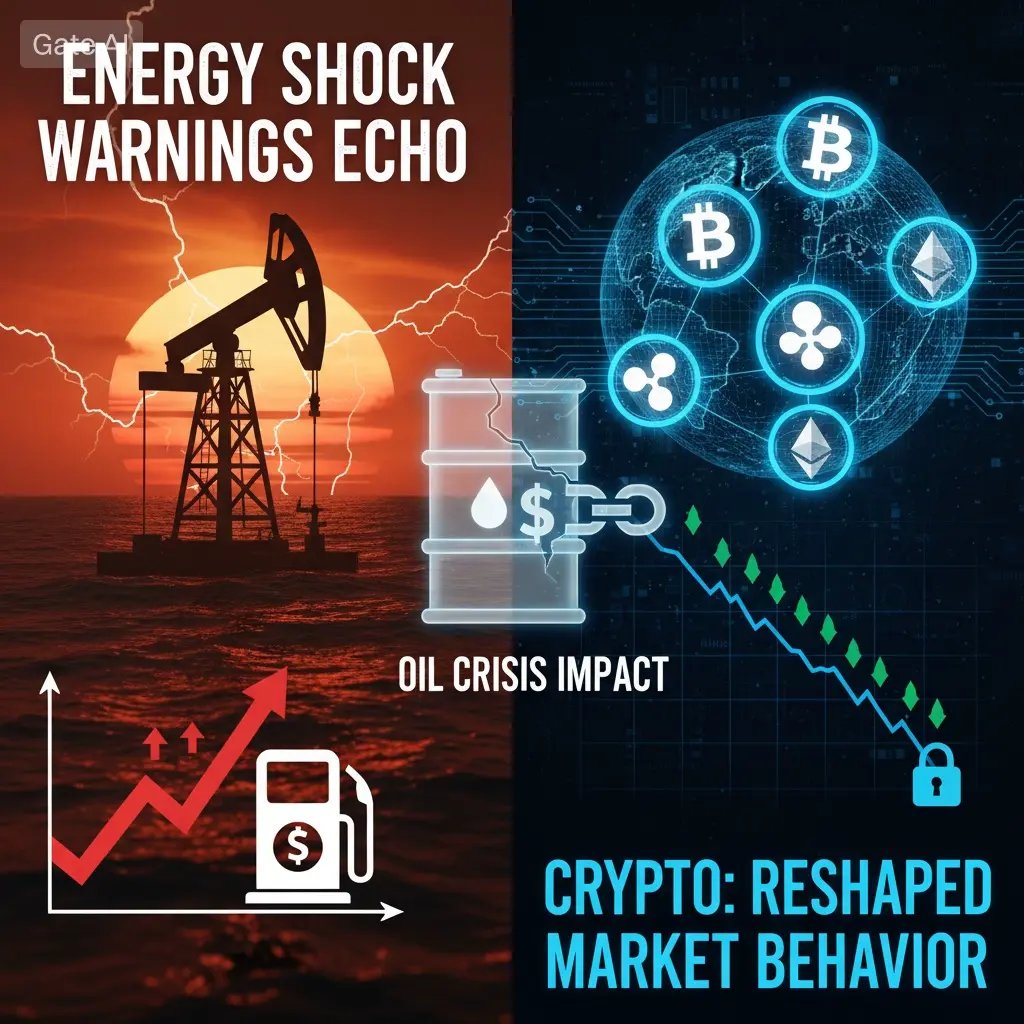
Energy Shock Warnings Echo in Crypto: How a Potential Oil Crisis Could Reshape Market Behavior
Fatih Birol’s recent warnings about a possible energy crisis—highlighting limited jet fuel reserves in Europe and the risks of a Hormuz blockade—don’t just belong to traditional markets. To me, they quietly extend into crypto as well, because liquidity, risk appetite, and macro pressure are all deeply interconnected.
When energy becomes uncertain, everything else follows. Oil is not just a commodity; it’s the backbone of global economic activity. A disruption at the scale being suggested—especially t
BTC1,39%
CryptoSelf
Energy Shock Warnings Echo in Crypto: How a Potential Oil Crisis Could Reshape Market Behavior
Fatih Birol’s recent warnings about a possible energy crisis—highlighting limited jet fuel reserves in Europe and the risks of a Hormuz blockade—don’t just belong to traditional markets. To me, they quietly extend into crypto as well, because liquidity, risk appetite, and macro pressure are all deeply interconnected.
When energy becomes uncertain, everything else follows. Oil is not just a commodity; it’s the backbone of global economic activity. A disruption at the scale being suggested—especially through something as critical as the Strait of Hormuz—would not simply raise prices, it would reshape expectations. Inflation fears would intensify, growth projections would weaken, and central banks would be forced into even tighter positions.
This is where crypto enters the equation in a less obvious but equally important way. In times of macro stress, capital doesn’t immediately flow into risk assets—it hesitates. Higher energy costs mean tighter liquidity conditions, and tighter liquidity often translates into reduced momentum across speculative markets. Crypto, despite its independent narrative, remains highly sensitive to these shifts.
What stands out to me is the psychological transition such a scenario would trigger. Markets move not only on events, but on anticipation of those events. The mere possibility of a large-scale energy disruption can create a defensive posture among investors. Risk is repriced before it fully materializes.
There is also a secondary layer to consider: mining and operational costs. Bitcoin mining, for example, is directly tied to energy availability and pricing. A sustained increase in energy costs could pressure miners, potentially altering supply-side behavior. This introduces a feedback loop where macro conditions begin to influence on-chain dynamics.
At the same time, crises often create unexpected narratives. While short-term pressure may dominate, longer-term perspectives sometimes shift toward alternative systems, including decentralized finance and non-sovereign assets. But this transition is rarely immediate—it requires a stabilization phase first.
What I find most compelling is how interconnected everything has become. A geopolitical tension in energy supply can ripple through inflation expectations, central bank policy, global liquidity, and eventually into crypto market structure. It’s no longer possible to isolate crypto from the broader system.
In moments like this, the market doesn’t just react—it recalibrates. And that recalibration tends to favor caution before conviction.
#GateSquare #CreatorCarnival #ContentMining #KalshiFacesNevadaRegulatoryClash #Gate13thAnniversaryLive
repost-content-media
  • Reward
  • 4
  • Repost
  • Share
CryptoShadow:
LFG 🔥
View More
Backlash Erupts Over Token Unlock Plan: World Liberty Faces a Trust Test
The reaction toward World Liberty following its token unlock announcement reveals something deeper than simple disagreement—it exposes how fragile trust can be when supply dynamics shift unexpectedly. Calling it “bullying” may sound emotional on the surface, but underneath that reaction lies a structural concern: who really controls value in a tokenized system?
Token unlocks are not new. They are part of the design in many crypto projects. But timing, scale, and communication determine whether they are perceived as necess
CryptoSelf
Backlash Erupts Over Token Unlock Plan: World Liberty Faces a Trust Test
The reaction toward World Liberty following its token unlock announcement reveals something deeper than simple disagreement—it exposes how fragile trust can be when supply dynamics shift unexpectedly. Calling it “bullying” may sound emotional on the surface, but underneath that reaction lies a structural concern: who really controls value in a tokenized system?
Token unlocks are not new. They are part of the design in many crypto projects. But timing, scale, and communication determine whether they are perceived as necessary evolution or opportunistic pressure. In this case, the response suggests that participants are not reacting to the mechanism itself, but to the perceived imbalance of power behind it.
What I find most telling is how quickly sentiment can turn when supply becomes visible. For a long time, value is discussed in terms of utility, vision, and growth. But the moment supply expands, everything becomes more immediate. Dilution is not theoretical—it is felt. And when it is felt without alignment, it creates resistance.
The word “bullying” reflects more than frustration; it reflects a sense of asymmetry. A belief that decisions are being made from a position of control, while others are left to absorb the consequences. Whether that perception is fully justified or not, in markets perception often matters as much as reality.
This is where communication becomes as critical as economics. Projects don’t just manage tokens—they manage expectations. And expectation, once broken, is far more difficult to rebuild than price.
From a broader perspective, events like this highlight a recurring tension in crypto: decentralization in theory versus control in practice. Many systems promise distributed ownership, yet moments like token unlocks remind participants that certain decisions remain concentrated.
I don’t see this as an isolated incident. It feels more like part of a larger pattern where markets are becoming increasingly sensitive to transparency, fairness, and timing. Investors are no longer passive—they question, react, and reshape narratives in real time.
Ultimately, the impact of this situation will not be defined solely by the unlock itself, but by how the aftermath is handled. Trust in crypto is rarely destroyed in a single moment—it erodes through unresolved tensions.
And right now, this feels like one of those moments where the market is watching closely, not just what happens, but how it happens.
#GateSquare #CreatorCarnial #ContentMining #GatePreIPOsLaunchesWithSpaceX #Gate13thAnniversaryLive

repost-content-media
  • Reward
  • 3
  • Repost
  • Share
CryptoShadow:
LFG 🔥
View More
Strategic Bitcoin Reserve: The Beginning of Nation-Level Accumulation?
The idea of governments holding Bitcoin is no longer theoretical — it is धीरे evolving into policy discussion. The latest development surrounding a proposed Strategic Bitcoin Reserve bill in the United States signals a potential shift in how nations perceive digital assets, not just as speculative instruments, but as strategic reserves.
At the center of this narrative is — an asset originally designed to operate outside traditional financial systems, now being considered for integration into them at the highest level. This
BTC1,39%
CryptoSelf
Strategic Bitcoin Reserve: The Beginning of Nation-Level Accumulation?
The idea of governments holding Bitcoin is no longer theoretical — it is धीरे evolving into policy discussion. The latest development surrounding a proposed Strategic Bitcoin Reserve bill in the United States signals a potential shift in how nations perceive digital assets, not just as speculative instruments, but as strategic reserves.
At the center of this narrative is — an asset originally designed to operate outside traditional financial systems, now being considered for integration into them at the highest level. This paradox is what makes the moment so significant.
A Strategic Bitcoin Reserve would imply that the U.S. government sees value in holding BTC similarly to gold or foreign currencies. Historically, reserves are built to hedge against uncertainty, protect economic stability, and strengthen geopolitical positioning. If Bitcoin enters that category, it fundamentally changes its role in the global financial system.
This also introduces a new layer of legitimacy.
For years, Bitcoin adoption has been driven by retail investors, institutions, and a handful of forward-thinking nations. But when a global power like the begins to formalize its stance through legislation, it sends a signal far beyond its borders. Other countries may not immediately follow, but they will pay attention.
However, the implications go beyond simple adoption.
A government holding Bitcoin creates a new dynamic in supply and demand. Unlike retail or even institutional investors, nation-states operate on longer time horizons and larger scales. Accumulation at that level could reduce circulating supply, potentially increasing scarcity — one of Bitcoin’s core value drivers.
At the same time, it raises questions about control and influence. Bitcoin was built on the idea of decentralization, but large-scale government holdings could introduce new forms of indirect influence over market behavior. While they cannot control the network itself, their actions could significantly impact price dynamics.
There is also a strategic angle to consider. In a world where economic competition increasingly intersects with technology, holding Bitcoin could be seen as positioning for a future where digital assets play a central role in global finance. It is not just about today’s market — it is about tomorrow’s system.
Still, caution is necessary.
A bill proposal is not the same as implementation. Political processes are complex, and outcomes are never guaranteed. The idea of a Strategic Bitcoin Reserve may evolve, face resistance, or be reshaped before becoming reality.
But even at this stage, the conversation itself matters.
Because markets do not wait for final decisions — they move on expectations.
And if the expectation becomes that nation-level Bitcoin adoption is accelerating, then the narrative around BTC may shift from speculative asset to strategic asset.
That is not just a price story.
It is a structural one.
#GatePreIPOsLaunchesWithSpaceX #AltcoinsRallyStrong #KalshiFacesNevadaRegulatoryClash #US-IranTalksVSTroopBuildup #AnthropicvsOpenAIHeatsUp
repost-content-media
  • Reward
  • 3
  • Repost
  • Share
CryptoShadow:
To The Moon 🌕
View More
#GatePreIPOsLaunchesWithSpaceX
Pre-IPO Narratives Enter a New Phase: When Venture Capital Meets Public Market Hype
The intersection of early-stage investing and public market speculation is becoming increasingly blurred. The emergence of pre-IPO launch narratives — especially those tied to high-profile ecosystems like Gate — reflects a broader shift in how retail and institutional investors access early growth opportunities.
The concept behind #GatePreIPOsLaunchesWithSpaceX is not just about a single listing or partnership narrative. It represents a structural change in market behavior: the c
CryptoSelf
#GatePreIPOsLaunchesWithSpaceX
Pre-IPO Narratives Enter a New Phase: When Venture Capital Meets Public Market Hype
The intersection of early-stage investing and public market speculation is becoming increasingly blurred. The emergence of pre-IPO launch narratives — especially those tied to high-profile ecosystems like Gate — reflects a broader shift in how retail and institutional investors access early growth opportunities.
The concept behind #GatePreIPOsLaunchesWithSpaceX is not just about a single listing or partnership narrative. It represents a structural change in market behavior: the compression of private market excitement into public market accessibility.
Traditionally, pre-IPO exposure was limited to venture capital firms, private equity funds, and accredited investors. Entry required capital, connections, and long holding periods. But modern crypto-native platforms and exchange-driven ecosystems are changing this dynamic by packaging early-stage exposure into more liquid, retail-accessible formats.
What makes this trend powerful is narrative velocity.
When a brand like SpaceX is mentioned in proximity to pre-IPO discussions — even indirectly — it amplifies attention cycles. Investors are not only evaluating fundamentals; they are reacting to perceived proximity to innovation, disruption, and future technology dominance. This creates a feedback loop where attention itself becomes a form of liquidity.
However, this acceleration comes with structural tension.
Pre-IPO assets are inherently illiquid and long-term in nature, while retail markets are driven by short-term price discovery and rapid sentiment shifts. When these two systems merge, volatility becomes embedded into the structure itself. Early enthusiasm can drive sharp inflows, but exits can be equally fast once momentum fades.
Another key factor is expectation inflation. As more platforms market “early access” opportunities, the definition of what qualifies as a high-value pre-IPO asset becomes diluted. Not every narrative tied to innovation carries equal economic weight, yet market attention often treats them as comparable in the short term.
Still, the trend is not purely speculative.
There is a legitimate structural evolution underway. Capital markets are becoming more modular. Instead of waiting for IPO cycles to unlock value, investors increasingly expect continuous access to growth stages. This shift aligns with broader financial democratization trends seen across both traditional fintech and crypto ecosystems.
The challenge moving forward will be sustainability.
As pre-IPO narratives become more common, differentiation becomes harder. Markets will increasingly need to distinguish between genuine early-stage value and narrative-driven hype cycles.
In that sense, #GatePreIPOsLaunchesWithSpaceX is less about a single event and more about a directional signal:
Capital markets are no longer waiting for companies to mature.
They are trying to price the future earlier than ever before.
repost-content-media
  • Reward
  • 3
  • Repost
  • Share
CryptoShadow:
LFG 🔥
View More
#Gate13thAnniversaryLive

Exchange Maturity and the Shift From Platforms to Ecosystems
Crypto exchanges are no longer just trading venues — they are evolving into full-scale ecosystems. Events like #Gate13thAnniversaryLive highlight this transformation, where a platform is no longer measured only by volume or listings, but by its cultural and structural influence in the broader digital asset economy.

Over the past decade, exchanges have moved through distinct phases. The first phase was infrastructure: building liquidity, matching engines, and basic spot trading. The second phase introduced de
CryptoSelf
#Gate13thAnniversaryLive

Exchange Maturity and the Shift From Platforms to Ecosystems
Crypto exchanges are no longer just trading venues — they are evolving into full-scale ecosystems. Events like #Gate13thAnniversaryLive highlight this transformation, where a platform is no longer measured only by volume or listings, but by its cultural and structural influence in the broader digital asset economy.

Over the past decade, exchanges have moved through distinct phases. The first phase was infrastructure: building liquidity, matching engines, and basic spot trading. The second phase introduced derivatives, leverage, and advanced financial instruments. The current phase, however, is fundamentally different — it is about ecosystem expansion.
Modern exchanges are now integrating multiple layers: launchpads, incubators, research platforms, social trading environments, and even narrative-driven campaigns. This creates a system where users are not just traders, but participants in a continuously evolving financial environment.
The significance of an anniversary event like this is not ceremonial — it is reflective.
It marks how far the industry has moved from simple order books to complex financial ecosystems that resemble hybrid structures between traditional finance, venture capital, and digital community platforms.
One of the key drivers behind this evolution is user retention through engagement. In highly competitive markets, liquidity alone is not enough. Exchanges must create reasons for users to remain active even during low-volatility periods. Anniversary campaigns, trading challenges, and ecosystem rewards all serve this purpose by turning inactivity into participation.
Another important layer is narrative control.
Exchanges increasingly shape market attention through curated campaigns and themed events. By highlighting certain sectors, tokens, or technologies, they indirectly influence where liquidity flows next. This does not guarantee price movement, but it does influence visibility — and in crypto, visibility often precedes volatility.
There is also a strategic positioning aspect.
As regulatory pressure increases globally, centralized exchanges are under constant scrutiny. In response, they are evolving into more diversified platforms to reduce dependency on pure spot trading revenue. Ecosystem expansion is, in many ways, a survival strategy as much as it is a growth strategy.
However, this evolution introduces complexity.
When financial infrastructure and narrative-building merge, the line between organic market activity and platform-driven momentum becomes less distinct. Users must increasingly distinguish between genuine market demand and engineered engagement cycles.
Still, the direction is clear.
Crypto exchanges are no longer just gateways into markets.
They are becoming markets themselves.
And milestones like #Gate13thAnniversaryLive are less about celebrating the past — and more about signaling what the next phase of market structure will look like.

repost-content-media
  • Reward
  • 4
  • Repost
  • Share
CryptoShadow:
Diamond Hands 💎
View More
#AnthropicvsOpenAIHeatsUp
The AI Arms Race Intensifies: Benchmarks, Trust, and the Battle for Dominance
The artificial intelligence sector is no longer defined by quiet iteration — it is defined by direct competition. The growing tension captured in #AnthropicvsOpenAlHeatsUp reflects a rapidly accelerating race between leading AI developers to define the next generation of intelligence systems.
On one side is , positioning itself around safety-focused, reasoning-heavy models designed for reliability and structured output. On the other is , which has maintained a dominant presence through rapi
CryptoSelf
#AnthropicvsOpenAIHeatsUp
The AI Arms Race Intensifies: Benchmarks, Trust, and the Battle for Dominance
The artificial intelligence sector is no longer defined by quiet iteration — it is defined by direct competition. The growing tension captured in #AnthropicvsOpenAlHeatsUp reflects a rapidly accelerating race between leading AI developers to define the next generation of intelligence systems.
On one side is , positioning itself around safety-focused, reasoning-heavy models designed for reliability and structured output. On the other is , which has maintained a dominant presence through rapid scaling, product integration, and broad ecosystem adoption.
What makes this competition unique is that it is not just about performance — it is about trust.
In earlier technology cycles, the best model often won by being the fastest or most capable. In the current AI era, the definition of “best” is more complex. It includes reasoning ability, alignment with human intent, safety constraints, and integration into real-world workflows. This shifts the competition from raw intelligence to usable intelligence.
Benchmark improvements, such as newer model versions outperforming predecessors, are important signals — but they are no longer the full story. Each release is now evaluated across multiple dimensions: reasoning consistency, hallucination reduction, latency, multimodal ability, and adaptability across tasks.
This creates a feedback loop of rapid iteration.
When one company releases a stronger model, the other responds quickly, compressing innovation cycles. As a result, the AI landscape evolves not in yearly leaps, but in monthly or even weekly increments. This pace of development is unprecedented in modern technology.
There is also a growing divergence in strategy.
Some models prioritize openness and ecosystem expansion, aiming to embed themselves across applications, platforms, and enterprise systems. Others prioritize controlled deployment, emphasizing safety layers and structured usage environments. These are not just technical choices — they are philosophical differences about how AI should exist in society.
For markets and industries, this competition has direct consequences.
AI systems are increasingly embedded into finance, healthcare, software development, and content production. Improvements in model capability translate directly into productivity gains. This means that each competitive leap has real economic impact beyond the tech sector.
However, there is also pressure.
As models become more capable, expectations rise. Users begin to rely on them not just for assistance, but for judgment, decision support, and automation. This raises the stakes significantly around reliability and alignment.
In this environment, leadership is fragile.
A temporary benchmark advantage does not guarantee long-term dominance. What matters more is ecosystem adoption, developer trust, and integration depth.
The real question is no longer which model is smarter.
It is which model becomes indispensable.
And that is why #AnthropicvsOpenAlHeatsUp is more than a competitive headline — it is a signal that the AI industry is entering its most intense phase yet.
repost-content-media
  • Reward
  • 3
  • Repost
  • Share
CryptoShadow:
To The Moon 🌕
View More
#USStocksHitRecordHighs
Record Highs in Equities: Liquidity Strength, Rate Expectations, and Risk Appetite Expansion
The move toward record highs in U.S. equities under #USStocksHitRecordHighs reflects a broader macro environment where liquidity conditions, earnings resilience, and expectations around monetary policy are aligning in favor of risk assets.
At the center of this rally is the broader U.S. equity complex, led by benchmarks like the . When major indices push into new highs, it is rarely just a reflection of current earnings — it is a forward-looking pricing of growth, liquidity, an
CryptoSelf
#USStocksHitRecordHighs
Record Highs in Equities: Liquidity Strength, Rate Expectations, and Risk Appetite Expansion
The move toward record highs in U.S. equities under #USStocksHitRecordHighs reflects a broader macro environment where liquidity conditions, earnings resilience, and expectations around monetary policy are aligning in favor of risk assets.
At the center of this rally is the broader U.S. equity complex, led by benchmarks like the . When major indices push into new highs, it is rarely just a reflection of current earnings — it is a forward-looking pricing of growth, liquidity, and policy expectations.
One of the key drivers behind this momentum is the evolving interest rate narrative. Markets are increasingly sensitive not only to current rates, but to expectations of future policy easing or stabilization. Even the anticipation of slower tightening or potential rate cuts can significantly increase the present value of future earnings, which supports equity valuations.
This creates a structural shift in sentiment.
Investors begin to move away from defensive positioning and reallocate capital into higher-beta assets. This is not purely speculative behavior — it is a rational response to changing discount rate assumptions. When the cost of capital is expected to decline, risk assets naturally become more attractive.
Another important factor is earnings resilience.
Despite macro uncertainty in certain regions, many large-cap U.S. companies continue to demonstrate strong profitability, driven by technology, productivity gains, and global diversification. This supports the idea that the equity rally is not purely liquidity-driven, but also partially fundamentals-backed.
However, record highs also introduce a psychological dimension.
When markets reach new peaks, investor behavior often becomes more confident — sometimes excessively so. This can lead to momentum-driven inflows, where participants buy not because of valuation, but because of trend confirmation. In such phases, sentiment can temporarily dominate fundamentals.
There is also a structural element involving passive investing.
Index-linked capital flows, particularly through ETFs and retirement accounts, tend to increase exposure automatically as markets rise. This creates a feedback loop where rising prices attract more inflows, which in turn support further price appreciation.
For global markets, U.S. equity strength has broader implications.
When American stocks outperform, global capital often rebalances toward U.S. assets, affecting currency flows and risk sentiment across emerging markets and alternative asset classes, including crypto. Assets like often respond indirectly to this shift in global risk appetite and liquidity distribution.
However, record highs also raise a key question: sustainability.
Markets rarely move in straight lines indefinitely. Periods of strong upward momentum are often followed by consolidation phases, where valuations and expectations realign. The timing of such transitions is difficult to predict, but they are a natural part of market structure.
In this context, #USStocksHitRecordHighs is not just a headline about performance.
It is a reflection of a broader regime where liquidity, expectations, and sentiment are temporarily aligned — and where confidence itself becomes a major driver of market direction.
And as always, the key question is not how high markets can go,
but how long the conditions supporting them can persist.
repost-content-media
  • Reward
  • 3
  • Repost
  • Share
CryptoShadow:
Diamond Hands 💎
View More
  • Pin