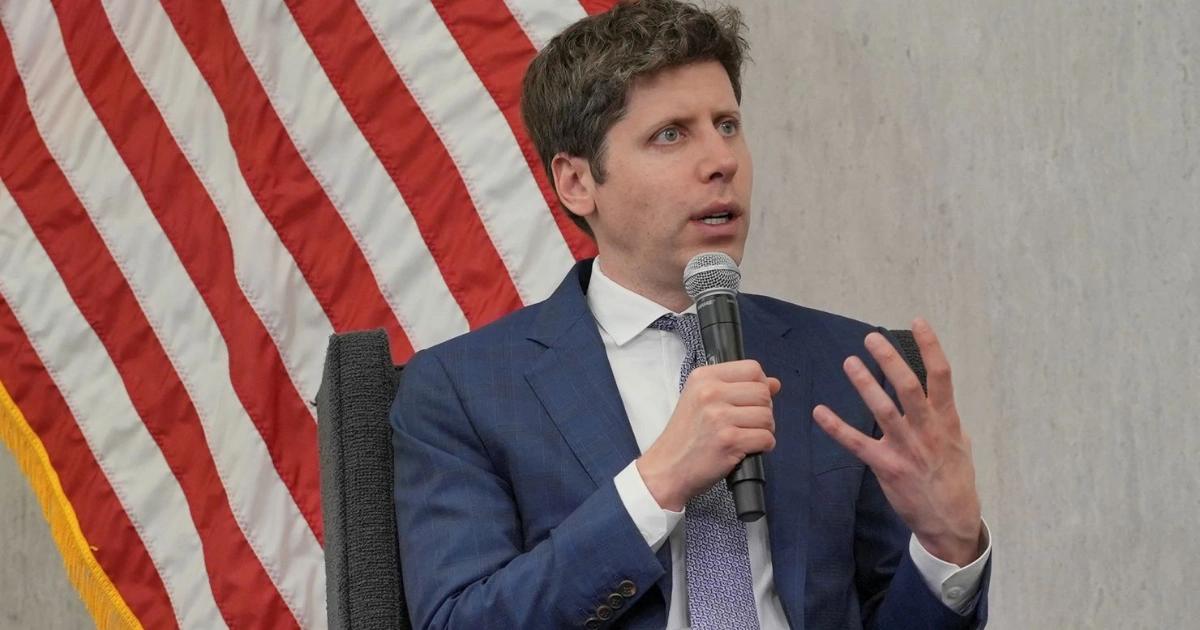
Altman at the India summit compared AI data center energy consumption to the 20-year cost of human development, sparking controversy over anti-human and nuclear energy interests.
When AI data centers face human growth history
In the current global focus on AI energy consumption, OpenAI CEO Sam Altman recently made a shocking statement at the AI Impact Summit held in India.
In response to public concerns about the massive environmental footprint of large language models like ChatGPT, Altman avoided conventional PR language or technical explanations, directly challenging traditional human societal perceptions.
He proposed an avant-garde and controversial view: that public scrutiny of data center electricity loads overlooks the astonishing costs involved in nurturing a human being. Altman’s core argument treats “intelligence output” as a process of energy transformation. He believes that people are accustomed to examining cold server farms but ignore the enormous energy expenditure involved in a human growing from infancy into a productive individual.
This logic, equating biological growth with model training, fundamentally changes the framework for discussing AI’s environmental impact. As OpenAI strives toward artificial general intelligence (AGI), such resource allocation debates become more provocative, casting a cold cost-benefit light on what was once purely a technical issue. While data centers consume large amounts of electricity, Altman argues that the wisdom generated from this investment should be compared over longer timeframes and human development costs.
Altman’s view of biological inefficiency
According to Altman’s detailed description at the summit, it takes about 20 years for a human to grow from birth to a level of “intelligence.” During this long period, humans continuously consume vast amounts of food, water, space, and various social resources. He emphasized to the local media, The Indian Express, that human existence is rooted in a long evolutionary history—built on the learning and survival experiences accumulated over billions of past humans avoiding predators and adapting.
From this, Altman concludes that, if we evaluate “energy efficiency” in achieving equivalent intelligence, AI may have already matched or even surpassed humans.
This contrast between biological evolution and silicon-based training reveals the pursuit of ultimate efficiency in the eyes of tech bureaucrats. From Altman’s perspective, although AI data centers consume power, they can consolidate knowledge and perform calculations in a relatively short time, whereas human brain development is lengthy and variable. He even hints that data center efficiency is rapidly improving, making humans seem inferior in pure resource conversion efficiency. This algorithmic reduction of human life to energy consumption ignores emotions, creativity, and the irreplaceable nature of biological existence.
For Altman, the 20-year human development process is like an extremely inefficient running training, while AI accelerates wisdom growth through denser energy use.
The cold calculation of tech bureaucrats? Industry and online community backlash
This discourse quickly sparked a wave of backlash. Sridhar Vembu, co-founder of Indian software giant Zoho, who was also present, expressed strong disapproval on X (formerly Twitter), criticizing the idea of equating technology with humanity.
Vembu argued that technology should quietly serve in the background of life, assisting humans rather than dominating or replacing human values. He expressed concern over the tendency to conflate technology with life, viewing it as a reflection of Silicon Valley executives’ collective blind faith in productivity at the expense of human warmth.

Image source: X/@svembu Indian software giant Zoho co-founder Sridhar Vembu strongly opposes Altman’s views, emphasizing he does not want a world where technology equals humanity
Vembu’s stance represents the view of many traditional tech experts—that technology should serve people, not treat humans as calculable costs.
Online reactions were even more direct and angry. Reddit discussions were filled with criticism of Altman, with many users perceiving his remarks as “anti-human,” even describing his ideas as “evil and pathological.” Many comments pointed out that Altman seems completely unable to understand that human life’s value surpasses any code-based cost analysis.
Tech analyst Max Weinback also stated plainly that reducing humans to “production costs” while ignoring human nature itself will lead society down a negative path. This logic of viewing humans as “wasteful resource liabilities” touches on the bottom line of human dignity, risking OpenAI’s brand image under the label of ruthless efficiency.
Nuclear energy strategies and doomsday predictions: interests intertwined between AGI and green energy
Amid the controversy, Altman proposed a seemingly practical solution: the world must rapidly shift to clean energy sources like nuclear, wind, and solar power. However, behind this suggestion lies a complex web of interests. Altman is also chairman of the nuclear startup Oklo, which casts a shadow of personal gain over his policy advocacy. Critics question whether his focus on AI energy concerns and promotion of favorable energy solutions for his own investments are motivated by business interests intertwined with moral appeals.
Looking back at Altman’s past statements, he has consistently been in a paradoxical position:
- He publicly predicted that AI could lead to the end of the world but still promotes the development of large corporations based on that premise;
- He testified before Congress that AI could be used for biological weapons, yet remains committed to pursuing AGI breakthroughs;
- His claims about preventing existential risks while simultaneously dehumanizing humans as data center residues reflect the psychological state of tech leaders driven by power and technological fanaticism.
As AI’s electricity demands continue to rise, the ongoing conflict over resources, efficiency, and human values may just be beginning. How humanity will find a balance between Silicon Valley’s “efficiency” and its own intrinsic worth remains the most critical challenge of this technological revolution.
Disclaimer: The information on this page may come from third parties and does not represent the views or opinions of Gate. The content displayed on this page is for reference only and does not constitute any financial, investment, or legal advice. Gate does not guarantee the accuracy or completeness of the information and shall not be liable for any losses arising from the use of this information. Virtual asset investments carry high risks and are subject to significant price volatility. You may lose all of your invested principal. Please fully understand the relevant risks and make prudent decisions based on your own financial situation and risk tolerance. For details, please refer to
Disclaimer.
Related Articles
Crypto market structure bill release pushed back as industries view revised stablecoin yield compromise this week
Crypto and banking industry representatives are meeting to discuss stablecoin yield provisions in a market structure bill. Compromise language, led by Senators Alsobrooks and Tillis, has raised concerns in the crypto sector, particularly regarding yield based on stablecoin balances. The release of the revised text has been delayed, with ongoing negotiations over technical details. A markup hearing is anticipated later in April. Other regulatory concerns, including the definition of DeFi and potential ties to former President Trump's family, remain unresolved.
CoinDesk36m ago
Trump asks Congress for $1.5 trillion defense budget, the largest military spending request in US history
The Trump administration submitted a $1.5 trillion defense spending request to Congress on April 3 --- the largest military budget proposal in U.S. history --- pairing record military outlays with cuts to domestic programs in a fiscal combination that signals sustained inflation pressure and a
Cryptonews1h ago
Trump fires Pam Bondi, puts pro-crypto Todd Blanche in charge of the DOJ
President Trump has fired Pam Bondi and replaced her with Todd Blanche as interim U.S. Attorney General --- handing control of the Justice Department to the official who dismantled the DOJ's crypto enforcement unit in April 2025 and holds up to $485,000 in personal digital asset holdings.
Cryptonews2h ago
Bitcoin Hovers Near $67,000 Amid US Political Turmoil and Soaring Energy Prices
Bitcoin traded mostly flat on April 3, hovering near $67,000 despite sharp geopolitical and political developments. The cryptocurrency’s relative stability kept its market cap steady at $1.34 trillion and liquidations low at $31 million.
Political Turbulence Overshadows Conflict
Bitcoin traded
Coinpedia4h ago
The U.S. will double the reinsurance scale for ships in the Strait of Hormuz to $40 billion
The United States will provide a $40 billion reinsurance commitment for vessels transiting the Strait of Hormuz, and will introduce new insurance partners to boost confidence in maritime trade. The DFC will work with multiple insurance companies to jointly determine which vessels qualify for reinsurance.
GateNews7h ago
Trump Releases FY2027 Budget Proposal: $1.5 Trillion in Defense Spending Sets a Modern-Era Record
Trump released the FY 2027 budget proposal, planning to request $1.5 trillion in defense spending, a record high. Of this amount, $1.1 trillion would be allocated to the Department of Defense, and $350 billion would be used for ammunition procurement and industrial expansion. In addition, the budget also supports projects by the National Fraud Investigation Bureau and construction projects in Washington, D.C., including defense spending.
GateNews8h ago


