As the new energy sector continues to advance, Tesla has emerged as one of the most closely watched companies in global capital markets. Its stock ticker, TSLA, is not only a hot asset on the US market but is also seen by many investors as a key indicator for the new energy industry. Both long-term investors and short-term traders closely monitor TSLA’s business growth and stock performance.
Tesla’s widespread attention is driven by the rapid expansion of its electric vehicle business, as well as its strong growth prospects in energy storage, battery technology, and autonomous driving. Compared to traditional automakers, Tesla is more technology-centric, making TSLA an investment asset known for both growth potential and volatility.
What Is TSLA? The Relationship Between TSLA and Tesla
TSLA is Tesla’s ticker symbol on the NASDAQ Stock Exchange. Purchasing TSLA shares means investors hold fractional equity in Tesla and may benefit from the company’s future growth.
Founded in 2003, Tesla initially focused on electric vehicle manufacturing and gradually expanded into energy storage systems, solar solutions, and autonomous driving software. Today, Tesla is more than an automaker—it’s a diversified enterprise spanning new energy and technology.
This “automotive + energy + software” multi-business model gives Tesla significant visibility in capital markets and makes TSLA a top growth stock for investors.
Tesla’s Core Businesses and Revenue Streams
Tesla’s revenue is primarily generated from three segments: automotive sales, energy, and software services. Automotive sales remain the main revenue driver, with models like the Model 3 and Model Y accounting for a substantial share of total income. As global demand for new energy vehicles increases, Tesla’s automotive segment provides a stable revenue foundation.
Beyond vehicles, Tesla is expanding its energy business with storage solutions and solar products. While energy’s revenue contribution is still smaller than automotive, the global shift toward clean energy positions this segment as a key growth driver for Tesla’s future.
Autonomous driving software and related services are also critical to Tesla’s business model. Software typically offers higher profit margins, and the market generally expects this segment to become a major source of long-term profitability. Diversified revenue streams not only boost Tesla’s growth prospects but also enhance TSLA’s appeal in the marketplace.
Why Does TSLA Attract Market Attention?
TSLA commands strong market attention due to Tesla’s leadership in the new energy vehicle sector and its long-term growth outlook. As one of the world’s most iconic EV manufacturers, Tesla stands out for its brand strength, innovation, and market expansion.
Tesla’s valuation is shaped not just by current vehicle sales, but also by market expectations for its energy business and autonomous driving technology. With its technology-driven growth profile, TSLA is widely seen as blending characteristics of both manufacturing and tech stocks—driving its prominence in capital markets.
Additionally, Tesla’s popularity and high trading volume draw significant investor participation, making TSLA one of the world’s most actively traded stocks.
Key Factors Impacting TSLA’s Stock Price
TSLA’s price is shaped by multiple factors, with Tesla’s financial performance being paramount. Quarterly revenue, vehicle deliveries, and profit margin trends all directly influence market sentiment about Tesla’s future. When results exceed expectations, TSLA’s price typically responds positively.
Industry competition is another crucial factor. As new energy vehicle companies like BYD grow rapidly, Tesla faces mounting competitive pressure. If this leads to margin compression, TSLA’s valuation may be reassessed by the market.
Other influences include technological advancements and macroeconomic conditions. Updates to autonomous driving systems, new model launches, and interest rate changes can all shift investor expectations for Tesla’s growth. As a growth stock, TSLA tends to react strongly to shifts in market sentiment, resulting in higher volatility.
How to Buy TSLA Stock
Investors can purchase TSLA shares through platforms that support US equity trading. The standard process involves:
- Opening an account with US stock trading capabilities
- Depositing funds
- Searching for the TSLA ticker
- Selecting the quantity and placing an order
Directly purchasing TSLA stock enables investors to participate in Tesla’s long-term growth, but also exposes them to price volatility. Understanding Tesla’s business model and market environment is essential before investing.
What Is the TSLA3L Leveraged Token?
In addition to buying TSLA shares, platforms like Gate offer TSLA3L leveraged tokens, allowing investors to amplify market returns without directly using margin.
TSLA3L is a leveraged product that tracks TSLA’s change % and offers 3x long exposure. When TSLA rises, TSLA3L’s gains are theoretically magnified; conversely, declines in TSLA lead to amplified losses in TSLA3L. While these products can boost short-term returns, they carry significantly higher risk than holding the stock outright.
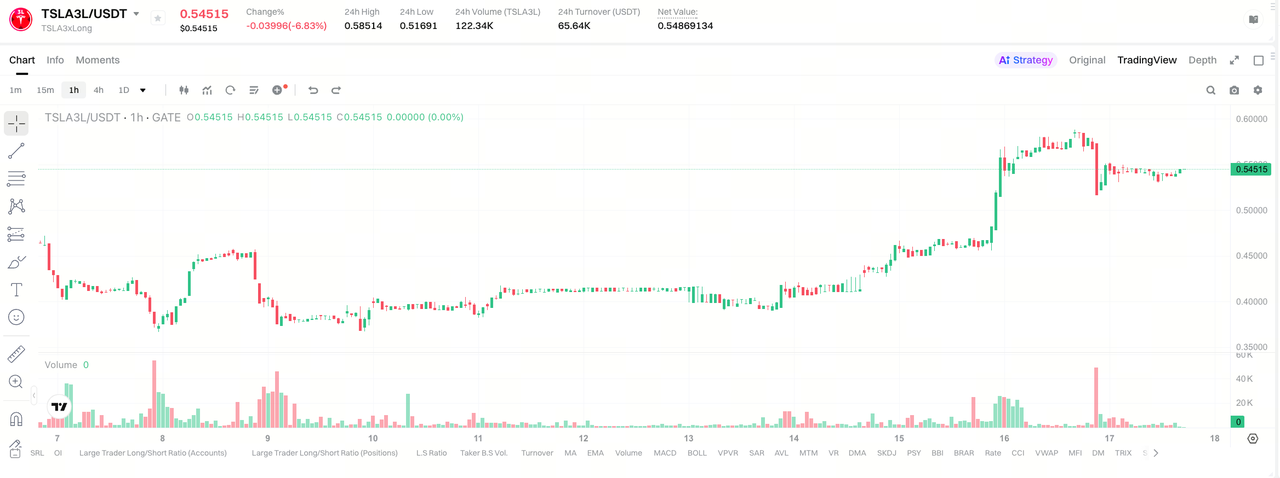
Because leveraged products are highly volatile, they are best suited for investors with strong risk tolerance and a thorough understanding of product mechanics.
TSLA: Investment Opportunities and Potential Risks
Over the long term, Tesla’s growth potential in electric vehicles, energy storage, and autonomous driving makes TSLA highly attractive. As the global new energy industry expands, Tesla’s market opportunity continues to grow.
Key investment opportunities for TSLA include:
- Sustained growth in the new energy vehicle market
- Long-term upside in autonomous driving
- New revenue streams from energy storage
However, TSLA also faces notable risks, including intensifying competition, high valuation, and macroeconomic shifts—all of which can increase price volatility.
Investors should closely monitor:
- Competitive pressures in the industry
- Volatility risk from high valuation
- Uncertainty in technology deployment
As a result, while TSLA offers considerable growth potential, it also comes with substantial volatility risk, making it better suited for investors with higher risk tolerance.
Summary
TSLA is Tesla’s stock ticker, and its investment value is rooted in the growth of its EV business, energy initiatives, and software services. As a leading name in the new energy sector, Tesla enjoys strong market competitiveness and sustained attention from global capital markets.
However, TSLA’s high growth outlook also brings greater volatility risk. Investors should weigh long-term growth prospects against industry competition, valuation levels, and market risks. Only with a full understanding of Tesla’s business model and risk profile can investors make informed decisions about TSLA’s investment value.
FAQs
Why does TSLA attract market attention?
Because Tesla demonstrates strong growth potential in electric vehicles, energy storage, and autonomous driving, TSLA has long been in the spotlight for investors.
What’s the difference between TSLA3L and TSLA?
TSLA is Tesla’s stock, while TSLA3L is a trading product that tracks TSLA’s price movements and provides leveraged exposure, carrying greater risk.
What risks are associated with investing in TSLA?
The main risks include intensifying industry competition, volatility driven by high valuation, and market risk resulting from changes in the macro environment.