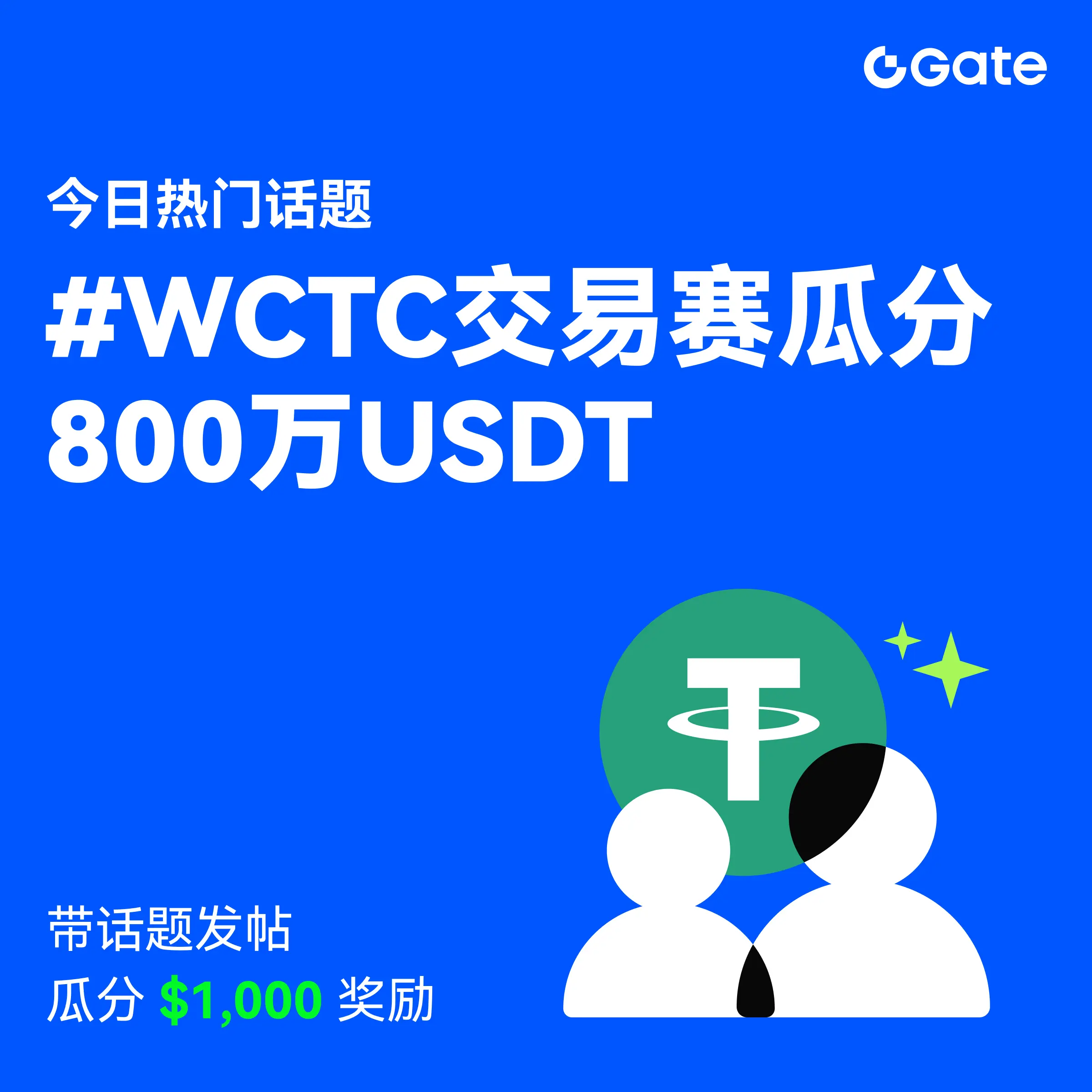
# WCTCTradingKingPK

184.87K
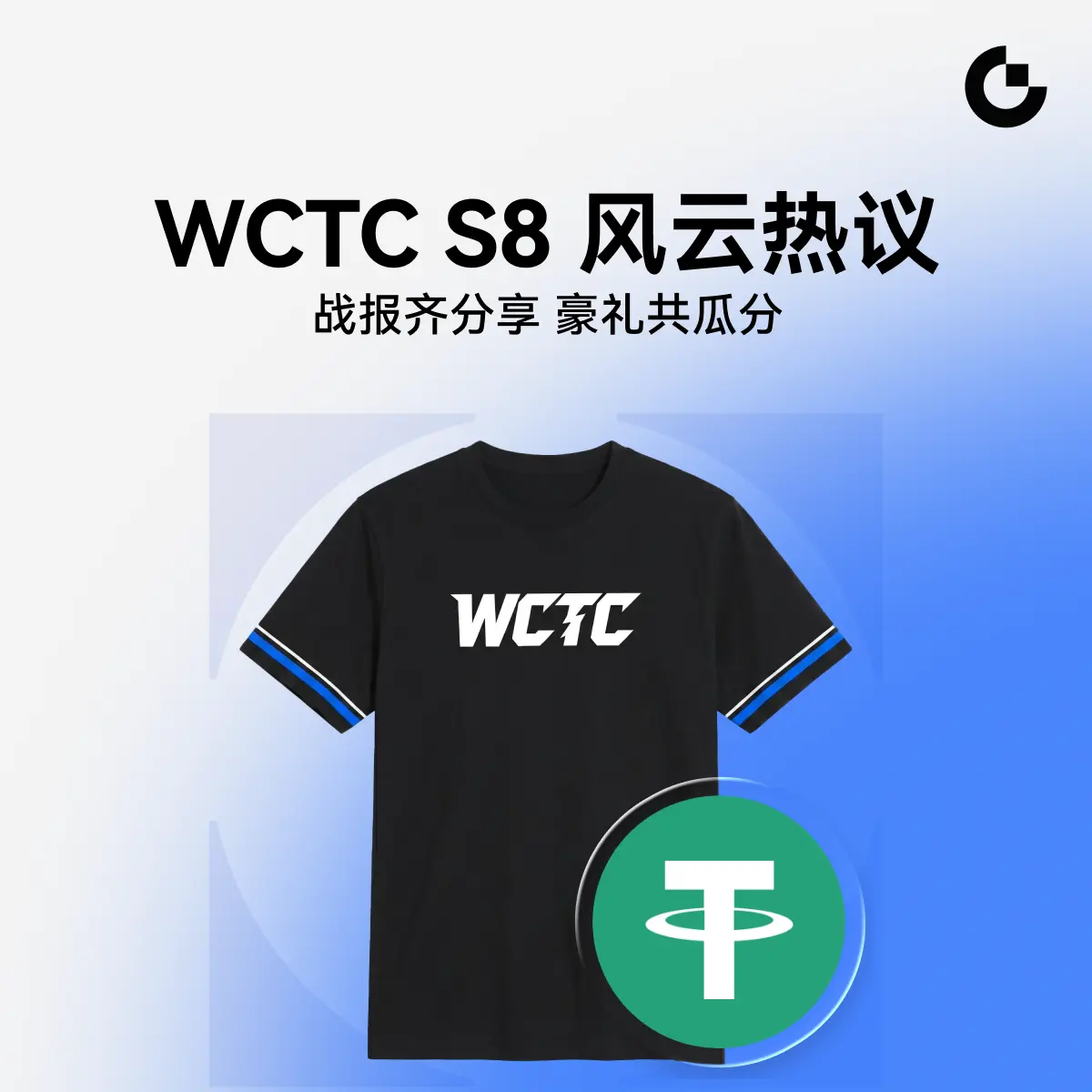
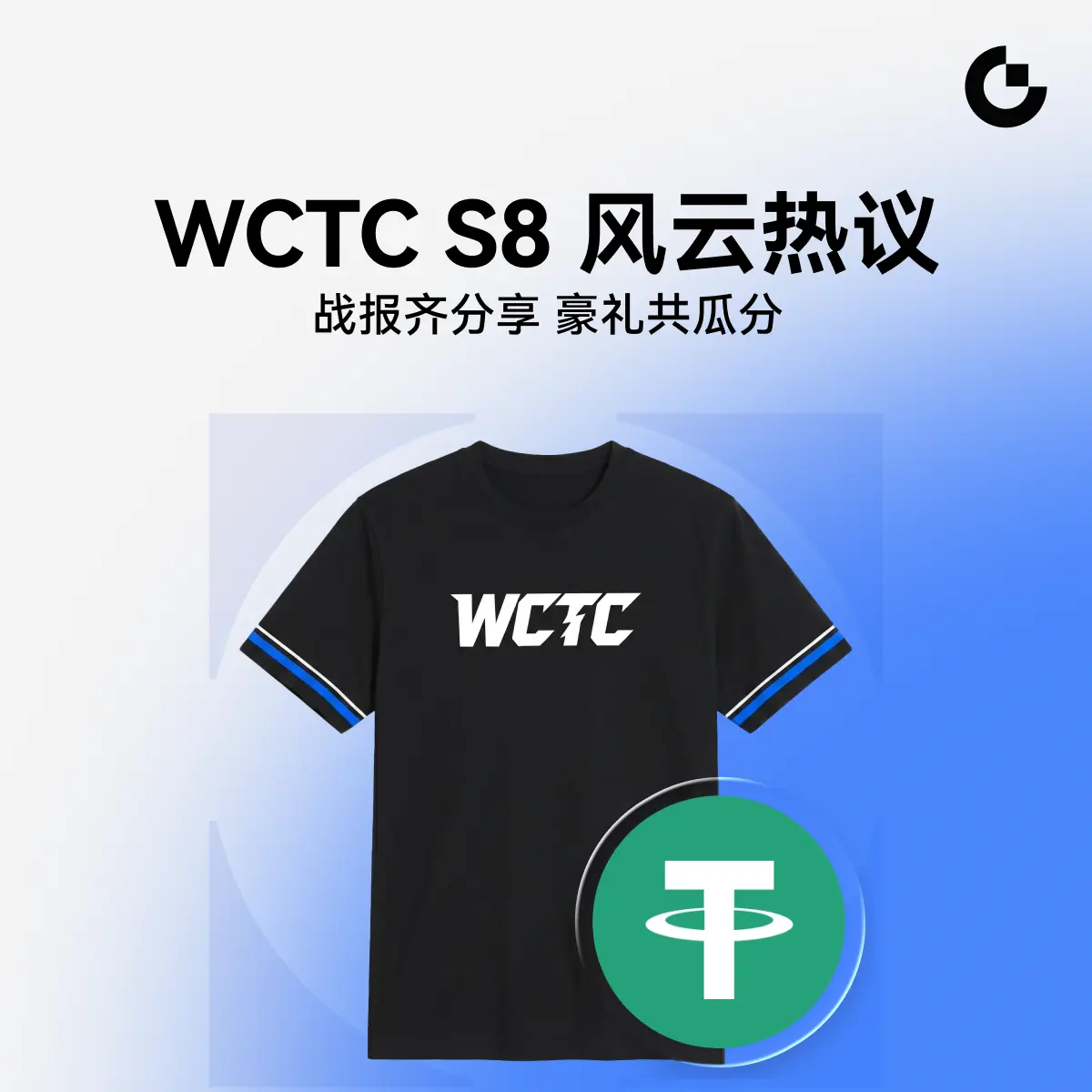
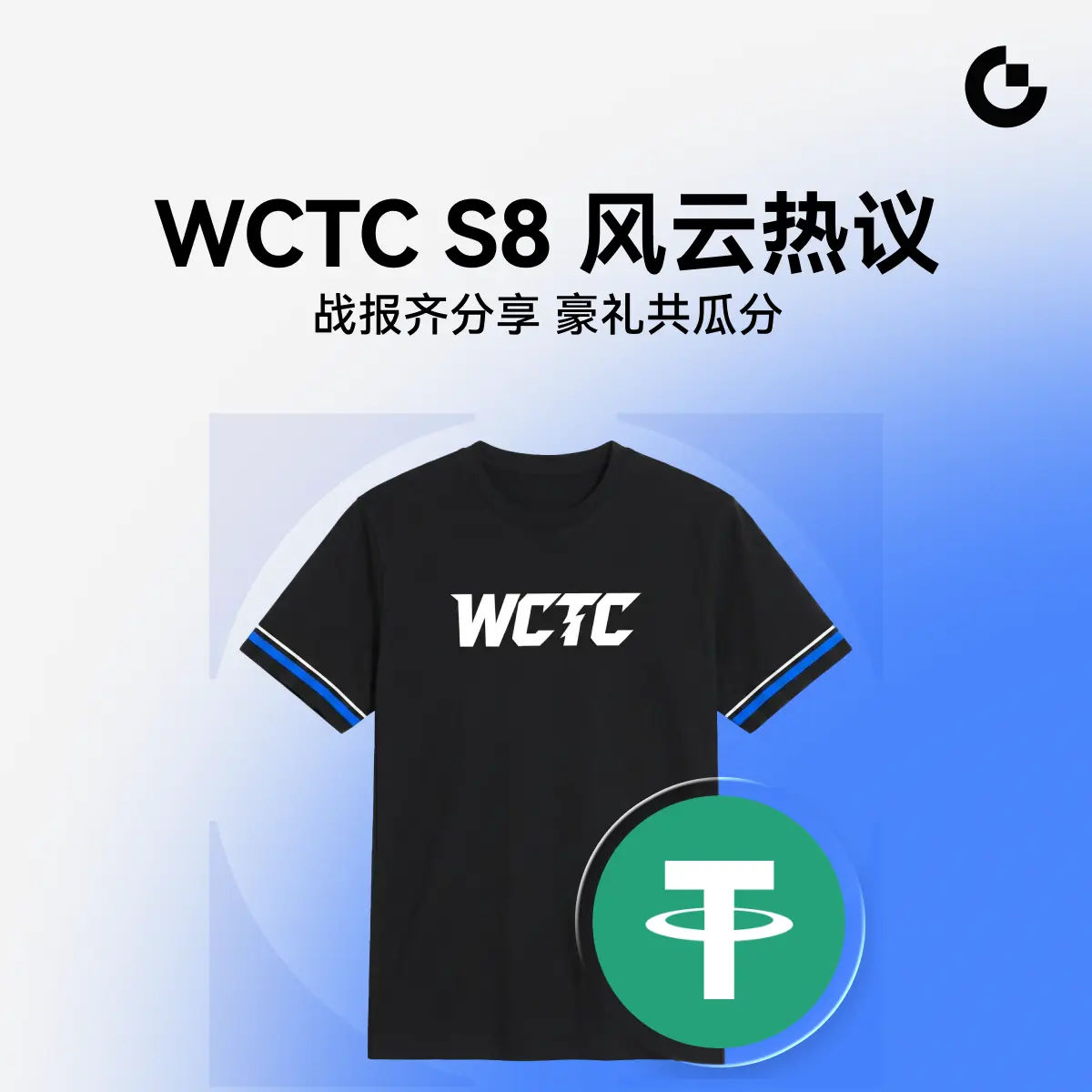
🏆 WCTC S8 Hot Discussion: Show Your Achievements, Win Luxurious Prizes
Post in the plaza to participate, WCTC limited edition peripherals, GT, coupons, and more await you!
🎁 Four Major Reward Tracks:
1️⃣ Team Gift: Share your team formation with one click, draw 100 people to win a $50 experience voucher.
2️⃣ Expert Gift: Write a strategy guide to win a $20 GT + official top placement.
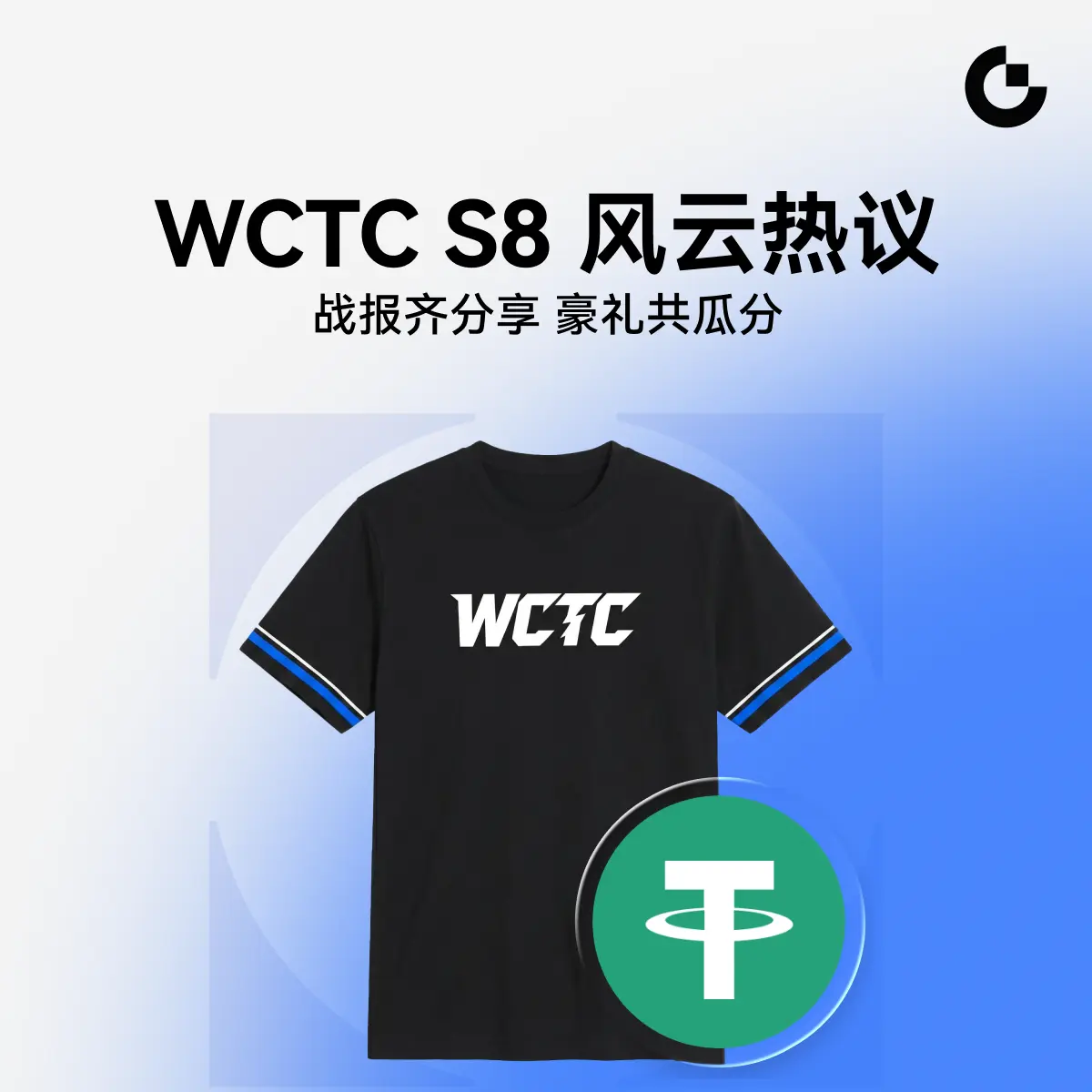
3️⃣ War God Gift: Share screenshots of your personal PK battle results to receive a WCTC commemorative T-shirt.
4️⃣ Leader: Share your team’s performance, and the top 10 in popularity will win full traffic prom
GT-0,4%
View Original
post-image
  • Reward
  • 25
  • Repost
  • Share
OjanFzn:
iwijajaiwj you have you are you know what I is that I y from you know how much for me and the same thing
View More
#WCTCTradingChallengeShare8MUSDT
WCTC S8 Global Trading Challenge: A Comprehensive Overview
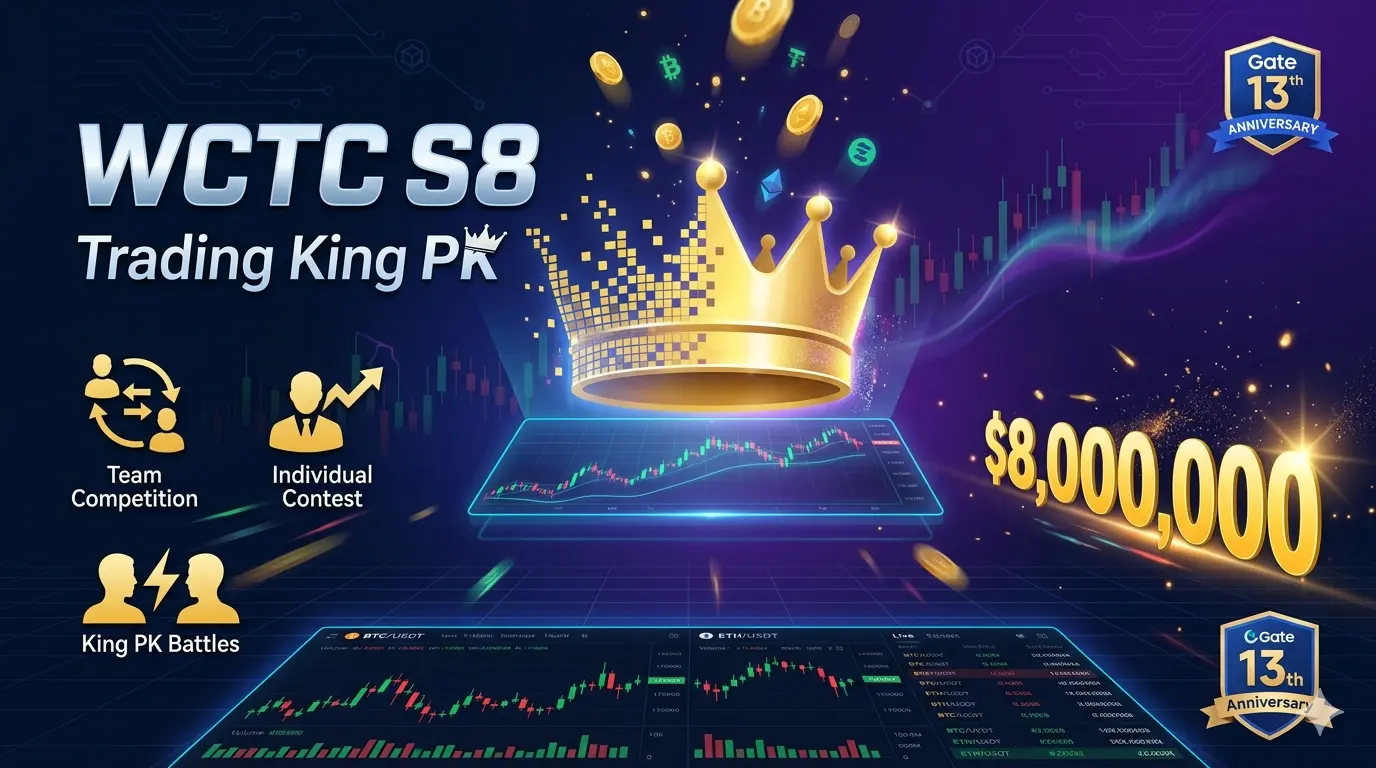
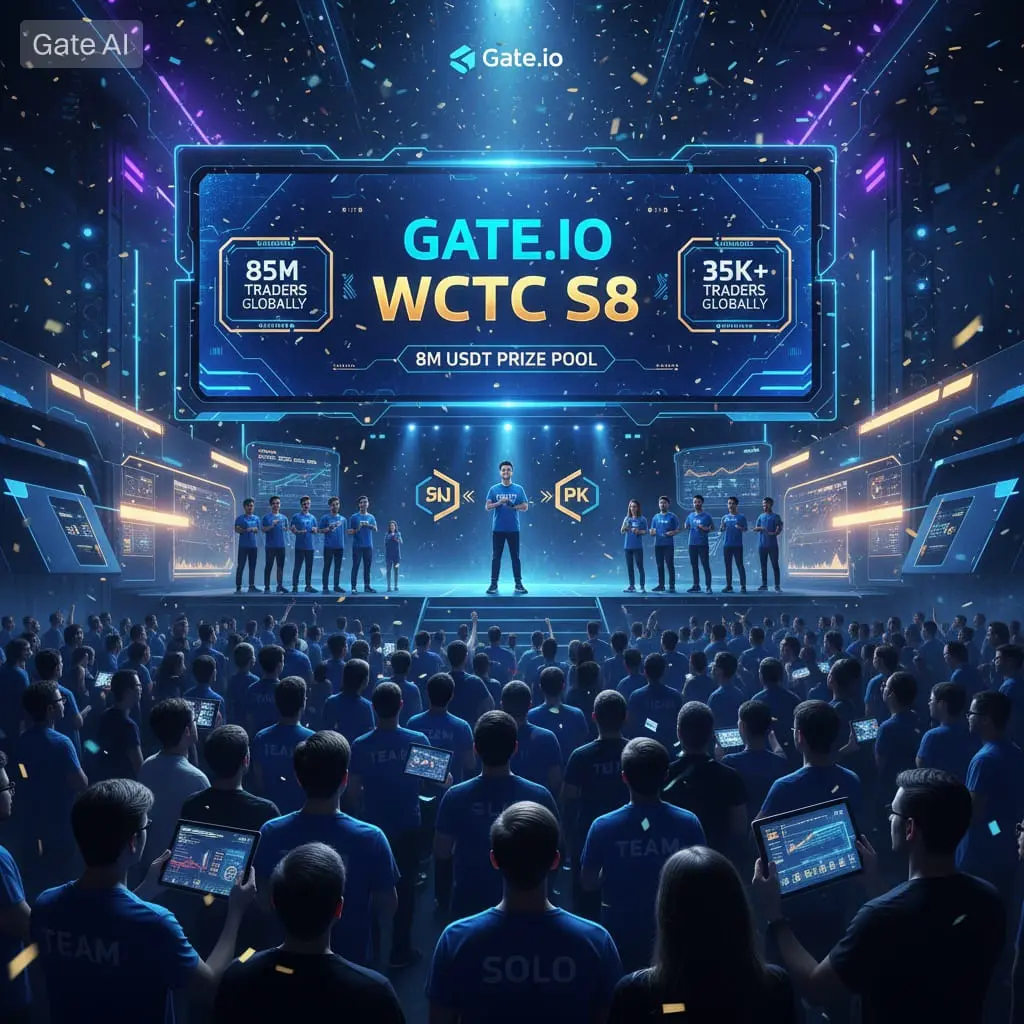
The World Crypto Trading Competition Season 8, launched by Gate to commemorate its 13th anniversary, represents one of the most ambitious trading competitions in the cryptocurrency industry with a total prize pool reaching up to 8 million USDT. This event commenced on April 23, 2026, and will continue for 28 days until May 20, 2026, offering traders worldwide an opportunity to compete across multiple categories while showcasing their trading expertise.
Competition Structure and Prize Distribution
The W
HighAmbition
#WCTCTradingChallengeShare8MUSDT
WCTC S8 Global Trading Challenge: A Comprehensive Overview
The World Crypto Trading Competition Season 8, launched by Gate to commemorate its 13th anniversary, represents one of the most ambitious trading competitions in the cryptocurrency industry with a total prize pool reaching up to 8 million USDT. This event commenced on April 23, 2026, and will continue for 28 days until May 20, 2026, offering traders worldwide an opportunity to compete across multiple categories while showcasing their trading expertise.
Competition Structure and Prize Distribution
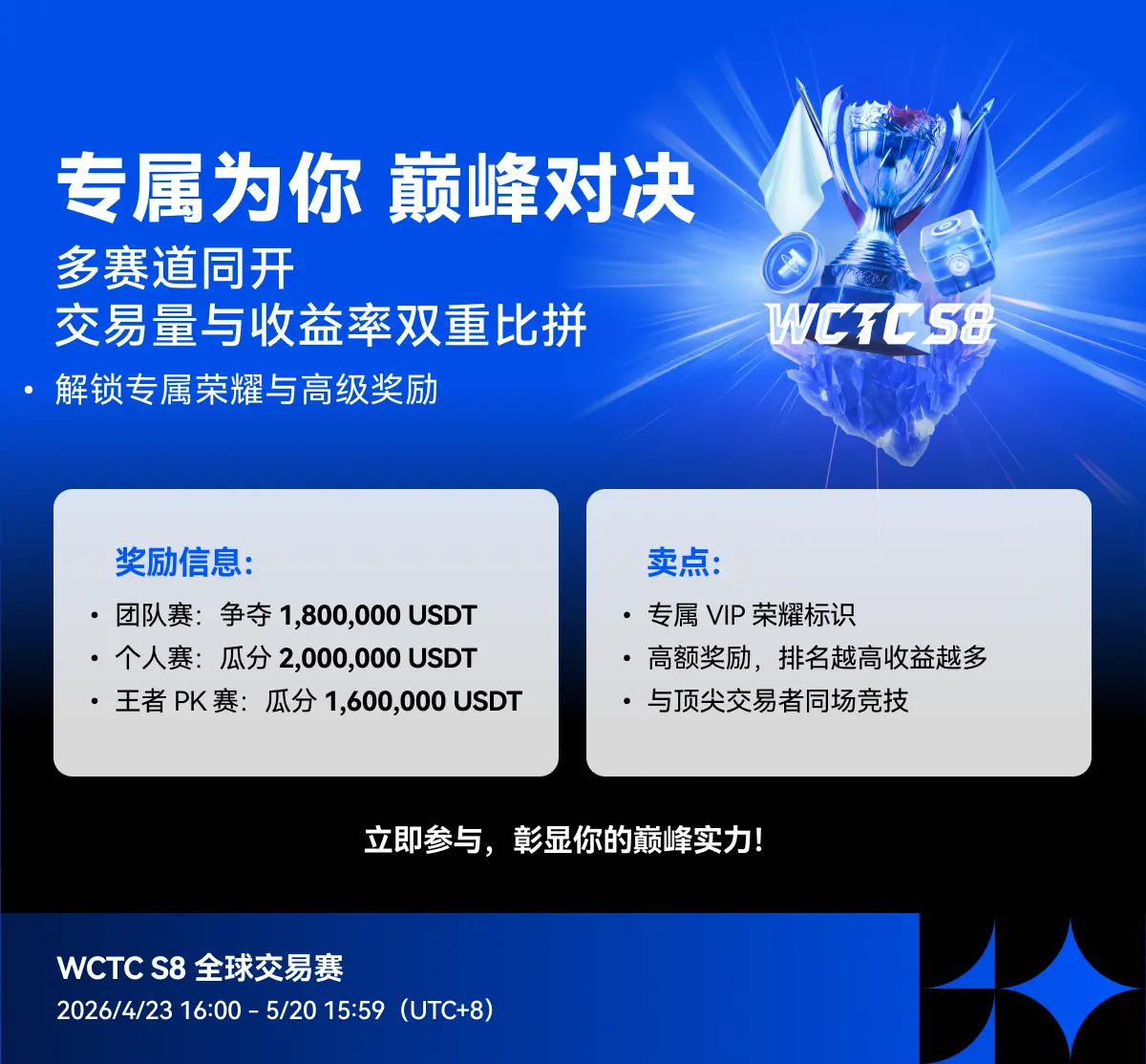
The WCTC S8 has been designed with three distinct competition tracks, each catering to different trading styles and preferences. The Team Trading Contest commands the largest prize allocation with up to 3.6 million USDT distributed among participating teams. This format encourages collaborative trading strategies where team members combine their efforts to achieve collective trading volumes and returns. Team leaders have the opportunity to claim rewards up to 108,000 USDT, and there is an additional early-bird incentive where the first 30 team leaders whose teams reach 50 members will share a bonus pool of 3,000 USDT.
The Solo Trading Contest offers individual traders a chance to compete independently with a prize pool of up to 2 million USDT. This track is ideal for traders who prefer to rely on their personal strategies and decision-making without the coordination requirements of team participation. Individual competitors are ranked based on their trading performance, and rewards are distributed according to their position on the leaderboard.
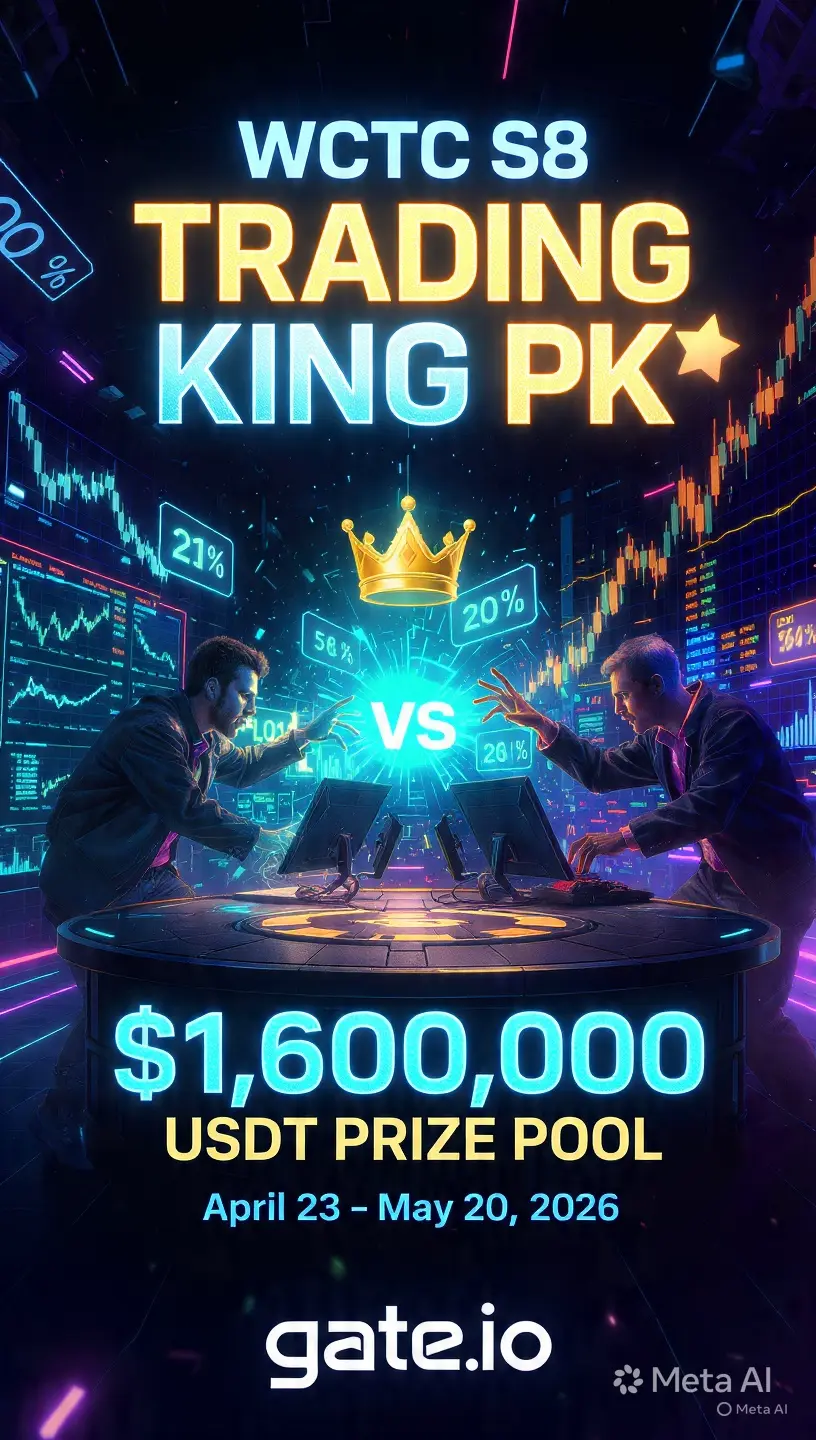
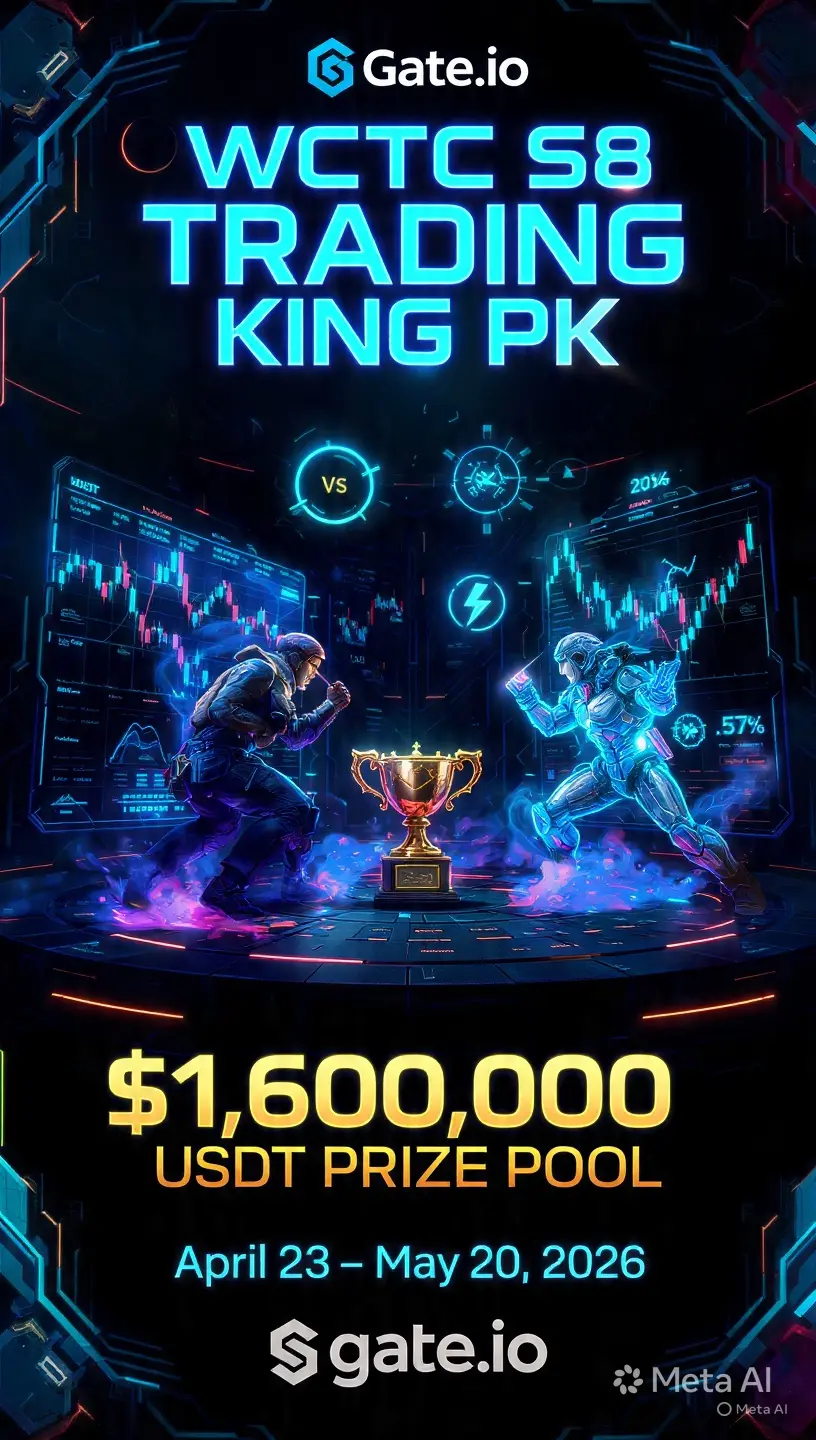
The Champions Showdown, also referred to as the 1v1 PK Battles, introduces a head-to-head competitive format with a prize pool of up to 1.6 million USDT. This track allows traders to challenge each other directly, creating an intense competitive environment where participants can test their skills against specific opponents. The addition of this format in Season 8 represents a significant evolution from previous iterations, adding an element of direct rivalry that enhances the overall excitement of the competition.
Trading Volume and Return Calculations
The competition employs a sophisticated formula to calculate valid trading volume that encompasses multiple trading products available on the Gate platform. The calculation methodology gives different weightings to various trading categories: Spot trading volume, ETF trading volume, and Convert volume are multiplied by 150%, while Futures trading volume counts at full value, and TradFi trading volume is multiplied by 10%. This weighting system encourages participants to diversify their trading activities across different products while recognizing the higher risk and complexity associated with futures trading.
For return calculations, the competition considers Futures returns and TradFi returns, which are then used to determine rankings in the various competition tracks. The Champions Showdown employs a specific Return on Investment calculation formula that varies depending on the account type being used. For Classic Spot Mode accounts, ROI is calculated by dividing the sum of Futures returns and TradFi returns by the sum of initial futures account assets, futures account transfers-in, initial TradFi account assets, and TradFi account transfers-in. For Unified Account Mode users, the calculation divides the returns by the sum of initial total account assets and total deposits.
Eligibility and Participation Requirements
To participate in the WCTC S8, traders must complete several mandatory steps. Registration requires clicking the Join Now button on the competition page and completing identity verification before the event concludes. The competition maintains specific minimum thresholds for eligibility: participants must achieve at least 10,000 USDT in total trading volume to be considered valid users, and those competing in the Team or Solo contests must reach at least 20,000 USDT in total trading volume to qualify for rewards.
Certain account types are excluded from participation, including API users, VIP 15 and above, market makers, enterprise or institutional accounts, and subaccounts. Additionally, specific trading pairs are excluded from volume calculations, including stablecoin pairs such as USDC/USDT, GUSD/USDT, and USD1/USDT, as well as all USD1 spot trading pairs. These exclusions are implemented to prevent wash trading and ensure fair competition among genuine retail traders.
Expanded Trading Scope and Multi-Asset Integration
A notable innovation in WCTC S8 is the inclusion of traditional finance products within the competition framework. Gate has integrated over 350 TradFi assets into the competition, including metals, stocks, indices, forex, and commodities. This expansion reflects the platform's broader strategy of multi-asset integration and provides traders with opportunities to leverage their knowledge of traditional markets alongside cryptocurrency trading. The inclusion of TradFi products with a 10% volume multiplier allows participants to diversify their strategies while still maintaining focus on crypto-native trading products that offer higher multipliers.
Bonus Events and Additional Incentives
Beyond the main competition tracks, WCTC S8 features a dedicated Bonus Event with a prize pool of 800,000 USDT. This includes rewards for early registration and participation, daily mystery boxes that provide ongoing incentives throughout the competition period, early-bird team bonuses, and livestream giveaways. New users receive a special welcome package including a 20 USDT bonus plus access to daily rewards, making the competition particularly attractive for those who are new to the Gate platform.
The competition employs a dynamic prize pool model where the total rewards increase based on the number of qualified participants. This tiered unlocking mechanism creates a collective incentive for participants to invite friends and grow the competition community, as larger participation leads to bigger prize pools for everyone involved.
Offline Celebrations and Community Engagement
As part of Gate's 13th anniversary celebration, the platform has organized several high-profile offline events in Hong Kong. These include the GATE GALA 13 anniversary dinner held at Rosewood Hong Kong on April 20, the Gate 13 Blue Carpet Ceremony featuring the unveiling of the F1 Red Bull team display car, and the Racing the Future outdoor exhibition at K11 MUSEA waterfront promenade running from April 18 to 24. These events demonstrate Gate's commitment to building a strong community presence and providing unique experiences for its users beyond the digital trading environment.
Reward Distribution and Compliance
Rewards for the Team and Solo contests will be credited to participants' accounts within 15 business days after the competition concludes. Vouchers can be viewed and used in the dedicated Vouchers section, though participants must activate and use them before expiration as expired vouchers become invalid. Rewards under 1 USDT will not be issued, and physical rewards will be airdropped via the Gate Shop with a 60-day delivery timeframe after shipping information is submitted.
The competition maintains strict anti-cheating measures, with Gate reserving the right to disqualify users and impose bans for behaviors including wash trading, collusive trading, self-trading, market manipulation, or bulk registration. Subaccounts, main accounts, and multiple accounts under the same identity are treated as a single participant, and trading volume from subaccounts does not count toward the main account.
Strategic Significance and Industry Context
The WCTC S8 represents more than just a trading competition; it embodies Gate's strategic vision for ecosystem development and user engagement. By integrating spot trading, derivatives, and traditional finance products into a unified competition framework, Gate is positioning itself as a comprehensive multi-asset trading platform. The structural upgrades and expanded prize pool reflect the platform's continued investment in user acquisition and retention, particularly during a period of significant market activity and competition among exchanges.
For participants, the competition offers multiple pathways to success depending on their trading style, risk tolerance, and preferred assets. Whether through team collaboration, individual skill demonstration, or direct competitive battles, traders have opportunities to earn substantial rewards while honing their trading strategies across diverse market conditions. The inclusion of both cryptocurrency and traditional finance products also provides a unique opportunity for traders to demonstrate versatility across asset classes, potentially attracting attention from the broader trading community and opening doors to future opportunities in the financial industry.
repost-content-media
  • Reward
  • Comment
  • Repost
  • Share
#WCTCTradingKingPK
WCTC S8 Trading King PK - The Ultimate Trading Showdown
The World Crypto Trading Competition (WCTC) Season 8 is here, and it's bigger than ever. As Gate celebrates its 13th anniversary, this year's competition brings an unprecedented $8 million prize pool across multiple formats. Whether you're a seasoned trader or just getting started, there's something for everyone.
What is WCTC S8?
WCTC S8 is Gate's flagship global trading competition running from April 23 to May 20, 2026. This season introduces a multi-dimensional upgrade with three distinct competition tracks designed
post-image
[The user has shared his/her trading data. Go to the App to view more.]
  • Reward
  • 2
  • Repost
  • Share
AngryBird:
To The Moon 🌕
View More
#WCTCTradingKingPK
Advanced Multi-Timeframe Momentum Strategy for WCTC S8 Individual PK Competition
The Individual PK Competition in WCTC S8 demands a trading approach that balances aggressive return generation with disciplined risk management. This comprehensive strategy guide presents a multi-timeframe momentum system specifically optimized for the high-pressure environment of head-to-head trading battles where performance is measured over compressed time periods.
Core Strategy Philosophy
The foundation of this strategy rests on capturing explosive price movements while maintaining strict c
HighAmbition
#WCTCTradingKingPK
Advanced Multi-Timeframe Momentum Strategy for WCTC S8 Individual PK Competition
The Individual PK Competition in WCTC S8 demands a trading approach that balances aggressive return generation with disciplined risk management. This comprehensive strategy guide presents a multi-timeframe momentum system specifically optimized for the high-pressure environment of head-to-head trading battles where performance is measured over compressed time periods.
Core Strategy Philosophy
The foundation of this strategy rests on capturing explosive price movements while maintaining strict capital preservation protocols. Unlike traditional swing trading that might hold positions for days or weeks, PK competition trading requires rapid decision-making and quick profit realization. The strategy employs a three-layer confirmation system that filters noise and identifies high-probability momentum bursts across multiple timeframes.
Timeframe Architecture
The strategy utilizes four distinct timeframes working in concert. The monthly and weekly charts provide structural context for major support and resistance zones. The daily chart identifies the primary trend direction and key decision levels. The four-hour chart serves as the main execution timeframe where entry and exit signals are generated. Finally, the one-hour chart provides micro-structure for precise entry timing and stop-loss placement.
This multi-timeframe approach ensures that trades align with the broader market structure while allowing for tactical precision in execution. Trading against the higher timeframe trend significantly reduces win probability, so the strategy enforces strict trend alignment rules before any position is considered.
Technical Indicator Configuration
The primary momentum identification tool combines the Relative Strength Index with volume analysis. The RSI is configured with a 14-period setting on the four-hour chart, with overbought and oversold thresholds adjusted to 75 and 25 respectively to account for cryptocurrency market volatility. Volume confirmation requires the current candle to exceed the 20-period average volume by at least fifty percent, ensuring that momentum signals coincide with genuine market participation rather than low-liquidity noise.
A secondary confirmation layer employs the Moving Average Convergence Divergence indicator with standard 12, 26, and 9 period settings. The strategy requires MACD histogram alignment with price momentum, meaning that bullish entries only trigger when both price and MACD histogram are making higher lows, while bearish entries require both to make lower highs.
The third confirmation element tracks exponential moving averages with 20, 50, and 200 period settings. The strategy mandates that price action must respect the 20-period EMA as dynamic support in uptrends and resistance in downtrends. Entries are only permitted when price pulls back to test the 20 EMA and demonstrates rejection through candlestick patterns.
Entry Protocol
Long entries trigger when four conditions align simultaneously. First, the daily chart must show a clearly defined uptrend with higher highs and higher lows. Second, the four-hour RSI must pullback from overbought territory to the 40-50 zone, indicating a healthy correction within the trend. Third, the MACD histogram must show bullish divergence or flattening before resuming upward expansion. Fourth, price must touch or slightly pierce the 20-period EMA on the four-hour chart and form a reversal candlestick pattern such as a hammer, morning star, or bullish engulfing.
Short entries follow the inverse logic with corresponding bearish requirements. The daily trend must be downward, the four-hour RSI must bounce from oversold to the 50-60 zone, MACD must show bearish characteristics, and price must reject from the 20 EMA with appropriate bearish candlestick confirmation.
Position Sizing and Risk Management
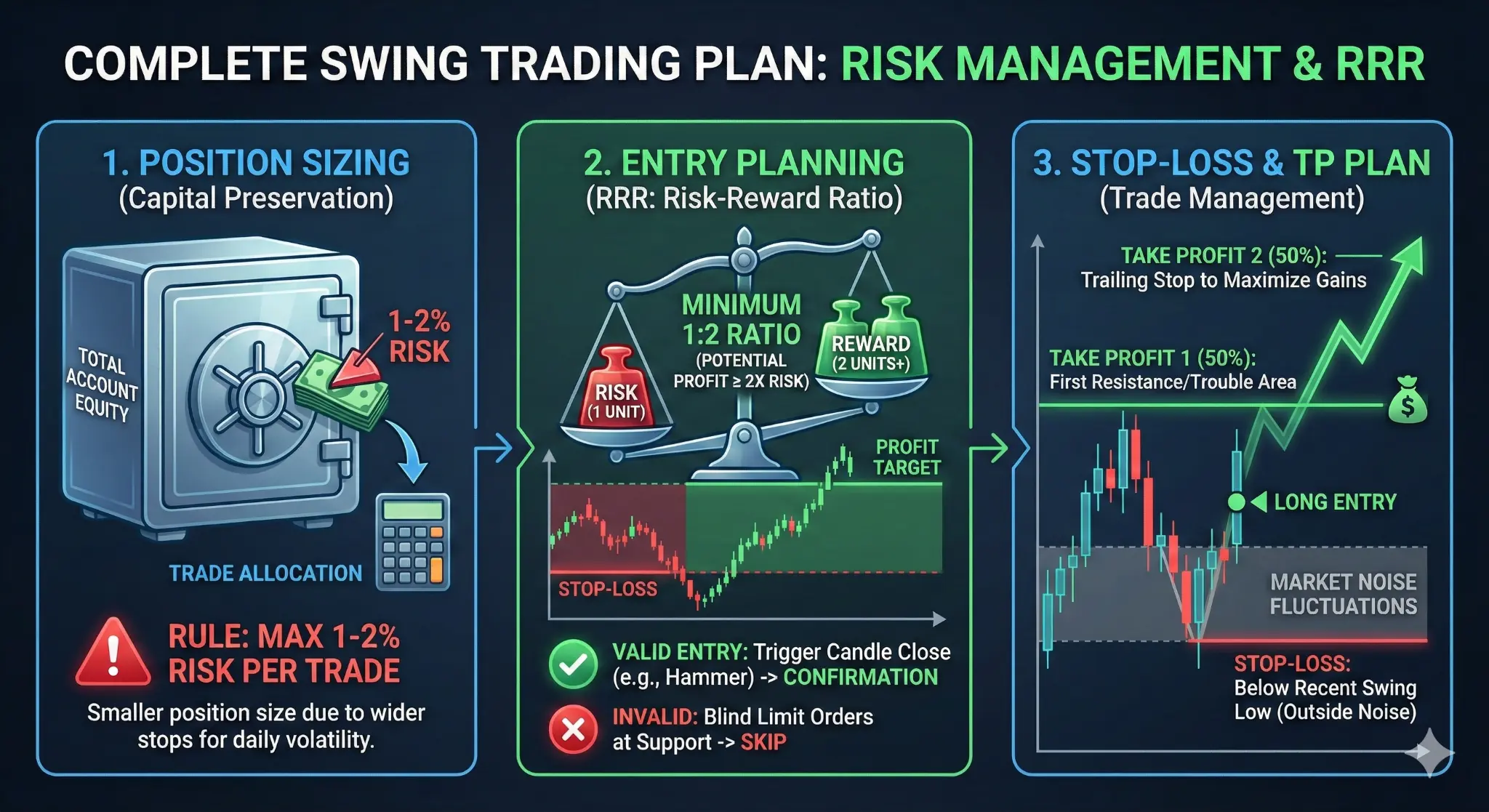
Capital allocation follows a dynamic position sizing model based on account equity and volatility conditions. The base position size starts at two percent of total trading capital per trade. This percentage increases to three percent when the Average True Range over fourteen periods falls below its 50-period average, indicating compressed volatility that often precedes explosive moves. Conversely, position size reduces to one percent when ATR exceeds its average by more than fifty percent, signaling elevated volatility and increased risk.
Stop-loss placement utilizes a dual-layer approach. The initial stop-loss sits at the swing low prior to entry for long positions or the swing high for short positions, ensuring that the trade invalidation point represents a genuine structural break rather than normal market noise. A secondary trailing stop activates once the position achieves a risk-to-reward ratio of one-to-one, locking in profits while allowing winners to run.
Profit Target Framework
The strategy employs a tiered profit-taking system designed to capture momentum while protecting gains. The first profit target sits at a one-point-five risk-to-reward ratio, where twenty-five percent of the position is closed. This initial partial exit ensures that the trade becomes risk-free while maintaining exposure to further gains. The second target at a two-point-five risk-to-reward ratio triggers closure of another fifty percent of the position. The final twenty-five percent trails with a stop-loss set at the second target level, capturing extended moves while protecting accumulated profits.
PK Competition Specific Adaptations
The Individual PK format introduces unique constraints that require strategic modifications. Competition rounds operate on fixed timeframes, typically ranging from hours to days, unlike normal trading where positions can be held indefinitely. This compressed timeline necessitates more aggressive entry criteria and faster profit realization.
The strategy adapts by reducing the confirmation period requirements. While standard implementation waits for daily candle closes, competition trading utilizes four-hour closes with one-hour micro-confirmation. This accelerates signal generation while maintaining structural validity.
Additionally, the PK environment benefits from correlation analysis across multiple trading pairs. When Bitcoin demonstrates strong momentum, altcoins often follow with amplified moves. The strategy monitors Bitcoin's four-hour structure as a leading indicator, entering altcoin positions only when Bitcoin confirms directional bias. This correlation filter significantly improves win rates by ensuring trades align with broad market sentiment.
Psychological Discipline Protocols
High-stakes competition trading amplifies emotional responses that destroy rational decision-making. The strategy incorporates specific protocols to maintain psychological equilibrium. Pre-session preparation includes reviewing trade rules, visualizing execution scenarios, and setting maximum daily loss limits at four percent of account equity. Once this limit triggers, all trading ceases regardless of market conditions or perceived opportunities.
During active trading, the strategy enforces a mandatory five-minute break after any losing trade. This cooling-off period prevents revenge trading and emotional escalation. Similarly, after three consecutive winning trades, a ten-minute break is required to prevent overconfidence and sloppy execution.
Market Condition Filters
Not all market environments support momentum trading effectively. The strategy identifies three distinct market regimes and adjusts accordingly. Trending markets with clear directional bias and healthy pullbacks represent ideal conditions where the strategy operates at full capacity. Choppy, range-bound markets with overlapping price action trigger a reduction in position size and wider stop-loss placement. Strongly trending markets with parabolic price action activate aggressive profit-taking and trailing stop protocols to protect against sudden reversals.
The Average Directional Index serves as the primary regime identification tool. Readings above thirty indicate trending conditions suitable for full strategy deployment. Readings between twenty and thirty suggest choppy conditions requiring caution. Readings below twenty signal ranging markets where the strategy remains inactive.
Execution Checklist
Every trade requires completion of a pre-entry checklist ensuring all conditions align. The checklist verifies trend alignment across timeframes, indicator confirmation, volume validation, risk-to-reward ratio minimum of one-to-two, and position size calculation. No trade proceeds without checklist completion, eliminating impulsive decisions and emotional overrides.
Post-trade analysis follows every closed position, documenting entry and exit rationale, emotional state, market conditions, and lessons learned. This continuous feedback loop drives strategy refinement and performance improvement over the competition period.
Advanced Techniques for Competitive Edge
Experienced traders can enhance the core strategy with additional techniques. Order flow analysis through volume profile identifies high-probability reaction zones where institutional participation concentrates. Market structure analysis tracks break of structure and change of character patterns that signal trend continuation or reversal. Multiple timeframe confluence zones where daily, four-hour, and one-hour support or resistance align provide exceptional risk-to-reward opportunities.
Correlation arbitrage between spot and perpetual futures markets occasionally presents risk-free profit opportunities during funding rate anomalies. While these situations are rare, monitoring funding rates every eight hours can capture additional returns without directional risk.
Performance Expectations and Reality
Successful implementation of this strategy in PK competition environments typically produces win rates between forty-five and fifty-five percent. While this appears modest, the asymmetric risk-to-reward structure ensures profitability. Average wins should exceed average losses by a factor of two to one or greater. This mathematical edge, compounded over multiple trades, generates the returns necessary for competitive performance.
Traders must abandon the pursuit of perfect trades and high win rates. Consistency, discipline, and adherence to proven mathematical edges outperform intuitive genius over time. The strategy provides the framework, but execution discipline determines ultimate success.
Final Implementation Notes
This strategy represents a complete trading system, not a collection of isolated indicators. Successful implementation requires thorough backtesting on historical data, paper trading to verify execution capability, and gradual capital deployment as proficiency develops. Modifying individual elements without understanding their systemic relationships typically degrades performance rather than improving it.
The WCTC S8 Individual PK Competition rewards traders who combine technical skill with psychological resilience. This strategy provides the technical foundation, but consistent application under pressure separates winners from participants. Master the system, trust the process, and let probability work in your favor over the competition timeline.
repost-content-media
  • Reward
  • Comment
  • Repost
  • Share
#WCTCTradingKingPK
WHAT IS WCTC S8
The World Crypto Trading Competition Season 8 WCTC S8 is Gate's flagship global trading championship and the most prestigious competition in the crypto trading calendar. Launched to mark Gate's 13th anniversary as a platform, WCTC S8 officially begins on April 23, 2026, and runs for 28 consecutive days. The total prize pool reaches up to $8 million, making this the largest WCTC prize pool in the competition's history. It is open to all global users — both new and existing and covers spot trading, futures trading, and now for the first time, TradFi assets inc
GT-0,4%
TAG-0,27%
TOKEN-7,43%
post-image
post-image
post-image
post-image
  • Reward
  • Comment
  • Repost
  • Share
#WCTCTradingKingPK
Advanced Multi-Timeframe Momentum Strategy for WCTC S8 Individual PK Competition
The Individual PK Competition in WCTC S8 demands a trading approach that balances aggressive return generation with disciplined risk management. This comprehensive strategy guide presents a multi-timeframe momentum system specifically optimized for the high-pressure environment of head-to-head trading battles where performance is measured over compressed time periods.
Core Strategy Philosophy
The foundation of this strategy rests on capturing explosive price movements while maintaining strict c
HighAmbition
#WCTCTradingKingPK
Advanced Multi-Timeframe Momentum Strategy for WCTC S8 Individual PK Competition
The Individual PK Competition in WCTC S8 demands a trading approach that balances aggressive return generation with disciplined risk management. This comprehensive strategy guide presents a multi-timeframe momentum system specifically optimized for the high-pressure environment of head-to-head trading battles where performance is measured over compressed time periods.
Core Strategy Philosophy
The foundation of this strategy rests on capturing explosive price movements while maintaining strict capital preservation protocols. Unlike traditional swing trading that might hold positions for days or weeks, PK competition trading requires rapid decision-making and quick profit realization. The strategy employs a three-layer confirmation system that filters noise and identifies high-probability momentum bursts across multiple timeframes.
Timeframe Architecture
The strategy utilizes four distinct timeframes working in concert. The monthly and weekly charts provide structural context for major support and resistance zones. The daily chart identifies the primary trend direction and key decision levels. The four-hour chart serves as the main execution timeframe where entry and exit signals are generated. Finally, the one-hour chart provides micro-structure for precise entry timing and stop-loss placement.
This multi-timeframe approach ensures that trades align with the broader market structure while allowing for tactical precision in execution. Trading against the higher timeframe trend significantly reduces win probability, so the strategy enforces strict trend alignment rules before any position is considered.
Technical Indicator Configuration
The primary momentum identification tool combines the Relative Strength Index with volume analysis. The RSI is configured with a 14-period setting on the four-hour chart, with overbought and oversold thresholds adjusted to 75 and 25 respectively to account for cryptocurrency market volatility. Volume confirmation requires the current candle to exceed the 20-period average volume by at least fifty percent, ensuring that momentum signals coincide with genuine market participation rather than low-liquidity noise.
A secondary confirmation layer employs the Moving Average Convergence Divergence indicator with standard 12, 26, and 9 period settings. The strategy requires MACD histogram alignment with price momentum, meaning that bullish entries only trigger when both price and MACD histogram are making higher lows, while bearish entries require both to make lower highs.
The third confirmation element tracks exponential moving averages with 20, 50, and 200 period settings. The strategy mandates that price action must respect the 20-period EMA as dynamic support in uptrends and resistance in downtrends. Entries are only permitted when price pulls back to test the 20 EMA and demonstrates rejection through candlestick patterns.
Entry Protocol
Long entries trigger when four conditions align simultaneously. First, the daily chart must show a clearly defined uptrend with higher highs and higher lows. Second, the four-hour RSI must pullback from overbought territory to the 40-50 zone, indicating a healthy correction within the trend. Third, the MACD histogram must show bullish divergence or flattening before resuming upward expansion. Fourth, price must touch or slightly pierce the 20-period EMA on the four-hour chart and form a reversal candlestick pattern such as a hammer, morning star, or bullish engulfing.
Short entries follow the inverse logic with corresponding bearish requirements. The daily trend must be downward, the four-hour RSI must bounce from oversold to the 50-60 zone, MACD must show bearish characteristics, and price must reject from the 20 EMA with appropriate bearish candlestick confirmation.
Position Sizing and Risk Management
Capital allocation follows a dynamic position sizing model based on account equity and volatility conditions. The base position size starts at two percent of total trading capital per trade. This percentage increases to three percent when the Average True Range over fourteen periods falls below its 50-period average, indicating compressed volatility that often precedes explosive moves. Conversely, position size reduces to one percent when ATR exceeds its average by more than fifty percent, signaling elevated volatility and increased risk.
Stop-loss placement utilizes a dual-layer approach. The initial stop-loss sits at the swing low prior to entry for long positions or the swing high for short positions, ensuring that the trade invalidation point represents a genuine structural break rather than normal market noise. A secondary trailing stop activates once the position achieves a risk-to-reward ratio of one-to-one, locking in profits while allowing winners to run.
Profit Target Framework
The strategy employs a tiered profit-taking system designed to capture momentum while protecting gains. The first profit target sits at a one-point-five risk-to-reward ratio, where twenty-five percent of the position is closed. This initial partial exit ensures that the trade becomes risk-free while maintaining exposure to further gains. The second target at a two-point-five risk-to-reward ratio triggers closure of another fifty percent of the position. The final twenty-five percent trails with a stop-loss set at the second target level, capturing extended moves while protecting accumulated profits.
PK Competition Specific Adaptations
The Individual PK format introduces unique constraints that require strategic modifications. Competition rounds operate on fixed timeframes, typically ranging from hours to days, unlike normal trading where positions can be held indefinitely. This compressed timeline necessitates more aggressive entry criteria and faster profit realization.
The strategy adapts by reducing the confirmation period requirements. While standard implementation waits for daily candle closes, competition trading utilizes four-hour closes with one-hour micro-confirmation. This accelerates signal generation while maintaining structural validity.
Additionally, the PK environment benefits from correlation analysis across multiple trading pairs. When Bitcoin demonstrates strong momentum, altcoins often follow with amplified moves. The strategy monitors Bitcoin's four-hour structure as a leading indicator, entering altcoin positions only when Bitcoin confirms directional bias. This correlation filter significantly improves win rates by ensuring trades align with broad market sentiment.
Psychological Discipline Protocols
High-stakes competition trading amplifies emotional responses that destroy rational decision-making. The strategy incorporates specific protocols to maintain psychological equilibrium. Pre-session preparation includes reviewing trade rules, visualizing execution scenarios, and setting maximum daily loss limits at four percent of account equity. Once this limit triggers, all trading ceases regardless of market conditions or perceived opportunities.
During active trading, the strategy enforces a mandatory five-minute break after any losing trade. This cooling-off period prevents revenge trading and emotional escalation. Similarly, after three consecutive winning trades, a ten-minute break is required to prevent overconfidence and sloppy execution.
Market Condition Filters
Not all market environments support momentum trading effectively. The strategy identifies three distinct market regimes and adjusts accordingly. Trending markets with clear directional bias and healthy pullbacks represent ideal conditions where the strategy operates at full capacity. Choppy, range-bound markets with overlapping price action trigger a reduction in position size and wider stop-loss placement. Strongly trending markets with parabolic price action activate aggressive profit-taking and trailing stop protocols to protect against sudden reversals.
The Average Directional Index serves as the primary regime identification tool. Readings above thirty indicate trending conditions suitable for full strategy deployment. Readings between twenty and thirty suggest choppy conditions requiring caution. Readings below twenty signal ranging markets where the strategy remains inactive.
Execution Checklist
Every trade requires completion of a pre-entry checklist ensuring all conditions align. The checklist verifies trend alignment across timeframes, indicator confirmation, volume validation, risk-to-reward ratio minimum of one-to-two, and position size calculation. No trade proceeds without checklist completion, eliminating impulsive decisions and emotional overrides.
Post-trade analysis follows every closed position, documenting entry and exit rationale, emotional state, market conditions, and lessons learned. This continuous feedback loop drives strategy refinement and performance improvement over the competition period.
Advanced Techniques for Competitive Edge
Experienced traders can enhance the core strategy with additional techniques. Order flow analysis through volume profile identifies high-probability reaction zones where institutional participation concentrates. Market structure analysis tracks break of structure and change of character patterns that signal trend continuation or reversal. Multiple timeframe confluence zones where daily, four-hour, and one-hour support or resistance align provide exceptional risk-to-reward opportunities.
Correlation arbitrage between spot and perpetual futures markets occasionally presents risk-free profit opportunities during funding rate anomalies. While these situations are rare, monitoring funding rates every eight hours can capture additional returns without directional risk.
Performance Expectations and Reality
Successful implementation of this strategy in PK competition environments typically produces win rates between forty-five and fifty-five percent. While this appears modest, the asymmetric risk-to-reward structure ensures profitability. Average wins should exceed average losses by a factor of two to one or greater. This mathematical edge, compounded over multiple trades, generates the returns necessary for competitive performance.
Traders must abandon the pursuit of perfect trades and high win rates. Consistency, discipline, and adherence to proven mathematical edges outperform intuitive genius over time. The strategy provides the framework, but execution discipline determines ultimate success.
Final Implementation Notes
This strategy represents a complete trading system, not a collection of isolated indicators. Successful implementation requires thorough backtesting on historical data, paper trading to verify execution capability, and gradual capital deployment as proficiency develops. Modifying individual elements without understanding their systemic relationships typically degrades performance rather than improving it.
The WCTC S8 Individual PK Competition rewards traders who combine technical skill with psychological resilience. This strategy provides the technical foundation, but consistent application under pressure separates winners from participants. Master the system, trust the process, and let probability work in your favor over the competition timeline.
repost-content-media
  • Reward
  • Comment
  • Repost
  • Share
#WCTCTradingKingPK
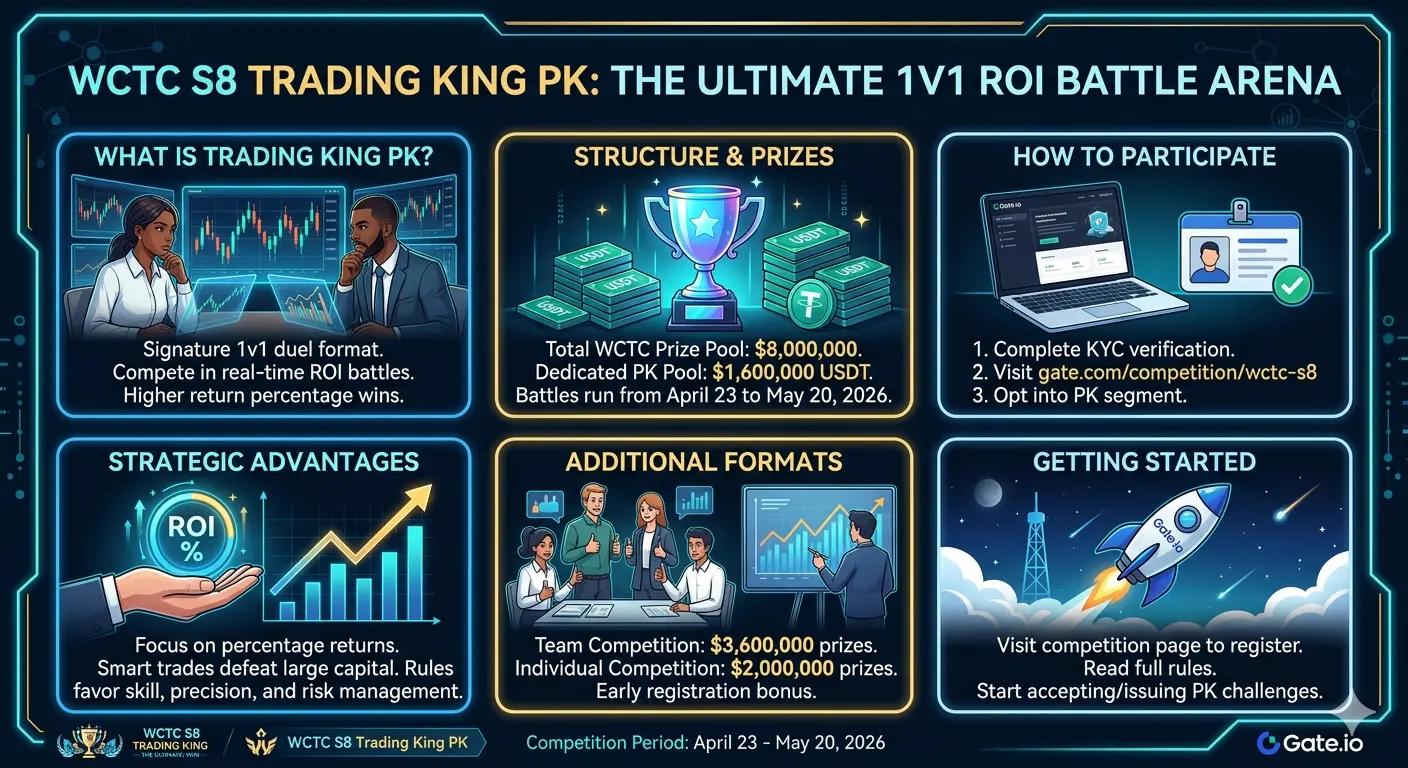
WCTC S8 Trading King PK: The Ultimate 1v1 ROI Battle Arena
The World Crypto Trading Competition Season 8 is now live, and the Trading King PK segment stands out as the most intense competitive format designed for traders who thrive under pressure. With zero entry barriers and real-time head-to-head battles, this is where trading legends are forged.
What is Trading King PK?
Trading King PK is Gate.io's signature 1v1 duel format where traders compete in real-time ROI battles. Unlike traditional trading competitions that reward cumulative volume or profit over weeks, PK battle
post-image
post-image
post-image
  • Reward
  • 4
  • Repost
  • Share
Dubai_Prince:
LFG 🔥
View More
#WCTCTradingKingPK
Advanced Multi-Timeframe Momentum Strategy for WCTC S8 Individual PK Competition
The Individual PK Competition in WCTC S8 demands a trading approach that balances aggressive return generation with disciplined risk management. This comprehensive strategy guide presents a multi-timeframe momentum system specifically optimized for the high-pressure environment of head-to-head trading battles where performance is measured over compressed time periods.
Core Strategy Philosophy
The foundation of this strategy rests on capturing explosive price movements while maintaining strict c
HighAmbition
#WCTCTradingKingPK
Advanced Multi-Timeframe Momentum Strategy for WCTC S8 Individual PK Competition
The Individual PK Competition in WCTC S8 demands a trading approach that balances aggressive return generation with disciplined risk management. This comprehensive strategy guide presents a multi-timeframe momentum system specifically optimized for the high-pressure environment of head-to-head trading battles where performance is measured over compressed time periods.
Core Strategy Philosophy
The foundation of this strategy rests on capturing explosive price movements while maintaining strict capital preservation protocols. Unlike traditional swing trading that might hold positions for days or weeks, PK competition trading requires rapid decision-making and quick profit realization. The strategy employs a three-layer confirmation system that filters noise and identifies high-probability momentum bursts across multiple timeframes.
Timeframe Architecture
The strategy utilizes four distinct timeframes working in concert. The monthly and weekly charts provide structural context for major support and resistance zones. The daily chart identifies the primary trend direction and key decision levels. The four-hour chart serves as the main execution timeframe where entry and exit signals are generated. Finally, the one-hour chart provides micro-structure for precise entry timing and stop-loss placement.
This multi-timeframe approach ensures that trades align with the broader market structure while allowing for tactical precision in execution. Trading against the higher timeframe trend significantly reduces win probability, so the strategy enforces strict trend alignment rules before any position is considered.
Technical Indicator Configuration
The primary momentum identification tool combines the Relative Strength Index with volume analysis. The RSI is configured with a 14-period setting on the four-hour chart, with overbought and oversold thresholds adjusted to 75 and 25 respectively to account for cryptocurrency market volatility. Volume confirmation requires the current candle to exceed the 20-period average volume by at least fifty percent, ensuring that momentum signals coincide with genuine market participation rather than low-liquidity noise.
A secondary confirmation layer employs the Moving Average Convergence Divergence indicator with standard 12, 26, and 9 period settings. The strategy requires MACD histogram alignment with price momentum, meaning that bullish entries only trigger when both price and MACD histogram are making higher lows, while bearish entries require both to make lower highs.
The third confirmation element tracks exponential moving averages with 20, 50, and 200 period settings. The strategy mandates that price action must respect the 20-period EMA as dynamic support in uptrends and resistance in downtrends. Entries are only permitted when price pulls back to test the 20 EMA and demonstrates rejection through candlestick patterns.
Entry Protocol
Long entries trigger when four conditions align simultaneously. First, the daily chart must show a clearly defined uptrend with higher highs and higher lows. Second, the four-hour RSI must pullback from overbought territory to the 40-50 zone, indicating a healthy correction within the trend. Third, the MACD histogram must show bullish divergence or flattening before resuming upward expansion. Fourth, price must touch or slightly pierce the 20-period EMA on the four-hour chart and form a reversal candlestick pattern such as a hammer, morning star, or bullish engulfing.
Short entries follow the inverse logic with corresponding bearish requirements. The daily trend must be downward, the four-hour RSI must bounce from oversold to the 50-60 zone, MACD must show bearish characteristics, and price must reject from the 20 EMA with appropriate bearish candlestick confirmation.
Position Sizing and Risk Management
Capital allocation follows a dynamic position sizing model based on account equity and volatility conditions. The base position size starts at two percent of total trading capital per trade. This percentage increases to three percent when the Average True Range over fourteen periods falls below its 50-period average, indicating compressed volatility that often precedes explosive moves. Conversely, position size reduces to one percent when ATR exceeds its average by more than fifty percent, signaling elevated volatility and increased risk.
Stop-loss placement utilizes a dual-layer approach. The initial stop-loss sits at the swing low prior to entry for long positions or the swing high for short positions, ensuring that the trade invalidation point represents a genuine structural break rather than normal market noise. A secondary trailing stop activates once the position achieves a risk-to-reward ratio of one-to-one, locking in profits while allowing winners to run.
Profit Target Framework
The strategy employs a tiered profit-taking system designed to capture momentum while protecting gains. The first profit target sits at a one-point-five risk-to-reward ratio, where twenty-five percent of the position is closed. This initial partial exit ensures that the trade becomes risk-free while maintaining exposure to further gains. The second target at a two-point-five risk-to-reward ratio triggers closure of another fifty percent of the position. The final twenty-five percent trails with a stop-loss set at the second target level, capturing extended moves while protecting accumulated profits.
PK Competition Specific Adaptations
The Individual PK format introduces unique constraints that require strategic modifications. Competition rounds operate on fixed timeframes, typically ranging from hours to days, unlike normal trading where positions can be held indefinitely. This compressed timeline necessitates more aggressive entry criteria and faster profit realization.
The strategy adapts by reducing the confirmation period requirements. While standard implementation waits for daily candle closes, competition trading utilizes four-hour closes with one-hour micro-confirmation. This accelerates signal generation while maintaining structural validity.
Additionally, the PK environment benefits from correlation analysis across multiple trading pairs. When Bitcoin demonstrates strong momentum, altcoins often follow with amplified moves. The strategy monitors Bitcoin's four-hour structure as a leading indicator, entering altcoin positions only when Bitcoin confirms directional bias. This correlation filter significantly improves win rates by ensuring trades align with broad market sentiment.
Psychological Discipline Protocols
High-stakes competition trading amplifies emotional responses that destroy rational decision-making. The strategy incorporates specific protocols to maintain psychological equilibrium. Pre-session preparation includes reviewing trade rules, visualizing execution scenarios, and setting maximum daily loss limits at four percent of account equity. Once this limit triggers, all trading ceases regardless of market conditions or perceived opportunities.
During active trading, the strategy enforces a mandatory five-minute break after any losing trade. This cooling-off period prevents revenge trading and emotional escalation. Similarly, after three consecutive winning trades, a ten-minute break is required to prevent overconfidence and sloppy execution.
Market Condition Filters
Not all market environments support momentum trading effectively. The strategy identifies three distinct market regimes and adjusts accordingly. Trending markets with clear directional bias and healthy pullbacks represent ideal conditions where the strategy operates at full capacity. Choppy, range-bound markets with overlapping price action trigger a reduction in position size and wider stop-loss placement. Strongly trending markets with parabolic price action activate aggressive profit-taking and trailing stop protocols to protect against sudden reversals.
The Average Directional Index serves as the primary regime identification tool. Readings above thirty indicate trending conditions suitable for full strategy deployment. Readings between twenty and thirty suggest choppy conditions requiring caution. Readings below twenty signal ranging markets where the strategy remains inactive.
Execution Checklist
Every trade requires completion of a pre-entry checklist ensuring all conditions align. The checklist verifies trend alignment across timeframes, indicator confirmation, volume validation, risk-to-reward ratio minimum of one-to-two, and position size calculation. No trade proceeds without checklist completion, eliminating impulsive decisions and emotional overrides.
Post-trade analysis follows every closed position, documenting entry and exit rationale, emotional state, market conditions, and lessons learned. This continuous feedback loop drives strategy refinement and performance improvement over the competition period.
Advanced Techniques for Competitive Edge
Experienced traders can enhance the core strategy with additional techniques. Order flow analysis through volume profile identifies high-probability reaction zones where institutional participation concentrates. Market structure analysis tracks break of structure and change of character patterns that signal trend continuation or reversal. Multiple timeframe confluence zones where daily, four-hour, and one-hour support or resistance align provide exceptional risk-to-reward opportunities.
Correlation arbitrage between spot and perpetual futures markets occasionally presents risk-free profit opportunities during funding rate anomalies. While these situations are rare, monitoring funding rates every eight hours can capture additional returns without directional risk.
Performance Expectations and Reality
Successful implementation of this strategy in PK competition environments typically produces win rates between forty-five and fifty-five percent. While this appears modest, the asymmetric risk-to-reward structure ensures profitability. Average wins should exceed average losses by a factor of two to one or greater. This mathematical edge, compounded over multiple trades, generates the returns necessary for competitive performance.
Traders must abandon the pursuit of perfect trades and high win rates. Consistency, discipline, and adherence to proven mathematical edges outperform intuitive genius over time. The strategy provides the framework, but execution discipline determines ultimate success.
Final Implementation Notes
This strategy represents a complete trading system, not a collection of isolated indicators. Successful implementation requires thorough backtesting on historical data, paper trading to verify execution capability, and gradual capital deployment as proficiency develops. Modifying individual elements without understanding their systemic relationships typically degrades performance rather than improving it.
The WCTC S8 Individual PK Competition rewards traders who combine technical skill with psychological resilience. This strategy provides the technical foundation, but consistent application under pressure separates winners from participants. Master the system, trust the process, and let probability work in your favor over the competition timeline.
repost-content-media
  • Reward
  • 1
  • Repost
  • Share
CryptoDiscovery:
To The Moon 🌕
#WCTCTradingKingPK
WCTC S8 Global Trading Competition: Your Gateway to Glory and RewardsThe eighth season of Gate's World Crypto Trading Championship has officially commenced, bringing together elite traders from across the globe in a battle for supremacy. With a staggering total prize pool reaching up to7,200,000 USDT, this is not merely a competition but a celebration of trading excellence where skill meets opportunity.
The championship unfolds across multiple dimensions, offering participants various pathways to showcase their abilities and claim substantial rewards. The Team Trading Conte
GT-0,4%
post-image
post-image
  • Reward
  • 2
  • Repost
  • Share
CryptoDiscovery:
To The Moon 🌕
View More
#WCTCTradingKingPK
Advanced Multi-Timeframe Momentum Strategy for WCTC S8 Individual PK Competition
The Individual PK Competition in WCTC S8 demands a trading approach that balances aggressive return generation with disciplined risk management. This comprehensive strategy guide presents a multi-timeframe momentum system specifically optimized for the high-pressure environment of head-to-head trading battles where performance is measured over compressed time periods.
Core Strategy Philosophy
The foundation of this strategy rests on capturing explosive price movements while maintaining strict c
  • Reward
  • 1
  • Repost
  • Share
CryptoDiscovery:
To The Moon 🌕
Load More