

Trade
Basic
Futures
Futures
Hundreds of contracts settled in USDT or BTC
TradFi
Gold
Trade global traditional assets with USDT in one place
Options
Hot
Trade European-style vanilla options
Unified Account
Maximize your capital efficiency
Demo Trading
Futures Kickoff
Get prepared for your futures trading
Futures Events
Participate in events to win generous rewards
Demo Trading
Use virtual funds to experience risk-free trading
Earn
Launch
CandyDrop
Collect candies to earn airdrops
Launchpool
Quick staking, earn potential new tokens
HODLer Airdrop
Hold GT and get massive airdrops for free
Launchpad
Be early to the next big token project
Alpha Points
Trade on-chain assets and enjoy airdrop rewards!
Futures Points
Earn futures points and claim airdrop rewards
Investment
Simple Earn
Earn interests with idle tokens
Auto-Invest
Auto-invest on a regular basis
Dual Investment
Buy low and sell high to take profits from price fluctuations
Soft Staking
Earn rewards with flexible staking
Crypto Loan
0 Fees
Pledge one crypto to borrow another
Lending Center
One-stop lending hub
VIP Wealth Hub
Customized wealth management empowers your assets growth
Private Wealth Management
Customized asset management to grow your digital assets
Quant Fund
Top asset management team helps you profit without hassle
Staking
Stake cryptos to earn in PoS products
Smart Leverage
New
No forced liquidation before maturity, worry-free leveraged gains
GUSD Minting
Use USDT/USDC to mint GUSD for treasury-level yields

More





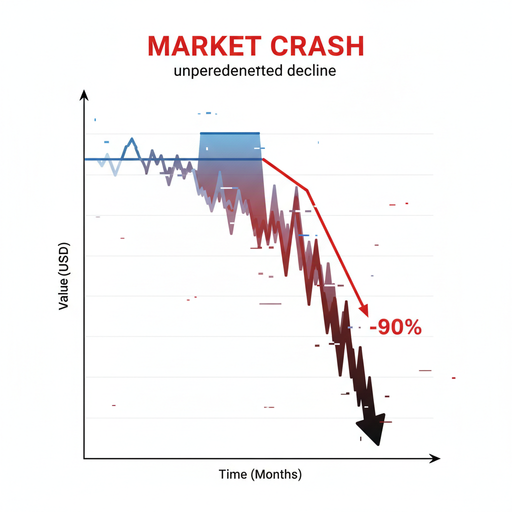

When the Death Cross Forms: Understanding a Critical Market Signal
Recent market turbulence has brought renewed attention to a technical pattern that investors and analysts watch closely: the death cross. This particular chart formation carries significant weight in financial markets because of its historical correlation with prolonged downturns. Understanding what triggers a death cross and how it functions can help investors better navigate uncertain market conditions.
The Foundation: How Moving Averages Work
Before exploring what makes the death cross pattern so significant, it’s important to understand the technical tool on which it’s based: the simple moving average, or SMA. A moving average represents the average price of a stock, index, or fund calculated over a specific timeframe. As new price data comes in, the average continuously recalculates, creating a smooth line that investors can overlay on price charts.
Two particular moving averages dominate technical analysis: the 50-day moving average and the 200-day moving average. The 50-day SMA captures short-term price momentum, responding quickly to recent market moves. The 200-day SMA, by contrast, reveals the long-term trend, smoothing out daily volatility to show the broader directional picture. When the 50-day line sits above the 200-day line, it typically signals positive momentum—what analysts call a bullish setup. When the relationship reverses, with the 200-day line positioned above the 50-day line, it suggests bearish conditions are taking hold.
These moving averages matter because they transform raw price data into visual signals. Rather than reacting to every daily fluctuation, investors can see whether the overall trend is rising or falling, and at what speed momentum is shifting.
The Death Cross Pattern: When Trends Reverse
The death cross emerges at a critical juncture: when the 50-day moving average crosses below the 200-day moving average. This crossover event is visually dramatic on a chart—the short-term line falls through the long-term line—but more importantly, it represents a fundamental shift in market psychology. Buyers have been replaced by sellers; optimism has given way to caution.
Historically, this pattern has preceded some of the most severe market declines in modern history. The 1929 stock market crash, the 1938 Roosevelt Recession, the oil crisis-driven collapse of 1974, and the 2008 financial crisis all featured the death cross forming in the weeks or months before accelerating losses. While technical analysis relies on historical patterns and past performance—and therefore cannot predict the future with certainty—the consistency of the death cross preceding bear markets is difficult to ignore.
Currently, major U.S. stock indices are approaching perilously close to forming this pattern. For the S&P 500 and Nasdaq, the gap between their 50-day and 200-day moving averages has narrowed significantly. The Dow Jones Industrial Average has already displayed the pattern, as have several of the largest technology stocks. This convergence means a death cross formation could arrive in the near term for indices that haven’t yet displayed it.
Historical Warnings: When the Death Cross Appeared Before
The death cross isn’t theoretical—it’s a pattern with proven predictive power. During the 1929 crash, investors who recognized the pattern faced an unfolding catastrophe. In 1938, economic contraction followed the technical signal. The oil embargo shock of 1974 saw the pattern emerge as commodity prices spiraled and stagflation gripped economies. Most recently, the 2008 financial crisis was preceded by a death cross that marked the transition from a speculative bubble to a deflationary collapse.
What these historical episodes share is that once the death cross formed, extended downside followed. While a bear market is technically defined as a 20% decline from recent highs, many market historians note that the death cross typically appears well before losses reach that magnitude. This makes it a kind of early-warning system—not perfect, but historically reliable enough to command serious attention from portfolio managers and risk strategists.
What This Means for Today’s Market
For investors watching current conditions, the implications are sobering. When technical indicators that have preceded major market downturns begin signaling similar patterns, prudent risk management suggests taking notice. This doesn’t necessarily mean abandoning equity positions entirely, but it does suggest reviewing portfolio composition, examining concentration risk, and considering whether defensive positioning might be warranted.
The death cross signals a transition point. It indicates that the momentum supporting rising prices has exhausted itself, and the burden of proof has shifted to the bulls. Without fresh positive catalysts, the technical setup becomes increasingly vulnerable to further selling pressure. Given how close major indices are to displaying this pattern, investors would be wise to understand what it means and consider its implications for their own investment strategies going forward.