

Trade
Basic
Futures
Futures
Hundreds of contracts settled in USDT or BTC
TradFi
Gold
Trade global traditional assets with USDT in one place
Options
Hot
Trade European-style vanilla options
Unified Account
Maximize your capital efficiency
Demo Trading
Futures Kickoff
Get prepared for your futures trading
Futures Events
Participate in events to win generous rewards
Demo Trading
Use virtual funds to experience risk-free trading
Earn
Launch
CandyDrop
Collect candies to earn airdrops
Launchpool
Quick staking, earn potential new tokens
HODLer Airdrop
Hold GT and get massive airdrops for free
Launchpad
Be early to the next big token project
Alpha Points
Trade on-chain assets and enjoy airdrop rewards!
Futures Points
Earn futures points and claim airdrop rewards
Investment
Simple Earn
Earn interests with idle tokens
Auto-Invest
Auto-invest on a regular basis
Dual Investment
Buy low and sell high to take profits from price fluctuations
Soft Staking
Earn rewards with flexible staking
Crypto Loan
0 Fees
Pledge one crypto to borrow another
Lending Center
One-stop lending hub
VIP Wealth Hub
Customized wealth management empowers your assets growth
Private Wealth Management
Customized asset management to grow your digital assets
Quant Fund
Top asset management team helps you profit without hassle
Staking
Stake cryptos to earn in PoS products
Smart Leverage
New
No forced liquidation before maturity, worry-free leveraged gains
GUSD Minting
Use USDT/USDC to mint GUSD for treasury-level yields

More





How to Trade with $100: A Realistic Guide to Small-Account Day Trading
One morning, a young woman named Emma checked her banking app and noticed her account balance had dropped faster than expected. For a moment, she wondered if a single lucky trading position could reverse her situation. That impulse—reaching for a quick win when finances feel tight—is exactly why the question “How to trade with $100?” deserves an honest answer. Learning how to trade with real money is challenging, but doing it safely with limited capital requires different expectations.
This guide separates fact from hope. You technically can execute trades with $100, but practical realities—broker rules, trading costs, and market friction—make turning $100 into consistent profit extremely difficult. A smarter approach treats that $100 as education money, not wealth-creation capital. The real learning how to trade comes from disciplined practice, strict risk management, and understanding costs, not from the size of your account.
The Core Challenge: What $100 Reveals About Small-Account Trading
When you’re learning how to trade with a minimal balance, you immediately encounter structural barriers. Yes, many brokers accept $100 accounts. No, that doesn’t mean $100 is an ideal starting point.
The headline question sounds simple: can $100 be enough to trade actively? In reality, three separate questions hide inside:
The short answers: yes, you can trade; no, don’t expect income; and only if you treat it as tuition, not as seed capital that must grow fast.
Platform Rules That Constrain $100 Trading
Before you commit capital, understand how brokers and regulators view small accounts. Learning how to trade involves navigating these constraints.
The Pattern Day Trader (PDT) Rule
U.S. stock trading has a critical rule: if your account has less than $25,000 and you execute four or more day trades within five business days, you’re flagged as a pattern day trader. Once flagged, your account faces trading restrictions. This rule exists to protect retail traders but also blocks frequent small-account trading. If you’re working with $100, hitting four trades could trigger restrictions. This alone changes how you approach trading strategy.
Commissions, Spreads, and Hidden Costs
“Zero-commission trading” sounds helpful until you recognize what still costs you money. Every trade carries invisible friction:
On a $100 account, if each trade loses 2–3% to spread and slippage, your capital disappears quickly. Learning how to trade means understanding that these micro-costs matter far more on small accounts than on large ones.
Margin and Leverage: A Double-Edged Tool
Some brokers offer margin or leverage, letting you control $500 or $1,000 with a $100 deposit. This seems attractive until losses happen. Leverage magnifies both gains and losses, and can trigger margin calls or forced liquidations without warning. Margin is not a shortcut; it’s a risk multiplier that requires discipline most beginners lack.
The Psychology of Trading with Limited Capital
Risk psychology changes when money feels scarce. Learning how to trade also means learning how to think clearly under stress.
When Small Can Mean Educational
A $100 account can be an affordable classroom. You practice order entry, test your emotional control, and learn what it feels like to watch real money move. If your goal is to build discipline and test a process, $100 buys meaningful practice without catastrophic consequences.
When Small Becomes Desperate
If that $100 is your last safety net or emergency fund, putting it at risk is dangerous. Day trading is high-stress, and stress combined with financial pressure creates poor decisions. Psychological resilience requires financial resilience first.
Building a Learning Framework: How to Trade Smart with $100
If you decide to proceed, structure the experiment like a researcher, not a gambler.
Start with Paper Trading
Before using real money, practice on a simulated platform. Execute 50–100 paper trades, document each one, and refine your entry and exit rules. This costs nothing and teaches execution discipline. Many traders skip this step and regret it. Only after paper trading shows consistent process should you move to real capital.
Define a Process-Based Goal
Don’t aim to turn $100 into $200. Instead, define success as:
Process-based goals shift your mindset from chasing returns to building skills.
Set Strict Per-Trade Risk Limits
With $100, cap risk at $1–$2 per trade. Yes, this means small gains. But it also trains you to accept losses gracefully and avoid account ruin. Small losses are the tuition of learning how to trade effectively.
Keep a Trading Journal
Record entry reason, position size, stop-loss, take-profit, and outcome for every single trade. Over 50–100 trades, patterns emerge. You’ll see whether your edge is real or illusory. This journal is more valuable than the money itself.
Practical Constraints: Where $100 Actually Works
Limited capital does have realistic uses. Learning how to trade in these niches can be effective:
Fractional Shares and Micro-Positions
Modern brokers offer fractional shares, letting you own small slices of expensive stocks with your $100. For long-term or swing-based strategies, this is powerful. For day trading, fractional shares don’t solve the PDT rule or slippage problem, but they do reduce friction.
Single-Instrument Focus
Use $100 to master one clean setup: a liquid ETF, a forex micro account, or micro futures (if allowed by your broker). One instrument reduces noise and helps you learn predictable behavior. Complex multi-position trading is harder; simple, repetitive setups are more educational.
Selecting Low-Friction Brokers
Choose platforms with genuinely low fees for micro accounts. Compare broker options, read margin agreements, and verify that trading costs won’t swallow tiny gains. A broker charging $1 per trade can consume 100% of a $1 profit.
Realistic Outcomes: The Trading Experiment Sequence
If you insist on risking $100, run it like a small science project.
Phase 1: Hypothesis and Planning
Write down your belief: “I expect to achieve X% average return per trade on instrument Y over Z trades.” Don’t promise unrealistic returns. The hypothesis is about process, not outcomes.
Phase 2: Paper Trading and Refinement
Document 100 paper trades. When mistakes happen (and they will), notice them and adjust. This stage builds the muscle memory of learning how to trade without financial consequence.
Phase 3: Live Trading with Micro-Risk
Fund your account with $100 and use the same micro-risk per trade ($1–$2). Trade 50–100 live trades. Document every decision, mistake, and outcome. Stay disciplined; don’t chase losses.
Phase 4: Analysis and Decision
After 50–100 live trades, analyze results. Did your edge hold after fees and slippage? If yes, consider scaling slowly and only with capital you can afford to lose. If no, move lessons to other financial areas: budgeting, side income, or long-term investing.
Better Uses for $100: Alternatives Worth Considering
For most people, $100 yields higher expected returns through other channels.
Invest in Trading Education
Spend $100 on a focused course, a high-quality book, or a mentor session covering risk management, position sizing, and trading psychology. Education compounds in ways that small trading accounts rarely do. A course teaching you to avoid mistakes is worth more than $100 lost to learning how to trade the hard way.
Build Your Emergency Fund
If you lack three to six months of essential expenses saved, use the $100 to start or strengthen that buffer. Financial resilience is the foundation that makes later investing possible without desperation.
Dollar-Cost Averaging into ETFs
Invest the $100 into low-cost, diversified index funds through fractional shares. Automate future contributions. Long-term compounding beats the randomness of small, high-risk trading.
Tax and Regulatory Reality Check
Even small profits carry tax consequences. Day trading generates short-term capital gains, often taxed at ordinary income rates (up to 37% in the U.S.). If you make $50 in profit, you might owe $15 or more in taxes, leaving $35. This eats into small gains and is often overlooked by beginning traders learning how to trade.
Red Flags: When You Shouldn’t Trade with $100
Skip day trading if:
In these cases, building resilience through budgeting, consistent saving, and steady investing will repay you more reliably than speculation.
Case Studies: Contrasting Approaches to $100
Sarah’s Disciplined Path
Sarah wanted to learn trading. She opened a paper account, practiced for three months, then funded a live $100 account strictly as “skin in the game.” She capped risk at $1 per trade, documented every trade, and stopped after 50 trades to analyze results. Her goal was learning, not profit. Result: she improved her timing, gained emotional control, and eventually moved into swing trading with a larger, better-capitalized account. She succeeded because she treated trading as a skill to practice, not a quick fix.
Miguel’s Desperate Gamble
Miguel saw a social media post claiming a pattern that triples accounts in days. He put his last $100 into leveraged trades, ignored stop-losses, and lost everything within two weeks. The money’s loss mattered, but the damage to his confidence and his household’s financial security mattered more. This is why learning how to trade must start with safety nets in place.
Key Questions Answered: Trading with $100
Can I really open an account with $100?
Yes, most modern brokers allow it. Some have no minimum at all. However, account size interacts with trading rules (PDT rule), fees, slippage, and margin policies, creating structural constraints.
How can I practice learning how to trade without risking $100?
Use paper trading accounts or simulated environments offered by brokers. Practice 100+ trades on paper, document results, and only move to real money after consistent process development.
What’s the most realistic outcome if I trade $100 for three months?
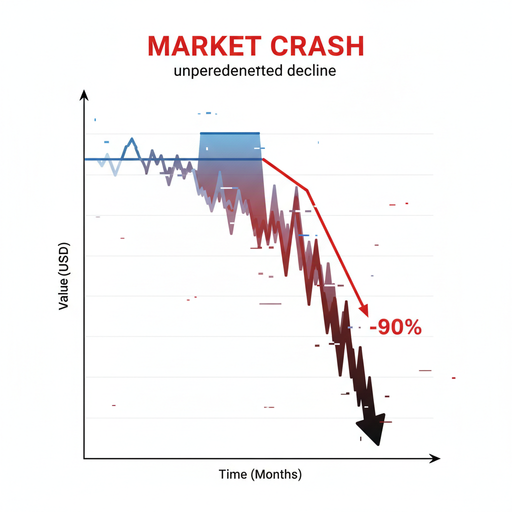
Expect to lose 30–50% on average. Market costs, learning mistakes, and slippage take a toll. Treat losses as tuition. If you keep your account intact, you’ve already won by surviving the learning phase without ruin.
What fees should I expect?
Zero-commission brokers still charge through spreads (1–3 pips on forex, $0.01–$0.05 on stocks), slippage, and margin interest. On $100, these costs proportionally hurt more.
Is there a way to avoid the PDT rule on $100?
The PDT rule applies to accounts under $25,000 that execute four or more day trades in five business days. Options: trade fewer than four times per week, focus on swing trades (positions held overnight), trade forex or futures (different rules), or avoid the restriction by moving to $25,000+.
Final Guidance: Making the Choice
If you decide $100 is truly disposable learning money:
If $100 is essential for living expenses or emergencies:
Don’t trade it. Build your emergency fund first. Learning how to trade can wait until you have financial cushion.
The Real Payoff
The true value of risking $100 isn’t whether it becomes $200. It’s whether you learn habits that transfer into better money management overall. Discipline, journaling, position sizing, and emotional control—these skills apply to investing, negotiating salary, or managing a budget. That’s worth far more than the $100 itself.
Learning how to trade with limited capital is possible. It’s just not a path to quick wealth. Treat it as structured education, protect your essentials first, document relentlessly, and let learning be the main return. Trade thoughtfully, and you’ll come out ahead.