

Trade
Trading Type
Spot
Trade crypto freely
Alpha
Points
Get promising tokens in streamlined on-chain trading
Pre-Market
Trade new tokens before they are officially listed
Margin
Magnify your profit with leverage
Convert & Block Trading
0 Fees
Trade any size with no fees and no slippage
Leveraged Tokens
Get exposure to leveraged positions simply
Futures
Futures
Hundreds of contracts settled in USDT or BTC
Options
HOT
Trade European-style vanilla options
Unified Account
Maximize your capital efficiency
Demo Trading
Futures Kickoff
Get prepared for your futures trading
Futures Events
Participate in events to win generous rewards
Demo Trading
Use virtual funds to experience risk-free trading
Earn
Launch
CandyDrop
Collect candies to earn airdrops
Launchpool
Quick staking, earn potential new tokens
HODLer Airdrop
Hold GT and get massive airdrops for free
Launchpad
Be early to the next big token project
Alpha Points
NEW
Trade on-chain assets and enjoy airdrop rewards!
Futures Points
NEW
Earn futures points and claim airdrop rewards
Investment
Simple Earn
Earn interests with idle tokens
Auto-Invest
Auto-invest on a regular basis
Dual Investment
Buy low and sell high to take profits from price fluctuations
Soft Staking
Earn rewards with flexible staking
Crypto Loan
0 Fees
Pledge one crypto to borrow another
Lending Center
One-stop lending hub
VIP Wealth Hub
Customized wealth management empowers your assets growth
Private Wealth Management
Customized asset management to grow your digital assets
Quant Fund
Top asset management team helps you profit without hassle
Staking
Stake cryptos to earn in PoS products
BTC Staking
HOT
Stake BTC and earn 10% APR
GUSD Minting
Use USDT/USDC to mint GUSD for treasury-level yields


More


- Trending TopicsView More
5.47K Popularity
560.02K Popularity
62.34K Popularity
2.53K Popularity
806 Popularity
- Hot Gate FunView More
- MC:$4.06KHolders:22.09%
- MC:$3.58KHolders:20.00%
- MC:$3.52KHolders:20.00%
- MC:$3.52KHolders:20.01%
- MC:$3.52KHolders:20.00%




- Pin
Bitcoin, to attract institutional investors in 2026, must reinvent itself as a 'profit-generating asset'
Source: DigitalToday Original Title: Bitcoin, by 2026, Holding Alone Won’t Be Enough… Key to Value and Revenue Generation Original Link: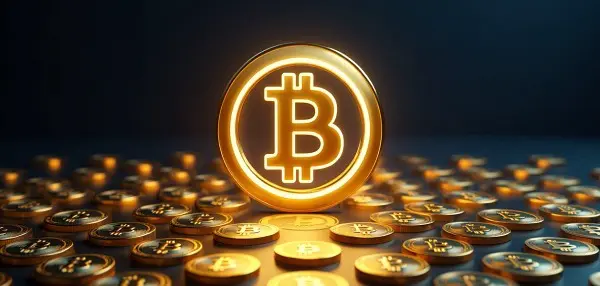
The upward trend of Bitcoin(BTC) has sharply declined in the fourth quarter of 2025, and market outlook has turned downward again. Contrary to expectations that institutional investors would pour in, reaching all-time highs, Bitcoin is now in a situation where even recovering previous peaks is uncertain. Experts believe that unless Bitcoin evolves from a simple ‘digital gold’ to an asset that generates profits, it will be difficult to attract the attention of institutional investors.
According to the blockchain industry, a co-founder of a protocol stated that in early 2025, institutional Bitcoin purchases were active, but over time, yield-generating assets such as government bonds, corporate credit, and artificial intelligence(AI) stocks emerged as alternatives, decreasing Bitcoin’s appeal. He emphasized, “As Bitcoin’s rise halted, investors lost the reason to hold assets that do not provide returns,” and stressed that “Bitcoin should now become an asset that ‘generates income,’ not just a ‘holding asset.’”
He argued that to re-attract institutional investors in 2026, a regulated ‘cash-plus Bitcoin strategy(cash-plus Bitcoin strategies)’ is necessary. “Institutions are expecting a 2-5% annual return through transparent and collateralized strategies, not a 20% DeFi yield,” he explained. “For Bitcoin to establish itself as a core reserve asset from just a holding asset, this needs to be met.”
For Bitcoin to transition into a productive asset, it must serve as collateral supporting government bonds or credit. “Bitcoin needs to evolve from merely a holding asset to a funding asset for portfolios,” he said, highlighting that “this is the path to developing a versatile asset that can be used in both traditional financial markets and on-chain markets.” However, he also added that this requires strong transparency standards, on-chain reserve proof, and standardized risk management systems.