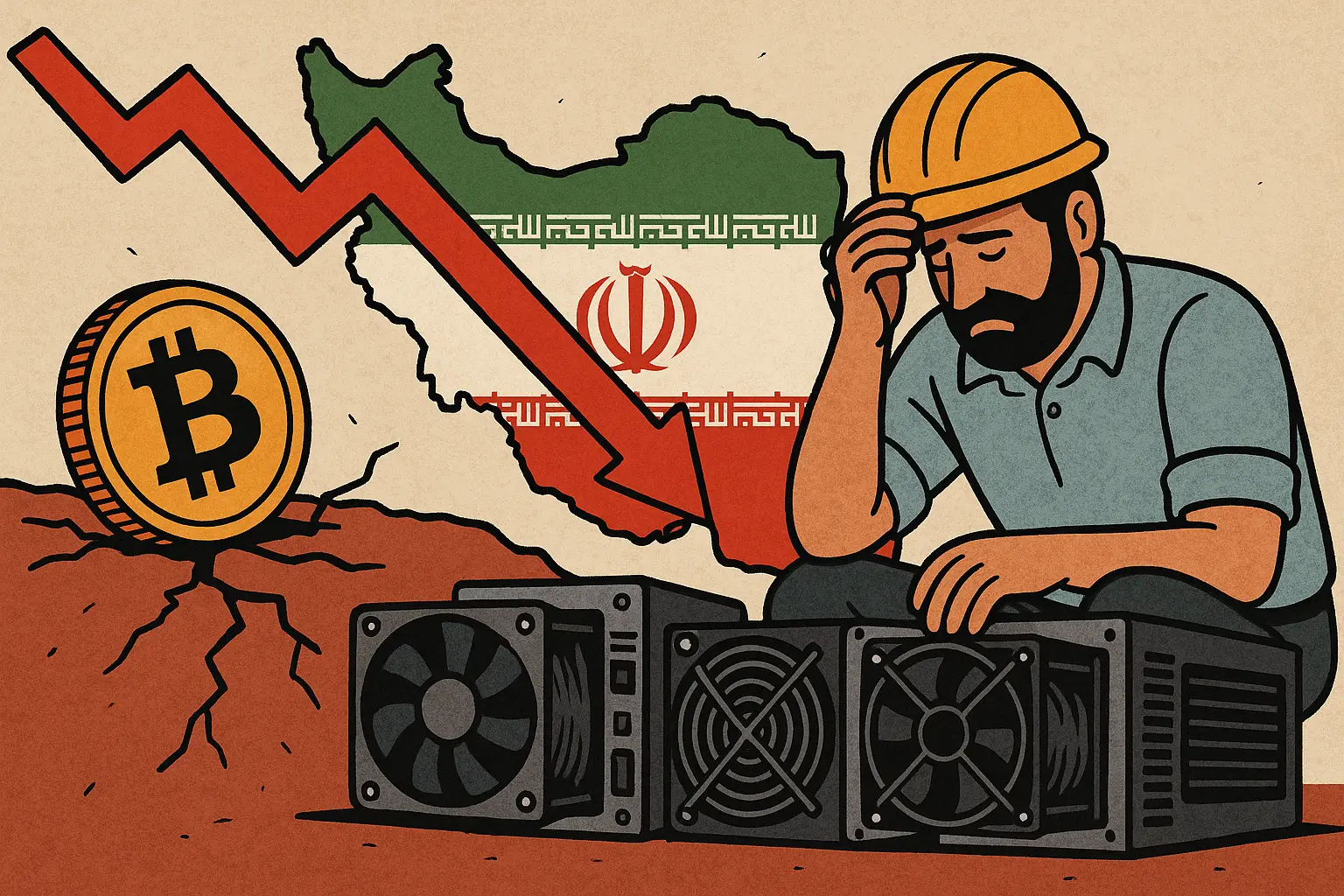
According to the latest quarterly report released by Luxor Technology Market Director Ian Philpot on the Hashrate Index, Iran’s Bitcoin hashrate dropped to 2 EH/s over the past quarter, a decline of 77%. Analysts emphasized that the main driver behind the global decline in Bitcoin hashrate was the sharp fall in the Bitcoin price, which compressed mining profits—not conflict in the Middle East.
Iran’s Hashrate Plunges 77%: Impact Highly Concentrated, Neighboring Countries Unaffected
 (Source: Hashrate Index)
Philpot’s report clearly points out that the impact of this hashrate drop is highly concentrated within Iran. In February this year, the United States and Israel launched airstrikes on Iran, after which the conflict escalated immediately, with both sides carrying out multiple rounds of retaliatory attacks. It is estimated that Iran has about 427k active Bitcoin mining machines, and amid ongoing conflict, local mining operations have been severely disrupted.
Although the United Arab Emirates and Oman are also in the Middle East region, their Bitcoin hashrate has not been affected in any way so far. Philpot said, “The impact of this event is limited to Iran; neighboring countries—the UAE and Oman—remain stable. Global hashrate stays around 1,000 EH/s, because no region’s hashrate is sufficient to threaten the network’s continuity. Regional interruptions only reallocate hashrate, rather than destroying it.”
Both sides of the U.S. and Iran reached a two-week ceasefire agreement this Tuesday, but whether Iran’s hashrate can recover during the ceasefire still depends on the pace of repairs to local infrastructure.
The Real Reason for the Global Hashrate Decline: Miners’ Profits Collapse, Large-Scale Retirement of Older Equipment
Philpot emphasized that the quarterly decline in global Bitcoin hashrate is mainly driven by a significant drop in the Bitcoin price. Bitcoin has fallen by more than 45% from its all-time high of $126k set in October last year, leading to a substantial contraction in mining profitability, and the hashrate price has dropped to a historical low.
Structural Causes Behind the Global Hashrate Decline
Old equipment gross margin turns negative: The gross margin of aging mining rigs (i.e., equipment with relatively high energy consumption) that are less efficient than the 25 joule-per-terahash standard has turned negative, forcing large-scale shutdowns and retirements
Scale of marginal hashrate going offline: Estimated marginal hashrate of about 252 EH/s is currently offline, mainly consisting of older hardware
Selective deployment of modern hardware: Large mining operators are concentrating resources on more efficient modern equipment, prioritizing deployment to regions where profitability can be maintained over the long term
Cyclical规律: Philpot noted that mining profitability, rather than energy costs or regulatory frameworks, drives the deployment and retirement of mining rigs
Global Hashrate Geographic Pattern: The United States, Russia, and China Dominate 65.6%
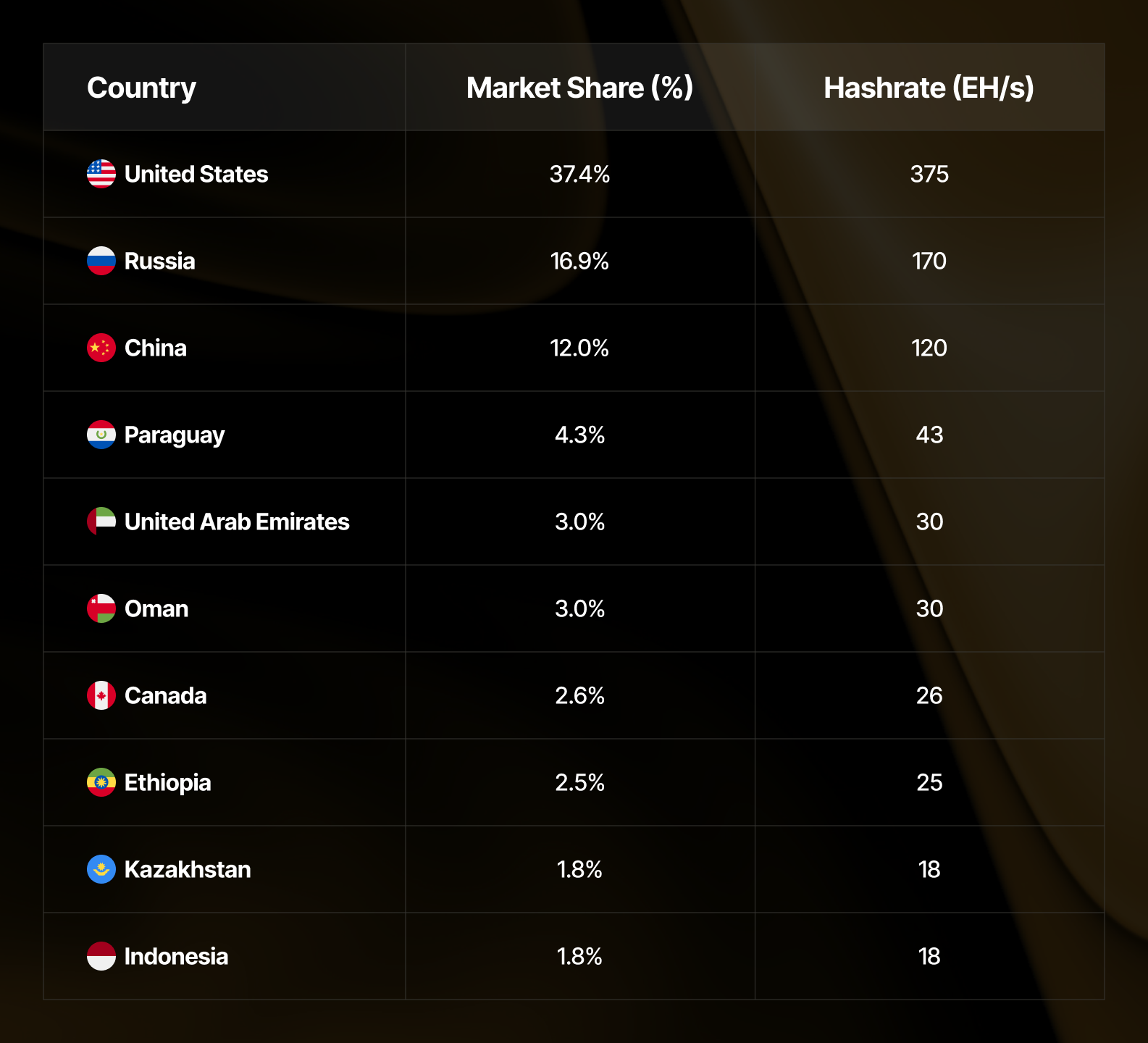
According to the Hashrate Index heatmap, the United States leads global Bitcoin hashrate with over 37% share. Russia ranks second at around 17%, and China is third with 12%. The three countries combined control 65.6% of global Bitcoin hashrate.
The overall scale of large hashrate operators is roughly steady, but internal composition is undergoing a structural shift: older equipment continues to be retired, while modern, efficient hardware is selectively deployed to regions with stronger cost competitiveness. Canada’s hashrate has declined slightly quarter-over-quarter, but it still remains in positive year-over-year growth. Philpot interprets this as a signal of efficiency optimization rather than an indication of capital outflows.
Frequently Asked Questions
Does Iran’s Bitcoin hashrate plunge of 77% pose a threat to global Bitcoin network security?
According to the Hashrate Index report, although Iran’s hashrate has fallen from about 9 EH/s to 2 EH/s, global hashrate still remains at roughly 1,000 EH/s. Philpot explicitly stated that no single region’s hashrate is currently sufficient to threaten the continuity of the Bitcoin network; regional interruptions would only redistribute hashrate to other regions and would not affect overall network security.
Why does global Bitcoin hashrate decline even in regions without conflict impacts?
The quarterly decline in global hashrate (5.8%) is mainly due to Bitcoin’s price falling by more than 45% from the historical high of $126k, greatly compressing mining profitability. Old equipment whose efficiency fails to meet standards has turned gross margin negative; as a result, estimated marginal hashrate of about 252 EH/s is taken offline. Conflict is not the main cause.
Which countries currently dominate the global Bitcoin hashrate distribution?
According to the Hashrate Index heatmap, the United States, with over 37% share, leads global Bitcoin hashrate. Russia accounts for about 17%, and China about 12%. Together, the three countries control 65.6% of global hashrate. The United States further consolidates its leading position in this round of geographic hashrate reorganization.
Disclaimer: The information on this page may come from third parties and does not represent the views or opinions of Gate. The content displayed on this page is for reference only and does not constitute any financial, investment, or legal advice. Gate does not guarantee the accuracy or completeness of the information and shall not be liable for any losses arising from the use of this information. Virtual asset investments carry high risks and are subject to significant price volatility. You may lose all of your invested principal. Please fully understand the relevant risks and make prudent decisions based on your own financial situation and risk tolerance. For details, please refer to
Disclaimer.


