Omni Network: Building the Next Generation of Interoperability for Ethereum Rollups

Beginner
Quick Reads
Last Updated 2026-03-30 02:17:58
Reading Time: 1m
Unlike traditional bridge protocols, Omni features a Layer 1 architecture that delivers a dedicated messaging channel and redefines coordination and security frameworks. This approach provides developers and users with a streamlined, unified interactive experience.

A Blockchain Network Engineered for Modular Scalability


(Source: OmniFDN)

As Ethereum’s Layer 2 scaling strategy continues to take shape, rollup solutions have become the industry standard. Yet these rollups often function as isolated silos, making seamless interoperability a major challenge. The Omni Network seeks to eliminate the barriers between rollups, delivering true cross-chain synchronization and native interoperability. Unlike traditional bridge protocols, Omni is architected as a Layer 1 network—providing not just a message transmission channel but also a redesigned coordination and security framework. This enables developers and users to benefit from a more efficient and cohesive on-chain experience.

Security Backed by EigenLayer Integration

Omni’s security model doesn’t rely solely on its own design. Instead, it incorporates EigenLayer’s Restaked ETH model, allowing nodes to simultaneously stake ETH and OMNI tokens to participate in network consensus—a dual-layer protection approach. This architecture enhances resistance to attacks and ties Omni’s security costs directly to the Ethereum mainnet, ensuring enhanced stability and resilience.

At the protocol layer, Omni leverages CometBFT consensus (formerly known as Tendermint), together with ABCI++ and the Engine API, to achieve confirmation times measured in seconds. The platform supports delegated staking and modular client expansion, creating significant potential for future upgrades.

XMsg Protocol: High-Speed Cross-Rollup Messaging

One of Omni’s most distinctive features is its XMsg (Cross-Rollup Message) protocol standard. XMsg is more than a message transport layer—it encompasses authentication, packaging, consensus, and submission as a complete protocol suite. When a cross-chain operation is triggered on a rollup, validators generate an XBlock, which, after reaching consensus, is swiftly committed to the target rollup. Relayers then handle real-time data synchronization. This low-latency process delivers instant finality, supports pre-confirmed transactions, and is designed with future shared sequencer integration in mind. For users, this means almost no perceived blockchain waiting time.

Omni EVM and Universal Gas Marketplace

For developers, Omni offers a unified execution environment through the Omni EVM. Teams can write and deploy a smart contract once and immediately make it available across multiple rollups—dramatically reducing maintenance burdens and deployment complexity.

With the Universal Gas Marketplace, users can pay transaction fees in $OMNI or a native asset on any supported network. This eliminates the cost friction of cross-chain operations and creates a more seamless user experience.

The Four Core Functions and Value Drivers of the OMNI Token

As the ecosystem’s centerpiece, the $OMNI token is more than just a transactional medium—it fulfills several strategic roles:

  • The gas payment asset for cross-rollup message processing
  • The staking token for nodes and validators, enabling participation in consensus and network security
  • The fee source for app deployers running DApps on Omni EVM
  • An incentive for relayers, developers, and contributors, fostering a virtuous ecosystem cycle
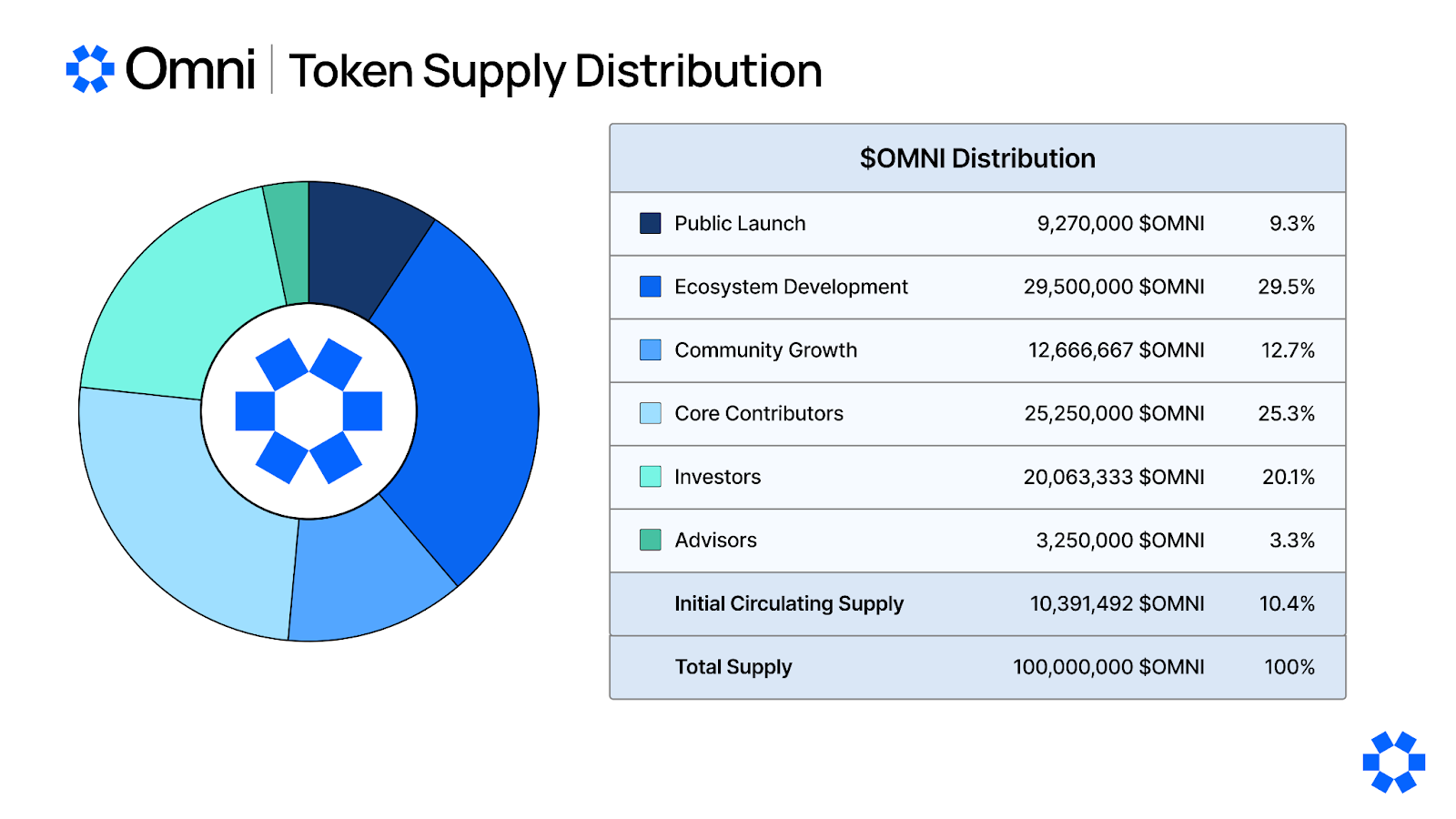

(Source: news.omni.network)

Official documentation reports OMNI’s total supply at 100 million tokens. Of this, 29.5% is allocated to ecosystem development, 25.3% to core contributors, 20.1% to investors, 12.7% to community growth, 9.3% to the public offering, and 3.3% to the advisory team. The initial circulating supply is approximately 10.4%.

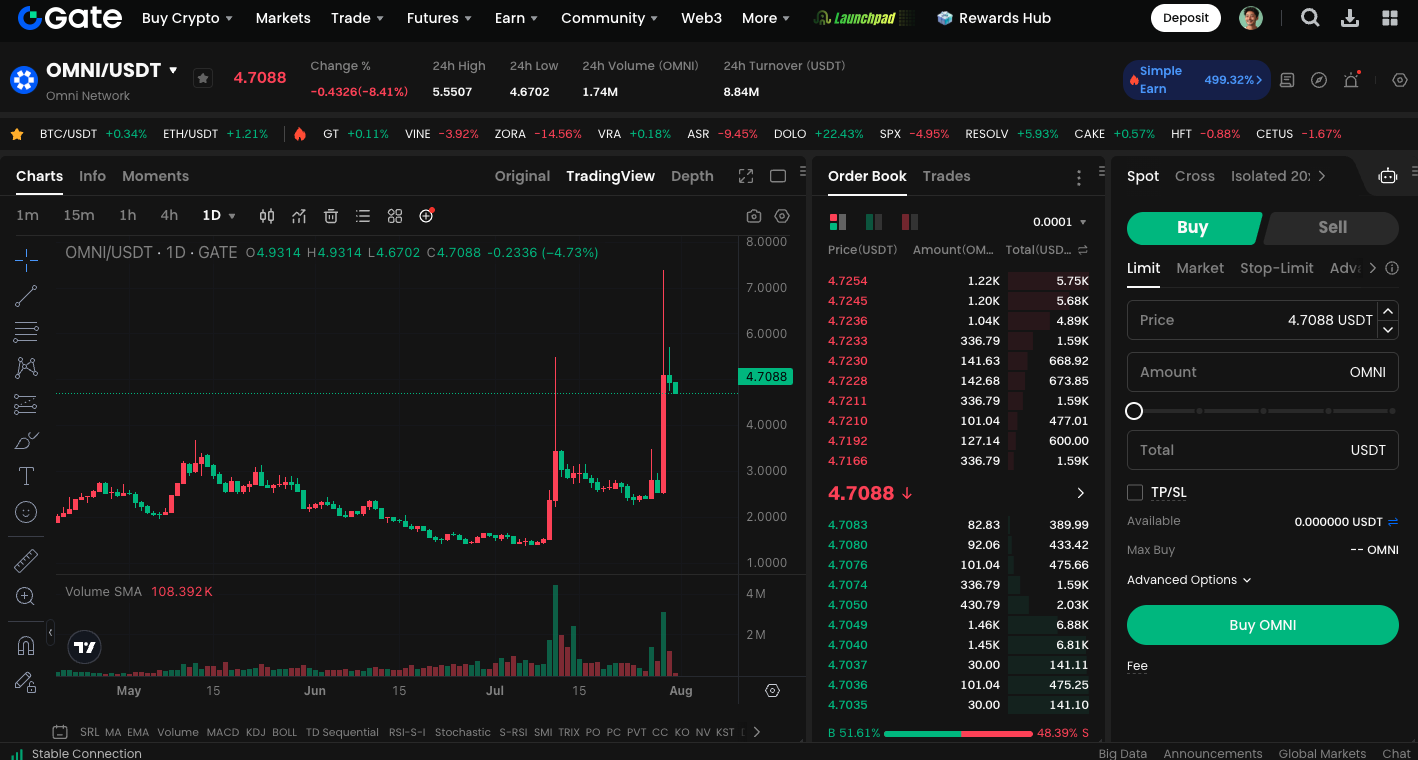
Start trading OMNI spot today: https://www.gate.com/trade/OMNI_USDT
Future Outlook and Summary

The launch of Omni Network is not just a technological breakthrough—it’s a transformation of decentralized infrastructure. By dissolving the silos between rollups, Omni enables applications to achieve true “write once, deploy everywhere” global availability. As more Layer 2 solutions, DApps, and users enter the Omni ecosystem, the network’s connectivity and value will multiply. For developers, Omni provides a multi-chain platform that is easier to deploy on; for users, it offers a smoother, more cost-effective blockchain experience.

Author: Allen
Disclaimer
* The information is not intended to be and does not constitute financial advice or any other recommendation of any sort offered or endorsed by Gate.
* This article may not be reproduced, transmitted or copied without referencing Gate. Contravention is an infringement of Copyright Act and may be subject to legal action.

Related Articles

What is Fartcoin? All You Need to Know About FARTCOIN
Intermediate

What is Fartcoin? All You Need to Know About FARTCOIN

Fartcoin (FARTCOIN) is a representative meme coin within the Solana ecosystem based on an AI-driven narrative. Its core concept originated from an experiment aimed at exploring the "boundaries between AI Agents and humor." More than just a digital asset with social attributes, the project deeply couples absurd humor culture with on-chain financial logic by integrating autonomous AI interaction models.
2026-04-04 22:01:19
Gold Price Forecast for the Next Five Years: 2026–2030 Trend Outlook and Investment Implications, Could It Reach $6,000?
Beginner

Gold Price Forecast for the Next Five Years: 2026–2030 Trend Outlook and Investment Implications, Could It Reach $6,000?

Analyze current gold price trends alongside authoritative five-year forecasts, integrating an evaluation of market risks and opportunities. This gives investors insight into the potential trajectory of gold prices and the main drivers expected to shape the market over the next five years.
2026-03-25 18:13:30
Aster vs Hyperliquid: Which Perp DEX Will Prevail?
Beginner

Aster vs Hyperliquid: Which Perp DEX Will Prevail?

Aster and Hyperliquid are the two representative protocols of the "purpose-built L1 path" within the current decentralized perpetual exchange (Perp DEX) sector. As a pioneer in the field, Hyperliquid has built a deep liquidity moat through its highly mature order book architecture and strong community consensus. Conversely, Aster, as a rising challenger, seeks to leapfrog the competition in high-performance trading through more aggressive multi-chain aggregation logic, private transaction modules, and an underlying execution environment optimized for 2026 market demands.
2026-03-24 11:58:33
AI-Native Settlement Layers: How United Stables Is Building the Next Financial Rail
Beginner

AI-Native Settlement Layers: How United Stables Is Building the Next Financial Rail

Stablecoins were originally designed as dollar substitutes within exchanges, primarily used for asset pricing and trade settlement. As on-chain financial ecosystems have matured, their role has expanded beyond simple payments to include collateral assets, cross-chain liquidity mediums, and unified settlement units. In particular, as AI systems and automated agents begin to participate directly in economic activity, demand has risen sharply for programmable value units capable of instant settlement. This shift is pushing stablecoins toward the role of foundational financial infrastructure.
2026-03-25 03:16:17
2026 Silver Price Forecast: Bull Market Continuation or High-Level Pullback? In-Depth Analysis of Silver Candlestick Chart
Beginner

2026 Silver Price Forecast: Bull Market Continuation or High-Level Pullback? In-Depth Analysis of Silver Candlestick Chart

2026 Silver Price Forecast: Latest Outlook This article integrates current market trends, silver candlestick chart analysis, and momentum factors to assess the potential key support and resistance levels, upside targets, and pullback risks for silver prices. The goal is to help investors make informed, rational decisions.
2026-03-25 16:08:59
ASTER Tokenomics: Buybacks, Burns, and Staking as the Value Foundation of ASTER in 2026
Beginner

ASTER Tokenomics: Buybacks, Burns, and Staking as the Value Foundation of ASTER in 2026

ASTER is the native equity and governance token of the Aster ecosystem, with its core value built upon a radical "Deflationary Engine." Beyond serving as a governance tool, ASTER integrates multiple utilities including staking rewards, trading fee discounts, and liquidity incentives. Through its deep integration with the upcoming dedicated Layer 1 mainnet, it enables direct value capture from protocol cash flow to token holders.
2026-03-25 07:38:07