


Litecoin (LTC): Exploring Its Underlying Network
What Is Litecoin (LTC)?
Litecoin Overview
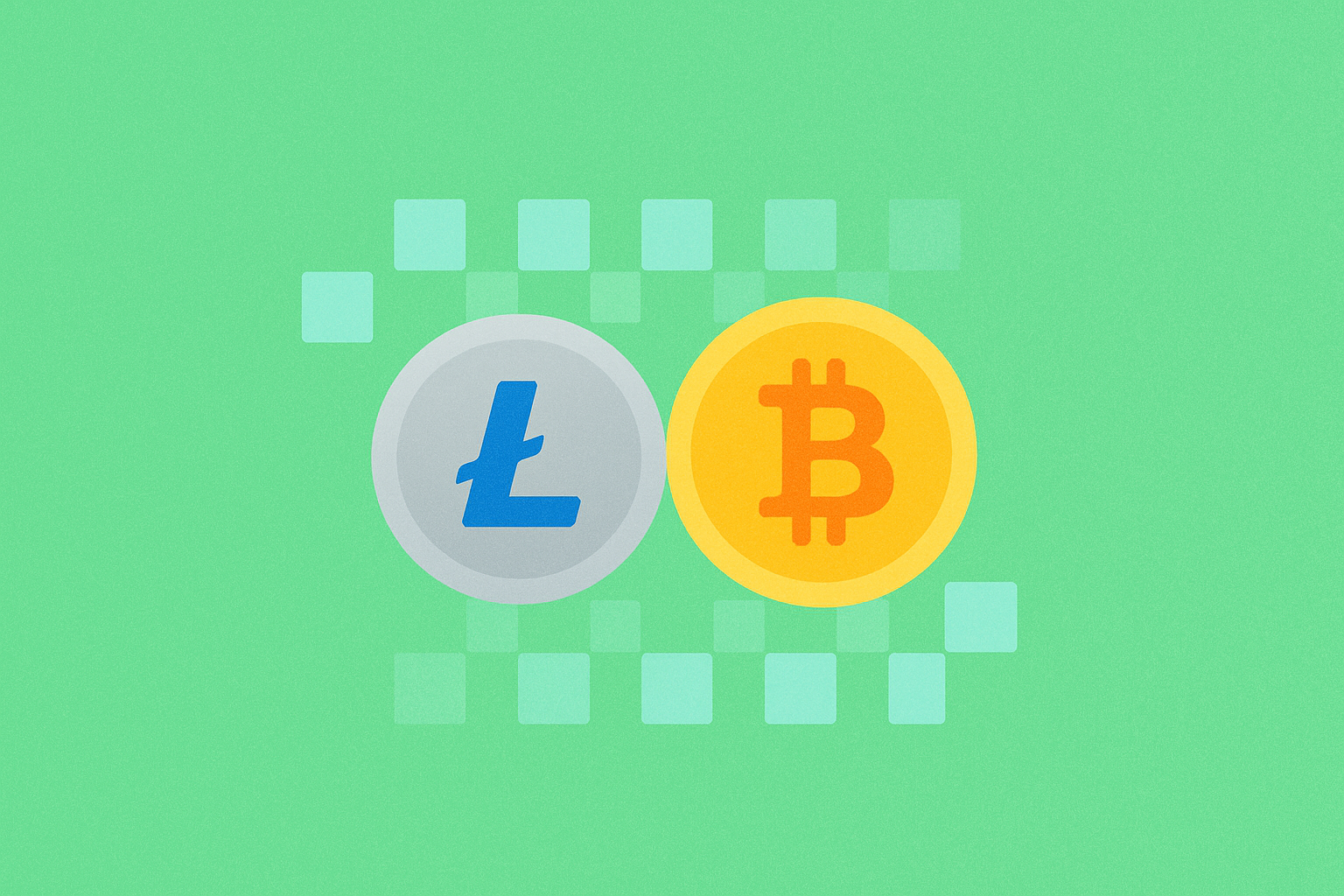
Litecoin (LTC) stands as one of the earliest altcoins in the cryptocurrency space. Introduced in 2011 by Charlie Lee, a former Google engineer, Litecoin was created as a streamlined alternative to Bitcoin, enabling near-instant payments with lower transaction fees. Built on Bitcoin’s open-source code, Litecoin features significant modifications that enhance both transaction efficiency and speed.
The phrase “silver to Bitcoin’s gold” captures Litecoin’s role within the crypto ecosystem. While Bitcoin is widely recognized as a premier store of value, Litecoin is often considered a more effective choice for peer-to-peer payments due to its faster confirmations and reduced fees.
Litecoin has a fixed supply cap of 84 million coins. Much like Bitcoin, it is deflationary and undergoes a halving event every 840,000 blocks (approximately every four years). Litecoin is available for purchase on numerous global digital trading platforms and cryptocurrency exchanges.
Litecoin Blockchain Network
Litecoin utilizes a purpose-built blockchain network to maximize transaction efficiency compared to Bitcoin. As a decentralized, peer-to-peer digital currency, Litecoin operates on a distributed blockchain that allows users to transact directly, without intermediaries.
Like Bitcoin, Litecoin employs a Proof of Work (PoW) consensus mechanism, enabling miners to earn new coins by adding blocks to its blockchain. However, instead of Bitcoin’s SHA-256 algorithm, Litecoin leverages Scrypt—a hashing algorithm that produces new blocks roughly every 2.5 minutes, whereas Bitcoin’s block average is 10 minutes.
The Litecoin development team initially created Scrypt to foster a decentralized mining ecosystem distinct from Bitcoin and to make 51% attacks on LTC more challenging. Early on, Scrypt allowed individuals to mine Litecoin using traditional GPU and CPU cards, limiting ASIC miner dominance. Over time, ASIC miners specifically designed for LTC emerged, rendering GPU and CPU mining largely obsolete.
How Litecoin Works
Given their similarities, Litecoin often serves as a “testing ground” for developers trialing blockchain innovations before deploying them on Bitcoin. For instance, Segregated Witness (SegWit) was implemented on Litecoin prior to Bitcoin in 2017. SegWit enables blockchain scaling by separating digital signatures from transaction data, optimizing limited block space and allowing higher transactions per second (TPS).
Lightning Network, another key scaling solution, was also launched on Litecoin before Bitcoin. As a layer 2 protocol built atop the Litecoin blockchain, Lightning Network utilizes user-generated micropayment channels, significantly reducing transaction fees and enhancing efficiency.
To address privacy concerns, Litecoin adopted the MimbleWimble Extension Block (MWEB) protocol—a privacy-focused technology named after a tongue-tying spell from the Harry Potter series that prevents victims from revealing information. In practice, MimbleWimble ensures that transaction details—including sender and receiver addresses and the transferred amounts—remain fully anonymous. MWEB also trims unnecessary transaction data, resulting in more compact and scalable blocks.
Litecoin Use Cases
As a pioneering altcoin, Litecoin improved upon Bitcoin’s codebase to deliver greater scalability and facilitate faster, lower-cost transactions. While Litecoin’s market capitalization trails behind Bitcoin, it excels as a peer-to-peer payment platform. Notably, the Litecoin Foundation announced that LTC can be spent using the Litecoin VISA debit card, converting LTC to USD in real time. Many merchants now accept Litecoin payments, including travel agencies, convenience stores, real estate firms, and online retailers.
A major development to watch is the rollout of MimbleWimble on the Litecoin network. Beyond concealing wallet addresses, MimbleWimble could potentially double Litecoin’s TPS. Successful implementation would further strengthen LTC’s privacy features and its fungibility as a digital asset.
Conclusion
Since its launch in 2011, Litecoin has consistently advanced its technology to reinforce its status as “silver to Bitcoin’s gold.” While it does not match Bitcoin or Ethereum (ETH) in market capitalization, the Litecoin community anticipates further innovations that will expand its features and applications. By prioritizing transaction efficiency, privacy, and practical payment adoption, Litecoin continues to establish itself as a dynamic and reliable payment solution in the rapidly evolving world of cryptocurrency.
FAQ
Which network does Litecoin use?
Litecoin operates on a decentralized, peer-to-peer blockchain network. Its protocol is based on Bitcoin but uses the Scrypt algorithm for proof-of-work, enabling faster transactions with a 2.5-minute block time.
Which network does LTC use?
Litecoin utilizes its own blockchain network, a decentralized peer-to-peer protocol. LTC runs on this network using the Scrypt algorithm for proof-of-work.
Which network does Bitcoin run on?
Bitcoin runs on the decentralized Bitcoin blockchain. This network employs the Proof of Work (PoW) consensus mechanism with SHA-256, supported by thousands of independent nodes worldwide to ensure transaction security and transparency.
Share
Content
How to Buy Cryptocurrency


Trending Cryptocurrencies


What Is TXC Coin: Whitepaper Logic, Use Cases, Technology Innovation, and Roadmap Progress Explained

Who Is Peter Todd?

What Is a Recovery Key ID?

XBT vs BTC: Let's Settle The Confusion

Best Crypto Wallet For Australians Beginners

Ledger Meaning: From Traditional Accounting to Crypto Transparency

a16z Crypto Doubles Down on Bitcoin Staking: Babylon Raises $15 Million, Fueling a Market Rebound for the BABY Token

From $14.6 Million to $91.3 Million: The Real Reasons Behind Visa Crypto Card Spending’s 525% Surge
Gary Gensler’s Departure and Market Rebound: A Dual Analysis of Crypto Prices and Regulation in 2026

Vertus Price Trend and Ecosystem Expansion Analysis: What’s Next for the Telegram Web3 Project?
2026 Virtuals Latest Developments and Full Analysis of VIRTUAL Price Trends